

|
Getting your Trinity Audio player ready...
|
TL;DR:
- Mid-term housing offers greater stability and cost efficiency for extended team projects.
- Short-term rentals are flexible but can disrupt team performance due to frequent moves.
- Choosing properly managed, compliant accommodations improves team productivity and project success.
When HR leads and project managers book team accommodation in Sweden, the default assumption is often that any furnished rental will do the job. That assumption can be costly. The type of housing you choose, and how long you commit to it, directly shapes team performance, project continuity, and your overall budget. Research suggests that accommodation quality and stability account for significant variation in workforce performance. This article breaks down the real differences between short-term and mid-term housing, compares costs and trade-offs, and gives you a clear framework for making the right call.
Table of Contents
- What defines short-term and mid-term housing?
- Comparing costs, stability, and flexibility for project teams
- Key scenarios: When to choose each housing type
- Practical steps to secure efficient team housing in Sweden
- The overlooked power of stable team accommodation
- Find the right team housing solution with Guestly Homes
- Frequently asked questions
Key Takeaways
| Point | Details |
|---|---|
| Understand housing types | Short-term and mid-term options serve very different team needs and project durations. |
| Factor in performance gains | Stable, mid-term housing can boost team output and retention significantly. |
| Balance cost and stability | Mid-term solutions may reduce daily rates and operational risk, especially for longer projects. |
| Evaluate for project fit | Match your accommodation choice to project length, team size, and the value of continuity. |
| Use specialised providers | Leveraging Sweden-based experts can simplify sourcing and streamline management for corporate teams. |
What defines short-term and mid-term housing?
The terms “short-term” and “mid-term” are used loosely in the market, which creates confusion when you are trying to match a housing solution to a specific project. Getting the definitions right is the first step to making a sound decision.
Short-term housing typically refers to stays of less than one to three months. These properties are designed for high turnover. Think serviced apartments available on a nightly or weekly basis, hotel-style units, or platforms listing furnished rooms for a few weeks at a time. They are set up for convenience and speed, not for the kind of settled routine a project team needs.
Mid-term housing covers stays of roughly one to twelve months. This category is specifically suited to project teams, relocating professionals, and organisations running extended assignments in a new city. Properties in this range are fully furnished, often include utilities and internet, and are managed to a consistent standard. Critically, they offer a stable base from which teams can operate without the friction of frequent moves.
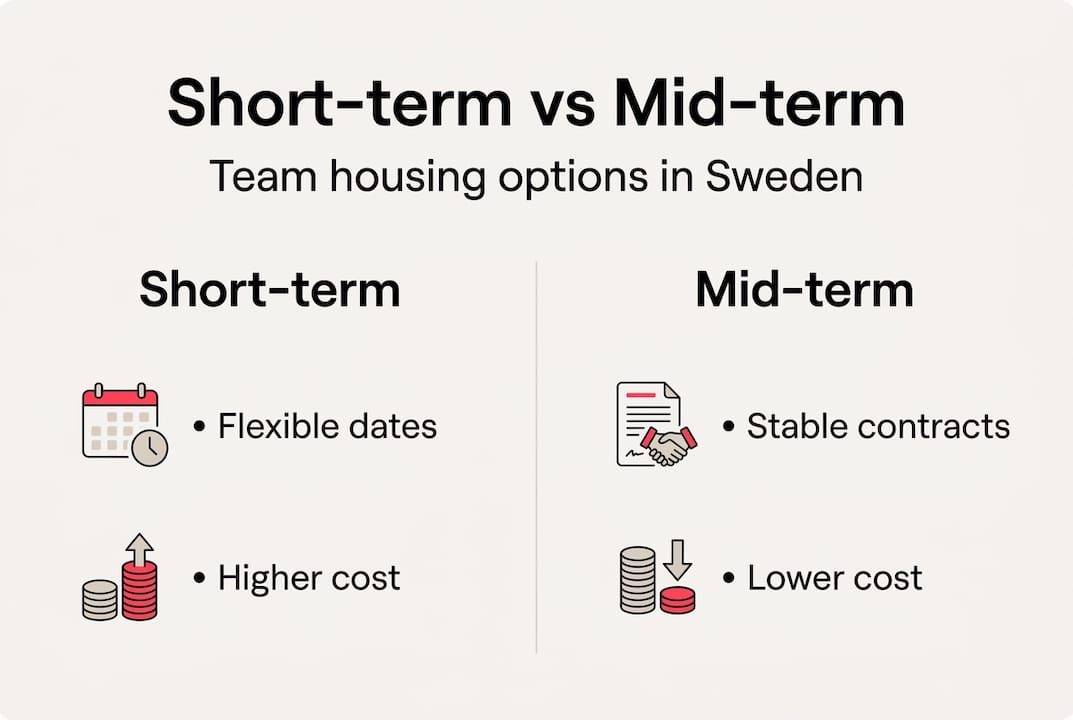
Here is a quick comparison of the core features:
| Feature | Short-term housing | Mid-term housing |
|---|---|---|
| Typical duration | 1 night to 3 months | 1 month to 12 months |
| Pricing model | Nightly or weekly rate | Monthly rate (lower per night) |
| Furnishing level | Basic to moderate | Full, home-standard |
| Utility inclusion | Usually included | Often included or negotiated |
| Contract flexibility | Very high | Moderate, with notice periods |
| Stability for teams | Low | High |
| Suited for | Audits, site visits, short projects | Extended projects, relocations |
In Sweden’s business context, short-term rentals are commonly used for executive visits, compliance audits, and single-week site inspections. Mid-term solutions are the natural fit for infrastructure projects, IT rollouts, consulting engagements, and any assignment where a team needs to be effective from day one and remain so for months.
It is worth noting that short-term rental alternatives are growing in relevance precisely because the short-term market in Sweden carries a secondary cost. STR activity raises housing prices by 0.14 to 6.8% in affected local markets. For organisations with a corporate social responsibility mandate, that is a factor worth considering alongside pure cost.
Pro Tip: When assessing temporary apartments for teams, always ask the provider whether the property is registered and compliant with Swedish short-term rental regulations. Non-compliant properties carry legal risk for the booking organisation.
Comparing costs, stability, and flexibility for project teams
With definitions in mind, it is important to understand the practical trade-offs facing teams. Cost is the most visible factor, but it is rarely the most important one once you account for the full picture.
Cost structure
Short-term accommodation in Sweden typically commands a premium nightly rate. A furnished apartment in Stockholm or Gothenburg on a short-term basis can cost 30 to 50% more per night than the equivalent property secured on a mid-term monthly arrangement. For a team of five staying for two months, that difference can represent tens of thousands of Swedish kronor.
Mid-term contracts allow providers to price more competitively because occupancy is guaranteed. The per-night cost drops, and ancillary expenses such as cleaning, linen changes, and administration are absorbed into a single monthly fee rather than itemised per stay.
Stability and project continuity
Frequent moves are disruptive. When team members change accommodation every few weeks, they lose time to packing, travel, and re-settling. They also lose the psychological stability that comes from having a consistent home base. Corporate housing research indicates that appropriate accommodation can account for up to 60% of performance variation in mobile workforces. That is not a marginal effect. It is a structural one.
The table below summarises the key trade-offs for project teams:
| Factor | Short-term | Mid-term |
|---|---|---|
| Cost per night | Higher | Lower |
| Total cost for 3 months | Significantly higher | More predictable and lower |
| Team disruption | High (frequent moves) | Low (stable base) |
| Contract flexibility | High (easy exit) | Moderate (notice period required) |
| Performance impact | Negative if prolonged | Positive with consistency |
| Staff retention influence | Lower | Higher |
| Admin burden for HR | High (repeat bookings) | Low (single contract) |
Flexibility versus consistency
Short-term housing wins on flexibility. If a project ends early or team composition changes rapidly, you are not locked into a long contract. This is genuinely useful for fast-moving assignments with uncertain timelines.
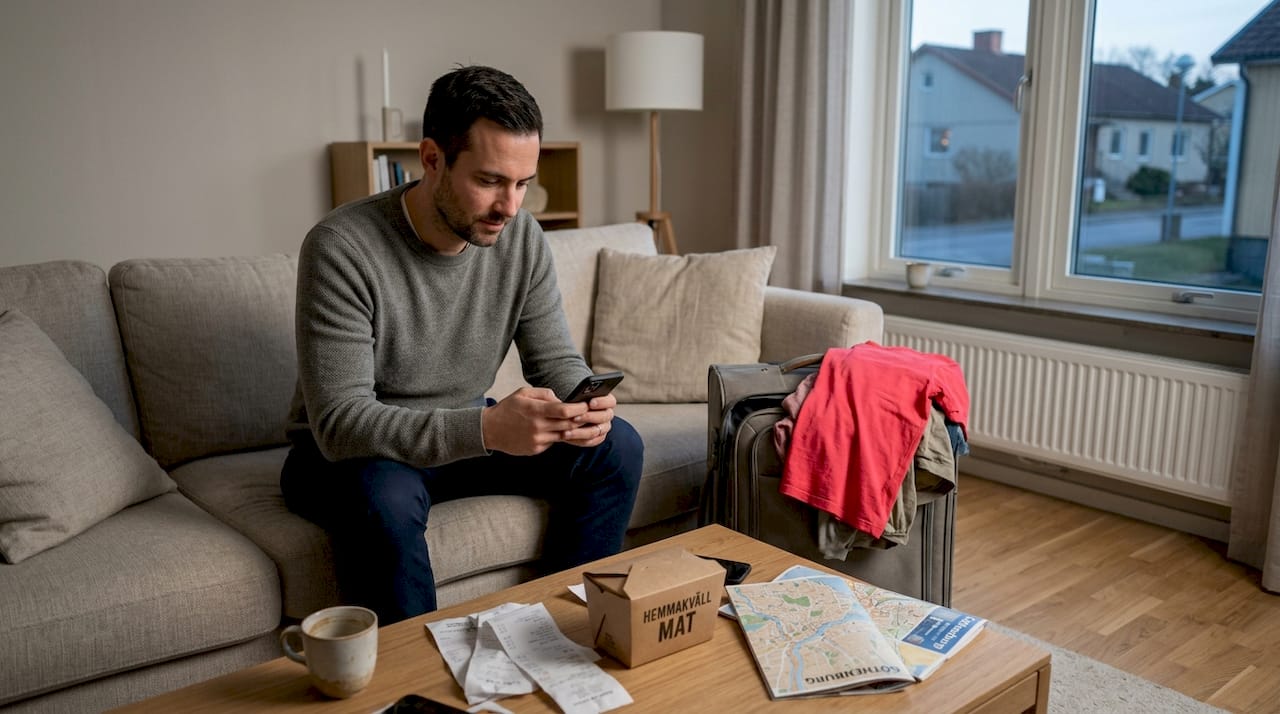
However, flexibility has a hidden cost. Every time a team member moves, productivity dips. Every new property requires a re-familiarisation period. For long-term accommodation in business settings, the research is consistent: teams that stay in one place longer perform better, integrate more effectively into local working culture, and report higher satisfaction.
For corporate homes for professionals, the mid-term model also reduces the administrative load on your HR team. Instead of managing a rolling series of short bookings, you operate from a single contract with a single point of contact.
Key insight: A 10% reduction in nightly rate may look attractive on a spreadsheet, but if it comes at the cost of team stability and performance, the true cost is far higher.
Key scenarios: When to choose each housing type
Having seen the trade-offs, it helps to pinpoint which common project scenarios call for which approach. The decision is rarely black and white, but there are clear patterns.
Choose short-term housing when:
- The project runs for less than four weeks with no likelihood of extension
- Team members rotate on a weekly basis and are not co-located for extended periods
- You need maximum booking flexibility because the project scope is genuinely uncertain
- The team is small (one to two people) and the stay is primarily for a specific event or audit
- Budget is fixed and the project timeline is tight and well-defined
Choose mid-term housing when:
- The project runs for two months or longer, even if the exact end date is flexible
- You have a team of three or more people who need to live and work in close proximity
- Staff retention and morale are a concern, particularly for international assignees
- The project requires local cultural integration, such as client-facing roles in a new market
- You want to reduce HR administration and consolidate accommodation under one contract
The comparison between corporate housing vs Airbnb is instructive here. Consumer platforms offer flexibility but rarely provide the consistency, legal compliance, or managed service that corporate teams require for stays beyond a few weeks.
Team size is a particularly important variable. A single consultant on a three-week assignment can manage well in a short-term serviced apartment. A team of eight engineers on a six-month infrastructure project needs something fundamentally different: consistent facilities, reliable internet, space to decompress after long days, and a management structure that resolves issues quickly without the team having to chase anyone.
Performance variation of up to 60% linked to accommodation quality is not an abstract statistic. It shows up in meeting readiness, decision-making quality, and the ability to maintain focus during high-pressure project phases.
Pro Tip: If your project has a stated end date but a realistic chance of extension, book mid-term from the start. Renegotiating a short-term booking into a longer stay is almost always more expensive and more disruptive than committing to a mid-term contract upfront.
Practical steps to secure efficient team housing in Sweden
Once you have identified the right option for your project, the next challenge is navigating the process efficiently. The following steps are designed to reduce friction and avoid the most common mistakes.
-
Define your requirements precisely. Before approaching any provider, document the team size, project duration, preferred location relative to the worksite, required amenities (reliable broadband, parking, laundry), and budget range. Vague briefs produce mismatched proposals.
-
Shortlist providers with a track record in corporate accommodation. Not all furnished rental providers operate to the same standard. Look for operators who specialise in professional and project-team stays, have transparent pricing, and can provide references from similar corporate clients. Check corporate housing selection tips for a structured evaluation framework.
-
Request a single-contract solution wherever possible. For teams of three or more, a single contract covering all team members under one property or portfolio simplifies invoicing, compliance, and management. It also gives you a single point of escalation if issues arise.
-
Evaluate the management model. Ask whether the property is self-managed or operated by a professional service provider. Self-managed properties are more prone to inconsistency, delayed maintenance, and communication gaps. Professionally managed properties, particularly those with 24/7 support, reduce the risk of disruption during critical project phases.
-
Build in a review clause. Even mid-term contracts can include a structured review point, typically at the 90-day mark, to assess whether the accommodation continues to meet team needs. This is particularly useful for projects with evolving team compositions.
-
Avoid last-minute bookings. Premium mid-term properties in Swedish cities are in high demand, particularly in Stockholm, Gothenburg, and Malmö. Booking with less than two weeks’ notice significantly narrows your options and increases cost. Aim to secure accommodation at least four to six weeks before the project start date.
-
Check local regulatory compliance. Sweden has specific regulations governing short-term and mid-term rentals, including requirements around subletting permissions and tax reporting. Ensure your provider is fully compliant to avoid legal exposure for your organisation.
Reviewing temporary housing providers side by side is a useful exercise before committing. The right provider will be transparent about pricing, responsive to your brief, and able to demonstrate consistent standards across their portfolio. Research consistently shows that teams housed in stable, well-managed accommodation outperform those in inconsistent or frequently changed environments.
The overlooked power of stable team accommodation
Most HR leads approach team housing as a logistics problem. Find a property, confirm the dates, send the address. The instinct is to optimise for cost and convenience, and to treat accommodation as a support function rather than a performance variable.
That framing misses something important. When a team is settled, they think more clearly. They sleep better. They arrive at the worksite ready rather than depleted. The 60% performance variation linked to accommodation quality is not driven solely by the physical space. It is driven by the psychological stability that comes from knowing where you are sleeping tonight, next week, and next month.
Short-term cost savings from cheaper nightly rates are real. But they are frequently dwarfed by the hidden costs of disruption: reduced output, increased sick days, higher turnover among international assignees, and the administrative burden of managing a rolling series of short bookings. A team that moves accommodation three times over a four-month project loses momentum each time.
Mid-term housing also does something that short-term housing rarely achieves: it builds a shared team culture. When people share a well-designed, comfortable space for an extended period, they develop the informal bonds that make project teams genuinely effective. That is harder to quantify than a nightly rate, but it shows up clearly in project outcomes.
The organisations that treat accommodation as a strategic input, rather than an administrative afterthought, consistently report better project delivery and stronger staff retention. Corporate housing furnished apartments designed for extended professional stays are not a luxury. For teams working in demanding conditions far from home, they are a practical investment in performance.
Find the right team housing solution with Guestly Homes
Choosing between short-term and mid-term accommodation is only half the challenge. The other half is finding a provider who can actually deliver consistent quality at the standard your team deserves.
Guestly Homes operates a portfolio of fully managed, premium properties across Sweden, purpose-built for professional stays ranging from 10 nights to 12 months. Whether you need a compact executive suite for a solo consultant or a spacious villa for a project team, Guestly provides a single point of contact, transparent pricing, and hotel-grade consistency throughout the stay. For larger teams, the 5-bedroom business villa offers the space and facilities to support extended project assignments, while the executive premium suite suits senior professionals requiring a high-standard base. Browse all team accommodation options or contact Guestly directly for a tailored proposal matched to your project timeline and team size.
Frequently asked questions
What is the difference between short-term and mid-term housing in Sweden?
Short-term housing covers stays under three months, typically priced at a nightly or weekly rate, while mid-term housing suits one to twelve month projects and offers greater stability, lower per-night costs, and more consistent facilities for teams.
How does the choice of housing type affect team performance?
Stable mid-term accommodation supports better team performance and retention, with research indicating that accommodation quality can account for up to 60% of performance variation in mobile workforces.
Are there risks of rising rental costs with short-term rentals in Sweden?
Yes. Increased short-term rental activity in Swedish cities has been shown to raise local housing prices by between 0.14 and 6.8%, which carries reputational and social responsibility implications for corporate bookers.
How can we ensure a smooth housing setup for large teams?
Start by assessing project duration, team size, and stability requirements, then partner with a professionally managed provider who can offer a single contract, consistent standards, and a clear escalation process for any issues that arise during the stay.
Recommended
- How to evaluate housing options for business teams in Sweden – Guestly Homes
- Best 6 Temporary Housing Providers for Teams – Expert Comparison 2026 – Guestly Homes
- Long-Term Lodging: Smart Solutions for Team Stays – Guestly Homes
- What is a medium-term rental: guide for Sweden’s HR teams – Guestly Homes