


TL;DR:
- Sweden offers a highly attractive environment for long-term work assignments, emphasizing work-life balance and social support. Its flat hierarchies, strong worker protections, and high English proficiency facilitate career growth for international professionals. Family-friendly policies, reliable infrastructure, and predictable bureaucratic timelines make Sweden a sustainable and welcoming choice for extended stays.
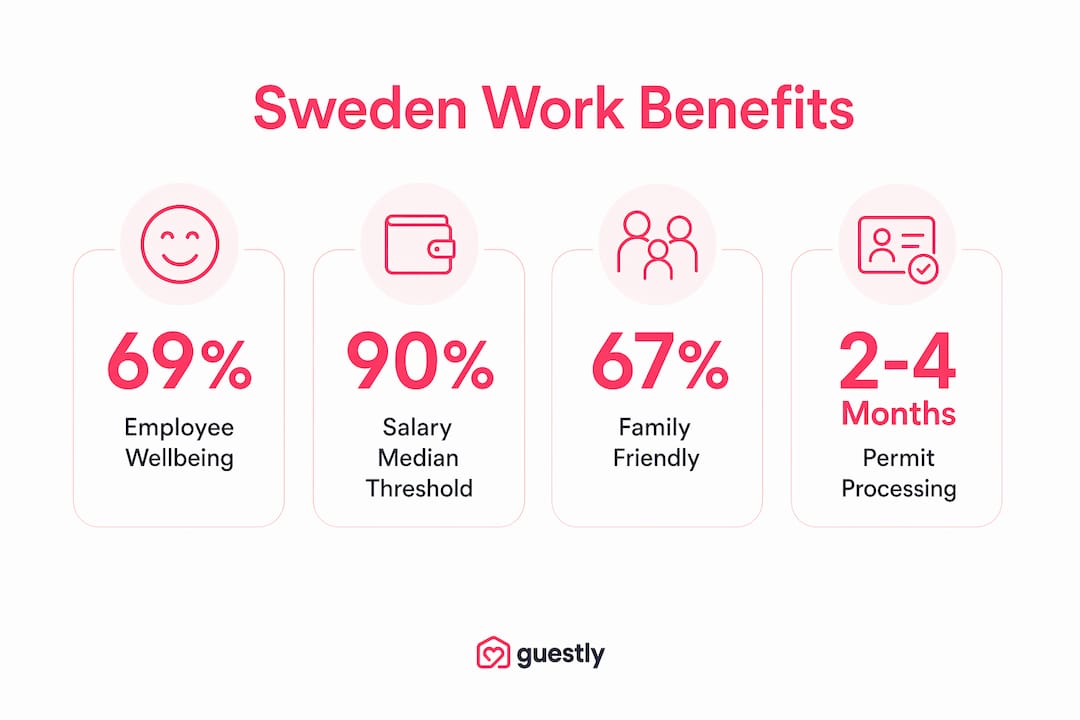
Sweden is defined as one of Europe’s most attractive destinations for long-term work assignments, combining exceptional work-life balance, a supportive social infrastructure, and a professional culture that actively benefits international talent. 69% of Swedish employees report thriving in their overall lives, compared to 49% across Europe and 34% globally. That gap is not accidental. It reflects deliberate policy choices around healthcare, parental leave, worker protections, and urban planning that together create conditions where professionals can perform well and live well simultaneously. For businesses and individuals weighing long-term work in Sweden, understanding these foundations is the starting point for a sound decision.
Why Sweden is one of Europe’s best countries for long-term work assignments
Sweden’s professional environment stands apart from most European peers for reasons that go well beyond salary or sector. The country’s flat organisational hierarchies mean that international professionals gain early access to high-level projects regardless of their seniority. That accelerated exposure is a genuine career advantage, and it surprises many assignees who arrive expecting the slower progression typical of more hierarchical workplaces.
Sweden’s labour market model is built on a principle of protecting workers rather than protecting specific jobs. Job security councils assist 90% of affected workers in finding new roles after redundancy. This creates a professional environment where taking on a challenging assignment carries less personal risk, because the safety net is real and well-funded.
English proficiency across Sweden is high, which removes the immediate communication barrier for most international professionals. That said, Swedish language skills matter more than many assignees initially expect. Over 70% of positions are filled through informal networks rather than public job postings. Without Swedish, access to that hidden job market remains limited, and social integration takes longer.
Key characteristics of Sweden’s work culture that benefit long-term assignees:
- Flat hierarchies give professionals direct access to decision-makers from early in their assignment.
- Strong worker protections reduce personal risk and support professional confidence.
- High English proficiency removes day-to-day communication barriers across most sectors.
- Informal hiring networks reward those who invest in language learning and local relationships.
- Consensus-driven decision-making requires patience but produces durable outcomes.
Pro Tip: Begin Swedish language classes before you arrive. Even basic proficiency signals commitment to colleagues and opens doors that remain closed to English-only speakers.
How do family-friendly policies affect long-term assignment wellbeing?
67% of non-EU labour migrants cite work-life balance and family-friendly conditions as the top non-career reason for choosing Sweden. That figure reflects something concrete rather than a vague cultural reputation. Sweden’s parental leave system provides generous paid leave for both parents, and the expectation that fathers take a significant share is embedded in workplace norms rather than just legislation. For assignees with families, this changes the daily calculus of relocation considerably.
Education and healthcare are funded through taxation and available to residents without direct cost at the point of use. Children of assignees can access the Swedish school system, and international schools in major cities provide continuity for families who need it. Healthcare quality is consistently high, removing one of the most common anxieties associated with international relocation.
The trade-off is taxation. Swedish income tax rates are among the highest in Europe, and residents accept this as the cost of collective security. For most long-term assignees, the net effect is positive: the services received in return for higher taxation represent genuine value, particularly for families.
Benefits that directly affect family wellbeing during a long-term assignment:
- Generous paid parental leave for both parents, with social expectation of shared use.
- Free access to high-quality state education from pre-school through university.
- Publicly funded healthcare with no direct cost at the point of use.
- Subsidised childcare that reduces the financial pressure on dual-income households.
Partner career satisfaction is a principal predictor of assignment retention. Employers who support dual-career households see significantly lower early turnover among their international professionals. Sweden’s family infrastructure makes that support considerably easier to deliver.
What makes Sweden’s infrastructure and environment suited to longer stays?
Sweden’s cities are consistently ranked among the safest and most liveable in Europe. Low crime rates, reliable public services, and well-maintained urban environments reduce the friction of daily life in ways that compound over a long assignment. A professional who is not managing safety concerns or unreliable services has more cognitive and physical energy for their work.
Public transport in Stockholm, Gothenburg, and Malmö is efficient and well-integrated. Digital connectivity across Sweden is among the strongest in Europe, which supports flexible and remote working arrangements with minimal disruption. For professionals on assignments that involve travel within the country, the infrastructure holds up reliably.
Access to nature is a genuine quality-of-life factor in Sweden, not a marketing point. Four distinct seasons, extensive forests, coastlines, and lakes are accessible from every major city within a short journey. The Swedish concept of friluftsliv, or outdoor life, is practised widely and provides a consistent counterbalance to professional pressure.
Practical steps for managing Sweden’s infrastructure challenges:
- Register with the Swedish Tax Agency (Skatteverket) immediately upon arrival. Your personal identity number (personnummer) unlocks access to banking, healthcare, and most public services.
- Apply for international school places well in advance. Spots in major cities fill quickly, and late applications cause avoidable disruption.
- Plan for a 2–4 month lead time on work permits. Bureaucratic processing times are predictable but not fast. Build this into your assignment timeline from the outset.
- Secure housing before arrival where possible. The rental market in Stockholm and Gothenburg is competitive, and short-notice searches frequently result in poor outcomes.
Pro Tip: The personnummer is the single most important administrative step in Sweden. Without it, basic services become significantly harder to access. Prioritise this registration above all other administrative tasks.
What do professionals need to plan before a long-term assignment in Sweden?
Practical preparation for a long-term assignment in Sweden has become more structured since mid-2026. Sweden’s new work permit regulations, effective from june 2026, require applicants to earn at least 90% of the national median salary to qualify. Professionals staying for a maximum of one year must also hold or apply for comprehensive health insurance. These requirements affect both the assignee and the employer’s planning process.
The hidden job market remains the most important consideration for professionals who may seek local employment during or after their assignment. Swedish language proficiency is the primary key to that market. Networking through professional associations, alumni groups, and sector events builds the relationships that lead to opportunities not advertised publicly.
Relocation is most accurately understood as a family project. Partner career satisfaction strongly predicts whether an assignment reaches its intended duration. Employers who provide dual-career support, including job search assistance for accompanying partners, see measurably better retention outcomes.
| Planning area | Key action |
|---|---|
| Work permit | Confirm salary meets the 90% median threshold; apply at least 3 months before start date |
| Health insurance | Arrange comprehensive cover if the assignment is 12 months or under |
| Housing | Begin search 3–4 months before arrival; prioritise central locations near public transport |
| International schooling | Apply to schools 6–12 months in advance in Stockholm and Gothenburg |
| Language learning | Begin Swedish classes before departure; aim for basic conversational level on arrival |
| Partner support | Engage dual-career support services early; connect partners with local professional networks |
For professionals moving to Sweden for work, the administrative timeline is the most commonly underestimated element. Building in sufficient lead time across permits, housing, and schooling prevents the disruptions that derail otherwise well-planned assignments.
Key takeaways
Sweden’s combination of high employee wellbeing, strong social infrastructure, and a worker-protective labour market makes it the most consistently reliable destination in Europe for long-term work assignments.
| Point | Details |
|---|---|
| Wellbeing rates are measurably higher | 69% of Swedish employees report thriving, far above the European average of 49%. |
| Flat hierarchies accelerate careers | International professionals gain early access to senior projects, regardless of their level. |
| Family infrastructure reduces attrition | Parental leave, free education, and healthcare directly support assignment retention. |
| Language learning is not optional | Over 70% of jobs are filled informally; Swedish proficiency is the entry point to that market. |
| Bureaucratic lead times are predictable | Work permits and school applications require 2–4 months of advance planning to avoid disruption. |
Sweden rewards patience, and that is the part most articles skip
By Joakim Thörn
The data on Sweden is compelling, and I have seen it cited accurately in many places. What gets left out is the texture of the first six months. Sweden does not immediately open up to newcomers. The culture is reserved, the bureaucracy is methodical, and the social networks are tight. Professionals who arrive expecting the warmth and immediacy they might find in southern Europe often find the early weeks disorienting.
What I have observed, consistently, is that the professionals who thrive here are the ones who treat the assignment as a long-term investment rather than a short-term posting. They learn Swedish, even imperfectly. They engage with local colleagues outside of formal meetings. They register with Skatteverket on day one and do not wait for their employer to prompt them.
The taxation question comes up constantly. Yes, Swedish income tax is high. What I find is that most professionals, once they have used the healthcare system, enrolled their children in school without paying fees, and commuted reliably on public transport for a year, stop framing it as a cost. They start framing it as a system that works. That shift in perspective is usually the point at which an assignment becomes a life.
Sweden’s local customs and professional norms are learnable. The country rewards the effort. The professionals who invest in understanding it, rather than waiting for it to adapt to them, are the ones who extend their assignments voluntarily.
— Joakim Thörn
Accommodation for long-term assignments in Sweden
Long-term assignments require more than a functional place to sleep. Professionals working in Sweden for months at a time need accommodation that supports focus, rest, and a stable daily routine.
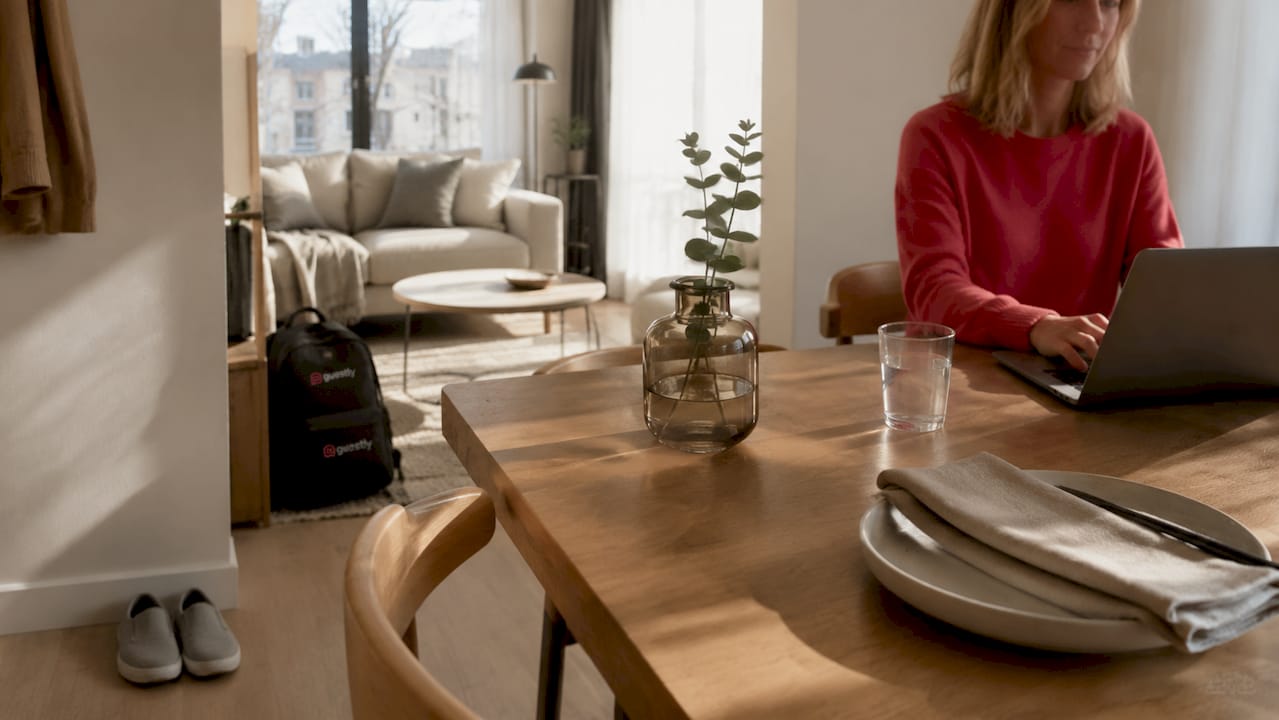
Guestly Homes operates fully managed villas and apartments across Sweden, designed specifically for professionals, project teams, and executives on extended stays. Properties are equipped to a consistent standard, with flexible terms that align with assignment timelines rather than fixed hotel contracts. The 5-bedroom business villa accommodates larger teams without compromising on quality, while the 4-bedroom grand villa with garden suits executives or families relocating for longer projects. Guestly Homes manages every detail of the stay, so the professional can focus entirely on the assignment.
FAQ
What is the minimum salary for a Swedish work permit in 2026?
From june 2026, Sweden requires work permit applicants to earn at least 90% of the national median salary. Applicants on assignments of 12 months or under must also hold comprehensive health insurance.
How long does a Swedish work permit take to process?
Processing typically takes 2–4 months. Building this lead time into assignment planning from the outset prevents costly delays at the start of a placement.
Is English sufficient for working in Sweden?
English is widely spoken across Swedish workplaces, and most professionals can operate effectively in English day to day. However, over 70% of positions are filled through informal Swedish-language networks, so language learning significantly improves long-term career prospects.
How does Sweden support families during long-term assignments?
Sweden provides generous paid parental leave, free state education, and publicly funded healthcare. These benefits apply to residents, making Sweden one of the most family-supportive environments in Europe for international assignees.
What accommodation options exist for long-term professional stays in Sweden?
Fully managed serviced apartments and villas, such as those operated by Guestly Homes, provide the consistency and flexibility that long-term assignees require. These properties offer home-standard living with hotel-grade management across key Swedish cities.
Recommended
- Moving to Sweden for work: what to check before booking – Guestly Homes
- Choosing the Right Stay for Mid- and Long-Term Work Trips: Top 4 Options in 2026 – Guestly Homes
- How to attract long-term guests to premium Swedish rentals – Guestly Homes
- Best Long-Term Stay Providers in Norrbotten 2026 – Guestly Homes