


Most Scandinavian hotels now rely on digital tools to improve guest communications, yet nearly 60 per cent still miss out on key personalisation opportunities. With guest expectations higher than ever, every message you send shapes the reputation of your property. Discover how the right mix of technology, strategy, and empathy creates smooth, memorable exchanges that make guests feel truly valued from booking to check out.
Table of Contents
Quick Summary
| Important Insight | Explanation |
| 1. Implement Personalised Communication | Use advanced property management systems to tailor communications based on individual guest preferences, improving engagement. |
| 2. Establish Clear Communication Standards | Create guidelines covering tone, language, and content structure ensuring all messages are effective and trustworthy. |
| 3. Automate Guest Updates | Leverage automation to deliver timely, relevant updates based on specific booking milestones, enhancing guest experience. |
| 4. Monitor Interaction Effectiveness | Use monitoring tools to analyse communication metrics, ensuring responses are quick, clear, and reflective of guest needs. |
| 5. Proactively Verify Guest Satisfaction | Develop strategies for post-stay follow-ups and feedback, using insights to enhance service and foster trust with guests. |
Step 1: Set up personalised communication channels
Setting up personalised communication channels allows you to create seamless interactions with guests that feel intuitive and tailored to their specific needs. By leveraging modern digital tools, you can transform standard guest communications into intelligent, responsive experiences that anticipate and address individual preferences.
To begin, integrate a robust property management system that supports advanced personalisation technologies. Look for platforms that can automatically track guest interactions, preferences, and historical data across multiple touchpoints. These systems enable you to create segmented communication pathways that adapt dynamically to each guest’s unique profile and requirements. For instance, a business traveller might prefer concise, email-based updates, while a leisure guest could appreciate more conversational SMS communications.
One critical strategy is implementing contextual messaging that responds to specific guest actions or milestones. When a guest books a stay, triggers can automatically send personalised welcome messages, pre arrival information, and tailored recommendations based on their booking profile. Digital interaction technologies now allow properties to transform standard communications into meaningful, engaging conversations that make guests feel genuinely understood and valued.
Pro Tip: Always include an opt out mechanism for each communication channel, ensuring guests maintain control over their interaction preferences. This demonstrates respect for their communication boundaries while maintaining a high quality, personalised service experience.
Step 2: Define clear information delivery standards
Defining clear information delivery standards transforms guest communications from generic interactions to precision-driven experiences that build trust and confidence. Your goal is to create a systematic approach that ensures every piece of communication meets rigorous quality and clarity benchmarks.
Effective communication principles require developing a comprehensive framework that standardises messaging across all guest touchpoints. Start by creating communication guidelines that specify tone, language complexity, response times, and content structure. These standards should cover every communication channel from email and SMS to automated messages and booking confirmations. Prioritise concise, purposeful language that eliminates unnecessary words and focuses on delivering essential information efficiently.
Implement a structured communication protocol that ensures timely and detailed information delivery. This means developing templates for different scenarios like booking confirmations, pre arrival information, welcome messages, and post stay communications. Each template should follow a consistent format that provides relevant details while maintaining a warm, professional tone. Consider creating a decision matrix that helps staff determine the appropriate communication channel and messaging style based on guest profile, booking type, and specific requirements.
Pro Tip: Regularly audit and refine your communication standards by collecting guest feedback. This allows you to continuously improve your messaging approach and adapt to changing guest expectations, ensuring your information delivery remains sharp, relevant, and genuinely helpful.
Step 3: Automate and schedule guest updates
Automating and scheduling guest updates transforms communication from reactive to proactive, ensuring your guests receive timely, relevant information precisely when they need it. This strategic approach eliminates manual communication hurdles and creates a seamless, intelligent guest experience.
SMS communication technologies offer exceptional opportunities for creating automated messaging workflows. Integrate a robust guest messaging platform that can trigger personalised updates based on specific booking milestones. These might include pre arrival confirmations, welcome messages, local recommendations, check in instructions, and post stay feedback requests. Prioritise platforms that support multi channel communication allowing guests to receive updates through their preferred method whether that is SMS, email, or in app notifications.

Digital guest messaging platforms now enable sophisticated automation that goes beyond simple notifications. Implement intelligent communication triggers that can handle common guest queries, provide maintenance request workflows, and support contactless check in processes. This approach not only increases operational efficiency but also dramatically improves guest satisfaction by providing instant, contextual information without requiring direct staff intervention.
Pro Tip: Always include an opt out mechanism and clear communication preferences settings. This ensures guests maintain control over their update frequency and communication channels, demonstrating respect for their individual communication needs while maintaining a high quality, responsive service experience.
Step 4: Monitor interactions for clarity and speed
Monitoring guest interactions requires a strategic approach that balances technological efficiency with genuine human understanding. Your goal is to create a comprehensive system that captures communication nuances while ensuring rapid, precise responses across all guest touchpoints.
Nonverbal communication principles extend beyond physical interactions into digital communication channels. Implement sophisticated monitoring tools that can analyse message tone, response times, and communication effectiveness. These systems should track metrics like average response time, first resolution rate, and guest satisfaction scores. Pay close attention to the language and emotional undertones of both automated and staff generated messages to ensure they consistently reflect your brand’s commitment to personalised, empathetic communication.
Consistent service standards demand a holistic approach to interaction monitoring. Develop a centralised dashboard that provides real time insights into communication performance across different channels. This allows your team to quickly identify potential communication bottlenecks, training opportunities, and areas where automated systems might need refinement. Regularly conduct qualitative reviews of communication interactions, looking beyond raw metrics to understand the emotional impact of your messaging approach.
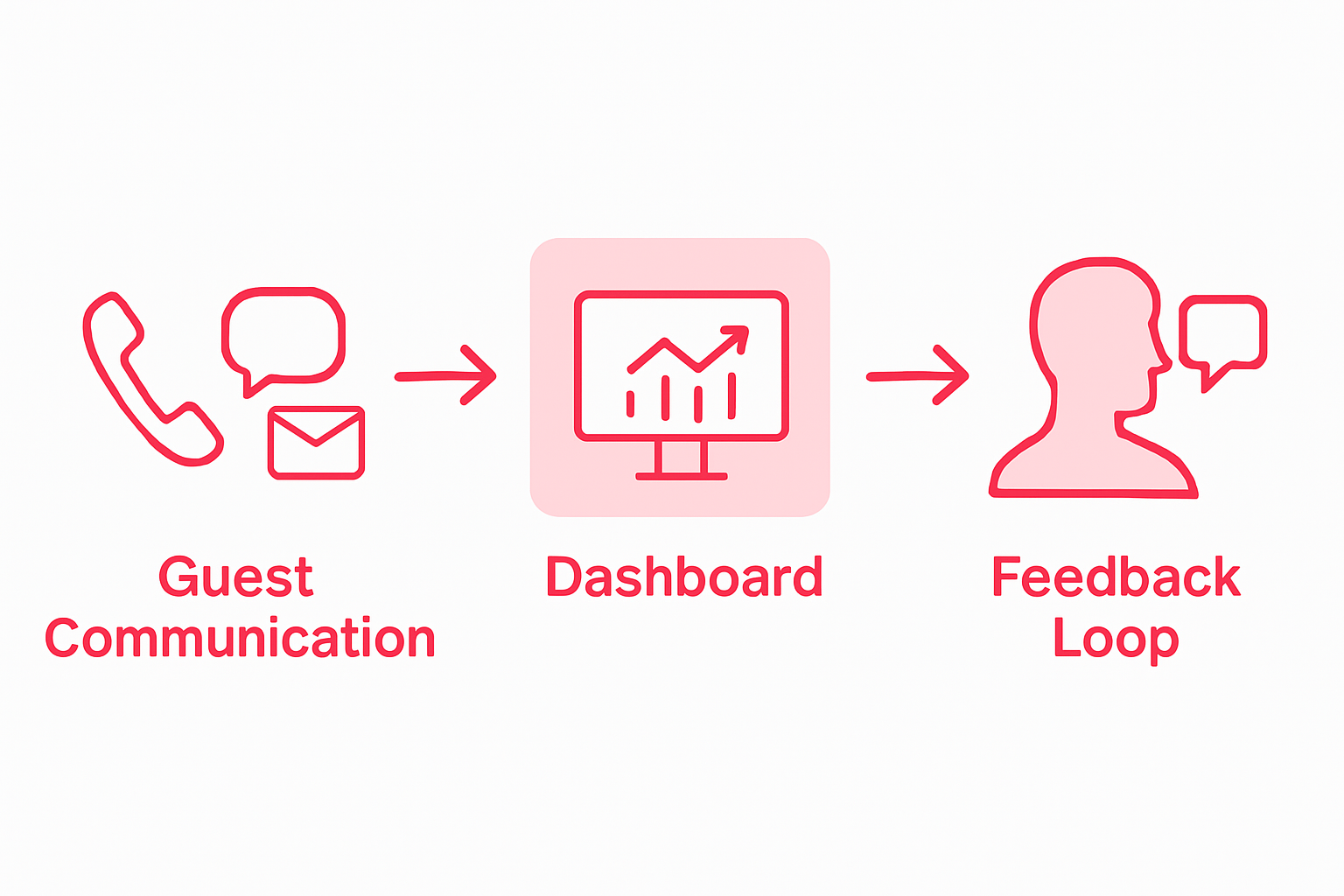
Pro Tip: Create a feedback loop that allows staff to provide insights into communication challenges. This human perspective complements technological monitoring, ensuring your interaction strategies remain both efficient and genuinely responsive to guest needs.
Step 5: Verify guest satisfaction and resolve issues
Verifying guest satisfaction is a crucial process that transforms potential challenges into opportunities for exceptional service and lasting guest relationships. Your objective is to create a proactive, empathetic approach that addresses concerns swiftly and rebuilds trust through genuine understanding.
Strategic guest request management requires developing a nuanced communication framework that prioritises empathy and constructive problem solving. Train your team to respond to complaints using positive language that acknowledges guest feelings while simultaneously offering practical solutions. Implement a structured escalation process that empowers staff to make immediate decisions, providing alternatives and compensation when necessary. Each interaction should focus on transforming a potentially negative experience into a demonstration of your commitment to guest care.
Proactive communication techniques play a critical role in satisfaction verification. Develop a comprehensive follow up strategy that includes post stay surveys, personalised feedback requests, and multiple channels for guests to share their experiences. Create mobile friendly feedback mechanisms that make it effortless for guests to communicate their thoughts. Use these insights to continuously refine your service approach, treating each piece of feedback as a valuable opportunity for improvement and demonstrating your genuine commitment to guest experience.
Pro Tip: Always respond to negative feedback personally and promptly. A genuine, thoughtful response can often transform a dissatisfied guest into a loyal advocate for your brand.
Elevate Guest Communications with Guestly Homes for Seamless, Stress-Free Stays
Managing guest communications requires a precise blend of clarity, personalisation, and promptness to create the seamless stay experience your guests deserve. This article highlights challenges such as setting up personalised channels, automating updates, and verifying satisfaction — all critical to delivering a frictionless journey from booking to check out. Key pain points include avoiding communication delays, maintaining consistent brand standards, and balancing technology with genuine human care.
At Guestly Homes, we understand these needs deeply. Our fully managed, premium homes across Sweden and the Nordics specialise in delivering stays that work quietly yet effectively for both guests and property owners. We embed hotel-grade consistency into extended stays, supporting effortless interactions that respect guest preferences and minimise needless follow-ups. With our trusted partnership models and dedicated guest interface, you can be confident every communication meets the highest standards required for truly seamless service.
Discover how Guestly Homes transforms property management and guest experiences through precise, dependable communication. Explore our tailored solutions for owners, bookers, and guests that prioritise presence without performance and support you can trust.
Ready to solve your guest communication challenges and deliver stays that flow effortlessly? Visit Guestly Homes now and learn how partnering with a 5-star operator enables you to offer calm, care, and clarity every step of the way.
Frequently Asked Questions
How can I set up personalised communication channels for my guests?
To set up personalised communication channels, integrate a robust property management system that tracks guest interactions and preferences. Begin by identifying key touchpoints and automating messages that cater to different guest profiles, such as business travellers or leisure guests.
What should I include in my information delivery standards for guest communications?
Your information delivery standards should detail tone, language complexity, response times, and content structure across all communication channels. Create templates for common scenarios like booking confirmations and post-stay communications to ensure concise and clear messaging.
How can I automate guest updates effectively?
To automate guest updates, utilise a messaging platform that triggers messages based on booking milestones. Schedule updates like pre-arrival confirmations and local recommendations to be sent automatically, ensuring guests receive relevant information at the right time.
What metrics should I monitor to evaluate guest communication effectiveness?
Monitor metrics such as average response time, first resolution rate, and guest satisfaction scores to evaluate communication effectiveness. Implement tools that analyse message tone and response quality to identify areas for improvement in your communication strategies.
How can I verify guest satisfaction and handle complaints?
To verify guest satisfaction, implement follow-up strategies such as post-stay surveys and personalised feedback requests. Train your team to respond to complaints empathetically and empower them to offer immediate solutions, turning negative experiences into positive ones.
What are the best practices for ensuring clarity and speed in guest interactions?
Best practices for clarity and speed include establishing a centralised dashboard for real-time communication insights and conducting regular audits of guest interactions. Train staff to prioritise effective and timely communication while promoting a feedback culture to continually refine messaging approaches.
Recommended
-
What is Hospitality Management? Understanding the Essentials – Guestly Homes
-
Master Check In Procedures in Hotel for 2025 Success – Guestly Homes
-
How to Maximize Guest Comfort in Corporate Housing – Guestly Homes
-
Understanding What is Guest Experience: A Comprehensive Guide – Guestly Homes
-
Complete Guide to Entertaining Guests at Home – Projector Display
-
Complete Guide to Hospitality in Corporate Events – Uproduction
-
Choosing Robes for Guests: Create Comfort and Style – Lotus Linen