

Many people confuse managed guest homes with holiday rentals or serviced apartments, missing their unique value entirely. Managed guest homes combine the space and privacy of a premium residence with the reliability and service standards of a five-star hotel. For property owners in Sweden, they offer predictable income without hands-on involvement. For HR leads coordinating extended business stays, they deliver consistent quality and cost efficiency that traditional hotels cannot match. This guide clarifies what managed guest homes truly are, how they work, and why they matter for both audiences in 2026.
Table of Contents
- What Are Managed Guest Homes And How Do They Work?
- Advantages Of Managed Guest Homes For Property Owners And Corporate Guests
- How Managed Guest Homes Compare To Other Accommodation Options
- Practical Considerations For Property Owners And HR Leads
- Discover Premium Managed Guest Homes With Guestly Homes
Key takeaways
| Point | Details |
|---|---|
| Professional management | Managed guest homes offer full-service property oversight including bookings, maintenance, and guest support without owner involvement. |
| Dual audience benefits | Property owners gain reliable income streams whilst HR leads secure cost-effective, high-quality accommodation for extended team stays. |
| Superior to alternatives | They combine home comfort with hotel reliability, outperforming traditional rentals and standard serviced apartments for stays of 10 nights to 12 months. |
| Vetted partnerships matter | Selecting trustworthy management operators ensures consistent guest satisfaction and optimal property performance. |
What are managed guest homes and how do they work?
Managed guest homes are premium properties operated by professional management companies to deliver consistent, hotel-grade experiences for extended stays. Unlike short-term rental platforms where owners handle bookings and guest communication themselves, managed homes provide fully serviced accommodation with dedicated operational teams overseeing every detail. The management company becomes the single point of contact for guests, handling everything from initial enquiries to checkout procedures.
The operational model centres on removing friction for both property owners and guests. Management services typically include:
- Professional photography and listing optimisation across booking channels
- 24/7 guest support and communication in multiple languages
- Regular property maintenance, cleaning, and quality inspections
- Dynamic pricing strategies to maximise occupancy and revenue
- Linen, toiletries, and amenity restocking between stays
- Damage protection and insurance coordination
For property owners, this translates to passive income without the stress of tenant management or emergency repair calls at midnight. You retain ownership whilst the management partner handles daily operations, guest screening, and property upkeep. Most arrangements involve either revenue sharing models where profits split between owner and operator, or fixed rental agreements where owners receive guaranteed monthly payments regardless of occupancy.
Corporate clients benefit from the consistency managed homes provide. When an HR lead books accommodation for a three-month project team, they need certainty that every property meets the same standards. Managed guest homes deliver this reliability through standardised processes, regular inspections, and professional oversight that individual landlords rarely match. The result is accommodation that functions as an extension of the workplace, supporting productivity rather than creating distractions.
Advantages of managed guest homes for property owners and corporate guests
Property owners choosing managed guest homes typically see 20% higher returns compared to traditional long-term rentals in Swedish markets. This stems from premium nightly rates that extended-stay guests willingly pay for quality and service, combined with higher occupancy rates driven by professional marketing and guest management. The financial model works because corporate clients and professionals value reliability over bargain pricing.
Beyond income, managed homes eliminate the operational burden that makes property ownership stressful. You avoid tenant disputes, late-night maintenance emergencies, and the constant communication demands of guest management. The management company absorbs these responsibilities, providing regular performance reports and handling all guest interactions. This hands-off approach particularly appeals to owners with multiple properties or those living abroad who cannot personally oversee their investments.
For HR professionals and project coordinators, managed guest homes solve the accommodation puzzle that derails team productivity. Hotels become expensive and impersonal for stays beyond a few weeks. Traditional rentals lack the service infrastructure teams need when working under pressure. Managed homes bridge this gap by offering:
- Dedicated workspace areas with reliable high-speed internet
- Fully equipped kitchens that reduce meal costs and support dietary needs
- On-demand housekeeping that maintains focus on work rather than chores
- Flexible lease terms that adapt to project timeline changes
- Single invoice billing that simplifies expense management
The cost savings reach 20% compared to extended hotel stays whilst providing significantly more space and comfort. A four-person team spending three months in managed accommodation versus hotel rooms can save their company tens of thousands of pounds whilst improving quality of life and work performance.
Guest comfort extends beyond physical amenities. Managed homes create environments where professionals can decompress after demanding workdays, maintain routines that support wellbeing, and feel genuinely at home rather than trapped in transient accommodation. This psychological benefit translates to better focus, lower stress, and ultimately stronger project outcomes.

Pro Tip: When evaluating management partners, request occupancy data and guest satisfaction scores from their existing portfolio rather than relying solely on promises. Track records reveal operational competence far better than marketing materials.
How managed guest homes compare to other accommodation options
Understanding where managed guest homes fit within the accommodation landscape helps both owners and bookers make informed decisions. Each option serves different needs, but managed homes occupy a unique position that balances multiple priorities.
Traditional hotels excel at short stays and provide consistent service, but their costs escalate rapidly beyond a week. A business traveller paying £150 per night faces £13,500 for a three-month stay in a standard room. Space constraints, lack of kitchen facilities, and the institutional atmosphere wear thin quickly. Hotels work brilliantly for conferences and brief visits, not extended living.
Serviced apartments improve on hotels by offering more space and kitchen access, but quality varies wildly between providers. Many operate with minimal on-site management, leaving guests to troubleshoot issues independently. The serviced apartment model provides a middle ground, yet rarely matches the attention to detail and responsive support that characterise properly managed guest homes.
Traditional long-term rentals offer the lowest costs but demand tenant responsibilities that business travellers cannot accommodate. Signing year-long leases, furnishing properties, managing utilities, and handling maintenance conflicts with the flexibility corporate assignments require. When a project extends or contracts unexpectedly, rigid lease terms create expensive complications.
| Accommodation Type | Privacy | Space | Service Level | Cost Efficiency | Flexibility |
|---|---|---|---|---|---|
| Managed Guest Homes | Excellent | Large | High | Very Good | Excellent |
| Hotels | Moderate | Limited | High | Poor | Good |
| Serviced Apartments | Good | Moderate | Variable | Good | Moderate |
| Traditional Rentals | Excellent | Large | None | Excellent | Poor |
Managed guest homes combine the best attributes across categories. You get the space and privacy of a rental, the service reliability of a hotel, and pricing that makes financial sense for extended stays. The home-like functionality matters enormously when accommodation becomes your primary living space for months rather than days.
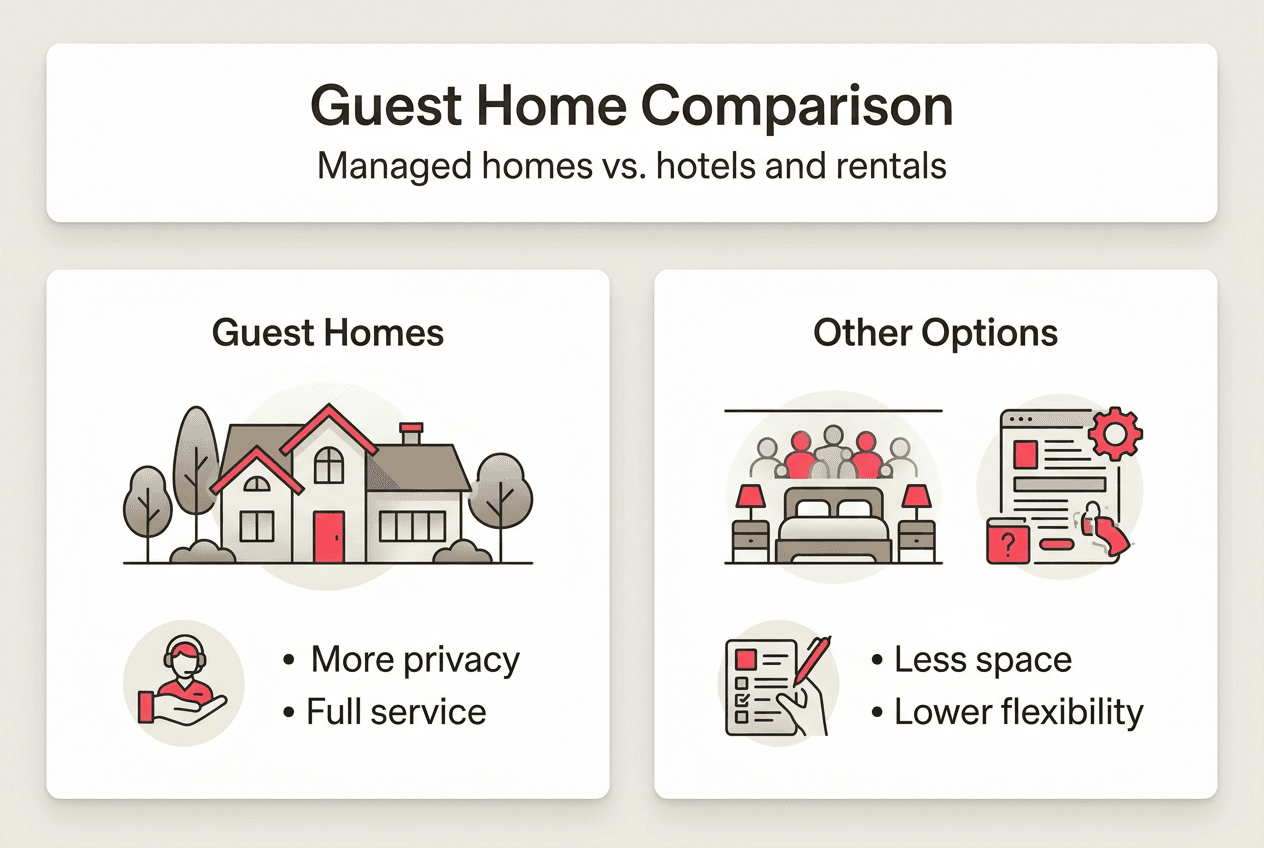
For property owners, the comparison shifts to income potential and management burden. Traditional rentals generate steady but modest returns with occasional tenant problems. Short-term rentals on platforms can yield higher income but demand constant attention and suffer from regulatory restrictions in many Swedish municipalities. Managed guest homes optimise for both income and ease, positioning properties in the premium extended-stay market whilst outsourcing all operational complexity.
The serviced accommodation model specifically designed for team stays addresses corporate needs that other options overlook. When booking for multiple people simultaneously, having properties that can house entire teams under one roof whilst maintaining individual privacy becomes invaluable. Managed homes accommodate this through careful property selection and configuration.
Practical considerations for property owners and HR leads
Successfully engaging with managed guest homes requires different approaches depending on whether you own property or book accommodation for teams. Both audiences benefit from understanding what separates exceptional management from merely adequate service.
Property owners should begin by evaluating potential management partners through these criteria:
- Request detailed financial projections showing expected occupancy rates, nightly rates, and net returns after management fees and operating costs.
- Review their existing property portfolio to assess quality standards and guest satisfaction metrics across multiple properties.
- Understand their marketing strategy, including which booking platforms they use and how they differentiate properties in competitive markets.
- Clarify the management agreement terms, particularly around contract length, exit clauses, and how major maintenance decisions get approved.
- Verify their insurance coverage, damage protection policies, and procedures for handling guest issues or property emergencies.
- Ask about their technology infrastructure for owner reporting, guest communication, and property access management.
Choosing trustworthy partners determines whether managed guest homes become a profitable, hands-off investment or a source of ongoing frustration. The best operators provide transparent reporting, proactive communication about property performance, and demonstrate genuine care for maintaining your asset’s condition and value.
HR leads and project coordinators face different but equally important considerations when booking managed accommodation:
- Start planning 8-12 weeks before team arrival to secure optimal properties, particularly in high-demand Swedish cities during peak business seasons.
- Communicate specific team needs upfront, including workspace requirements, dietary considerations for kitchen equipment, and any mobility or accessibility needs.
- Establish clear communication protocols with the management company, designating a single point of contact for booking modifications or guest support issues.
- Negotiate monthly billing cycles and payment terms that align with your company’s expense management processes rather than accepting standard terms.
- Request property viewings or virtual tours before committing, especially for longer engagements where accommodation quality directly impacts team performance.
- Clarify what services are included versus additional costs, particularly around cleaning frequency, linen changes, and amenity restocking.
The guide to managing extended stays provides frameworks that both owners and bookers can adapt to their specific situations. Success comes from treating managed guest homes as partnerships rather than transactions, where clear expectations and open communication create outcomes that satisfy everyone involved.
Pro Tip: Schedule quarterly reviews with your management partner to assess performance trends, discuss property improvements, and adjust strategies based on market changes. This proactive approach prevents small issues from becoming major problems whilst ensuring your property remains competitive.
Discover premium managed guest homes with Guestly Homes
Guestly Homes operates premium managed properties across Sweden, specialising in extended stays from 10 nights to 12 months for professionals and project teams. We handle every operational detail so property owners enjoy reliable income without involvement, whilst corporate clients secure accommodation that supports rather than hinders performance.
Our portfolio includes properties designed specifically for team stays and executive accommodation. The 5BR business villa accommodates larger groups needing dedicated workspace and meeting areas. For teams valuing relaxation alongside productivity, the 4BR villa with sauna and garden provides space to decompress after demanding workdays. Executives requiring premium surroundings appreciate the modern luxury villa with lake view, where design and function converge.
We operate as partners, not platforms. Whether you own property seeking professional management or coordinate accommodation for teams, Guestly Homes delivers the reliability and service quality that extended stays demand.
FAQ
What are the main services included in managed guest homes?
Managed guest homes typically include comprehensive booking management, regular professional cleaning, property maintenance and repairs, 24/7 guest support, and amenity restocking. Most operators also handle marketing, dynamic pricing, guest screening, and damage protection. The scope ensures owners remain completely hands-off whilst guests receive hotel-grade service throughout their stay.
How do managed guest homes benefit companies arranging extended stays?
Managed homes reduce costs by 20% compared to extended hotel stays whilst providing significantly more space and home-like comfort. Companies benefit from simplified billing, flexible lease terms that adapt to project timelines, and consistent quality across properties. Teams gain dedicated workspaces, full kitchens, and environments that support productivity rather than creating accommodation-related distractions.
What should property owners consider when choosing a management partner?
Trust and service alignment form the foundation of successful partnerships. Evaluate potential managers through their existing portfolio performance, guest satisfaction scores, and transparent financial reporting. Review contract terms carefully, particularly around revenue splits, contract length, and exit clauses. Strong operators provide regular performance updates, maintain your property’s condition as if it were their own, and communicate proactively about opportunities and challenges.
How long do typical managed guest home stays last?
Managed guest homes specialise in extended stays ranging from 10 nights to 12 months, with the sweet spot between one and six months. This duration suits corporate projects, temporary work assignments, and professionals relocating who need quality accommodation whilst establishing permanent housing. The model works less effectively for weekend breaks or annual holidays, where traditional short-term rentals or hotels serve better.
Can managed guest homes accommodate entire project teams?
Yes, many managed properties specifically cater to team accommodation with multiple bedrooms, shared living spaces, and dedicated work areas. Larger villas and multi-bedroom apartments allow teams to stay together, improving collaboration whilst maintaining individual privacy. This arrangement proves more cost-effective and productive than booking separate hotel rooms, particularly for projects lasting several months where team cohesion directly impacts outcomes.
Recommended
- Essential Guide to Managing Extended Stays for Owners – Guestly Homes
- Managed Homes Cut Executive Stay Costs by 20% in Sweden – Guestly Homes
- Complete Guide to What Property Management Companies Do – Guestly Homes
- Complete Guide to Types of Temporary Accommodation – Guestly Homes
- What Is Safari Accommodation? Complete Guide – Namibia Luxury Safaris | Book Your 2025/2026 Adventure Today