

Securing quality long-term accommodation for travelling employees often triggers more questions than answers for Swedish HR and project leads. With each placement in Piteå, Luleå, Boden, or Nyköping, decisions now involve more than just lease terms or monthly rates. The demands on modern lodging have evolved, blending comfort, compliance, and operational support into a single solution. Understanding these new standards ensures your teams receive reliable, fully serviced spaces that genuinely enhance both well-being and work performance. For Swedish enterprises managing sustained assignments, this knowledge is vital to ensuring smooth, productive stays.
Table of Contents
- What Constitutes Long-Term Lodging Today
- Key Types: Rentals, Hotels, Serviced Homes
- Essential Features and Guest Experience
- Legal Framework in Sweden and the Nordics
- Risks, Costs, and Choosing the Right Model
Key Takeaways
| Point | Details |
|---|---|
| Understanding Long-Term Lodging | Modern long-term lodging is about more than duration; it integrates quality services, operational consistency, and employee welfare. |
| Accommodation Types Comparison | Each accommodation model has distinct trade-offs: standard rentals offer independence, serviced homes provide professional support, and hotels focus on convenience. |
| Importance of Support and Responsiveness | Quality guest experience hinges on responsive support and proactive maintenance, significantly affecting team productivity and morale. |
| Legal Considerations in Sweden | It is crucial to ensure compliance with Swedish laws, including contract clarity and property management standards, to protect both the company and employees. |
What Constitutes Long-Term Lodging Today
Long-term lodging is no longer simply about securing a room for extended periods. Today, it represents a carefully structured solution that bridges housing, work continuity, and team stability. Modern definitions extend beyond duration to include service quality, operational consistency, and the ability to support professional performance across sustained stays.
The definition varies significantly based on duration and context. What qualifies as long-term differs between sectors, regions, and organisational needs. For your teams in Piteå, Luleå, Boden, and Nyköping, understanding these distinctions directly affects your budgeting, contract negotiations, and team welfare outcomes.
Duration and Modern Standards
Historically, long-term lodging simply meant renting a space for weeks or months. Today, sustained stays in urban environments reflect far more complex dynamics—work cycles, labour migration patterns, and the need for residential stability that supports both productivity and employee wellbeing.
Current industry standards define long-term lodging in these timeframes:
- 10 nights to 3 months – Short extended stays for project work or temporary relocations
- 3 to 6 months – Mid-term assignments, seasonal projects, or team rotations
- 6 to 12 months – Long-term placements, management transitions, or sustained operations
- 12+ months – Permanent relocation or long-term infrastructure projects
What Sets Modern Long-Term Lodging Apart
Today’s expectations go far beyond a furnished room. Your teams require fully serviced, hotel-grade accommodation that functions like a home—not a temporary fix. This means:
- Operational consistency across multiple properties and locations
- All-inclusive services (utilities, maintenance, cleaning, guest support)
- Professional standards applied to every detail: furnishings, connectivity, cleanliness
- Flexibility in contracts that reflect actual project timelines, not rigid lease terms
Modern long-term lodging is measured not just by duration, but by how seamlessly accommodation supports your team’s ability to perform.
The Swedish Enterprise Context
For Swedish organisations, long-term lodging today carries specific expectations shaped by Nordic values: quality over economy, transparency in agreements, and genuine care for resident welfare. Your teams expect accommodation that reflects Swedish standards for design, functionality, and responsible property management.

When evaluating solutions, consider whether providers offer secure, long-term accommodation specifically structured for business stays. This distinction matters. A furnished apartment is not the same as managed accommodation designed for professional teams.
Key Characteristics of Reliable Long-Term Solutions
What distinguishes premium long-term lodging from standard rentals?
- Single point of contact for all guest issues (no landlord chase)
- Fixed, transparent pricing with no surprise charges
- Property maintenance and repairs handled immediately, not delayed
- Guest support available throughout the stay
- Consistent quality standards across all properties
- Flexible terms aligned to actual project duration
These aren’t luxuries—they’re operational necessities that prevent disruption, protect your team’s productivity, and reduce HR administrative burden.
Pro tip: When evaluating long-term lodging providers, ask specifically about their support model during stays and how they handle maintenance issues. Response time directly affects your team’s actual time at work.
Key Types: Rentals, Hotels, Serviced Homes
When securing long-term accommodation for your teams, you’re choosing between fundamentally different models, each with distinct trade-offs. Understanding these categories helps you match the right solution to your specific project needs, budget constraints, and team welfare priorities.
Each type serves different purposes. Standard rentals prioritise independence and cost efficiency. Hotels emphasise service and convenience. Serviced homes bridge both worlds—offering the comfort of a home with professional support when you need it.
To clarify the distinctions between long-term lodging models, here’s a concise comparison:
| Model Type | Typical Use Case | Operational Burden | Cost Predictability |
|---|---|---|---|
| Standard Rental | Stays over 12 months | High (self-managed issues) | Variable, depends on negotiations |
| Serviced Home | 10 nights–12 months, teams | Low (provider manages support) | Fixed, transparent pricing |
| Commercial Hotel | Short stays, premium service | Minimal involvement | Highest, daily rate inflates over time |
Standard Rentals
Traditional furnished apartments and houses remain a common choice, particularly for cost-conscious organisations or extended placements beyond twelve months. You lease directly from a landlord or agency, often signing longer contracts with fixed terms.
What you get:
- Lower monthly costs compared to hotels or serviced homes
- Full independence in how your team uses the space
- Genuine kitchen facilities for cooking and meal preparation
- Space and privacy suited to longer stays
- No daily housekeeping or concierge services included
The challenge with standard rentals is operational burden. Maintenance issues fall to you or your team. There’s no single point of contact. A broken heating system means chasing a landlord, not calling guest support. For Swedish enterprises valuing frictionless operations, this friction compounds across multiple properties and team members.
Commercial Hotels
Hotels provide consistent hospitality services with daily housekeeping, front desk support, and amenities designed for short-term guests. They work well for brief visits, but become inefficient and expensive for team stays lasting weeks or months.
Hotel strengths:
- Immediate maintenance and housekeeping support
- Consistent quality standards across chains
- No tenant responsibility for property upkeep
- Hotel amenities (gyms, restaurants, business facilities)
- Flexible check-in and check-out
Hotel limitations for long-term stays:
- Daily rates compound significantly over months (typically 40–60% more expensive than serviced homes)
- Designed for transient guests, not residents establishing routines
- No cooking facilities; limited kitchen access
- Commercial environment that doesn’t feel like home
- Team members often feel temporary rather than settled
Serviced Homes and Apartments
Serviced homes represent the modern standard for professional team stays. These are fully furnished, professionally managed properties with optional services—cleaning, maintenance, concierge, and guest support—included or readily available.
Why serviced homes excel for your needs:
- Professional management – Single point of contact handles all issues
- Fully furnished and equipped – Move in, no shopping for basics
- Predictable costs – Fixed monthly pricing, no surprise charges
- Hotel-grade consistency – Quality standards applied uniformly
- Home-like environment – Kitchens, living spaces, and privacy for genuine residence
- Flexible terms – Contracts aligned to actual project duration, not rigid landlord leases
Serviced homes eliminate the operational friction of standard rentals whilst avoiding the cost inefficiency of extended hotel stays.
For your teams in Piteå, Luleå, Boden, and Nyköping, serviced homes provide the operational reliability Swedish enterprises expect—transparent agreements, quality-first thinking, and genuine care for team welfare.
Making the Right Choice
Consider your priorities:
- Cost-first, duration 12+ months – Standard rental
- Short visits, premium service – Hotel
- Professional teams, 10 nights to 12 months – Serviced home
Pro tip: Evaluate serviced home providers on their response time for maintenance issues and guest support availability. A 24-hour response commitment directly protects your team’s productivity and project timeline.
Essential Features and Guest Experience
Guest experience isn’t a single moment—it’s the sum of every interaction your team has from the moment they book until they leave. For long-term stays, this accumulation matters profoundly. A single frustration on day one compounds across weeks or months. Conversely, consistent, thoughtful service builds genuine satisfaction and team retention.
The best long-term accommodation providers understand that guest experience spans every touchpoint from booking through checkout, shaped by both tangible features and human responsiveness. Your teams don’t just need a place to sleep—they need an environment that supports their work, respects their time, and responds when things go wrong.
Physical Features That Matter
The foundation of guest experience is a space designed for actual living. This isn’t hotel aesthetics; it’s functional comfort aligned to how professional teams actually work.
Essential features include:
- High-speed, reliable connectivity – Non-negotiable for remote work and video calls
- Separate workspace – Desk, chair, quiet environment distinct from sleeping areas
- Full kitchen – Proper cooking facilities, not a kitchenette
- Climate control – Heating, cooling, and humidity management for comfort
- Quality furnishings – Beds, sofas, and chairs built for extended use
- Adequate storage – Wardrobes, shelving for a month-long stay minimum
- Laundry facilities – Washing machine access or regular laundry service
The Service Layer
Features alone don’t create experience. How providers support your team during the stay determines whether accommodation becomes an asset or a distraction.
Critical support elements:
- Single point of contact – One person or team handles all guest issues
- 24-hour response availability – Urgent problems don’t wait until morning
- Proactive maintenance – Issues fixed before guests report them
- Guest communication clarity – Clear instructions, policies, and support channels
- Flexibility within reason – Early checkout extensions, extra keys, special requests handled pragmatically
Guest experience in long-term stays thrives when physical comfort meets consistent, human responsiveness.
The Often-Overlooked Details
Small things reveal whether a provider genuinely understands team stays or merely offers accommodation.
These details matter:
- Welcome packs with local information, emergency contacts, and practical basics
- Fresh linens and toiletries provided without asking
- Clear house rules that respect guest privacy whilst protecting property
- Quiet hours policies that balance community and individual rest
- Transparent communication about property rules and expectations
For Swedish enterprises, these details reflect values: predictability, respect, and care. They signal whether a provider sees your team as temporary guests or as residents worthy of consideration.
Measuring What Works
Ask potential providers how they measure guest satisfaction. Legitimate long-term operators track satisfaction actively, not reactively through complaints. They should be able to show you response times, issue resolution rates, and genuine guest feedback—not marketing testimonials.
Your teams staying in well-managed accommodation experience measurably better project outcomes: fewer distractions, better focus, and reduced stress about their living situation. This directly protects your project timeline and team welfare.
Pro tip: Before committing to a long-term provider, request references from previous corporate teams—specifically asking about response times during stays and how they handled urgent maintenance issues.
Legal Framework in Sweden and the Nordics
Sweden’s approach to long-term lodging and residential arrangements is underpinned by a robust legal framework that protects both residents and operators. Understanding this framework is essential for HR managers and project leads navigating accommodation arrangements for teams across Swedish cities and the broader Nordic region.
Unlike many European countries where residential lodging operates in legal grey areas, Sweden’s system is structured, transparent, and aligned with Nordic values: individual rights, quality assurance, and clear accountability. This clarity protects your organisation, your teams, and your accommodation providers.
Core Legal Foundations
Swedish long-term lodging frameworks are grounded in the Social Services Act and related housing legislation, emphasising quality standards, resident rights, and coordination across municipal, regional, and national authorities. This multi-level responsibility structure ensures consistent oversight and protection.
Key legislative areas:
- Rental law – Governs contract terms, tenant protections, and landlord obligations
- Property management regulations – Define standards for maintenance, safety, and habitability
- Employment and relocation law – Covers company obligations when relocating employees
- Data protection (GDPR) – Applies strictly to guest information and booking records
- Health and safety standards – Building codes, fire safety, and environmental requirements
These aren’t bureaucratic hurdles; they’re protections ensuring your team lives in safe, well-maintained spaces with clear dispute resolution mechanisms.
Practical Implications for Your Organisation
When securing long-term accommodation, several legal considerations directly affect your contracts and obligations.
Critical points:
- Contract clarity – Agreements must explicitly define duration, costs, inclusions, and exit terms
- Tax and insurance implications – Long-term lodging arrangements may affect tax classification and insurance requirements
- Employee rights – Teams have legal protections regarding accommodation standards and termination notice periods
- Data handling – Guest information must comply with Swedish data protection standards
- Disability access – Properties must meet accessibility requirements under Swedish law
Swedish legal frameworks protect residents through clear rights, transparent agreements, and enforceable quality standards—not through reactive complaints.
Choosing Compliant Providers
When evaluating accommodation providers, compliance with Swedish law isn’t optional—it’s foundational. Legitimate operators maintain insurance, follow employment law, honour tenant protections, and operate transparently.
Verify that providers can demonstrate:
- Valid business registration and tax compliance
- Property ownership or explicit management authority
- Insurance coverage for guest liability and property damage
- Clear, written agreements aligned with Swedish rental law
- Transparent pricing with no hidden fees
- Documented safety certifications and maintenance records
Providers struggling to document these basics may indicate legal or operational risks. Swedish enterprises expect accountability; providers operating in this market should meet those expectations.
Nordic Regional Considerations
If your teams operate across Norway, Denmark, or Finland as well as Sweden, note that each country has distinct rental frameworks. Norwegian tenant protections differ from Swedish ones; Danish agreements operate under separate law.
For multi-country placements, work with providers experienced across Nordic jurisdictions. They understand local variations and can ensure consistent compliance across your team’s locations.
Pro tip: Request explicit confirmation from providers that they understand and comply with Swedish rental law, including documentation of insurance, tax registration, and adherence to tenant protection standards.
Risks, Costs, and Choosing the Right Model
Long-term lodging decisions involve trade-offs between cost, control, and complexity. Understanding these trade-offs prevents poor decisions that drain budgets, create operational friction, or leave teams in unsuitable accommodation.
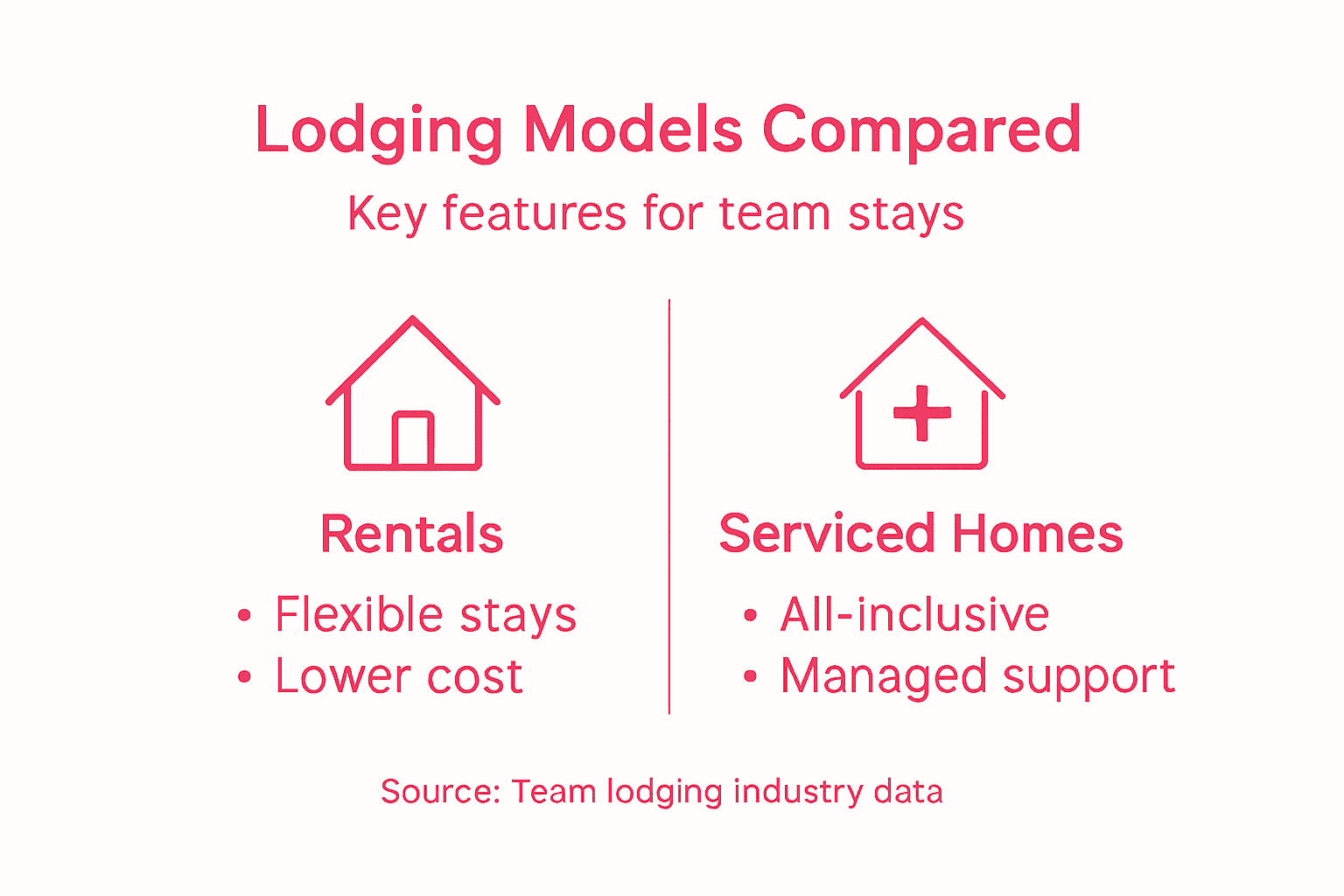
Every accommodation model carries distinct financial and operational risks. Your task is matching the right model to your specific constraints: project duration, team size, budget flexibility, and operational capacity.
Cost Structures Across Models
Costs vary dramatically by model. Understanding what you’re actually paying for separates smart decisions from budget surprises.
Typical monthly costs per person (Swedish market estimates):
- Standard rental – SEK 8,000–12,000 (lower cost, higher operational burden)
- Serviced apartment – SEK 12,000–18,000 (all-inclusive, predictable costs)
- Hotel – SEK 18,000–28,000+ (highest cost, lowest operational involvement)
These figures include only accommodation. Hidden costs often emerge later: cleaning deposits, maintenance emergencies, admin time chasing landlords, or premium charges for short-notice issues.
For informed budget planning, see estimated monthly costs and hidden factors in Sweden:
| Accommodation Type | Estimated Monthly Cost (SEK) | Common Hidden Expenses |
|---|---|---|
| Standard Rental | 8,000–12,000 | Deposit disputes, admin hours |
| Serviced Apartment | 12,000–18,000 | Limited negotiation, service variation |
| Hotel | 18,000–28,000+ | Rate jumps, meal costs, peak season surcharges |
Financial and Operational Risks
Each model presents distinct risk profiles. Recognising these prevents costly mistakes.
Standard rental risks:
- Maintenance emergencies fall entirely to you (heating failure mid-winter)
- Deposit disputes after checkout consume time and money
- Vacancy periods mean you’re paying rent with no occupant
- Landlord disputes over normal wear and tear
- Limited recourse if properties fall below your standards
Hotel risks:
- Exponential cost growth over weeks and months
- Limited space for team activities or meal preparation
- Less suitable for genuine “home” experience
- Rate inflation during peak seasons
Serviced home risks:
- Provider quality varies; poor operators create guest dissatisfaction
- Fixed pricing leaves no room for negotiation mid-stay
- Dependency on single provider for all support
The Profitability and Satisfaction Balance
Research shows that long-term lodging profitability depends on balancing occupancy rates, maintenance costs, and guest satisfaction. Higher guest satisfaction correlates with better long-term outcomes, even when pricing pressures exist.
This matters for your team selection. Poor accommodation creates dissatisfaction that compounds across weeks. Your team’s productivity, morale, and project success depend partly on living conditions you control.
The cheapest accommodation model often creates the highest hidden costs through operational friction and team dissatisfaction.
Evaluating Long-Term Rental Market Dynamics
Long-term rental profitability varies across European markets, influenced by regulatory frameworks, occupancy rates, and operational costs. Sweden’s stable regulatory environment and predictable tenant protections make long-term lodging more reliable than in less regulated markets.
Key evaluation factors:
- Occupancy predictability – How certain is consistent availability?
- Price stability – Can costs remain fixed across your contract term?
- Regulatory environment – Swedish protections work in your favour
- Exit flexibility – Can you adjust if project scope changes?
- Operational support – Who handles problems at 2 a.m.?
Choosing Your Model
Match your priorities to the right solution:
Standard rental – Choose if duration exceeds 12 months, budget is fixed, and your team tolerates operational uncertainty.
Serviced home – Choose for 10 nights to 12 months, professional teams, and operations-light priorities. Most Swiss enterprises select this.
Hotel – Choose only for stays under 4 weeks or when your team requires daily housekeeping and full amenities.
Pro tip: Calculate true costs including your own admin time (landlord chasing, dispute resolution, coordination). Serviced homes often cost less when you factor in labour costs avoided.
Unlock Seamless Long-Term Lodging Solutions for Your Teams
Managing long-term accommodation for professional teams requires more than just securing a space. The challenges of operational consistency, timely maintenance, and a true home-like environment are crucial to support your team’s productivity and wellbeing as detailed in the article. Guestly Homes understands these pain points and offers fully managed serviced homes that combine hotel-grade standards with the comfort of a real home — tailored precisely for stays from 10 nights to 12 months across Sweden and the Nordics.
With Guestly Homes, say goodbye to the hassles of chasing landlords or unpredictable rental conditions. Enjoy transparent pricing, a single point of contact for every issue, and properties designed to meet the needs of professionals working on complex projects. Discover how we enable hassle-free living that aligns perfectly with your organisation’s expectations for quality, compliance, and operational reliability.
Explore our unique model and trusted solutions at Guestly Homes today.
Experience the difference that expert long-term lodging management brings. Start your seamless team stay journey now by visiting Guestly Homes. Let us handle your accommodation challenges so your teams can focus on what truly matters — performing at their best without distraction.
Frequently Asked Questions
What is considered long-term lodging?
Long-term lodging typically refers to stays ranging from 10 nights to over a year, with an emphasis on functional support that enables professional performance during extended stays. It includes fully serviced accommodations that provide operational consistency and quality amenities.
What are the benefits of choosing serviced homes for long-term stays?
Serviced homes offer a home-like environment with professional management, predictable costs, and all-inclusive services. They are designed for comfort and convenience, with facilities that help teams feel settled and supported during their stay.
How do I choose between a standard rental and a serviced home?
Standard rentals are suitable for stays over 12 months and offer lower costs but come with higher operational responsibilities. Serviced homes are ideal for shorter stays or team assignments, providing low operational burdens and predictable pricing, making them a more convenient choice for professionals.
What should I look for in a long-term lodging provider?
When evaluating providers, consider aspects like clear and transparent pricing, responsiveness to maintenance requests, the quality of facilities, and whether they provide a single point of contact for all guest issues. These factors significantly impact your team’s experience and productivity.