


Owning a premium apartment or villa in Piteå, Luleå, Boden, or Nyköping presents both opportunity and complexity. The Swedish rental market offers promising income, but successful property management depends on accurate performance tracking and risk awareness. By understanding regional market trends and evaluating your management options, you can strengthen income security while maximising returns. This guide reveals proven strategies for balancing profitability and peace of mind in Sweden’s evolving property landscape.
Table of Contents
- Step 1: Assess Current Rental Performance And Identify Risk Factors
- Step 2: Compare Self-Management, Long-Term Letting, And Professional Operators
- Step 3: Optimise Pricing Strategy And Occupancy Rates For Stable Income
- Step 4: Upgrade Furnishings And Amenities To Attract Premium Guests
- Step 5: Implement Robust Screening And Minimise Wear And Tear
- Step 6: Verify Income Stability And Evaluate Long-Term Value Potential
Quick Summary
| Key Point | Explanation |
|---|---|
| 1. Assess Rental Performance Regularly | Conduct thorough evaluations of rental income, occupancy rates, and operating expenses to identify risks and optimise management strategies. |
| 2. Understand Management Options | Evaluate self-management, long-term letting, and professional operators to determine the ideal approach for your financial goals and time availability. |
| 3. Implement Dynamic Pricing Strategies | Adjust rental rates based on market demand, seasonal trends, and local economic conditions to enhance occupancy rates and revenue stability. |
| 4. Upgrade to Attract Premium Tenants | Invest in high-quality furnishings and modern amenities to increase property appeal and justify higher rental prices in competitive markets. |
| 5. Conduct Rigorous Tenant Screening | Use comprehensive background checks and evaluation criteria to select reliable tenants and protect your property from potential damages. |
Step 1: Assess current rental performance and identify risk factors
Successfully managing your rental property starts with a comprehensive performance assessment. This critical first step will help you understand your investment’s current status and potential vulnerabilities.
Begin by gathering detailed financial data about your property’s rental history. European market analysis indicates significant variations in rental income across different regions, making precise tracking essential. Key metrics to examine include:
- Annual rental income over the past 3-5 years
- Occupancy rates for each month
- Average rental duration of current tenants
- Net operating income after expenses
To identify potential risk factors, evaluate economic indicators that might impact your property’s performance. Financial stability research764351_EN.pdf) highlights several crucial macroeconomic elements to consider:
- Local inflation rates
- Interest rate trends
- Regional employment statistics
- Property market valuation in your specific area
Professional property management requires a proactive approach to risk assessment and performance tracking.
Compare your current performance against local market benchmarks to understand your property’s competitive positioning. Look for opportunities to optimise rental strategies, such as adjusting pricing, improving property features, or targeting specific tenant demographics.
Pro Tip: Consider hiring a professional property performance audit service to gain an unbiased, comprehensive evaluation of your rental asset’s potential and risks.
Step 2: Compare self-management, long-term letting, and professional operators
Navigating the complex landscape of rental property management requires a strategic approach to balancing income potential with operational efficiency. Understanding the nuanced differences between self-management, long-term letting, and professional operators can significantly impact your investment’s financial performance.
Property management strategies reveal distinct advantages and challenges for each approach. Let’s break down the key considerations:
Self-Management Options:
- Direct control over tenant selection
- Potentially lower upfront management costs
- Requires significant personal time investment
- Higher risk of legal compliance challenges
Long-Term Letting Approach:
- More stable income streams
- Reduced tenant turnover
- Lower administrative overhead
- Limited flexibility in property usage
Professional Operator Model:
- Comprehensive legal and operational support
- Advanced marketing and tenant screening
- Predictable income management
- Professional maintenance networks
Strategic property management is about finding the right balance between control, efficiency, and financial returns.
Comparative rental property analysis indicates that professional operators typically reduce overall management stress while potentially optimising rental income through sophisticated pricing and tenant placement strategies.
Ultimately, your choice depends on your personal time availability, risk tolerance, and financial goals. Professional operators offer a hands-off approach that can mitigate risks and streamline your property’s performance.
To help clarify your management choices, here’s a comparison of key rental property management options:
| Aspect | Self-Management | Long-Term Letting | Professional Operator |
|---|---|---|---|
| Control | Direct, hands-on | Moderate oversight | Limited, fully outsourced |
| Required Expertise | Legal and admin skills | Basic tenant management | Industry-specific knowledge |
| Income Predictability | Variable, affected by gaps | Consistent, subject to fewer gaps | Highly predictable, regular payments |
| Time Commitment | High, frequent involvement | Moderate, periodic tasks | Low, minimal owner interaction |
| Risk Management | Owner-led, higher liability | Reduced through lease structure | Expert-led, risk mitigation strategies |
Pro Tip: Create a detailed spreadsheet comparing the potential annual costs, time commitments, and projected returns for each management approach before making your final decision.
Step 3: Optimise pricing strategy and occupancy rates for stable income
Maximising your rental property’s financial performance requires a sophisticated approach to pricing and occupancy management. By understanding market dynamics and implementing strategic pricing techniques, you can create a stable and profitable rental strategy.
Rental market research reveals critical insights into effective pricing strategies that balance affordability and income potential. Consider these key approaches:
Dynamic Pricing Strategies:
- Adjust rates based on seasonal demand
- Monitor local market trends
- Implement flexible pricing algorithms
- Create tiered pricing structures
Occupancy Optimisation Techniques:
- Analyse historical booking patterns
- Identify peak and off-peak periods
- Develop targeted marketing campaigns
- Offer competitive long-term stay incentives
Successful rental income management requires continuous adaptation and strategic pricing intelligence.
Housing market affordability studies demonstrate that properties with competitive, data-driven pricing achieve higher occupancy rates and more consistent income streams. This approach involves carefully balancing rental rates with local wage levels and market expectations.
To maintain stable income, develop a comprehensive pricing model that accounts for local economic conditions, property features, and seasonal variations. Regularly review and adjust your strategy to remain competitive and attractive to potential tenants.
Pro Tip: Invest in rental market analysis software that provides real-time pricing recommendations and occupancy trend insights to stay ahead of market fluctuations.
Step 4: Upgrade furnishings and amenities to attract premium guests
Transforming your rental property into an attractive, high-end space requires strategic investments in furnishings and amenities that appeal to discerning tenants. By carefully selecting quality upgrades, you can significantly enhance your property’s market value and rental income potential.

European real estate trends indicate that modern tenants prioritise sophisticated, well-designed living spaces that offer more than basic accommodation. Consider these strategic upgrades:
Essential Premium Furnishing Elements:
- High-quality, contemporary furniture
- Ergonomic workspace solutions
- Smart home technology integration
- Minimalist, neutral colour palettes
Advanced Amenity Improvements:
- High-speed fibre optic internet
- Dedicated workspace with ergonomic equipment
- Professional-grade kitchen appliances
- Energy-efficient lighting systems
Premium properties command higher rents by delivering exceptional living experiences, not just basic shelter.
Rental market economic analysis confirms that properties with superior amenities can justify higher rental rates, especially in competitive urban markets.
Invest thoughtfully in upgrades that genuinely enhance tenant comfort and productivity. Focus on quality over quantity, selecting items that demonstrate long-term durability and aesthetic sophistication.
Pro Tip: Consult local interior design professionals who specialise in corporate housing to ensure your property upgrades align with current professional tenant expectations.
Step 5: Implement robust screening and minimise wear and tear
Protecting your rental property investment requires a strategic approach to tenant selection and property maintenance. By implementing comprehensive screening processes and proactive preservation strategies, you can significantly reduce financial risks and maintain your property’s long-term value.
Comprehensive tenant screening involves a multi-layered approach to evaluating potential tenants’ reliability and suitability. Essential screening components include:
Tenant Screening Criteria:
- Detailed credit history checks
- Employment verification
- Previous rental reference reviews
- Background and criminal record assessments
- Income stability evaluation
Property Preservation Strategies:
- Establish clear property usage guidelines
- Document existing property condition thoroughly
- Schedule regular professional inspections
- Use durable, high-quality materials
- Implement strategic maintenance protocols
Effective tenant screening is your first line of defence against potential property damage and financial uncertainty.
Property wear and tear management emphasises the importance of setting clear expectations and implementing protective measures. This approach helps maintain your property’s condition while supporting positive tenant relationships.
By combining rigorous tenant screening with proactive maintenance strategies, you create a robust system that protects your investment, reduces unexpected expenses, and supports consistent rental income.
Pro Tip: Create a comprehensive onboarding document for tenants that clearly outlines property care expectations, maintenance responsibilities, and potential consequences of property damage.
Step 6: Verify income stability and evaluate long-term value potential
Understanding the financial resilience of your rental property requires a comprehensive approach to assessing income predictability and future market potential. By systematically evaluating economic indicators and tenant financial profiles, you can develop a robust strategy for sustainable rental income.
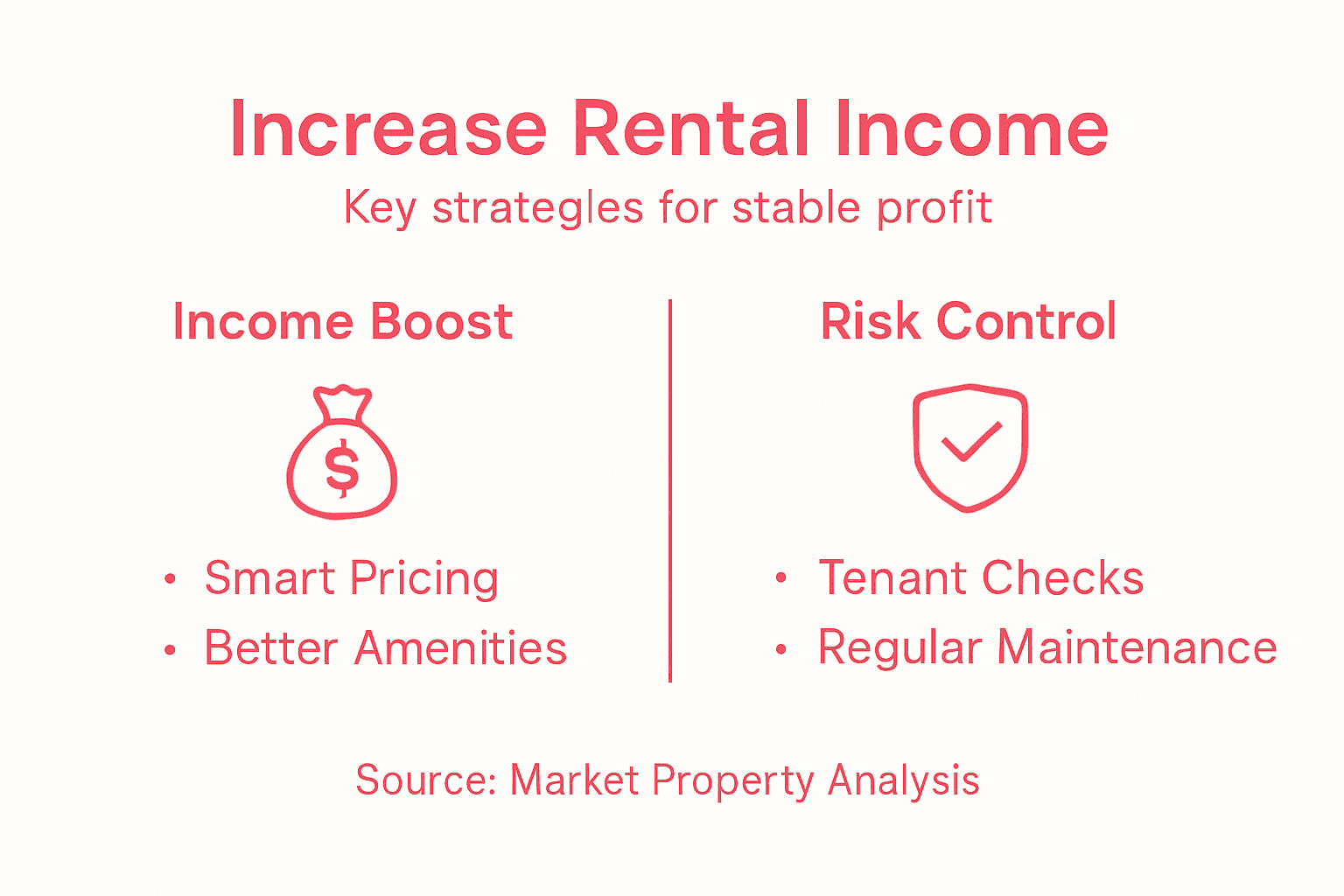
Financial stability review emphasises the critical importance of examining multiple economic dimensions when assessing rental property value. Key evaluation criteria include:
Income Stability Assessment:
- Verify employment contract duration
- Analyse salary consistency
- Review debt-to-income ratios
- Assess career trajectory and stability
- Examine industry sector economic health
Long-Term Value Indicators:
- Local infrastructure development
- Neighbourhood economic trends
- Projected population growth
- Regional employment market dynamics
- Future urban planning initiatives
Long-term property value transcends current rental income – it’s about strategic positioning and future potential.
Rental sector research reveals that properties with stable income profiles attract more reliable tenants and demonstrate superior investment performance.
Combine quantitative financial analysis with qualitative market insights to build a comprehensive understanding of your property’s true economic potential. This holistic approach helps mitigate risks and maximise long-term returns.
For a quick overview, consider these factors when evaluating your property’s future potential:
| Indicator | Impact Area | Long-Term Benefit |
|---|---|---|
| Infrastructure Projects | Transport and amenities | Higher property demand |
| Population Growth | Local housing needs | Increased rental prices |
| Employment Trends | Workforce stability | Lower tenant turnover |
| Urban Planning Initiatives | Area regeneration | Improved capital value |
Pro Tip: Consider engaging a professional property valuation expert who can provide independent, data-driven insights into your rental property’s current and projected market value.
Unlock Stable and Increased Rental Income with Expert Partnership
Managing rental properties while reducing risk and maximising returns is a challenge many owners face. This article reveals how optimising pricing strategies, thorough tenant screening, and upgrading amenities can drive income growth without exposing you to unnecessary risk. If these goals resonate with you, it is time to consider a management solution that delivers predictable income, professional oversight, and hassle-free performance.
At Guestly Homes, we specialise in fully managed, premium homes crafted for extended stays across Sweden and the Nordics. Our unique blend of revenue share and arbitrage models provides property owners with flexible, stable earnings and expert risk management. Benefits include:
- A trusted, hands-off service designed to protect and enhance your property value
- Consistent, high-margin income tailored to market dynamics and tenant expectations
- Access to professional tenant screening and superior maintenance protocols
Explore how Guestly Homes can transform your rental property into a high-performing asset today.

Take control of your rental income strategy with a partner who values your property as much as you do. Visit Guestly Homes now to learn more about seamless property management solutions built for confidence and long-term profitability.
Frequently Asked Questions
How can I assess my rental property’s current performance?
To assess your rental property’s current performance, gather financial data such as annual rental income, occupancy rates, and net operating income. Begin by tracking these metrics over the past 3-5 years to identify any trends and potential risks.
What are the main factors to consider when choosing between self-management and professional property management?
The main factors include the level of control you want, your expertise in legal and administrative tasks, and the time you can commit. For instance, if you prefer a hands-off approach and are busy with other responsibilities, consider hiring a professional operator to manage your property efficiently.
What pricing strategies can help increase rental income without raising risks?
Implement dynamic pricing strategies by adjusting rental rates based on seasonal demand and local market trends. Consider using tiered pricing to attract different tenant demographics, which may help enhance occupancy rates and generate consistent income.
How can I choose the right furnishings and amenities to attract higher-paying tenants?
To attract premium guests, invest in high-quality furniture, ergonomic workspace solutions, and smart home technology. Start by upgrading your property with essential premium furnishings, which could justify rental increases by 10-20%.
What steps should I take to effectively screen tenants and minimise property wear and tear?
Establish a comprehensive tenant screening process that includes credit history checks and previous rental reference reviews. Create a detailed property condition document and conduct regular inspections to maintain your property’s value and reduce potential damage.
How can I evaluate the long-term value potential of my rental property?
Evaluate the long-term value of your property by analysing local infrastructure developments, neighbourhood economic trends, and projected population growth. By understanding these indicators, you can make informed decisions that enhance your property’s appeal and maximise returns over time.