

TL;DR:
- Feeling at home during a temporary work assignment depends on making intentional choices in the first days of arrival. Addressing comfort, routines, and social connections reduces relocation stress and promotes mental wellbeing.
Feeling at home during a temporary work assignment is defined by the intentional choices you make in the first days of arrival, not by the length of your stay. Professionals on extended assignments, whether in Stockholm, Gothenburg, or any Nordic city, face a recognised psychological challenge: the brain resists settling when it perceives a space as temporary. Routine, functional comfort, and social integration are the three pillars of successful adjustment to temporary living. Address all three and relocation stress reduces significantly. Neglect them and the assignment becomes harder than the work itself.
How to feel at home during a temporary work assignment: personalise your space first
Setting up your bedroom, kitchen, and bathroom immediately after arrival is the single most effective first step. These three areas govern sleep, nutrition, and personal hygiene. When they function well, the rest of the assignment follows more smoothly. Prioritising functional spaces from day one anchors your daily routine before disorientation sets in.
Unpacking clothes into storage immediately signals to the brain that the accommodation is a residence, not a transit point. Living out of a suitcase prolongs transitional stress in a measurable way. Treating the space as a controlled sanctuary, rather than a temporary holding area, improves mental wellbeing throughout the stay.
Avoid overly themed or heavily curated décor. Neutral, timeless design helps professionals mentally project themselves into a space rather than observe it from a distance. Natural materials and understated tones, consistent with Scandinavian interior principles, work particularly well. They invite presence rather than performance.
Here is a practical sequence for personalising your temporary accommodation:
- Unpack all clothing and toiletries on day one. Do not leave items in bags or cases beyond the first evening.
- Place one or two personal photographs in visible spots. The bedroom and the main living area are the most effective locations.
- Bring a sensory anchor from home. A favourite candle, a travel diffuser, or a familiar pillow cover provides neurological stability in an unfamiliar environment.
- Create defined zones. Designate one area for work, one for rest, and one for meals. Even in a studio, physical separation of activities supports mental clarity.
- Use smart storage. Baskets, drawer organisers, and shelf dividers reduce visual clutter and make a small space feel considered rather than cramped.
Pro Tip: Pack a small pouch of sensory anchors before every assignment. A travel diffuser with a familiar scent, a compact photo frame, and a favourite mug weigh almost nothing but change the feel of a space within hours of arrival.
Natural and sustainable décor elements, such as bamboo accessories or linen textiles, reinforce a calm, grounded atmosphere. These additions cost little and require no permanent changes to the property.
How can routines and social connections build a sense of belonging?
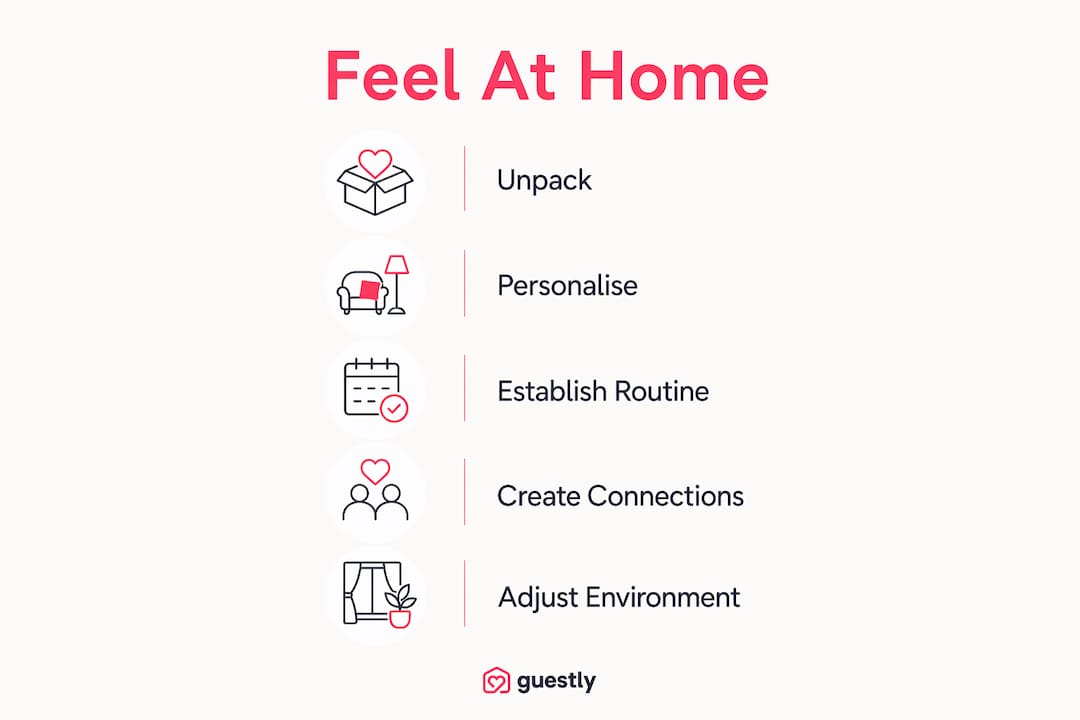
Establishing stable routines within the first weeks reduces loneliness and accelerates adjustment. The mechanism is straightforward: predictable daily anchors reduce the cognitive load of navigating an unfamiliar environment. When you know where you will have your morning coffee and when you will exercise, the rest of the day feels more manageable.
Saying yes to social invitations during the first 90 days of an assignment facilitates meaningful connections. This is not about socialising for its own sake. It is about building the kind of low-level familiarity with people and places that makes a city feel less foreign.
Practical tactics for building routine and connection include:
- Select one local café and visit it regularly. Familiarity with a space and its staff creates a quiet sense of belonging that accumulates over weeks.
- Join a gym, running club, or fitness class near your accommodation. Physical activity combined with social repetition is one of the most effective tools for reducing relocation stress.
- Attend at least one work social event per month. Colleagues who know you outside of meetings become a support network, not just professional contacts.
- Find a green space and use it consistently. A park, a waterfront path, or a quiet square visited regularly becomes a personal landmark.
- Commit to one non-work activity per week from the start. A language class, a cooking course, or a community group gives the week structure beyond professional obligations.
Pro Tip: Block one evening per week in your calendar for a non-work activity before the assignment begins. Treating it as a fixed commitment prevents work from filling every available hour.
The goal is not to replicate your life at home. The goal is to build a parallel structure that provides enough familiarity to support performance and wellbeing. Settling into a long-term stay faster depends on this kind of deliberate habit formation.
What environmental strategies reduce relocation stress?
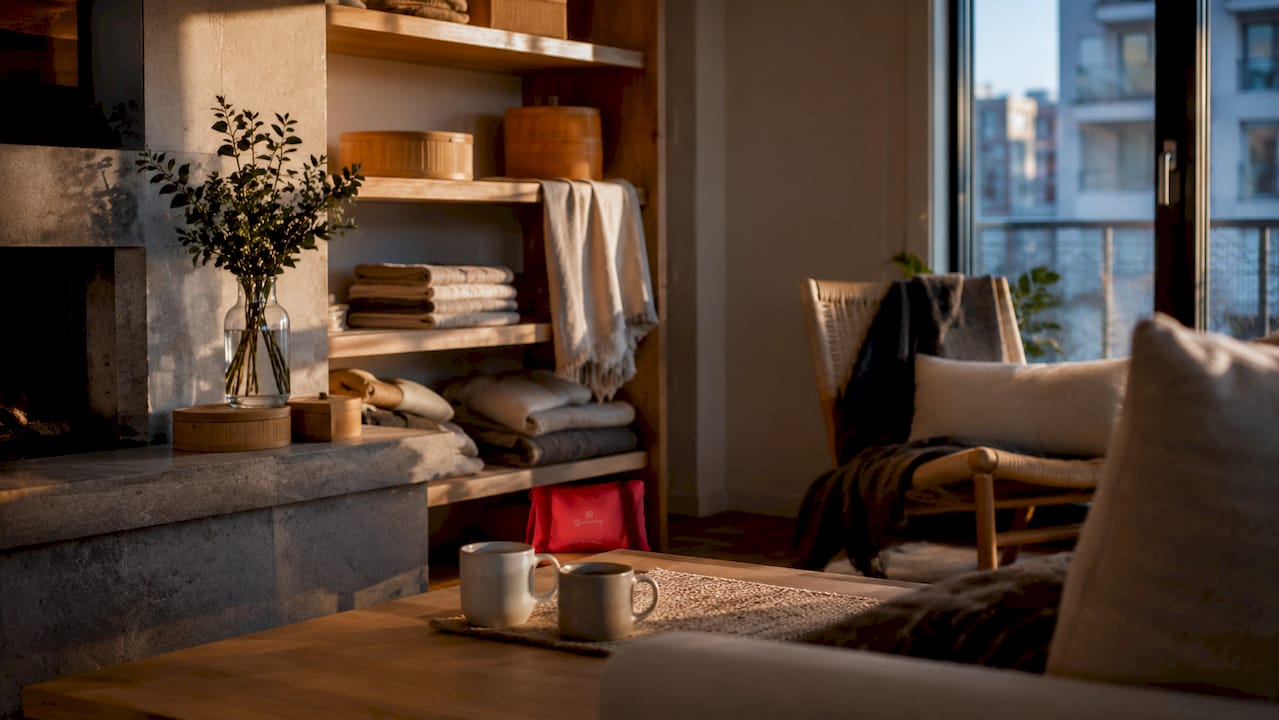
Environmental stress often stems from a perceived loss of control. Sensory anchors restore stability and reduce anxiety by giving the brain familiar reference points in an unfamiliar setting. This is not a minor comfort measure. It is a recognised psychological mechanism.
Lighting is one of the most underestimated environmental levers. Layered, warm lighting creates a calm atmosphere and reduces eye strain during long working days. Bias lighting behind a screen, a warm lamp beside the sofa, and adjustable overhead lighting together create a space that shifts with your mood and the time of day. Most temporary accommodation arrives with functional but flat lighting. Bringing a compact travel lamp costs little and changes the atmosphere considerably.
The table below compares environmental adjustments with behavioural strategies, showing how each category addresses relocation stress from a different angle.
| Kategorie | Strategie | Primary benefit |
|---|---|---|
| Environmental | Warm, layered lighting | Reduces eye strain and improves mood |
| Environmental | Sensory anchors (scent, texture) | Restores neurological stability |
| Environmental | Neutral décor and natural materials | Encourages mental projection into the space |
| Behavioural | Unpacking immediately on arrival | Signals residence rather than transit |
| Behavioural | Defined zones for work, rest, and meals | Supports brain mode switching |
| Behavioural | Consistent daily schedule | Reduces cognitive load and decision fatigue |
Temperature also matters. A space that is too cold or too warm disrupts sleep and concentration. Adjust the thermostat on arrival and treat it as a non-negotiable comfort baseline. Optimising your temporary housing for both work and rest starts with these foundational environmental controls.
Pro Tip: Bring a small, warm-toned travel lamp. It costs under £30 and transforms the atmosphere of almost any temporary accommodation within minutes of being switched on.
How to troubleshoot common challenges in temporary housing
Loneliness is the most common difficulty reported by professionals on extended assignments. The solution is not to eliminate it immediately but to address it through a combination of digital connection and local engagement. Schedule regular video calls with family and close friends, but do not rely on them as your only social contact. Local engagement, however modest, builds the kind of grounded presence that digital connection cannot replicate.
Homesickness responds well to familiar routines and sensory reminders. Cooking a meal you know well, listening to a familiar playlist, or following a weekend routine from home all reduce the psychological distance from your permanent residence. These are not indulgences. They are functional tools for maintaining stability.
Spatial limitations in smaller temporary accommodation require practical solutions:
- Use multi-purpose furniture where possible. A storage ottoman, a fold-down desk, or a bed with under-frame drawers all increase usable space without permanent modification.
- Avoid leaving items on surfaces unnecessarily. Clear surfaces reduce visual noise and make a small space feel larger and more controlled.
- Rotate personal items rather than displaying everything at once. A small rotation of photographs or objects keeps the space feeling considered rather than cluttered.
“If feelings of sadness or isolation persist beyond six months and begin to affect your work performance or sleep quality, seeking professional mental health support is the appropriate next step. Relocation adjustment is a recognised psychological process, and early intervention prevents the condition from worsening.”
The six-month threshold is a practical guideline, not a rigid rule. Persistent relocation stress that affects sleep or professional performance warrants professional attention regardless of how long the assignment has been running.
Key takeaways
Feeling settled during a temporary work assignment requires deliberate action across three areas: your physical environment, your daily routines, and your social connections.
| Punkt | Einzelheiten |
|---|---|
| Prioritise functional spaces | Set up bedroom, kitchen, and bathroom on day one to anchor daily routines immediately. |
| Unpack and claim the space | Treat the accommodation as a residence from arrival; living out of a suitcase prolongs stress. |
| Use sensory anchors | Familiar scents, textures, and personal items restore neurological stability in unfamiliar settings. |
| Build routines and social ties | Commit to regular local habits and accept social invitations within the first 90 days. |
| Control your environment | Warm lighting, defined zones, and comfortable temperature reduce relocation stress measurably. |
What I have learnt about settling in quickly on assignment
The advice that gets repeated most often, unpack immediately and establish a routine, is correct. But the part that rarely gets said is how much patience the process actually requires. Most professionals expect to feel settled within a week or two. The reality is that genuine comfort in a temporary space takes closer to four to six weeks to develop, and that is entirely normal.
The small, intentional changes matter far more than grand gestures. A familiar scent, a consistent morning walk, a café where the staff recognise you: these accumulate into something that functions like belonging. You do not need to redesign the space or fill it with possessions. You need enough familiar reference points to stop the brain from treating every morning as the first day.
Self-compassion is underrated in this context. Professionals on assignment are often high performers who expect to adapt quickly. When adjustment takes longer than anticipated, the temptation is to push harder rather than to allow the process to unfold. The psychology of home-like accommodation is well documented: belonging is built incrementally, not installed on arrival.
The most useful thing you can do in the first week is to lower your expectations of how quickly you will feel at home, and raise your commitment to the small daily actions that make it happen.
— Joakim Thörn
Guestly Homes: accommodation designed to feel like home from day one
Professionals on temporary assignments should not have to spend their first week solving accommodation problems. Guestly Homes operates fully managed, high-standard properties across Sweden, designed specifically for extended stays ranging from 10 nights to 12 months.
Every property includes a fully equipped kitchen, considered storage, and the kind of calm, Nordic-style interior that supports both work and rest without requiring any personalisation effort from the guest. The 1BR Nordic Apartment is a strong starting point for professionals seeking a well-equipped, home-like base for their assignment. For those travelling alone, the Nordic Studio offers the same standard in a compact, functional format. Guestly Homes removes the friction of settling in so that you can focus on the work.
FAQ
How quickly can professionals feel at home in temporary housing?
Genuine comfort in temporary accommodation typically develops over four to six weeks. Unpacking immediately and establishing daily routines from day one accelerates the process.
What are the most effective sensory anchors for temporary stays?
Familiar scents such as a favourite candle or travel diffuser, a personal pillow cover, and a compact photograph are the most portable and effective sensory anchors for reducing stress in unfamiliar environments.
How does lighting affect comfort in temporary accommodation?
Warm, layered lighting reduces eye strain and improves mood during extended stays. A compact travel lamp with a warm-toned bulb is one of the most cost-effective adjustments a professional can make.
When should a professional seek support for relocation stress?
If feelings of sadness or isolation persist beyond six months and begin to affect sleep or work performance, professional mental health support is the recommended course of action.
Does neutral décor really help with adjusting to temporary housing?
Neutral and timeless design helps temporary residents mentally project themselves into a space rather than feel like visitors. Overly themed or heavily curated interiors reinforce the sense of being a guest rather than a resident.