

TL;DR:
- Relocating for work involves managing both logistical and psychological adjustments to a new environment. Establishing routines, preparing essentials, and securing reliable accommodation from the start help accelerate feeling at home. Full adjustment may take 6 to 18 months, with small daily habits providing critical stability and comfort throughout the process.
Relocating for work is never as simple as unpacking a bag and getting on with things. For professionals on extended assignments, the challenge of how to settle into a long-term stay faster is both practical and psychological. You are managing a new city, an unfamiliar routine, and a full workload at the same time. The good news is that adjusting to long-term stays does not have to feel like an uphill struggle. With the right preparation and a deliberate approach to daily structure, you can feel genuinely at home far sooner than you might expect.
Inhaltsübersicht
- Key takeaways
- Preparing for arrival: organise before you land
- Building daily routines that anchor you
- Handling administrative tasks without losing momentum
- Daily comfort: sleep, cooking, exercise, and connection
- Managing the emotional side of adjustment
- My perspective on settling in during long-term assignments
- Stay somewhere that works for you from the first night
- FAQ
Key takeaways
| Punkt | Einzelheiten |
|---|---|
| Prepare before you arrive | Organise essentials, contacts, and administrative priorities before your first night to reduce early friction. |
| Routines create a sense of home | Consistent daily habits anchor you psychologically and speed up the feeling of belonging. |
| Sequence admin tasks carefully | Address registration unlocks banking and telecoms; delays in one step cascade into others. |
| Pace yourself in the first 30 days | Focus on stabilisation, not perfection. Full adjustment typically takes 6 to 18 months. |
| Small comforts matter greatly | Personal touches, sleep quality, and local social connections have an outsized impact on wellbeing. |
Preparing for arrival: organise before you land
The work of settling in starts well before you open the front door. Professionals who arrive with a clear plan for their first 48 hours consistently experience less stress and faster adaptation than those who improvise. This is not about over-planning. It is about removing unnecessary friction from a period that is already demanding.
Start with accommodation. Booking well-managed, fully equipped long-term stays makes an enormous difference. Beyond comfort, the financial logic is sound: monthly stays of 28 days or more typically attract discounts of 30 to 45 per cent compared to nightly rates, which matters when assignments run for months. Understanding the benefits of extended stay apartments before you book helps you ask the right questions about what is included.
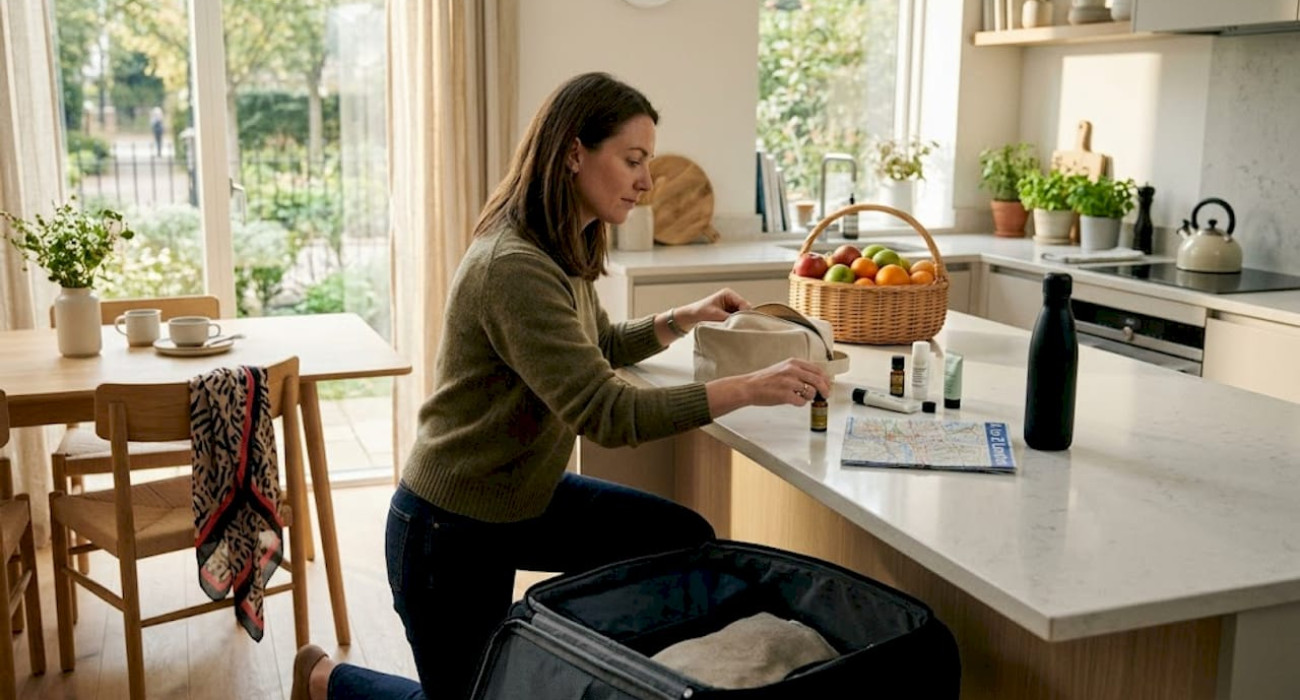
Once accommodation is secured, prepare a first-night essentials bag. This should contain toiletries, a change of clothes, snacks, phone chargers, and any medication. Treat it separately from your main luggage so that even if bags are delayed, you are not starting the assignment on the back foot.
Gather key contacts before departure. This means local emergency services, the nearest pharmacy, your company’s in-country contact, and the accommodation provider’s direct support number. Having these ready removes a category of anxiety on arrival.
| Priority | Task | Timing |
|---|---|---|
| Critical | Book accommodation with kitchen and laundry | Before departure |
| Critical | Prepare first-night essentials bag | Day before travel |
| Hoch | Research address registration requirements | Week before arrival |
| Hoch | Set up local SIM or data plan | First 48 hours |
| Mittel | Identify nearest supermarket and pharmacy | First 48 hours |
| Mittel | Open local bank account or activate international card | First week |
Pro Tip: Research address registration rules for your destination before you arrive. In many countries, including Germany, you must register within 14 days of moving in, and this registration unlocks access to banking, telecoms, and other essential services. Missing the deadline creates a cascade of delays.
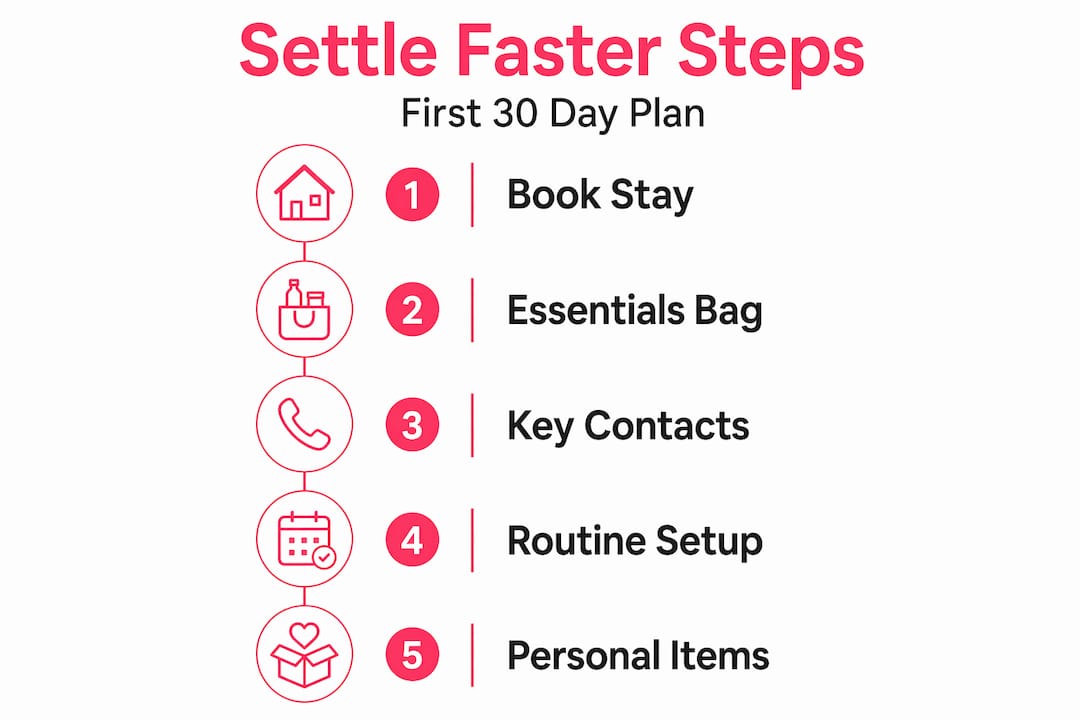
Set realistic expectations for your first thirty days. The goal is stabilisation, not perfection. Rushing the setup phase introduces instability. Give each element time to settle before moving on to the next.
Building daily routines that anchor you
Here is a truth that most relocation articles skip over: home is defined by routines, not by physical space. The fastest way to feel at home in a new city is not to sightsee more. It is to repeat the same small actions at the same time each day until they feel automatic.
Routines provide a psychological anchor that reduces unfamiliarity fatigue and creates a steady foundation for performance at work. For professionals on assignment, this matters enormously. A chaotic morning routine bleeds into concentration. A consistent one protects your focus before the working day begins.
Here is a practical sequence to build your routine in the first two weeks:
- Establish a fixed morning ritual. Wake at the same time each day. Make coffee or tea in the same way. Spend ten minutes reading or stretching before looking at your phone. The specifics matter less than the consistency.
- Identify your primary supermarket within the first three days. Then shop there weekly rather than at different stores each time. Familiarity with a single store’s layout reduces decision fatigue and creates a reliable rhythm.
- Plan simple, repeatable meals for weekday evenings. You do not need to cook elaborate dishes. Having three or four reliable recipes using local ingredients gives your evenings structure and keeps your nutrition steady.
- Learn your transport routes thoroughly within the first week. Walk the route to the office once before you need to use it professionally. Understand the bus or metro timetable. Knowing your commute removes a source of low-level daily stress.
- Protect your evenings for wind-down, not constant exploration. One of the most common mistakes is filling every evening with activities in an attempt to feel settled faster. Rest is part of adaptation, not a sign of wasted time.
- Give yourself a small neighbourhood mission each weekend. Visit one nearby café, park, or market. Repeated visits to the same nearby places build familiarity far more effectively than wide, unfocused exploration across the whole city.
- Identify one social touchpoint in the first two weeks. This might be a co-working space event, a local language class, or a community sports group. You do not need depth immediately, but regular, low-pressure contact with the same people accelerates your sense of connection considerably.
Pro Tip: Keep a brief daily log for the first two weeks. Note what felt comfortable and what felt disorienting. After a fortnight, patterns become visible and you can adjust your routine with real information rather than guesswork.
Handling administrative tasks without losing momentum
Administrative tasks feel tedious, but they are the infrastructure that everything else depends on. Treating them as optional, or postponing them until things feel more settled, creates exactly the instability you are trying to avoid. The key insight is that these tasks are closely interconnected. Delays in one area cascade into others.
Sequence them in this order:
- Address registration first. This is the foundational step in most countries. Without it, opening a local bank account, signing a telecoms contract, and registering for health services becomes considerably harder or impossible.
- Banking and payment setup second. Once you have your registered address, set up a local account or confirm your international card works reliably for recurring payments. Subscription services, utilities, and transport passes all depend on this.
- Telecoms third. Secure a local SIM or data plan. International roaming costs on a multi-month assignment are unnecessary. A local number also makes you appear more accessible to local contacts, which matters professionally.
- Utilities and services fourth. If your accommodation requires you to manage utilities independently, confirm providers and payment schedules in writing. If utilities are included, confirm this in writing too.
A few additional points worth noting:
- Book government or administrative appointments as soon as you arrive, not when you feel ready. Waiting lists are often longer than expected.
- Keep digital copies of all documents in a cloud folder accessible from any device.
- Set calendar reminders for renewal dates on contracts, including transport passes and gym memberships.
Pro Tip: Create a single document listing every administrative task, its deadline, the relevant office or service, and its current status. Review it weekly. What gets written down and reviewed gets done.
Daily comfort: sleep, cooking, exercise, and connection
Tips for long-term accommodations often focus on logistics and overlook the daily habits that determine whether you feel well or merely functional. The quality of your sleep, what you eat, how you move your body, and whether you interact with other people are the variables that most directly affect your capacity to perform and adapt.
On sleep, the priority is environment. Even in a fully furnished stay, small adjustments make a meaningful difference:
- Use blackout curtains or a sleep mask if the room is not fully dark.
- Keep your bedroom cool. Most adults sleep better between 16 and 19 degrees Celsius.
- Establish a consistent bedtime and avoid screens for thirty minutes before sleep. In an unfamiliar place, your nervous system is already processing more than usual. Protecting sleep is non-negotiable.
Cooking does not need to be complex to be effective. The goal is nutritious, repeatable meals made from ingredients you can find locally. Visit a market in your first week to understand what is seasonal and affordable. Build a small repertoire of four or five meals and rotate them. Cooking at home even twice a week creates a domestic rhythm that a purely restaurant-based diet does not.
For exercise, look beyond traditional gyms. Many cities offer short-term memberships at fitness studios, community pools, or climbing centres. Parks with outdoor equipment are often free. A thirty-minute walk taken consistently at the same time each day does more for adaptation than occasional intense workouts that are hard to maintain.

Social connection is the variable most professionals underestimate. You do not need to build deep friendships immediately. What you need is low-pressure, regular interaction with people outside your immediate work context. Local sports leagues, community app groups, language exchange meetups, and neighbourhood events all provide this. The goal is simply to be a recognisable face in a small circle.
Pro Tip: Place one or two personal items from home in a visible location in your accommodation: a photograph, a favourite mug, a small plant. These objects are not decoration. They are psychological anchors that signal continuity between your previous life and your current one.
Managing the emotional side of adjustment
Full adjustment to a new living environment typically takes between 6 and 18 months. This is worth stating clearly because most professionals expect to feel settled within a few weeks. When they do not, they interpret the discomfort as failure rather than as a normal part of the process.
Here are the patterns to watch for and manage:
- The extended vacation trap. This occurs in the first weeks when everything feels novel and exciting. The trap is neglecting routines because you are in ‘exploration mode.’ When the novelty fades, the absence of routine becomes destabilising.
- Unfamiliarity fatigue. Making constant micro-decisions in an unfamiliar environment is genuinely tiring. Reduce decision fatigue by standardising small choices: the same breakfast, the same route, the same lunch spot.
- Homesickness. This is normal and does not indicate dissatisfaction. Homesickness can coexist with genuine satisfaction. Maintaining regular contact with people at home through scheduled calls, rather than reactive check-ins, keeps connections alive without feeding anxiety.
- Burnout from over-adaptation. Some professionals push themselves to adapt quickly by filling every moment. Allow for genuine rest. Adaptation is a process, not a performance.
A new stable rhythm rather than trying to do it all immediately is what actually carries you through a long-term stay. Progress is not linear, and the weeks that feel most difficult are often the ones just before things begin to feel natural.
If stress escalates beyond normal adjustment, seek support. Many international employers offer employee assistance programmes with counselling access. Your GP or a local health service can also be a straightforward first step.
My perspective on settling in during long-term assignments
I have observed and heard from enough professionals navigating extended work relocations to notice a clear pattern. The ones who settle in fastest are not the ones who hit the ground running hardest. They are the ones who choose a few small anchors and protect them stubbornly.
In my experience, the most underrated strategy is simply going to the same café or supermarket three times in the first week. That repetition does something quiet but powerful. The staff recognise you. You know where the coffee is. The place stops feeling foreign. From that one small anchor, the rest of the neighbourhood gradually comes into focus.
What I have also found is that professionals tend to underestimate how much their identity is tied to their home environment, their usual routines, their familiar city. When those disappear simultaneously, there is a disorientation that goes beyond logistics. It involves recalibrating who you are when the usual context is absent. That is not a problem to be solved quickly. It is a process to be respected.
The most honest advice I can offer is this: give yourself permission to feel unsettled for longer than you expected, and invest that energy into small, consistent habits rather than large gestures. The routines will carry you when motivation does not.
— Joakim
Stay somewhere that works for you from the first night
For professionals managing a work assignment across weeks or months, the quality of your accommodation determines how quickly everything else falls into place. Guestlyhomes provides fully managed, premium homes across Sweden and the Nordics, designed specifically for professionals who need a space that supports their performance without requiring effort to maintain.
Every Guestlyhomes property arrives fully equipped, well-located, and ready from the moment you walk in. There is no coordination overhead, no missing kitchenware, and no administrative surprises. Whether you are looking for an executive premium suite for a solo assignment or a spacious villa with sauna for a team project, Guestlyhomes has options built around how professionals actually live and work. Explore the full range of executive accommodation options and find the stay that makes settling in feel straightforward from day one.
FAQ
How long does it take to feel settled in a long-term stay?
Full adjustment to a new living environment typically takes between 6 and 18 months. The first 30 days should focus on stabilisation rather than achieving comfort quickly.
What is the fastest way to feel at home in a new place?
Establishing consistent daily routines is more effective than exploration or socialising widely. Repeated visits to the same local places build familiarity faster than variety.
Why is address registration so important when relocating?
In many countries, address registration is the foundational step that unlocks access to banking, telecoms, and local services. Delays in registration create cascading delays across other setup tasks.
How do I manage homesickness during a long work assignment?
Homesickness is a normal part of adjustment and can coexist with satisfaction in your new location. Scheduled regular calls with people at home, alongside small personal rituals, help manage it without feeding anxiety.
What should I prioritise in the first week of a long-term stay?
Focus on address registration, identifying your nearest supermarket, establishing a sleep and morning routine, and learning your commute. These four areas have the greatest impact on early stability.