


Every landlord faces the challenge of balancing investment growth with day-to-day property concerns. With demand for rental properties rising across northern Sweden, understanding the true difference between real estate and property management is more vital than ever. Nearly 80 percent of property owners underestimate the value of professional management and risk missing out on steady returns. This article untangles the confusion, helping you grasp exactly how each role shapes your investment journey.
Table of Contents
Key Takeaways
| Point | Details |
| Real Estate vs Property Management | Real estate professionals focus on transactions and market strategies, while property managers oversee the daily operations of properties. |
| Distinct Responsibilities | Real estate involves high-level strategy and investment guidance, whereas property management is about maintaining property functionality and tenant relationships. |
| Owner Confusion | Property owners often misinterpret the roles due to overlapping functions, leading to unclear expectations of each sector’s responsibilities. |
| Value Beyond Transactions | Effective property management enhances asset value through strategic maintenance and tenant relations, transforming properties into long-term, revenue-generating investments. |
Defining Real Estate and Property Management
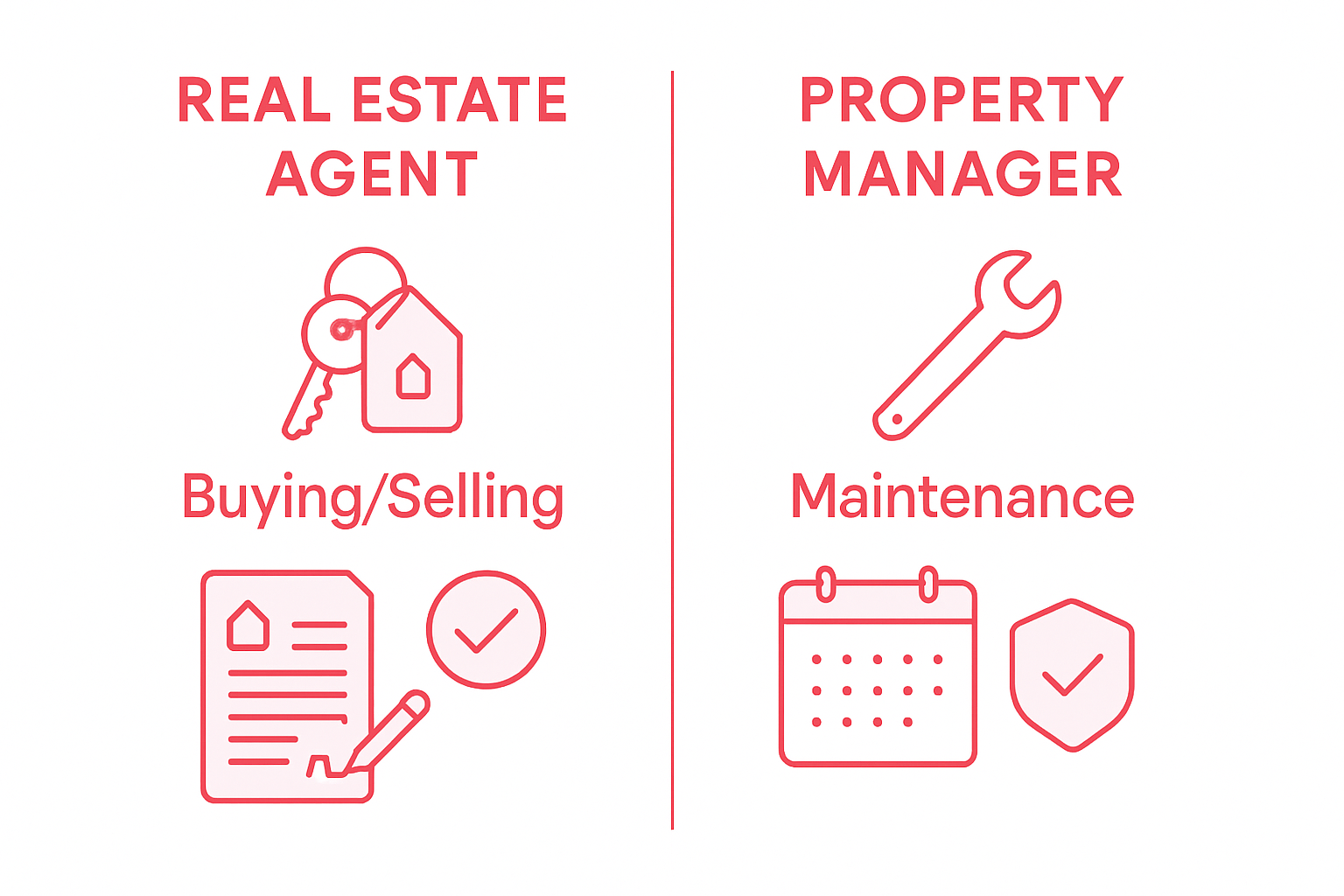
Real estate and property management represent two interconnected yet distinctly different professional disciplines within the property sector. Real estate professionals primarily focus on property transactions, investment opportunities, and market dynamics, while property managers concentrate on the ongoing operational aspects of maintaining and optimising property performance.
At its core, real estate encompasses the broader landscape of buying, selling, and transferring property ownership. Real estate professionals act as strategic intermediaries, guiding clients through complex market landscapes, conducting comprehensive market research, and negotiating transactions across residential, commercial, and industrial sectors. Their expertise lies in understanding property values, market trends, and investment potential. Property management, by contrast, operates within a more granular domain, managing the day-to-day functioning of properties after acquisition.
The key distinctions between these disciplines can be summarised through their primary objectives:
-
Real Estate Professionals:
-
Facilitate property transactions
-
Conduct market analysis
-
Provide investment guidance
-
Negotiate purchase and sale contracts
-
Assess property market value
-
-
Property Managers:
-
Oversee daily property operations
-
Manage tenant relationships
-
Handle maintenance and repairs
-
Collect and manage rental income
-
Ensure regulatory compliance
-
Ultimately, real estate creates the asset, while property management ensures its ongoing performance and value preservation. Both roles are essential in transforming properties from mere physical structures into dynamic, revenue-generating investments.
Core Differences in Roles and Responsibilities
The roles of real estate professionals and property managers involve distinct responsibilities that are critical to property performance and investment success. Property managers handle the intricate day-to-day operations of individual properties, focusing on immediate, practical aspects of property maintenance and tenant interactions.

Strategic Focus distinguishes these professional roles significantly. Real estate professionals engage in macro-level strategies involving property valuation, market positioning, and transactional processes. Asset management concentrates on financial strategies designed to incrementally increase property value and optimise long-term investment potential. Property managers, by contrast, operate in the immediate operational landscape, ensuring properties remain functional, compliant, and financially stable.
The key operational differences can be understood through their primary responsibilities:
-
Real Estate Professionals:
-
Conduct comprehensive market analysis
-
Evaluate property investment potential
-
Negotiate complex property transactions
-
Provide strategic investment guidance
-
Assess market trends and property values
-
-
Property Managers:
-
Manage tenant screening and relationships
-
Coordinate property maintenance and repairs
-
Collect and manage rental income
-
Ensure regulatory and safety compliance
-
Handle day-to-day operational challenges
-
While real estate professionals build the foundation of property investment, property managers serve as the critical maintenance and operational backbone, transforming properties from static assets into dynamic, revenue-generating investments.
Why Owners Confuse the Two Sectors
Property owners often struggle to distinguish between real estate and property management due to the seemingly interconnected nature of these professional domains. The overlap in tasks like tenant relations and property maintenance creates a blurred boundary that can mislead property owners about the distinct roles and responsibilities of each sector.
Perception Complexity emerges from the fact that both real estate professionals and property managers interact with properties, albeit in fundamentally different capacities. Real estate professionals engage with properties as transactional assets, focusing on buying, selling, and investment potential. Property managers, conversely, treat properties as living systems requiring continuous care, maintenance, and operational optimization. This subtle distinction often escapes property owners who see both professions as simply ‘dealing with property’.
The key reasons for confusion include:
-
Shared touchpoints with property ownership
-
Both interact directly with property assets
-
Both provide guidance on property-related decisions
-
Both aim to protect and enhance property value
-
-
Misunderstanding of professional scopes
-
Assumption that transaction equals ongoing management
-
Lack of clarity about specialized roles
-
Limited understanding of professional boundaries
-
-
Complex property ecosystem
-
Interconnected professional networks
-
Emerging hybrid service models
-
Increasing complexity of property investments
-
Ultimately, recognising the nuanced differences between real estate and property management requires a sophisticated understanding of how properties generate value through strategic transactions and meticulous, ongoing operational excellence.
Professional Management: Value Beyond Transactions
Professional property management transcends simple transactional interactions, representing a sophisticated ecosystem of strategic asset preservation and value enhancement. Property managers act as sophisticated guardians of real estate investments, implementing nuanced strategies that protect and elevate property performance far beyond basic operational maintenance.
Strategic Asset Optimization emerges as the cornerstone of professional management. Property managers meticulously work to maintain and maximize the financial value of income-producing properties, employing a comprehensive approach that balances financial prudence with proactive asset care. Their role involves intricate processes such as precise tenant screening, strategic rent pricing, systematic maintenance scheduling, and sophisticated market positioning.
The multifaceted value proposition of professional management includes:
-
Financial Optimization:
-
Minimise operational expenditures
-
Implement data-driven pricing strategies
-
Reduce vacancy periods
-
Maintain consistent revenue streams
-
-
Asset Protection:
-
Regular preventative maintenance
-
Comprehensive property inspections
-
Rapid response to repair requirements
-
Regulatory compliance management
-
-
Tenant Experience:
-
Professional communication channels
-
Efficient conflict resolution
-
Streamlined rental processes
-
Consistent service quality
-
Beyond mere operational management, professional property management transforms real estate from a static asset into a dynamic, self-sustaining investment vehicle, quietly generating value while mitigating risks and maximising potential returns.
Guestly Homes—Ensuring Quiet, Hands-Off Performance
Guestly Homes represents a sophisticated approach to property management that transforms the traditional relationship between property owners and their assets. Our approach to handling extended stays epitomises our commitment to creating a seamless, effortless experience for property owners across Sweden’s most dynamic markets.
Operational Excellence defines our entire methodology. We understand that property owners seek more than just basic management—they desire a partner who can quietly and efficiently maximise their asset’s potential. Our comprehensive management strategies are meticulously designed to eliminate the typical complexities and stressors associated with property ownership, allowing owners to benefit from their investments without daily operational burdens.
The Guestly approach is characterised by:
-
Performance Optimization:
-
Predictable, consistent income streams
-
Minimal owner intervention required
-
Advanced market positioning
-
Dynamic pricing strategies
-
-
Risk Mitigation:
-
Comprehensive tenant screening
-
Proactive maintenance protocols
-
Legal and regulatory compliance
-
Financial protection mechanisms
-
-
Technological Integration:
-
Real-time performance tracking
-
Automated reporting systems
-
Intelligent market analysis
-
Seamless communication platforms
-
Ultimately, Guestly transforms property management from a complex, time-consuming endeavour into a quiet, efficient system that performs consistently—delivering value without demanding constant attention.
Unlock Seamless Property Success with Guestly Homes
Understanding the distinct yet intertwined worlds of real estate and property management is crucial for owners seeking to protect and grow their investments. The article highlights common challenges such as confusion between transactional real estate activities and ongoing, hands-off property management. Owners often desire stable income, risk mitigation, and effortless oversight—all while enhancing their property’s long-term value.
Guestly Homes steps in as your trusted partner to resolve these pain points. By specialising in fully managed, premium homes tailored for extended stays, we ensure your property performs quietly yet powerfully. Our proven Revenue Share Model and Arbitrage Model align with your strategic goals while eliminating daily management stress. Discover how our advanced operational excellence safeguards your asset with:
-
Proactive tenant screening and maintenance
-
Consistent, high-margin property activation
-
Transparent, technology-driven reporting
Partnering with Guestly means transforming your real estate asset into a reliable investment that works for you, without demanding constant attention.

Take control over your property’s performance today by visiting Guestly Homes to learn how our expertise fills the gap between real estate and true property management. Experience quiet, hands-off success with a team that quietly excels so you do not have to.
Frequently Asked Questions
What is the primary difference between real estate professionals and property managers?
Real estate professionals focus on property transactions, market dynamics, and investment opportunities, while property managers handle the day-to-day operations of properties, ensuring proper maintenance, tenant relations, and regulatory compliance.
How do property managers enhance the value of real estate investments?
Property managers implement strategic asset optimisation techniques, such as financial optimisation, regular maintenance, tenant screening, and efficient conflict resolution, ensuring properties maintain and increase their financial value over time.
Why do property owners often confuse real estate and property management roles?
Property owners might confuse these roles due to shared touchpoints, such as direct interaction with properties and guidance on property-related decisions, leading to misconceptions about the distinct responsibilities of each profession.
What are the key responsibilities of a property manager?
Key responsibilities of a property manager include overseeing daily property operations, managing tenant relationships, coordinating maintenance and repairs, collecting rental income, and ensuring compliance with regulations.