


Owning a premium villa or serviced apartment in Piteå, Luleå, Boden, or Nyköping puts you in a unique position within Sweden’s evolving rental market. Many professionals relocating for work struggle to secure first-hand contracts, making corporate rental demand both steady and competitive. Understanding how corporate housing differs from traditional lettings helps you position your property for reliable income while reducing daily hassles. This overview shows what truly sets the corporate rental sector apart for Swedish property owners.
Table of Contents
- Corporate Rental in Sweden Explained
- How Swedish Corporate Housing Differs from Traditional Rentals
- Why Sweden’s Market Demands Professional Operators
- Essential DIY Preparation Tasks for Owners
- Furnishing and Durability Standards
- Internet and Connectivity
- Kitchen Readiness and Supplies
- Safety Compliance and Winter Readiness
- Cleaning Protocols and Linen Management
- Photography and Pricing Strategy
- 24/7 Guest Support
- How Professional Operators Raise Standards
- Systematic Photography and Staging
- Professional Cleaning Systems
- Linen and Inventory Logistics
- Rigorous Inspection Protocols
- Dynamic Pricing and Market Analysis
- Corporate Client Sourcing and Relationship Management
- Safety and Compliance Management
- Comparing Costs, Workload, and Risk Factors
- Upfront Investment Costs
- Ongoing Operational Costs
- Time Investment and Workload
- Financial and Market Risk
- Liability and Legal Exposure
- Revenue Potential Comparison
- Choosing Your Route: Time, Asset, and Returns
- If You Choose Self-Management
- If You Choose Partnership
- The Time Factor
- Asset Protection and Long-Term Strategy
- Revenue Realistically: What You’ll Actually Earn
Key Takeaways
| Point | Details |
|---|---|
| Corporate Rentals Defined | Corporate rentals in Sweden cater to professionals needing flexible, fully furnished accommodation. |
| Distinct Market Features | The Swedish corporate rental market prioritises flexibility, all-inclusive services, and professional management, differentiating it from traditional rentals. |
| Benefits of Professional Operators | Partnering with professional operators provides access to quality properties, simplifies compliance, and mitigates risks associated with self-management. |
| Self-Management Considerations | Owners must be prepared for significant time, financial investment, and operational risks in self-managing properties. |
Corporate Rental in Sweden Explained
Corporate rental in Sweden is a distinct market segment designed specifically for professionals, project teams, and executives requiring extended stays—typically 10 nights to 12 months. Unlike short-term holiday lets or student housing, corporate rentals prioritise stability, consistency, and workplace readiness.
Sweden’s rental landscape has unique characteristics that shape how corporate housing operates. [The Swedish rental system includes both first-hand leases and second-hand leases], with first-hand contracts (direct from property owners) remaining competitive and difficult to secure. Most professionals relocating to Sweden for work struggle with this market reality, making purpose-built corporate accommodation increasingly valuable.
How Swedish Corporate Housing Differs from Traditional Rentals
Corporate rentals operate on different principles than standard residential lets. They typically include furnishings, utilities, linen management, professional cleaning, and 24/7 support—amenities unnecessary for traditional renters managing their own homes. The lease terms are also structured differently, with flexible entry and exit dates designed around project timelines rather than calendar years.
Key differences include:
- Flexibility: Move-in and move-out aligned to work schedules, not fixed tenancy dates
- All-inclusive setup: Furnished to full standards, ready for immediate occupancy
- Professional management: Responsive support and maintenance systems in place
- Corporate billing: Invoicing to employers or project coordinators, not individual residents
- Quality consistency: Hotel-grade standards applied across multiple properties
Traditional rentals require tenants to source furniture, arrange utilities separately, and manage repairs themselves. Corporate housing removes these administrative burdens.
Here’s a summary of the main distinctions between corporate and traditional rentals in Sweden:
| Aspect | Corporate Rental | Traditional Rental |
|---|---|---|
| Lease Length | 10 nights to 12 months | Often 12 months or more |
| Furnishings | Fully furnished for working guests | Usually unfurnished or basic |
| Billing | Invoices to companies | Tenants pay individually |
| Service Level | 24/7 support, cleaning, linen service | Residents manage everything |
| Entry/Exit Flexibility | Move-in/out matches project needs | Move-in/out fixed by tenancy dates |
| Guest Experience | Hotel-grade consistency, ready to work | Variable, standards not enforced |
Why Sweden’s Market Demands Professional Operators
Sweden’s competitive rental environment creates friction for companies relocating teams. [Housing in Sweden includes rental properties, apartments in housing associations, and privately owned houses], each with different rental rights and responsibilities. This complexity means businesses often turn to professional operators who navigate these regulations transparently.
When companies book corporate accommodation through specialist operators, they gain:
- Access to vetted, standards-compliant properties
- Simplified onboarding for arriving employees
- Guaranteed quality and consistency across all stays
- Local expertise in Swedish rental law and procedures
Professional corporate operators manage the regulatory complexity so companies can focus on their people and projects.
Property owners benefit equally. Instead of managing individual tenants, handling Swedish tax obligations, or navigating corporate contracts, they partner with operators who handle everything—leaving them with predictable income and minimal operational involvement.
Pro tip: If you own a property suited to corporate guests, partnering with an established operator removes the burden of learning Swedish rental law, tax obligations, and corporate billing systems whilst securing consistent bookings.
Essential DIY Preparation Tasks for Owners
If you’re preparing your property for corporate rental without professional support, you’re taking on significant responsibility. This section outlines what you must handle personally to meet corporate standards and protect your asset.
Corporate guests expect professional-grade accommodation from day one. Your preparation tasks determine whether you attract quality bookings or face constant complaints and early departures.
Furnishing and Durability Standards
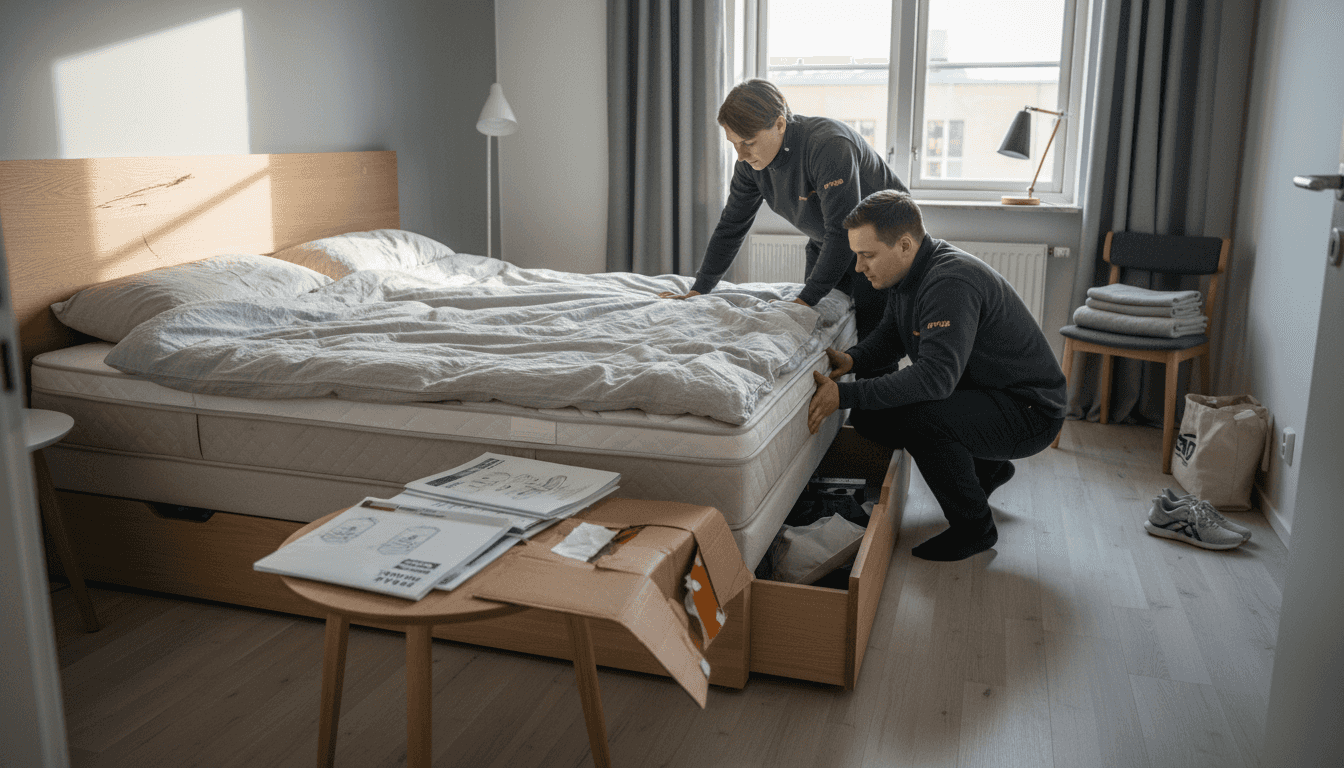
Furnishing a property for corporate guests differs entirely from furnishing a home. You’re investing in items that will withstand frequent turnover, heavy use, and demanding schedules.
Essential furnishing includes:
- Beds: Premium mattresses (firm support for restful sleep after work), quality pillows, and durable bed frames
- Seating: Commercial-grade sofas and chairs built for daily use, not aesthetic appeal alone
- Kitchen: Full equipment—cooker, refrigerator, microwave, dishwasher, pots, pans, cutlery, glasses
- Workspace: Desk, office chair, adequate lighting for remote work or project planning
- Storage: Wardrobes, drawers, and shelving—corporate guests unpack properly, unlike tourists
Cheaper furniture fails within months. A worn sofa or creaking bed directly damages your reputation and booking rates. Budget accordingly; durability costs more upfront but costs far less in replacements and lost revenue.
Internet and Connectivity
Strong WiFi is non-negotiable. Corporate guests work remotely, attend video calls, and manage tight deadlines from your property.
You must provide:
- Minimum 50 Mbps download speed (test regularly)
- Mesh WiFi coverage in all rooms—no dead zones
- A reliable router with backup connectivity
- Clear login instructions provided before arrival
WiFi failures destroy corporate bookings instantly. One dropped video call during a critical meeting ends your relationship with that guest and their employer.
Kitchen Readiness and Supplies
A fully stocked kitchen signals professionalism. Corporate guests cook meals, prepare coffee, and eat breakfast before work.
Essential supplies:
- Coffee, tea, basic spices, salt, and oil
- Cleaning supplies for the kitchen
- Dish soap, sponges, and hand towels
- Basic condiments and sugar
[Energy efficiency improvements to appliances] reduce operational costs whilst keeping the kitchen functional and appealing. Upgrading to modern, efficient equipment also demonstrates your commitment to quality.
Safety Compliance and Winter Readiness
Sweden’s winters demand preparation. Your property must be safe and functional year-round, regardless of season.
Critical safety tasks:
- Install smoke detectors on every level
- Provide fire extinguishers in accessible locations
- Test heating systems before autumn arrives
- Ensure windows and doors lock securely
- Stock winter supplies: ice melt, shovels, blankets
- Insulate pipes to prevent freezing
- Clear gutters and drainage before winter
A failed heating system in December isn’t an inconvenience—it’s a liability that damages your business and your reputation.
Cleaning Protocols and Linen Management
Professional cleaning happens between every guest, without exception. This is non-negotiable for corporate standards.
Your cleaning responsibilities:
- Deep clean the entire property before each arrival
- Change all linens (sheets, pillowcases, towels)
- Stock fresh towels in bathrooms
- Establish a cleaning schedule that runs like clockwork
- Document each cleaning with photos
Managing linen logistics yourself means washing, drying, folding, and storing linens constantly. One missed cleaning cycle loses your next booking.
Photography and Pricing Strategy
You must create professional photographs showing your property’s true condition and appeal. Poor photos cost bookings directly.
You also need a pricing strategy. Research comparable properties in your area, understand demand fluctuations by season, and adjust pricing to stay competitive whilst maximising revenue.
24/7 Guest Support
Corporate guests expect immediate responses. A guest with a heating failure, locked-out situation, or damaged appliance at 11 p.m. cannot wait until morning.
You must be available constantly—or arrange a professional management service to cover you.
Preparing a property for corporate rental alone demands constant attention: furnishing, cleaning, responding to emergencies, managing bookings, and handling maintenance never stop.
Pro tip: Document every task you complete—photographs, cleaning dates, maintenance records—so you understand the true workload before committing to self-management for a full year.
How Professional Operators Raise Standards
Professional operators like Guestly Homes don’t simply manage properties—they operate under structured frameworks designed to deliver consistency, safety, and excellence across every booking.
This consistency is what corporate clients pay for. They’re not choosing based on price; they’re choosing based on reliability and predictable quality.
Systematic Photography and Staging
Professional operators handle photography differently than individual owners. They stage properties strategically, control lighting precisely, and photograph from angles that showcase functionality.
Importantly, operators photograph properties during the preparation phase—before final positioning. This means if you’re considering partnering with a professional operator, avoid investing in professional photography beforehand. Layout, furniture placement, and staging may change during the operator’s setup process.
Operators also update photographs seasonally and after significant upgrades, keeping listings current and competitive.
Professional Cleaning Systems
Professional operators implement systematised cleaning protocols that individual owners cannot replicate alone. These aren’t quick turnovers; they’re deep, documented processes.
Operator cleaning standards include:
- Deep cleaning between every guest arrival
- Scheduled maintenance cleaning during occupied periods
- Quality control inspections with photographic evidence
- Professional cleaning suppliers and trained staff
- Inventory checks and restocking procedures
Systems like these require dedicated teams, not one person managing everything after work.
Linen and Inventory Logistics
Managing linens at scale demands infrastructure. Professional operators partner with industrial laundry services, maintain backup linen stock, and rotate inventory systematically.
They track:
- Linen condition and replacement schedules
- Towel and bedding inventory levels
- Kitchen supplies and replacements
- Bathroom amenities and toiletries
- Storage and organisation systems
This level of detail prevents the chaos of running out of clean sheets mid-week or discovering worn linens too late.
Rigorous Inspection Protocols
[Professional operators adhere to rigorous standards] that include systematic property inspections. These follow structured checklists covering safety, cleanliness, functionality, and guest readiness.
Inspections happen:
- Before each guest arrival
- During longer stays
- After each guest departure
- Quarterly for deep audits
Photographic documentation creates accountability and protects both the property and the operator.
Dynamic Pricing and Market Analysis
Professional operators use data-driven pricing tools that adjust rates based on demand, seasonality, competition, and corporate booking patterns. Individual owners typically set prices manually and miss opportunities.
Operators monitor:
- Market rates in your region
- Corporate booking calendars
- Seasonal demand fluctuations
- Competitor pricing
- Length-of-stay incentives
This expertise often generates 15–25% higher revenue than owner-managed pricing.
Corporate Client Sourcing and Relationship Management
Professional operators have established relationships with corporate HR departments, recruitment firms, project managers, and relocation services. They actively source bookings; owners wait passively.
Operators provide:
- Direct corporate client networks
- B2B marketing and outreach
- Customised corporate packages
- Multi-property booking options
- Streamlined corporate billing
Professional operators transform your property into part of a larger ecosystem—one that attracts consistent, quality bookings without constant owner involvement.
Safety and Compliance Management
[Industry collaboration on safety standards] means professional operators stay current with regulations, certifications, and best practices. They manage compliance documentation systematically, protecting both guests and your asset.
They handle:
- Fire safety certifications
- Gas and electrical inspections
- Insurance documentation
- Guest safety protocols
- Emergency response procedures
Non-compliance creates liability; operators absorb this risk professionally.
Pro tip: If you’re considering a professional operator, ask specifically how they handle photography timing, cleaning documentation, and inspection schedules—these reveal their operational maturity and your property’s actual protection level.
Comparing Costs, Workload, and Risk Factors
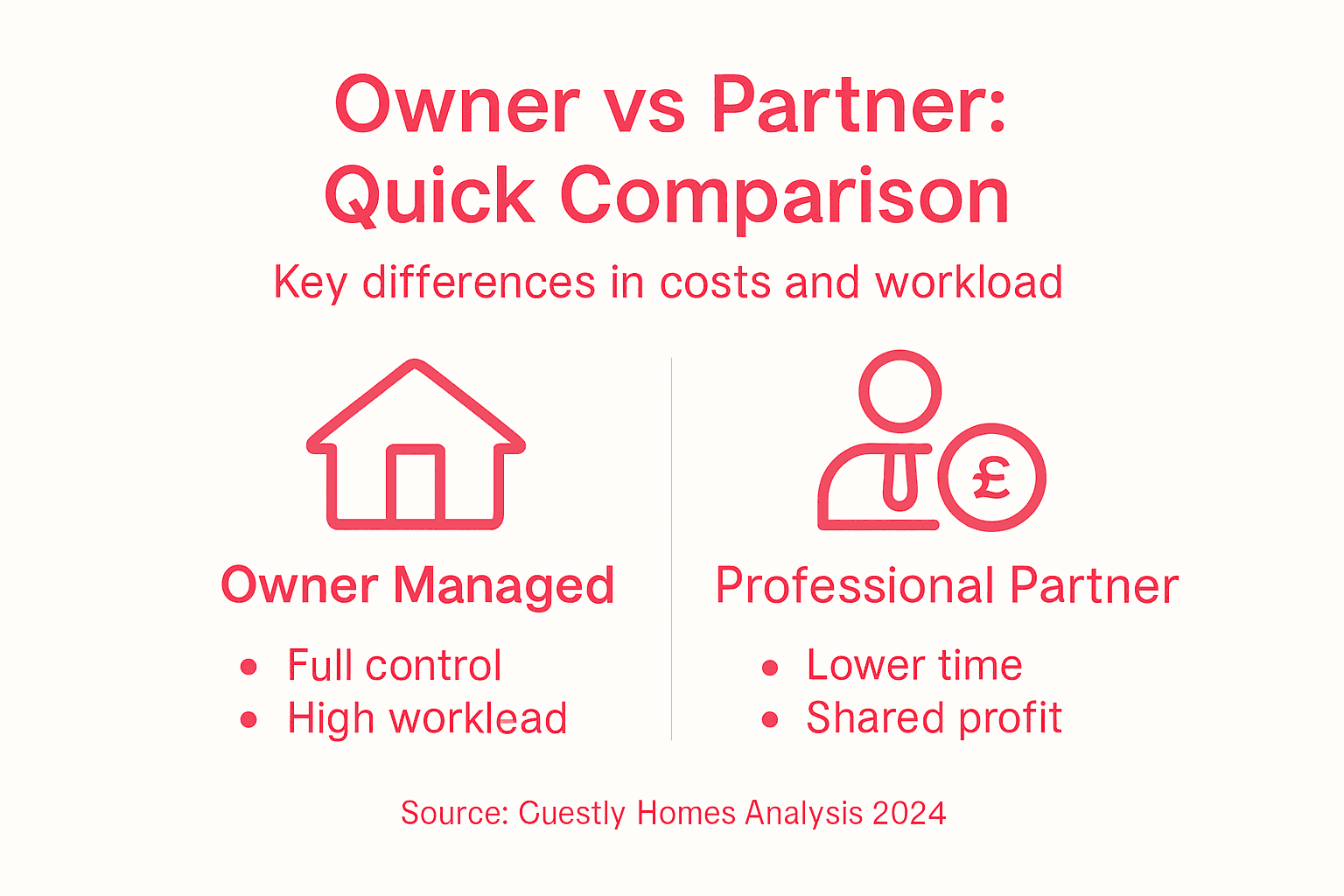
The decision to manage your property yourself or partner with a professional operator comes down to three factors: upfront investment, ongoing time commitment, and who bears the financial and operational risks.
Understanding these differences helps you choose the path that aligns with your capacity and business goals.
Upfront Investment Costs
Self-managed properties require significant initial capital. You’re funding furnishings, appliances, WiFi infrastructure, safety systems, professional photography, and marketing setup all at once.
Typical owner-managed upfront costs:
- Furnishings and durables: £8,000–£15,000
- Kitchen equipment: £2,000–£4,000
- WiFi and technology: £500–£1,500
- Safety systems and compliance: £1,000–£2,000
- Professional photography: £800–£2,000
- Marketing platform setup: £500–£1,000
Total: £13,000–£25,000 before receiving a single booking.
Partnership models shift this burden. Guestly Homes handles setup costs, meaning you contribute less capital upfront but share future earnings. [In corporate rental arrangements, cost and workload allocation varies significantly], with operators typically covering preparation and marketing expenses.
Ongoing Operational Costs
Your monthly expenses continue whether the property is occupied or vacant. Self-management costs include:
- Utilities and internet: £150–£300 monthly
- Cleaning and linen services: £600–£1,500 monthly
- Maintenance and repairs: £200–£500 monthly (budgeted average)
- Property insurance: £100–£200 monthly
- Supplies and restocking: £200–£400 monthly
These costs accumulate to £1,250–£2,900 monthly regardless of occupancy. A single vacant month costs you significantly.
Professional operators absorb these costs, paying you either a fixed rent (arbitrage model) or sharing revenue after operational expenses (revenue share model).
Time Investment and Workload
Self-management demands constant availability. Your responsibilities never pause:
- Guest communication: 2–4 hours weekly (booking queries, arrivals, departures, issues)
- Cleaning coordination: 8–12 hours bi-weekly
- Maintenance and inspections: 4–6 hours weekly
- Photography and listing updates: 2–3 hours monthly
- Financial tracking and taxes: 3–5 hours monthly
- Emergency response: On-call 24/7
Total realistic commitment: 20–30 hours weekly.
For property owners balancing other employment or managing multiple properties, this becomes unmanageable. Professional operators handle all these tasks, leaving you with quarterly reporting and occasional communication.
Financial and Market Risk
[Risk allocation varies between owner and partner arrangements], with owners bearing vacancy risk directly. If your property sits empty for a month, you lose 100% of potential revenue but pay 100% of costs.
Risks you carry as an owner:
- Vacancy risk: Empty periods generate no income
- Guest damage: Repairs and replacements reduce profit
- Market fluctuation: Pricing mistakes or seasonal downturns affect bookings
- Regulatory changes: New tax rules or rental laws impact profitability
- Operational liability: Guest injuries or disputes become your responsibility
Professional operators manage these risks systematically. They maintain occupancy through corporate networks, handle damage claims through insurance, adjust pricing dynamically, and absorb regulatory complexity.
Liability and Legal Exposure
As an individual owner, you’re personally liable for safety failures, contractual disputes, and guest claims. A serious incident could exceed your insurance coverage.
Operators carry professional liability insurance and employ legal expertise, protecting your asset and limiting your exposure.
Managing all costs, workload, and risk alone is achievable—until the first major emergency occurs at midnight or a guest books cancels two days before arrival.
Revenue Potential Comparison
Revenue differs substantially between models. Self-managed properties depend entirely on your pricing and booking ability. Most owners generate £800–£1,500 monthly net profit after costs.
Partnership models offer different structures:
- Revenue share (60/40 split): Higher upside if the operator performs well; you earn £1,200–£2,200 monthly with zero workload
- Fixed rent: Predictable monthly income (typically £1,000–£1,800) regardless of occupancy; you surrender upside but gain stability
Operators consistently achieve higher occupancy and pricing through corporate networks and dynamic pricing, often generating 20–30% higher revenue than owners manage alone.
Pro tip: Calculate your true hourly rate for self-management: divide annual net profit by hours worked, then compare it to what a partnership would deliver passively—the numbers often reveal which path protects your time and asset.
Choosing Your Route: Time, Asset, and Returns
The right choice depends on what you value most: control and maximum returns, or peace of mind and passive income. Neither choice is wrong; both serve different owner priorities.
This final decision requires honest self-assessment about your capacity, goals, and what success looks like for you.
If You Choose Self-Management
Self-management makes sense if you have specific circumstances favouring it. You’re well-suited to manage alone if:
- You have flexible time availability (10–15 hours weekly)
- You live near the property for responsive maintenance
- You enjoy detailed operational work
- You have experience managing rental properties
- You’re willing to absorb financial volatility
- You want maximum long-term asset control
Self-management offers genuine advantages. You capture 100% of revenue above costs, build equity in the asset, make all strategic decisions independently, and retain full property control.
However, success requires treating it like an active business, not a passive income source. You’ll manage cleaning schedules, handle guest crises at inconvenient times, adjust pricing strategically, and maintain comprehensive documentation.
If You Choose Partnership
Partnership appeals to owners prioritising stability and minimal involvement. This path suits you if:
- You lack time for hands-on management
- You prefer predictable, consistent income
- You want professional standards without personal delivery
- You’re managing multiple properties
- You value risk mitigation over maximum returns
- You want the property expertly maintained long-term
Partnership models—whether revenue share or fixed rent—deliver fundamentally different value. You exchange some profit potential for operational peace, professional management, corporate client access, and reduced personal liability.
[When evaluating ownership versus partnership, consider time horizons, asset management responsibilities, and expected returns carefully]. A 5-year partnership commitment differs substantially from a 12-month trial.
The Time Factor
Time is your scarcest resource. Self-management demands 20–30 hours weekly indefinitely. For working professionals or property owners in Piteå, Luleå, Boden, or Nyköping managing properties from distance, this becomes impractical quickly.
Partnership transfers this time burden to professionals, leaving you with quarterly check-ins and seasonal communication. That’s the real value exchange.
Asset Protection and Long-Term Strategy
Your property is a significant asset. How you operate it determines whether it appreciates or depreciates over time.
Self-managed properties risk:
- Inconsistent maintenance reducing property condition
- Damage accumulation from less rigorous guest screening
- Cosmetic decline undermining long-term value
- Legal liability exposure from gaps in compliance
Professional operators implement systematic maintenance, professional cleaning, documented inspections, and compliance management—all protecting your asset for 10, 15, or 20 years ahead.
Your choice isn’t just about next year’s income—it’s about what state your property is in, and what income it generates, five years from now.
Revenue Realistically: What You’ll Actually Earn
Owner projections often overestimate returns. Most self-managed properties generate £1,000–£1,500 monthly net profit after all costs, assuming 75–80% occupancy.
That’s £12,000–£18,000 annually for 20–30 hours of work weekly. Your effective hourly rate is £5–£12 per hour—often below local employment options.
Partnership models offer:
- Revenue share (60/40): £1,200–£2,200 monthly, zero hours of work
- Fixed rent: £1,000–£1,800 monthly guaranteed, regardless of occupancy
The financial calculation often favours partnership when you account for your time’s true value.
To help you assess which management route suits your property, consider this comparative overview:
| Factor | Self-Management | Professional Operator |
|---|---|---|
| Upfront Cost | High, paid by owner | Low or covered by partner |
| Time Needed | 20–30 hours weekly | Minimal, mainly quarterly check-ins |
| Risk Exposure | Owner bears all risks | Risks shared or absorbed by operator |
| Income Model | 100% net profit (after costs) | Revenue share or fixed payout |
| Occupancy Source | Owner finds guests individually | Corporate network fills bookings |
| Asset Protection | Depends on owner’s diligence | Routine inspections, compliance |
Making the Final Decision
Ask yourself three questions:
- Time: Do I genuinely have 20–30 hours weekly available indefinitely?
- Skill: Am I confident managing corporate guests, repairs, cleaning, pricing, and compliance?
- Risk tolerance: Can I absorb vacant months, guest damage, and market downturns financially and emotionally?
If you answered “no” to any question, partnership is the stronger choice.
Pro tip: Start with a trial period if possible—partner for 6–12 months, observe how the operator performs, then decide whether to continue or transition to self-management with much clearer expectations.
Maximise Your Property’s Potential with Expert Corporate Rental Management
Preparing a property for corporate rental is complex and demanding. From fulfilling strict furnishing and safety standards to managing 24/7 guest support and dynamic pricing, the challenges are significant. As the article outlines, self-management requires a huge time investment, upfront costs, and risk absorption—factors that can drain your energy and put your asset at risk.
With Guestly Homes, you do not have to face these challenges alone. We are a premium Swedish operator specialising in fully managed corporate rentals that deliver hotel-grade consistency and hassle-free performance for property owners. Our Revenue Share Model and Arbitrage Model adapt to your needs, offering hands-off management while protecting your asset’s long-term value. You gain access to expert property preparation, professional cleaning, rigorous inspections, and a corporate client network that keeps your property occupied with quality guests.
Explore how a professional partnership can change your experience and returns by visiting Guestly Homes. Discover the difference that comes with a team that understands Swedish rental nuances and who deliver consistent income and peace of mind through Premium Corporate Rentals.
Ready to elevate your property’s corporate rental performance without the heavy workload and risk? Connect with us today at Guestly Homes and find the right partnership model for your goals.
Frequently Asked Questions
What is the difference between self-managing a corporate rental and using a professional operator?
Self-managing involves handling all aspects of the rental business, including guest communication, cleaning, and maintenance, which can demand 20–30 hours a week. In contrast, professional operators manage these tasks, allowing for minimal owner involvement and providing access to corporate networks.
How much should I invest to prepare my property for corporate rental?
Upfront investment for self-management can range between £13,000 and £25,000, covering furnishings, kitchen equipment, safety systems, and more. Using a professional operator typically reduces your initial financial burden, as they often cover setup costs.
What essential features should be included in a corporate rental property?
A corporate rental should be fully furnished with durable items, have strong WiFi connectivity, a well-stocked kitchen, safety compliance, and cleaning protocols in place. Professional management can ensure these standards are met consistently.
What ongoing costs should I expect when managing a corporate rental myself?
Ongoing costs for self-management can include utilities (£150–£300 monthly), cleaning and linen services (£600–£1,500 monthly), maintenance and repairs (£200–£500 monthly), and other supplies (£200–£400 monthly), cumulatively reaching £1,250–£2,900 monthly regardless of occupancy.