


TL;DR:
- The best accommodation strategy for rotating project teams emphasizes digital automation, flexible contracts, and well-designed properties to boost efficiency and team morale. Digital platforms reduce costs by automating bookings, payments, and reporting, thereby minimizing errors and delays. Proper location, safety, and comfort features like full kitchens and reliable internet support long-term productivity and well-being.
The best accommodation strategy for rotating project teams is a structured system that combines digital automation, flexible booking policies, and well-designed living spaces to maintain operational efficiency and team performance across every rotation cycle. This is not simply a matter of finding available beds near a project site. The most effective approach treats lodging as a direct input to project output, where poor housing decisions create measurable losses in productivity and staff morale. Project managers who apply this framework report fewer logistical delays, lower travel costs, and stronger team cohesion. The following sections set out the practical methods, operational criteria, and wellness considerations that define best practice in 2026.
How does digital automation transform accommodation management for rotating teams?
Digital automation is the single most impactful change a project manager can make to team lodging operations. Transitioning from manual processes to a centralised digital platform saves up to 90% of planning time and cuts process costs by 93%. That figure is not theoretical. Deutsche Bahn reduced its annual hotel invoices from 41,000 to just 12 by implementing end-to-end digital lodging automation. The implication is clear: manual workflows do not scale with rotating teams, and the administrative burden compounds with every new rotation.
A fully digital approach to accommodation for project teams typically covers four interconnected functions:
- Centralised procurement. All lodging is sourced, approved, and tracked through a single platform, giving coordinators full visibility of spend and availability across multiple sites.
- Real-time booking. Team members or coordinators book confirmed accommodation instantly, removing the delays and errors common in email-based processes.
- Virtual payment cards (VCCs). VCCs eliminate checkout friction and automate invoice consolidation, removing the need for manual reconciliation after each stay.
- Audit-ready reporting. Digital platforms generate structured data on spend, supplier performance, and occupancy, which supports both financial oversight and supplier renegotiation.
Hotels and serviced properties with high operational efficiency score 5% higher in perceived value among business travellers and increase client retention by 10%. Business traveller complaints also dropped 19% when lodging prioritised digital touchpoints and operational efficiency. These figures confirm that the technology investment pays back through both cost reduction and traveller satisfaction.
Pro Tip: Avoid fragmented manual workflows where bookings, invoices, and communications sit in separate systems. Consolidating these into one platform removes the most common sources of error and delay in rotating team logistics.

For project managers coordinating corporate group travel workflows, the shift to digital is not a future consideration. It is the baseline for any well-run rotation programme in 2026.
What operational factors should guide accommodation selection for rotating teams?
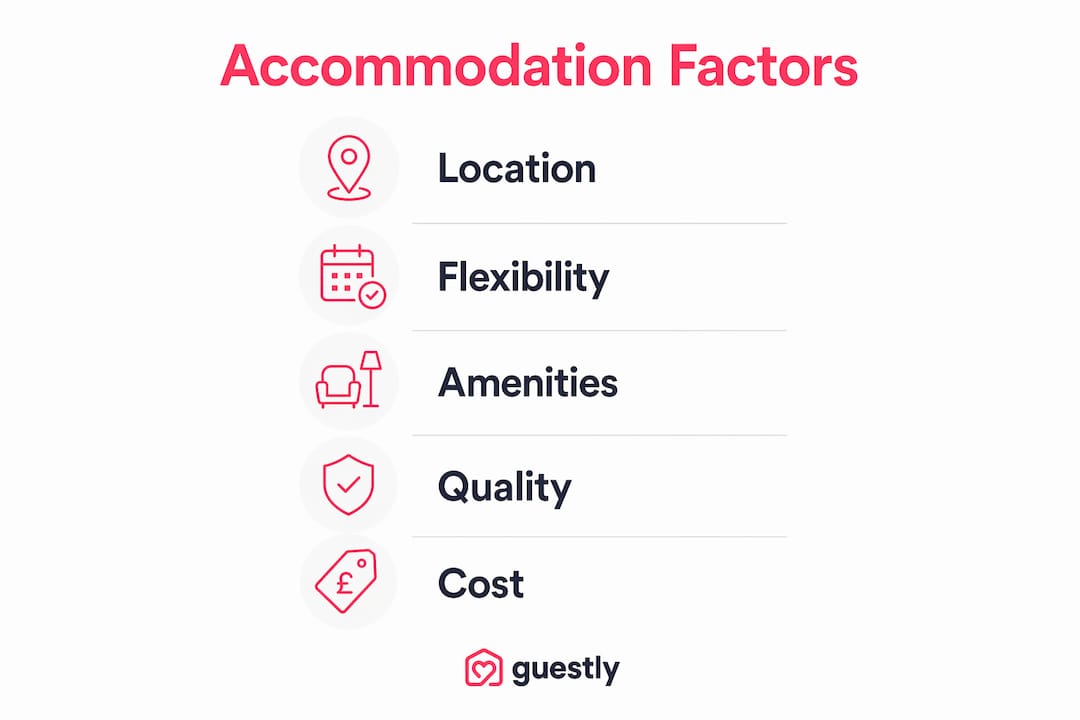
Location, safety, and amenity quality are the three operational pillars of effective accommodation selection. Getting these right reduces both direct costs and the hidden costs of team fatigue and travel stress.
Key selection criteria for project team lodging include:
- Proximity to the project site. Short commute times preserve working hours and reduce transport costs. Properties within a practical distance of the site reduce daily friction for every team member.
- Avoidance of tourist-heavy areas. 87% of business travellers prefer accommodation away from tourist-heavy zones. Properties in these areas carry inflated pricing and higher ambient noise, both of which affect rest and budget.
- Safety and security. 67% of business travellers report hesitancy linked to unpredictability and safety concerns. Choosing properties with verified security standards and clear emergency protocols removes a significant source of staff anxiety.
- Full-size kitchen facilities. For stays exceeding 30 days, full cooking capabilities are necessary to maintain dietary health and stamina. Kitchenettes are adequate for short rotations but insufficient for longer assignments.
- Wellness facilities. Access to gym equipment, outdoor space, or in-building fitness areas supports physical health during extended deployments.
- Reliable, fast internet. Remote reporting, video calls, and digital tools require consistent connectivity. This is a non-negotiable requirement, not a premium feature.
Pro Tip: Before confirming any booking, request the provider’s extension policy and early termination terms in writing. Rigid cancellation policies are standard in general hospitality and can create significant financial penalties when project scopes change.
Selecting accommodation that meets these criteria is not about comfort as a luxury. It is about removing the environmental variables that degrade team performance over weeks and months. For a structured overview of planning lodging for large teams, the operational factors above form the foundation of any credible selection process.
How do quality accommodation features impact team productivity and well-being?
The physical environment of a team’s lodging directly affects sleep quality, cognitive performance, and mental health. Sleep quality improves by up to 20% in quiet, well-designed accommodation. Each lost hour of sleep links to a 1.2% drop in workplace productivity for knowledge workers. For a team of ten on a six-week rotation, poor sleep conditions represent a measurable reduction in project output.
“Sleep-focused design is not a hospitality trend. It is a performance variable. Accommodation that controls noise, air quality, and light conditions produces measurably better outcomes for knowledge workers on extended assignments.”
The features that most reliably support well-being in project team housing include HEPA air filtration, acoustic insulation between rooms, blackout window treatments, ergonomic desk and chair setups, and in-room or in-building fitness options. These are not premium extras. They are the difference between a team that arrives rested and one that accumulates fatigue across a rotation.
| Ominaisuus | Performance impact |
|---|---|
| Acoustic insulation | Reduces sleep disruption; supports 20% sleep quality improvement |
| Full kitchen access | Maintains dietary health on stays over 30 days |
| Gym or fitness access | Supports physical health and reduces stress during long deployments |
| Ergonominen työtila | Reduces physical strain; supports sustained focus during working hours |
| Fast, reliable internet | Enables remote reporting and digital collaboration without interruption |
Generational preferences also shape what teams expect from their lodging. Gen Z professionals prioritise tech-enabled features and home-like environments over traditional hotel formats. As younger engineers and consultants make up a growing share of rotating project teams, accommodation that feels residential rather than institutional becomes a retention and morale factor, not just a comfort preference.
Travel managers who incorporate gym access and cooking facilities into their accommodation plans report stronger traveller satisfaction scores and lower attrition during long assignments. The investment in quality lodging pays back through sustained team performance, not just staff goodwill.
What are best practices for flexible and scalable lodging logistics?
Effective team rotation strategies require logistics that adapt to project changes without creating financial or operational penalties. The following practices define a well-structured lodging programme for rotating teams.
- Negotiate extension and early termination terms upfront. Project timelines shift. Accommodation contracts that do not account for this create avoidable costs. Confirm these terms before signing any agreement, not after a scope change forces the issue.
- Deploy virtual payment cards for every booking. VCCs simplify financial oversight by automating invoice consolidation and removing the need for individual expense claims. This is particularly valuable when multiple team members rotate through the same property.
- Use a centralised communication platform. All stakeholders, including project managers, HR coordinators, and team leads, should have access to the same booking data, arrival schedules, and property details. Fragmented communication is the most common cause of lodging errors during handovers.
- Group team members in shared properties where possible. Co-located teams maintain stronger communication and cohesion than those spread across separate hotels. A shared villa or serviced apartment also reduces per-person cost compared with individual hotel rooms.
- Build a preferred supplier list. Working with a small number of vetted providers reduces the time spent sourcing accommodation for each new rotation and improves consistency of quality across sites.
Pro Tip: For stays of varying lengths across a rotation cycle, consider short-term rental alternatives that offer both nightly and monthly pricing. This gives coordinators the flexibility to match contract length to actual project duration without overpaying.
Optimising space for rotating teams also means thinking about handover logistics. A property that can be cleaned, restocked, and ready for the next rotation within a defined window removes the gap between departing and arriving teams. Providers who offer managed turnaround as part of their service remove this burden from the coordinator entirely.
Key takeaways
The best accommodation strategy for rotating project teams combines digital automation, flexible contract terms, and well-designed properties to protect both project budgets and team performance.
| Kohta | Yksityiskohdat |
|---|---|
| Digital automation cuts costs | Centralised platforms reduce process costs by 93% and eliminate manual invoice handling. |
| Location selection matters | Avoid tourist-heavy areas; prioritise proximity to site and verified safety standards. |
| Sleep quality drives output | Quiet, well-designed lodging improves sleep by up to 20%, directly protecting productivity. |
| Full kitchens over kitchenettes | Stays exceeding 30 days require full cooking facilities to maintain team dietary health. |
| Flexible terms prevent penalties | Always confirm extension and early termination policies before signing accommodation contracts. |
What I have learned about balancing control and comfort in rotating team accommodation
Having worked across multiple project deployments, the tension I see most often is between the coordinator’s need for control and the team’s need for comfort. These two priorities are not in conflict. They only feel that way when the accommodation strategy is built around cost alone.
The projects that run most smoothly are those where the lodging decision was made with the same rigour as the staffing decision. That means assessing the property against operational criteria, not just price per night. It means asking whether the space supports the kind of rest and recovery that a rotating team actually needs after a full day on site.
Technology is the enabler, not the solution. A digital booking platform removes friction, but it does not replace the judgement required to select the right property for the right team. The coordinators I respect most use data to narrow their options and then apply genuine knowledge of their team’s working patterns to make the final call.
The human factor is consistently underweighted. A team that feels well-housed performs better, stays longer, and requires less management attention. That is not a soft benefit. It is a measurable operational outcome. The accommodation budget is not a cost to minimise. It is an input to project performance, and it should be treated accordingly.
— Joakim Thörn
Guestly Homes for rotating project teams
Project managers who need accommodation that works without supervision will find Guestly Homes built for exactly that requirement. Guestly Homes operates fully managed villas and serviced apartments across Sweden, with properties designed for professional teams on extended assignments.
Properties such as the 5-bedroom business villa accommodate rotating teams with multiple bedrooms, full kitchen facilities, and the kind of consistent standard that removes uncertainty from every handover. For smaller rotations, the 2BR Nordic cabin with sauna offers wellness-focused accommodation that supports recovery during intensive project phases. Flexible rental terms, digital booking, and a single point of contact mean coordinators spend less time managing lodging and more time managing projects. Contact Guestly Homes to discuss accommodation that fits your rotation schedule.
FAQ
What is the most effective accommodation strategy for rotating project teams?
The most effective strategy combines centralised digital booking, flexible contract terms, and properties with full kitchen and wellness facilities. Digital platforms alone can reduce process costs by 93% and eliminate manual invoice handling.
How does accommodation quality affect project team productivity?
Sleep quality improves by up to 20% in well-designed, quiet lodging, and each lost hour of sleep reduces knowledge worker productivity by 1.2%. Investing in quality accommodation directly protects project output.
What amenities matter most for long-term project team stays?
Full-size kitchen facilities, reliable internet, gym access, and acoustic insulation are the highest-priority amenities for stays exceeding 30 days. Kitchenettes are insufficient for extended rotations where dietary health affects sustained performance.
How should project managers handle changing rotation schedules?
Confirm extension and early termination policies with every provider before booking. Rigid cancellation terms in standard hospitality contracts create financial penalties when project scopes change, which is a common occurrence in field-based assignments.
What is the advantage of using virtual payment cards for team accommodation?
Virtual payment cards automate invoice consolidation, eliminate manual reconciliation, and remove checkout friction for individual team members. This simplifies financial oversight across multiple rotations and multiple properties.