


|
Pregătirea playerului Trinity Audio...
|
Pe scurt:
- Guest reviews significantly influence booking decisions and rental income for Swedish property owners.
- Maintaining high review scores through operational systems and prompt responses is essential for long-term success.
- Review management, rather than property attributes alone, serves as a critical competitive advantage.
Guest reviews are one of the most powerful revenue levers available to property owners in Sweden, yet they remain one of the most misunderstood. Many owners invest heavily in interior design, premium furnishings, and desirable locations, assuming these factors alone will drive bookings and justify higher nightly rates. The data tells a different story. 83% of guests would pay more for listings with more positive reviews, and 79% are willing to pay more specifically for 5-star properties. This guide explains the mechanics behind review systems, what guests actually score, and how to build a review strategy that consistently protects and grows your rental income.
Tabla de conținut
- How reviews shape guest decisions and property income
- Review platform mechanics: Airbnb vs Booking.com
- Managing reviews for premium Swedish rentals: Strategies and pitfalls
- Beyond star ratings: Category-specific review improvement
- A fresh perspective: Why review management is your real competitive edge
- Optimise your rental property with Guestly Homes
- Întrebări frecvente
Principalele concluzii
| Punct | Detalii |
|---|---|
| Reviews drive bookings | High review scores directly lead to more bookings and increased rental income. |
| Platform mechanics matter | Review visibility and weighting differ by platform and impact conversion. |
| Respond constructively | Reading and addressing every review helps improve guest satisfaction and scores. |
| Target subscores | Improving cleanliness, value, and other categories boosts overall satisfaction. |
| Early reviews set momentum | Strong initial reviews influence your rental’s performance for months to follow. |
How reviews shape guest decisions and property income
With the stakes established, let’s clarify exactly how reviews influence guest behaviour and rental ROI. Reviews are not simply a record of past stays. They function as a live signal to prospective guests, influencing trust, perceived value, and ultimately, booking decisions. A property with 50 detailed, positive reviews and a 4.9-star rating will almost always outperform a beautifully designed property with only a handful of mixed scores, even if the latter has superior furnishings.
Better reviews and ratings can lead directly to more bookings and higher earnings, according to platform guidance for hosts. This is not simply a correlation. Platforms use review scores as a ranking signal, meaning that properties with stronger ratings appear higher in search results and receive more visibility. More visibility translates to more enquiries, and more enquiries translate to higher occupancy.
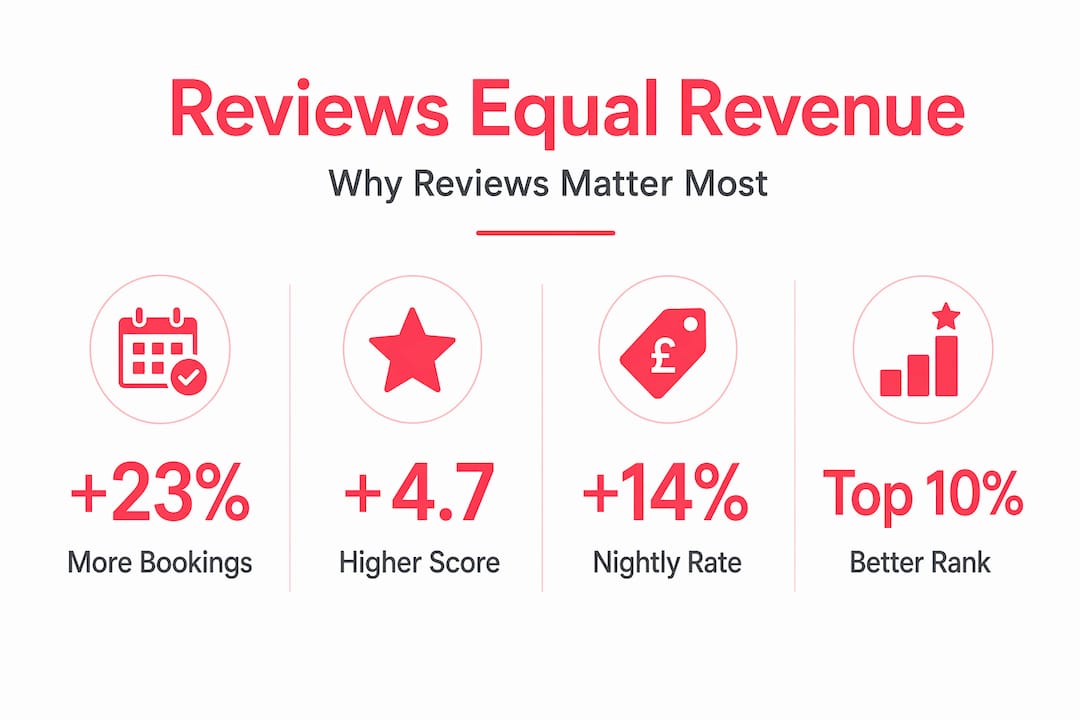
For premium properties in Stockholm and other Swedish cities, the financial stakes are considerable. Stockholm STR performance benchmarks show that review-driven conversion can materially affect achievable average daily rate (ADR) and revenue per available room (RevPAR). A property operating at 85% occupancy with a 4.9-star rating will generate meaningfully more income than an identical property at 70% occupancy with a 4.3-star rating, even before accounting for the ability to charge a higher nightly rate. Understanding rental performance in Sweden means understanding how reviews sit at the centre of that performance.
Here is a simplified view of how review scores affect key performance indicators for premium Swedish rentals:
| Review score | Typical occupancy range | ADR premium potential | Search ranking impact |
|---|---|---|---|
| Below 4.0 | 40-55% | Negative (discounting required) | Significantly reduced |
| 4.0 to 4.5 | 55-70% | Neutral | Moderat |
| 4.5 to 4.8 | 70-82% | 10-20% above baseline | Puternic |
| 4.9 to 5.0 | 80-92% | 20-35% above baseline | Highest visibility |
What guests actually rate covers more ground than most owners expect. Cleanliness, communication speed, check-in experience, comfort, listing accuracy, and how problems are handled are all scored, either explicitly or through written commentary. A slow response to a maintenance issue, a slightly inaccurate listing description, or a check-in process that causes confusion can each pull down a score that took months to build. Consulting a thorough Sweden rental guide can help owners understand the baseline expectations guests bring to premium properties in this market.
Review platform mechanics: Airbnb vs Booking.com
Understanding the revenue link, it’s crucial to know how different platforms operate and what their review rules mean for your property. Airbnb and Booking.com are the two dominant platforms for premium short-term rentals in Sweden, and they handle reviews in meaningfully different ways. Knowing these mechanics helps you manage your property’s reputation more strategically.
On Airbnb, guests and hosts each have a 14-day window after checkout to submit a review. Reviews are published simultaneously once both parties have submitted, or when the 14-day window closes. Critically, your average star rating only becomes visible in search results after three guests have submitted ratings. This means your first three stays carry disproportionate weight. A poor early experience does not just affect one review; it shapes the foundation of your public rating before you have enough volume to absorb the impact.
Booking.com operates differently. It uses a weighted review system where more recent reviews carry greater influence on your overall score. This means a string of poor reviews in recent weeks can drag down a score built over years, while a sustained period of excellent service can recover a damaged rating relatively quickly. Booking.com also provides separate subscores for cleanliness, staff, value for money, and free Wi-Fi, each calculated independently. A property can have a high overall score but a notably lower cleanliness subscore, which guests will notice and which can suppress bookings from guests for whom cleanliness is the primary concern.
Both platforms take authenticity seriously. Booking.com verifies reviews by requiring guests to have made a confirmed booking before leaving feedback, and the platform holds more than 70 million verified property reviews. This verification process is reassuring for owners in one sense: fake negative reviews are unlikely to slip through. In another sense, it means that negative reviews almost certainly reflect a genuine guest experience, which makes addressing the root cause operationally essential.
“A single unresolved issue, repeated across multiple stays, will appear in multiple reviews. Platforms do not filter for repetition. Guests do.”
| Caracteristică | Airbnb | Rezervare.com |
|---|---|---|
| Review window | 14 days post-checkout | Guests invited after checkout |
| Visibility threshold | Visible after 3 ratings | Visible immediately |
| Recency weighting | Standard averaging | Recent reviews weighted higher |
| Subscores | Overall categories | Cleanliness, staff, value, Wi-Fi |
| Verification | Confirmed bookings only | Confirmed bookings only |
Pro Tip: If you are launching a new listing, prioritise guest experience intensely for your first three stays on Airbnb. Those early reviews set your public rating and directly affect how quickly your property gains search visibility.
Preparing your rental for reviews from the very first guest is far more effective than attempting to recover from early negative scores. Equally, understanding rental pitfalls in Sweden helps owners avoid the common operational mistakes that generate avoidable negative feedback.
Managing reviews for premium Swedish rentals: Strategies and pitfalls
Once you know the mechanics, it is time to apply practical strategies to raise your review scores and guest satisfaction. The challenge for private owners is that maintaining consistently high standards across every stay requires systems, not just good intentions. Hotels employ dedicated housekeeping teams, maintenance staff, and guest services personnel. A private owner managing their own property is, in effect, trying to replicate that operational infrastructure alone.
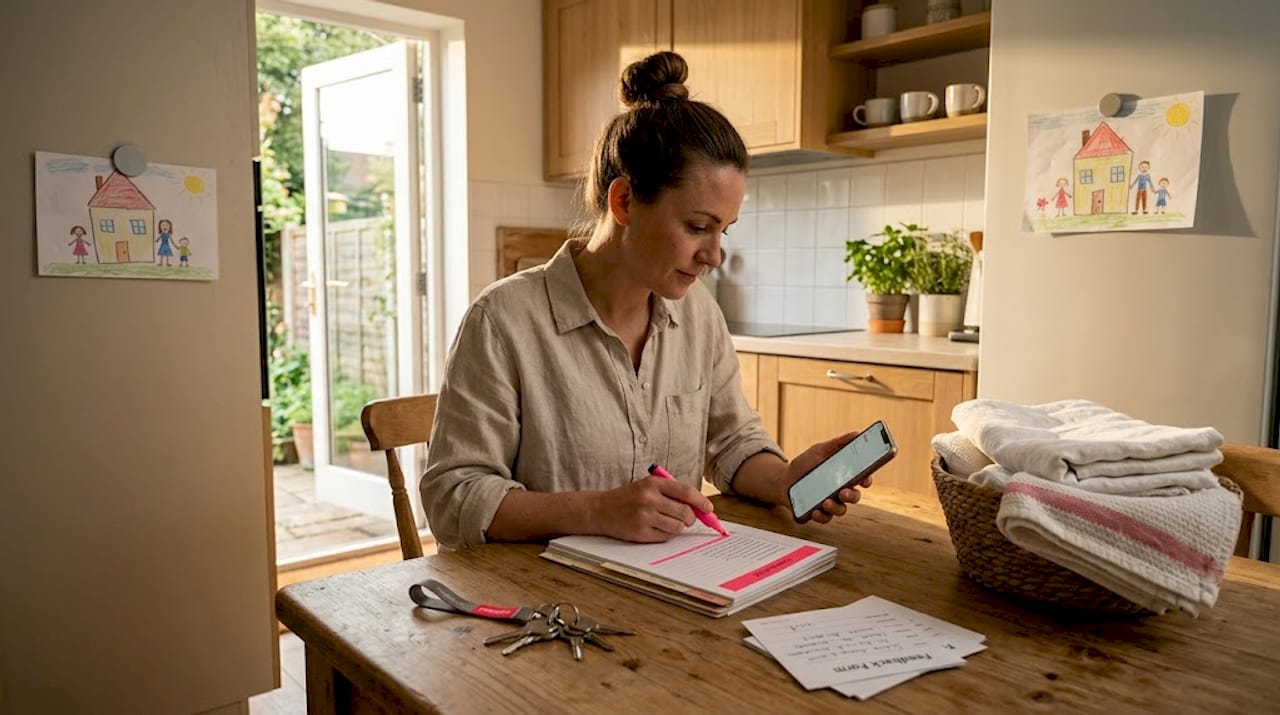
Reading every review and responding constructively is explicitly framed as a driver of improvement and guest satisfaction for premium hosts. This is not optional activity. It is a core operational discipline. The following strategies are practical and proven for Swedish premium rental owners.
Requesting reviews without pressure:
- Send a brief, warm message to guests 24 to 48 hours after checkout, thanking them for their stay and mentioning that reviews help other guests make informed decisions.
- Keep the message personal and specific to their stay, referencing something they mentioned or enjoyed.
- Never offer incentives for positive reviews; this violates platform terms and erodes trust.
- Time your message correctly. Guests who receive a follow-up too quickly may feel pressured; those who receive one too late may have already moved on.
Responding to negative reviews effectively:
- Respond within 48 hours. A prompt, professional response signals to future guests that you take feedback seriously.
- Acknowledge the guest’s experience without becoming defensive. Even if you disagree with elements of the review, validate that their experience was real.
- Explain what has changed operationally as a result of their feedback. Vague apologies carry less weight than specific commitments.
- Keep your response concise. Future guests will read it; lengthy defensive responses can do more damage than the original review.
- Never argue publicly with a guest. Even when you are correct, the perception damage is significant.
The most important insight here is that platform verification means negative reviews almost always reflect a real experience. Disputing their authenticity is rarely productive. Fixing the underlying issue is. For owners attracting long-term guests to premium Swedish properties, consistency of experience across every stay is the single greatest driver of sustained high scores.
Pro Tip: Create a simple post-stay checklist that maps common guest complaints to operational fixes. If three separate guests mention that the Wi-Fi instructions were unclear, that is a systems issue, not a guest issue. Fix the instructions once and the complaint disappears permanently.
The pressure of maintaining high scores over time is genuinely significant for private owners. A single bad week, whether caused by a maintenance failure, a difficult guest situation, or a communication delay, can undo months of careful reputation building. Flexible rental agreements can help owners manage occupancy in ways that reduce the risk of problematic stays, but they do not substitute for robust operational systems.
Beyond star ratings: Category-specific review improvement
Improving reviews is not simply about collecting more stars. The more precise and commercially valuable objective is to identify which specific categories are pulling your overall score down and to address those operational drivers directly. This distinction matters enormously for premium properties, where guests arrive with high expectations across every dimension of their stay.
On Booking.com, guests score multiple independent subscores including cleanliness, staff, value for money, and free Wi-Fi. A property can achieve a strong overall score while carrying a noticeably weaker cleanliness rating, and that subscore will be visible to every future guest who filters by cleanliness. Improving the correct operational driver matters more than chasing an overall rating improvement in isolation.
Consider the following practical checklist for category-specific review improvement:
- Cleanliness: Implement a structured cleaning protocol with a written checklist for every turnover. Commission independent inspections periodically. Replace linens and towels on a fixed schedule rather than waiting for visible wear.
- Value for money: Ensure your listing accurately represents what guests will receive. Overpromising and underdelivering is the fastest route to poor value scores, even at competitive price points.
- Staff and communication: Set clear response time targets. Guests who wait more than a few hours for a reply during their stay will note it. Automated responses acknowledging receipt of messages can bridge the gap while you prepare a full reply.
- Free Wi-Fi: Test your connection speed before every guest arrival. Provide clear, simple instructions in the property. Consider a backup solution for connectivity issues.
- Comfort: Invest in quality mattresses and bedding. These are the elements guests notice most acutely and remember most clearly.
- Accuracy: Review your listing description and photographs every quarter. Properties change over time, and an outdated listing is a reliable source of disappointment.
Choosing the right rental model for your Swedish property can also affect which operational levers are available to you. Owners working with professional operators benefit from structured systems that address each of these categories consistently, without the burden of managing every detail personally.
A fresh perspective: Why review management is your real competitive edge
The conventional view of premium rental success focuses on the property itself: its location, its design, its amenities. This view is understandable but incomplete. The data consistently shows that review management, as a sustained operational discipline, outperforms static property attributes as a driver of long-term rental income.
Consider the mechanics. On Booking.com, recent reviews carry greater weight than older ones, and on Airbnb, your rating becomes visible only after three guests have rated your property. This means that early performance and continuous service quality can disproportionately affect your search exposure and conversion rate. A beautifully designed property that delivers an inconsistent guest experience will eventually be outranked by a simpler property that delivers a flawless one, every time.
The uncomfortable truth for private owners is that meeting hotel-level expectations consistently is genuinely difficult without hotel-level systems. Guests who pay premium rates expect premium responses, including rapid communication, immaculate presentation on arrival, and immediate resolution of any issue that arises during their stay. A single slow response to a maintenance request, or a cleaning oversight discovered at check-in, can cost you a five-star rating that took three months to earn.
This is precisely where professional operators create structural advantage. Structured cleaning protocols, pre-arrival inspections, 24-hour guest support, and documented response procedures are not luxuries. They are the operational infrastructure that makes consistent five-star performance achievable at scale. The risks with unmanaged rentals in Sweden are not hypothetical. They show up directly in review scores, occupancy rates, and ultimately in annual rental income.
Review management is not a marketing activity. It is an operational one. Owners who treat it as such, building systems rather than simply hoping for positive feedback, consistently outperform those who rely on their property’s inherent appeal alone.
Optimise your rental property with Guestly Homes
If this guide has made one thing clear, it is that maintaining exceptional review scores requires more than a great property. It requires consistent operational systems, rapid guest support, and the discipline to act on feedback every single time.
Guestly Homes brings exactly that infrastructure to premium Swedish properties. From structured cleaning and pre-arrival inspections to 24-hour guest communication and proactive review management, every stay is managed to the standard that five-star scores demand. Whether you are considering a 1BR Nordic Apartment or a modern luxury villa in Sweden, Guestly’s fully managed model means your property performs consistently, without requiring your constant involvement. Explore how Swedish premium property solutions from Guestly Homes can protect and grow your rental income through review-driven performance.
Întrebări frecvente
How quickly do reviews impact my rental property’s visibility on Airbnb?
Airbnb displays your average star rating in search results only after three guests have submitted reviews, so your first three stays are critical for establishing early visibility.
Do negative reviews on Booking.com affect my property score more than older reviews?
Yes. Booking.com weights recent reviews more heavily than older ones, meaning a cluster of recent negative feedback will impact your score more strongly than historical positive reviews.
What’s the best way to respond to a negative review?
Respond promptly, acknowledge the guest’s experience honestly, and explain what operational change you have made as a result. Responding constructively signals professionalism to future guests and can meaningfully influence their booking decision.
Which review categories should I focus on for premium rentals?
Prioritise cleanliness, communication responsiveness, value accuracy, and Wi-Fi reliability. Booking.com scores these categories independently, so a weakness in any single area will be visible to prospective guests even if your overall score is strong.
Can positive reviews actually raise my nightly rate in Sweden?
Yes. Stockholm STR benchmarks confirm that review-driven conversion materially affects achievable ADR and RevPAR, meaning higher review scores directly support the ability to charge and sustain premium nightly rates.
Recomandate
- Why some Swedish rentals outperform their neighbours – Guestly Homes
- How to attract long-term guests to premium Swedish rentals – Guestly Homes
- Prepare your home for rental the right way in Sweden – Guestly Homes
- Construiește-ți un portofoliu imobiliar profitabil în Suedia: Ghidul pentru 2026 – Guestly Homes