


TL;DR:
- Effective long-term accommodation planning begins early, with accurate forecasting, flexible contracts, and phased procurement. Quality amenities, well-designed layouts, and reliable supplier relationships support team wellbeing, safety, and project stability throughout extended assignments. Proper management of these factors minimizes disruption, controls costs, and enhances team performance over the project duration.
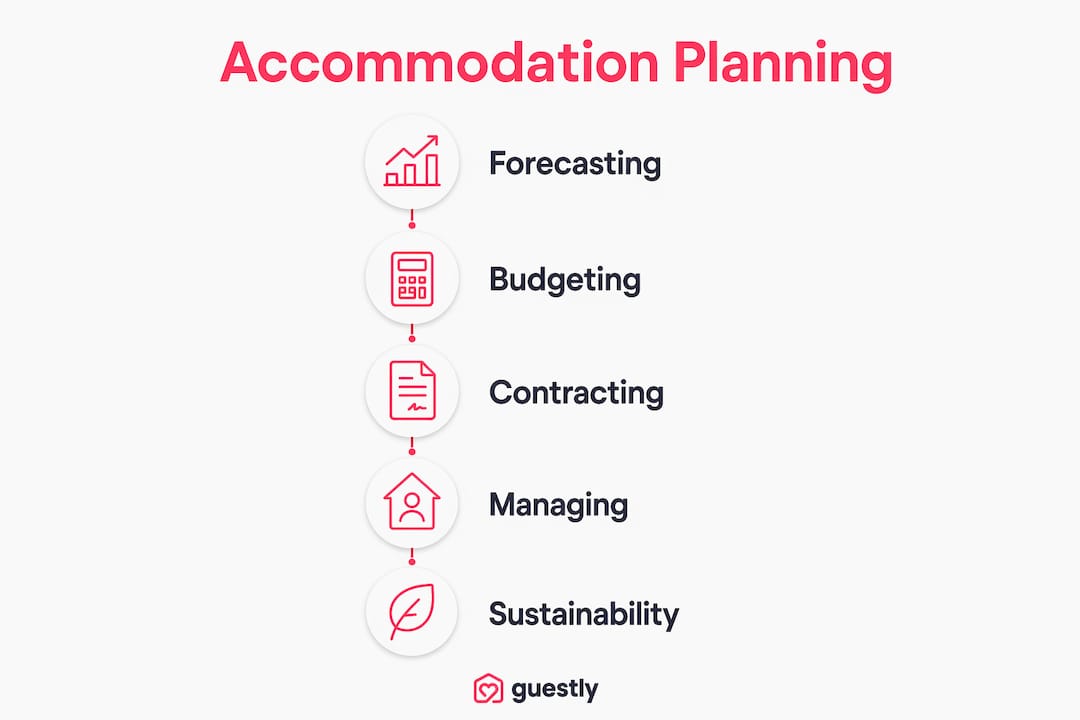
Accommodation planning for long-term projects is the process of forecasting, procuring, and managing suitable housing for teams assigned for six months or longer. Unlike short-term bookings, extended stay planning requires decisions made weeks or months in advance, with supplier lead times, budget cycles, and team wellbeing all in play simultaneously. Get it right and your project runs without distraction. Get it wrong and you face disruption that no Gantt chart can absorb. This guide gives project coordinators and HR managers a practical framework for planning long-term team housing from first forecast to final checkout.
What does accommodation planning for projects lasting six months or more actually involve?
Accommodation planning for projects of this duration is formally known as workforce accommodation management. The term covers everything from initial headcount forecasting to contract negotiation, phased procurement, and ongoing maintenance. Most coordinators treat it as a logistics task. The more experienced ones treat it as a risk management function.
The distinction matters because housing decisions compound over time. A poor choice made in week one creates friction in week twelve. A supplier relationship built on vague terms becomes a liability when your project extends by two months. The planning horizon for six-month-plus assignments demands the same rigour you apply to procurement, scheduling, and health and safety.
Three elements define every successful plan: accurate forecasting, disciplined budgeting, and contractual flexibility. Each one depends on the others. A precise headcount forecast is useless if your budget cannot absorb a phased arrival. A flexible contract means nothing if you have not mapped your peak occupancy dates in advance.

How do you forecast accommodation needs for long-term project teams?
Forecasting starts with headcount, but it does not end there. You need peak occupancy figures, not average ones. A civil engineering project might bring 40 workers on site in month one, scale to 120 by month four, and reduce to 30 for the snagging phase. Each phase requires a different accommodation footprint.
Beyond numbers, location logistics shape your forecast significantly. Remote sites with limited local housing stock require on-site modular units. Urban projects may draw on serviced apartments or managed villas. Climate matters too. A project running through a Nordic winter needs insulated, heated units with covered walkways. A summer build in southern Europe needs ventilation and shading built into the spec.
Amenity requirements belong in the forecast from day one. Teams on six-month assignments need more than a bed. Private rooms, shared kitchens, laundry facilities, and reliable internet access are not optional extras. They are the difference between a team that performs and a team that deteriorates.
Procurement lead times are longer than most coordinators expect. Production alone takes 4–8 weeks for large-scale temporary site accommodation, with shipping adding a further 2–6 weeks and on-site assembly taking 1–3 days per unit. That means a project starting in april needs its accommodation order placed no later than january.
Pro Tip: Involve your accommodation supplier in the forecasting process at least three months before mobilisation. Experienced suppliers can flag capacity constraints, suggest phased delivery schedules, and help you build contingency into the plan before it becomes a crisis.
- Map peak headcount by project phase, not just overall numbers.
- Identify location constraints: remote site, urban centre, or hybrid.
- List required amenities: private rooms, kitchens, laundry, internet.
- Confirm supplier lead times and work backwards from your start date.
- Build a 10–15% buffer into your unit count for late joiners and extensions.
How do you budget for extended project accommodation without overspending?
Budgeting for six-month project housing is not simply a matter of multiplying a nightly rate by the number of beds. The real cost picture includes hire or rental fees, utilities, cleaning, maintenance, and the management overhead of coordinating it all. Each of these lines can surprise you if you have not scoped them explicitly.
Poor quality accommodation carries a cost that rarely appears in a budget spreadsheet. Quality accommodation reduces operational risk and supports project continuity, while substandard welfare units increase disruption and safety incidents. A team housed in cramped, poorly maintained units will underperform. That underperformance has a project cost that dwarfs the saving made on the accommodation line.
Modular temporary accommodation offers a practical middle ground between cost and quality. Modular solutions reduce delivery schedules by up to 40% compared to traditional on-site construction. That speed translates directly into cost savings on mobilisation. Many modular units are also designed for multiple deployment cycles, supporting circular construction principles and reducing waste across successive projects.
| Accommodation type | Typical cost profile | Flexibiliteit | Duurzaamheid |
|---|---|---|---|
| Modular on-site units | Medium upfront, low ongoing | High: scalable and relocatable | Strong: reusable across projects |
| Hotel or serviced rooms | High per night, no setup cost | Low: fixed room count | Moderate: depends on property |
| Managed rental homes or villas | Medium to high, lease-based | Medium: contract-dependent | Variable: depends on operator |
Pro Tip: Negotiate hire terms that align with your project’s funding cycles and approval gates. Flexible hire terms tied to project milestones protect your budget if timelines shift, and they give you a legitimate exit point if the project is paused or descoped.
How do you manage team changes and project extensions without losing control?
Mid-project headcount changes are the rule, not the exception, on assignments lasting six months or more. Subcontractors rotate in and out. Specialist teams arrive for defined phases. Key personnel leave and replacements take time to onboard. Each change creates an accommodation event that your plan must absorb without disruption.
Staggered procurement is the most effective tactic for managing this complexity. Experienced suppliers stage shipments to install units progressively, avoiding the logistical pressure of a single large delivery. This approach also gives you time to confirm actual arrival numbers before committing to full capacity.
A phased arrival plan works alongside staggered procurement. Rather than housing everyone from day one, you bring teams on site in waves that match the project schedule. This reduces the risk of paying for empty units during the ramp-up phase and gives your site team time to manage inductions properly.
Four tactics keep accommodation flexible as your project evolves:
- Secure a core unit count with firm contracts and hold an option on additional units with a defined notice period.
- Build a maintenance schedule into the contract from the outset, with clear responsibilities for the supplier versus your team.
- Review occupancy weekly during the first two months, then monthly once the project stabilises.
- Agree a formal extension process with your supplier before the original end date, not after it.
Employee wellbeing is directly affected by how smoothly these transitions are managed. A team that arrives to find its accommodation unready, or that loses units unexpectedly during a project extension, loses confidence in the organisation. That confidence is hard to rebuild over a six-month assignment.
What layout and amenities make long-term accommodation work for teams?
The physical design of your accommodation site has a measurable effect on team performance and safety. Thoughtful camp layouts that separate noisy work zones from sleeping and rest areas improve morale and reduce fatigue-related incidents. This is not a comfort preference. It is an operational requirement on any project running multiple shifts.
“Accommodation is a critical operational component, not just a perk. Investing in quality solutions enhances project stability and sustainability alignment.” — Wernick Group
The amenities that matter most on extended assignments are the ones that support daily life without friction. High-quality facilities such as laundry, dining, and recreation areas placed within easy walking distance promote wellbeing and reduce fatigue and safety incidents. Internet access is non-negotiable. Teams on long assignments need to maintain contact with family and manage personal administration.
Key layout principles for six-month-plus sites:
- Separate sleeping quarters from noisy operational zones.
- Position dining and recreation areas within a short walk of all accommodation units.
- Mark emergency routes clearly and keep them free of equipment at all times.
- Plan for routine inspections every four to six weeks, with a clear process for reporting and resolving maintenance issues.
- Include quiet zones for rest and recovery, particularly on projects running 24-hour shift patterns.
Sustainability belongs in the layout conversation too. Energy-efficient units with good insulation, LED lighting, and water-saving fixtures reduce the site’s environmental footprint and lower utility costs over a six-month period. For public sector projects, this alignment with Net Zero targets is increasingly a procurement requirement, not a preference.
Key takeaways
Effective accommodation planning for long-term projects requires early forecasting, disciplined budgeting, and contractual flexibility working together from the outset.
| Punt | Details |
|---|---|
| Start forecasting early | Procurement lead times of 4–8 weeks for production mean orders must be placed months before mobilisation. |
| Budget for the full cost picture | Include utilities, cleaning, and maintenance alongside hire fees to avoid mid-project budget surprises. |
| Build flexibility into contracts | Align hire terms with project milestones and secure options on additional units before you need them. |
| Stage procurement and arrivals | Phased delivery and staggered arrivals reduce logistics pressure and avoid paying for empty units. |
| Design for wellbeing | Separating work zones from rest areas and providing quality amenities directly supports team performance and safety. |
What I have learned from watching long-term accommodation plans succeed and fail
I have seen project coordinators treat accommodation as the last item on the mobilisation checklist. It is always the first thing that causes a problem. The teams that get this right share one habit: they start the accommodation conversation at the same time they start the project plan, not after the contract is signed.
The most common misconception I encounter is that flexibility costs more. In practice, the opposite is true. A contract with a defined extension option and a clear scale-up clause costs marginally more upfront and saves significantly when the project runs long. Projects almost always run long.
What I find underappreciated is the connection between accommodation quality and project output. A team housed well arrives on site rested, focused, and ready. A team that has spent the night in a poorly maintained unit, with unreliable heating and no decent kitchen, arrives depleted. Over six months, that difference accumulates into measurable productivity loss.
My advice to any HR manager or coordinator approaching a long-term assignment is to keep teams comfortable from day one, not as an afterthought. Talk to your supplier continuously, not just at the start and end. And treat the accommodation plan as a living document that you review and adjust as the project evolves.
— Joakim
How Guestlyhomes supports long-term project teams across the Nordics
Guestlyhomes operates fully managed, high-standard villas and apartments across Sweden, purpose-built for professionals and project teams on extended assignments. Every property is maintained to a consistent standard, with no management overhead passed to the booker. You make one call, confirm the dates, and the accommodation performs without supervision.
For teams of four or more, the 5BR business villa and the 4BR Grand Villa with Garden offer the space, kitchen facilities, and private living areas that make six-month assignments genuinely liveable. Guestlyhomes handles everything from check-in to maintenance, so your team focuses on the project and you focus on delivery. Explore the full range of long-term stays available across Sweden.
FAQ
What is workforce accommodation management?
Workforce accommodation management is the formal term for planning, procuring, and maintaining housing for project teams on extended assignments. It covers forecasting, supplier contracts, phased delivery, and ongoing maintenance throughout the project lifecycle.
How far in advance should you book accommodation for a six-month project?
Book at least three to four months before mobilisation. Production lead times for modular units alone run 4–8 weeks, with shipping adding a further 2–6 weeks, so late orders create real risk of delayed site readiness.
What accommodation type suits long-term project teams best?
Modular on-site units suit remote or large-scale projects because they are scalable and relocatable. Managed villas or serviced apartments work well for urban assignments where teams need home-like conditions and consistent facilities over several months.
How do you handle accommodation when a project extends unexpectedly?
Agree a formal extension process with your supplier before the original end date. Contracts with defined extension options and notice periods give you the flexibility to scale up or continue without renegotiating from scratch under time pressure.
Why does accommodation quality affect project performance?
Poor quality accommodation increases fatigue and safety incidents, which directly reduces output. Quality housing with proper amenities, separated rest zones, and reliable facilities supports team morale and keeps performance consistent across a long assignment.