

|
Trinity Audio -soittimen valmistelu...
|
TL;DR:
- Meaningful personalisation in executive accommodation involves knowing guests’ preferences, routines, and needs, not just adding superficial amenities. Proper data collection, structured preparation, precise execution, and post-stay verification are essential for delivering a frictionless, tailored experience. Guestly Homes provides high-standard properties and systems designed to make personalised and scalable executive stays effortless.
When an executive arrives at their accommodation after a gruelling travel day, the last thing they want is a generic room with a fruit basket and a printed welcome card. As an HR professional or project manager in Sweden, you are expected to deliver a seamless, high-standard living experience for every extended stay, without losing hours to back-and-forth emails, last-minute requests, and guesswork. This guide gives you a clear, structured process for personalising executive accommodation from the first data-gathering stage through to post-stay evaluation, so you can meet rising expectations with confidence and precision every time.
Sisällysluettelo
- Understanding modern personalisation in executive accommodation
- Preparation: what you need to tailor an executive stay
- Execution: steps to personalise the stay for maximum executive satisfaction
- Verification: measuring success and adjusting your approach
- What most miss about true personalisation for executives
- How Guestly Homes makes executive personalisation effortless
- Frequently asked questions
Keskeiset asiat
| Kohta | Yksityiskohdat |
|---|---|
| Go beyond basics | Personalisation in 2026 means leveraging data and integrated tech, not just adding extra amenities. |
| Systematic preparation matters | Gather key information and set up robust systems for flawless customisation every time. |
| Step-by-step yields consistency | Following a precise workflow prevents missed details and ensures every executive feels valued. |
| Feedback closes the loop | Regular reviews and adapting to feedback fuel ongoing improvement and stronger satisfaction. |
Understanding modern personalisation in executive accommodation
True personalisation in executive travel has moved far beyond selecting a pillow menu or arranging airport transfers. In 2026, it means integrating guest profiles, leveraging technology, and designing a stay that reflects an individual’s working style, wellness needs, cultural preferences, and professional context. This is a meaningful shift that HR teams in Sweden cannot afford to overlook.
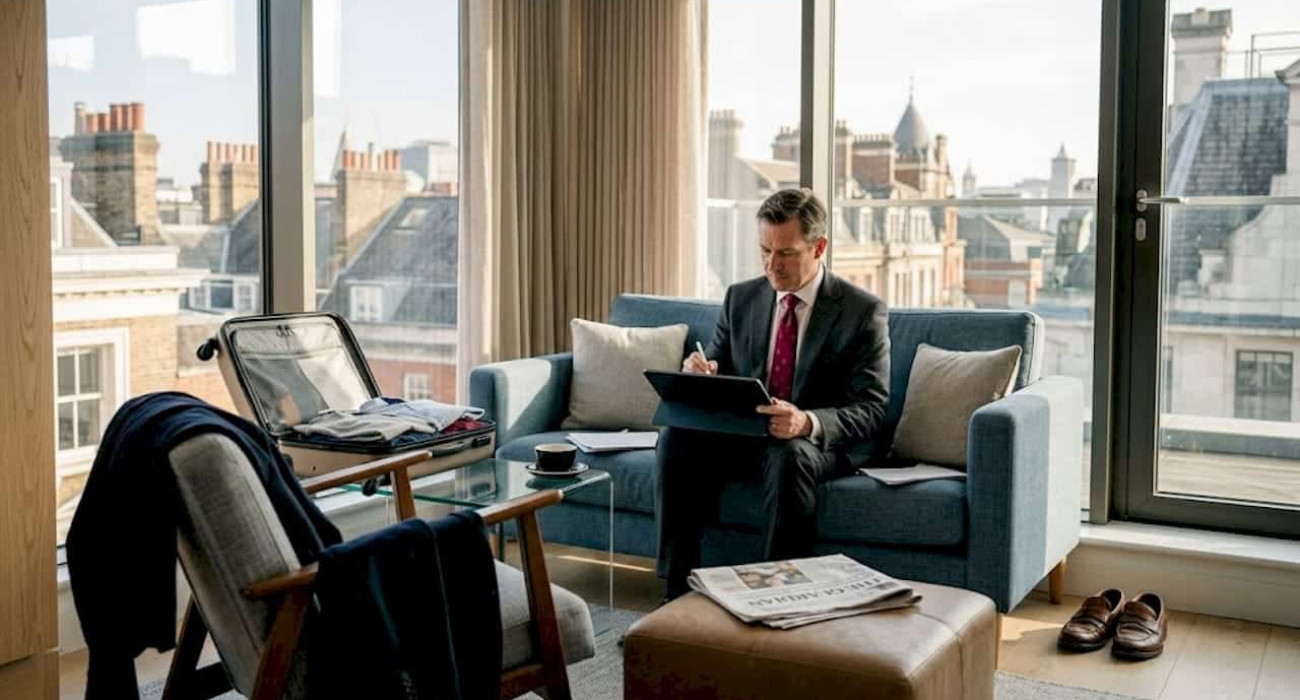
The distinction between superficial and meaningful personalisation is stark. Superficial personalisation means adding someone’s name to a welcome card or stocking their favourite coffee brand. Meaningful personalisation means knowing that a particular executive prefers a standing desk, works until midnight on Tuesdays, requires blackout curtains for restorative sleep, and expects a reliable fibre broadband connection for video calls across multiple time zones. These details fundamentally change the quality of a stay.
| Superficial personalisation | Meaningful personalisation |
|---|---|
| Preferred beverage in fridge | Workspace configured to executive’s habits |
| Name on welcome card | Stay profile built from past booking data |
| Branded toiletries | Wellness preferences (gym, sauna, meal prep) |
| Generic city guide | Curated local services matched to lifestyle |
| Welcome fruit basket | Dietary requirements fully accommodated |
Personalisation is now driven by strategic data integration and delivers an “experience-led”, ecosystem approach, according to research from Skift. This matters enormously for Swedish HR professionals who manage repeat executive placements, because building a rich guest profile over time generates compounding returns in satisfaction and loyalty.
“The measure of personalisation is not what you add to a stay. It is what you remove: friction, uncertainty, and the need for an executive to ask twice.”
Understanding corporate accommodations at a structural level also helps HR teams communicate more effectively with accommodation partners and set realistic, high-impact expectations from the outset. Modern operators now use digital signage for guest experience and integrated property management systems to deliver precisely this kind of anticipatory service at scale.
Preparation: what you need to tailor an executive stay
Armed with an understanding of what meaningful personalisation looks like, the next step is gathering the right information and resources to make it happen. This preparation phase is where most coordinators either set themselves up for success or create unnecessary stress down the line.
The core data you need falls into three categories: executive-level preferences, historical stay data, and company-wide travel protocols. Executive preferences include dietary requirements, sleeping habits, connectivity needs, preferred room temperature, language for communication, and any accessibility considerations. Historical stay data, when available, tells you what worked and what did not across previous placements. Company travel protocols define your budget parameters, approved service levels, and any security or confidentiality requirements.
Platforms now treat personalisation as a data-driven ecosystem, not just upselling perks. This means the tools you use to capture and store preference data matter significantly. A basic spreadsheet is a starting point, but dedicated property management systems and guest profile applications allow you to share information securely with accommodation operators, flag recurring requests automatically, and build profiles that grow more accurate with each stay.
Essential tools and roles for a personalised stay:
- Property management system (PMS): Stores guest profiles, booking history, and service notes
- Guest communication app: Enables direct, real-time contact between executive and local support
- Secure preference form: Collects personal and professional requirements before arrival
- Stay coordinator: The HR or PM point of contact responsible for all pre-arrival logistics
- Local support contact: An on-the-ground person who handles day-of requests and property access
- Concierge service: Optional but valuable for high-demand executives requiring curated local services
Reviewing the must-haves for executive housing gives you a concrete baseline for what a high-performing stay environment should include before you add any personalisation layer on top. Similarly, mapping out the executive apartment setup process ensures your operator and internal team are aligned on timelines, responsibilities, and quality benchmarks.
Pro Tip: Create a secure, standardised preference form that is sent to each executive two weeks before their stay. Keep it concise (under 10 questions) and frame it as a service, not an admin task. A short note explaining that the responses help tailor their specific home for the duration of the stay increases completion rates significantly.
| Data category | What to collect | How to collect it |
|---|---|---|
| Professional needs | Workspace, connectivity, meeting facilities | Pre-arrival preference form |
| Wellness preferences | Gym, sauna, meal prep, sleep environment | Preference form plus past stay data |
| Dietary requirements | Allergies, intolerances, preferred cuisine | Preference form, updated at each stay |
| Local service requests | Transport, restaurants, dry cleaning | Guest communication app |
| Communication preferences | Response time expectations, preferred channel | Onboarding call with coordinator |
Execution: steps to personalise the stay for maximum executive satisfaction
Once preparation is complete, it is time to execute each element of personalisation with precision and clarity. This is where the work done in the preparation phase pays off, and where a structured, stepwise approach separates good coordinators from exceptional ones.
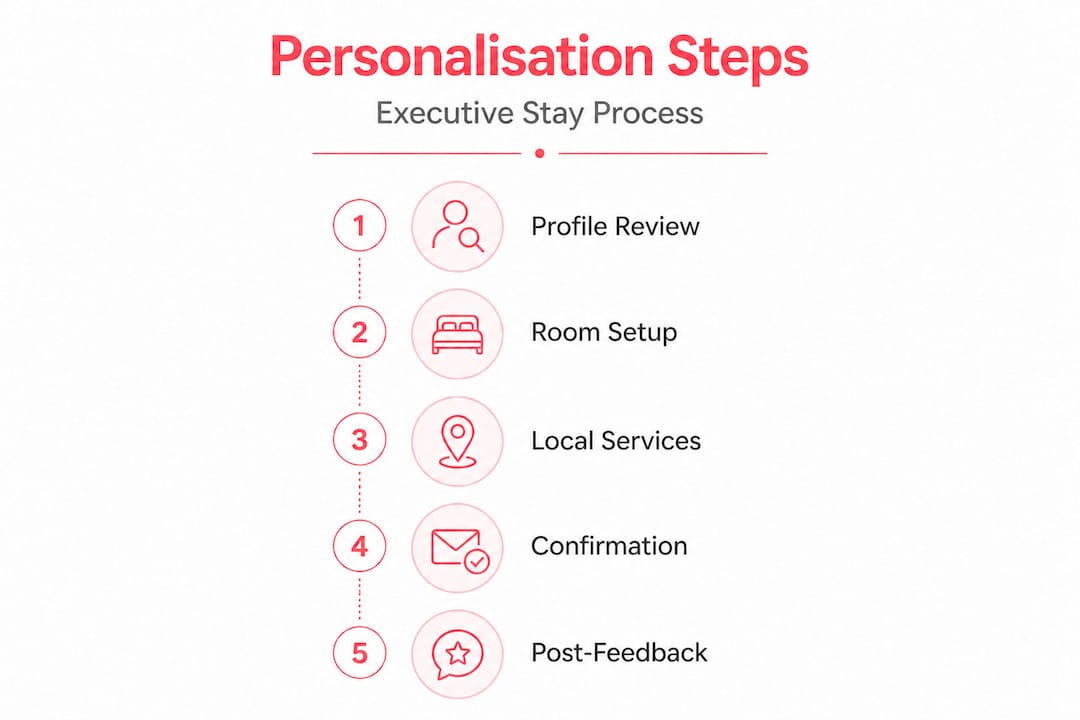
Step 1: Match accommodation to the executive’s needs. Before booking, cross-reference the executive’s profile against available properties. Consider location relative to their work site, proximity to transport links, neighbourhood character (quiet versus central), and property features such as a dedicated home office, private outdoor space, or on-site parking. For executives on extended placements of several weeks or months, these factors affect not just comfort but day-to-day productivity. Review executive accommodation options to ensure you are matching the right home to the right person, not simply filling a vacancy.
Step 2: Customise in-room setup and technology access. Once the property is confirmed, work with the operator to configure the space ahead of arrival. This includes adjusting furniture layout for a preferred workspace, ensuring the correct monitor or docking station is available, setting connectivity to the required specification, stocking the kitchen with preferred items, and confirming that any wellness features (such as a sauna, exercise equipment, or blackout blinds) are prepared. Reading up on preparing homes for executives gives coordinators a clear checklist for what a well-prepared property should look like on arrival day.
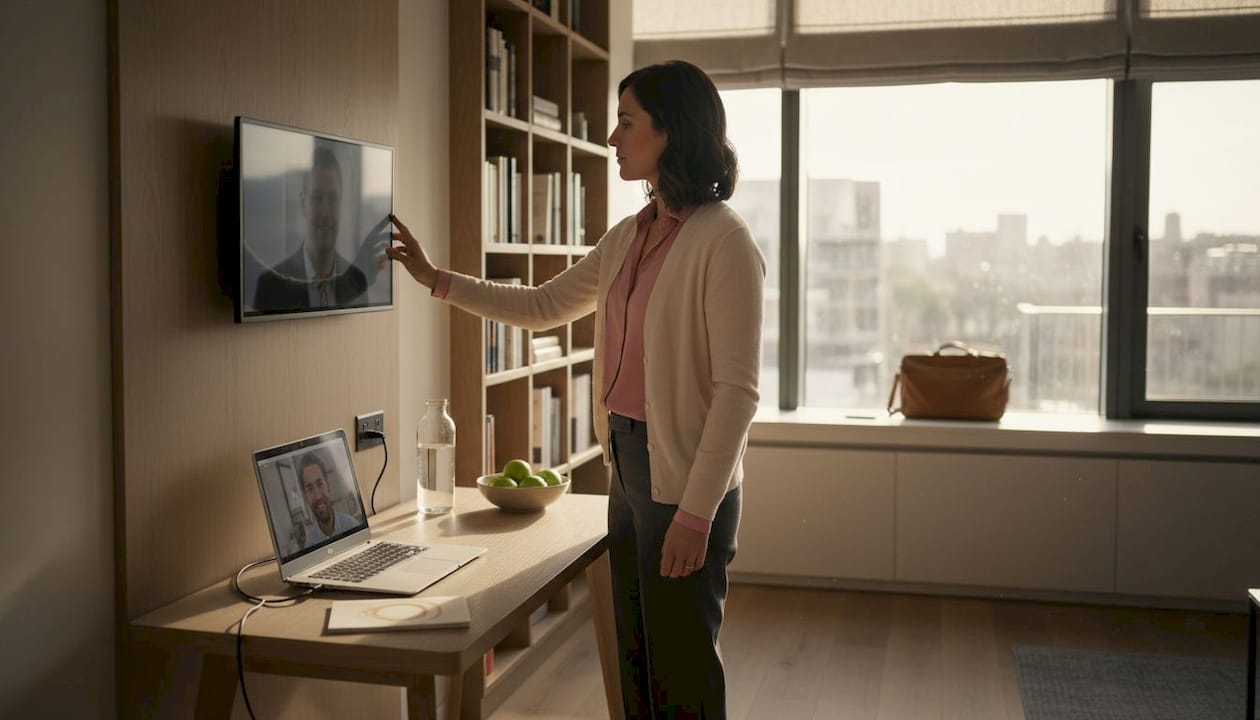
Step 3: Arrange local services and request-driven extras. Personalisation extends beyond the front door. For long-stay executives, access to reliable local services makes a tangible difference. Arrange restaurant recommendations aligned to dietary preferences, a preferred dry-cleaning provider, a local gym membership if not on-site, and any transport arrangements such as car hire or a regular taxi account. A brief curated local guide tailored to the executive’s interests (rather than a generic digital hotel guide style document) demonstrates genuine thought and care.
Step 4: Communicate and confirm all details with guests and support teams. No personalisation strategy delivers its full value unless it is communicated clearly to every party involved. Send the executive a stay summary at least 48 hours before arrival. Share the same summary with local support staff and the accommodation operator. Confirm emergency contacts, check-in procedures, and any outstanding requests are resolved. Clear communication prevents the last-minute scrambles that undermine an otherwise well-prepared stay.
Personalisation success is achieved when platforms and brands work as cohesive, experience-led ecosystems. In practical terms, this means your internal systems, your operator’s systems, and your executive’s expectations are aligned and speaking the same language before the keys are handed over.
Pro Tip: Use a stay summary table to consolidate every confirmed detail into a single, scannable document. Include the property address, check-in time, Wi-Fi credentials, local support contact, confirmed amenities, and any outstanding requests. Send this to the executive, the local support contact, and your own records simultaneously.
Verification: measuring success and adjusting your approach
With setup and execution handled, it is essential to close the loop by verifying success and identifying areas for improvement. This stage is where many HR teams fall short, treating each booking as complete once the executive has checked in. In reality, the verification phase is what transforms a good stay into a repeatable, scalable standard.
The most direct verification method is a structured post-stay feedback request. Keep it brief: three to five focused questions that assess specific elements of the stay rather than asking for a general rating. Ask about workspace quality, the accuracy of pre-arrival setup relative to stated preferences, responsiveness of local support, and whether the executive would choose the same property again. This targeted approach generates actionable data rather than vague satisfaction scores.
| Measurement method | What it tells you | When to apply it |
|---|---|---|
| Post-stay preference form | Accuracy of personalisation versus expectation | Within 48 hours of check-out |
| Repeat booking rate | Long-term satisfaction and brand confidence | Reviewed quarterly |
| Incident log review | Where service gaps or delays occurred | Within one week of check-out |
| Benchmarked satisfaction score | Performance against standard versus personalised stays | Reviewed per stay and cumulatively |
| Executive peer referral | Indirect signal of strong experience | Monitored over 3 to 6 months |
Strategic personalisation relies on integrated systems to ensure outcomes are both visible and actionable. In practice, this means feeding post-stay data back into guest profiles immediately, so the next coordinator handling the same executive starts from a stronger baseline. Reviewing how to choose executive housing at the verification stage is also useful: sometimes the feedback reveals a mismatch between property type and executive need that can be corrected in future placements.
“The most powerful feedback is swift, actionable, and digital. A structured post-stay message sent within 24 hours captures accurate impressions and signals to the executive that their experience is genuinely valued.”
Tweak your approach after every placement. If an executive notes that the workspace was not configured correctly despite providing preferences, review the handoff process between coordinator and operator. If local service recommendations were not used, consider whether they were too generic. Small, consistent adjustments accumulate into a materially better process over time.
What most miss about true personalisation for executives
Most HR teams in Sweden approach executive accommodation personalisation the same way: choose a high-quality property, add a few thoughtful extras, and assume the job is done. The honest reality is that this approach produces a decent stay but rarely produces loyalty, advocacy, or the kind of frictionless experience that keeps high-performing executives focused on their work rather than their surroundings.
The fundamental mistake is treating personalisation as a list of amenity choices rather than a joined-up system. Offering an executive the option between a foam or memory foam pillow is not personalisation. Building a guest profile that captures workspace preferences, communication style, wellness habits, and dietary requirements, and then surfacing that profile automatically at every future booking, is personalisation. The difference is the difference between a hotel that noticed your name and an operator who already knows you.
Platforms increasingly prioritise long-term loyalty through experience ecosystem strategies. Swedish HR teams can lead in this space by adopting two practices that remain surprisingly rare in practice. First, build and maintain a centralised executive preference library that is updated after every stay and shared with approved accommodation partners. Second, establish a post-stay review rhythm that is built into your booking process, not added as an afterthought. These two steps alone place your programme ahead of the majority of corporate travel operations in the region.
The corporate travel lodging guide offers a useful framework for teams managing multiple executives across multiple locations simultaneously. The principle is the same whether you are managing one senior director or a team of fifteen consultants: the consistency of your process is what makes personalisation scalable, not the generosity of individual gestures.
How Guestly Homes makes executive personalisation effortless
Delivering the kind of structured, data-informed personalisation described in this guide requires an accommodation partner that operates at the same standard you hold yourself to. That is precisely where Guestly Homes is built to help.
Guestly Homes operates fully managed, high-standard properties across Sweden, purpose-built for extended executive stays of 10 nights to 12 months. Every property is maintained to 5-star operator standards, with smart technology integration, flexible service configurations, and local support that responds without being chased. Whether you are placing a single C-suite executive or coordinating accommodation for a project team, Guestly Homes provides one clear interface, consistent quality, and a service model that makes your role easier. Explore the Guestly Homes portfolio and see how effortless executive personalisation can become when the operator is built for exactly this purpose.
Frequently asked questions
What kind of information should be collected to personalise executive stays?
It is vital to gather executive preferences, past stay data, company travel policies, and any special requirements before booking. Personalisation is tightly linked to executive data and travel identity, so the richer your profile, the more precise the outcome.
How do you measure the success of a personalised executive stay?
Success is best tracked through executive feedback, analysed reviews, and benchmarking satisfaction against repeat booking rates. Integrated systems make outcomes visible and actionable, which is why feeding post-stay data back into guest profiles immediately is so important.
What is the biggest mistake HR teams make in executive accommodation?
Many stop at basic amenities and miss the opportunity of a joined-up, data-driven approach that delivers real loyalty. Many brands treat personalisation as simple perks rather than as part of an experience ecosystem, which limits its long-term impact significantly.
Can technology improve the personalisation of executive stays?
Modern platforms integrate technology for seamless profile management and tailored experiences throughout the stay. Integrated systems and digital tools are central to personalised guest experiences, enabling coordinators to scale high-quality outcomes across multiple placements efficiently.
Suositeltu
- How to Prepare Homes for Executives: A Step-by-Step Guide – Guestly Homes
- Executive Apartment Setup Process for Seamless Stays – Guestly Homes
- How to Choose Executive Housing for Optimal Comfort – Guestly Homes
- Master extended stay booking workflow for project teams – Guestly Homes
- Host executive retreats at sea for maximum impact