


More than 60 percent of british corporate teams report that securing consistent, high-quality housing in Sweden is full of surprises and hidden challenges. For HR leads managing relocations to Piteå, Luleå, Boden, or Nyköping, misunderstandings about long-term rentals can lead to unexpected costs and compliance headaches. This guide clarifies what truly sets Swedish long-term rentals apart and helps you avoid the costly pitfalls international firms often face.
Índice
- Long Term Rent: Definition and Misconceptions
- Types of Extended Rental Arrangements
- How Long Term Rentals Work in Sweden
- Legal Protections and Compliance Essentials
- Costs, Obligations, and Exit Procedures
- Comparing Long Term and Short Stay Solutions
Puntos clave
| Punto | Detalles |
|---|---|
| Understanding Legal Frameworks | Long-term rental agreements vary significantly by country, influencing tenant rights and responsibilities. Familiarise yourself with local laws to avoid legal pitfalls. |
| Fixed vs. Indefinite Leases | Fixed-term leases offer stability and predictability, while indefinite leases provide flexibility for longer tenancies. Choose based on your professional mobility needs. |
| Deposit and Termination Policies | Be aware that deposit requirements and termination clauses differ regionally. Ignoring these can lead to financial losses or legal disputes. |
| Identify Costs Beyond Rent | Consider all potential costs like utilities, service fees, and administrative charges when evaluating long-term rental options to ensure financial clarity. |
Long Term Rent: Definition and Misconceptions
Long-term rent represents an accommodation arrangement extending beyond standard short-term leases, typically spanning periods of several months to multiple years. Unlike traditional rental agreements, these contracts provide extended housing stability for professionals, corporate teams, and individuals seeking predictable living arrangements. Understanding the nuanced landscape of long-term rent requires distinguishing between various legal frameworks and tenant rights.
The European tenancy law research reveals significant complexities in defining long-term rent across different national contexts. Importantly, long-term rent is not a uniform concept but varies substantially between regions, with each country establishing unique regulatory standards. These differences impact critical aspects such as tenant protections, rental duration, pricing mechanisms, and legal obligations for both property owners and occupants.
Key characteristics of long-term rent typically include:
- Fixed contract periods ranging from 6 to 24 months
- More stable monthly pricing compared to short-term rentals
- Enhanced tenant rights and legal protections
- Greater flexibility for professional relocations
- Potential opportunities for lease renewals or extensions
Misconceptions about long-term rent often arise from oversimplified assumptions. Many individuals mistakenly believe that long-term rental agreements are identical across different regions, which is fundamentally incorrect. Professional renters must understand that legal frameworks, deposit requirements, termination clauses, and tenant rights can differ dramatically between jurisdictions.
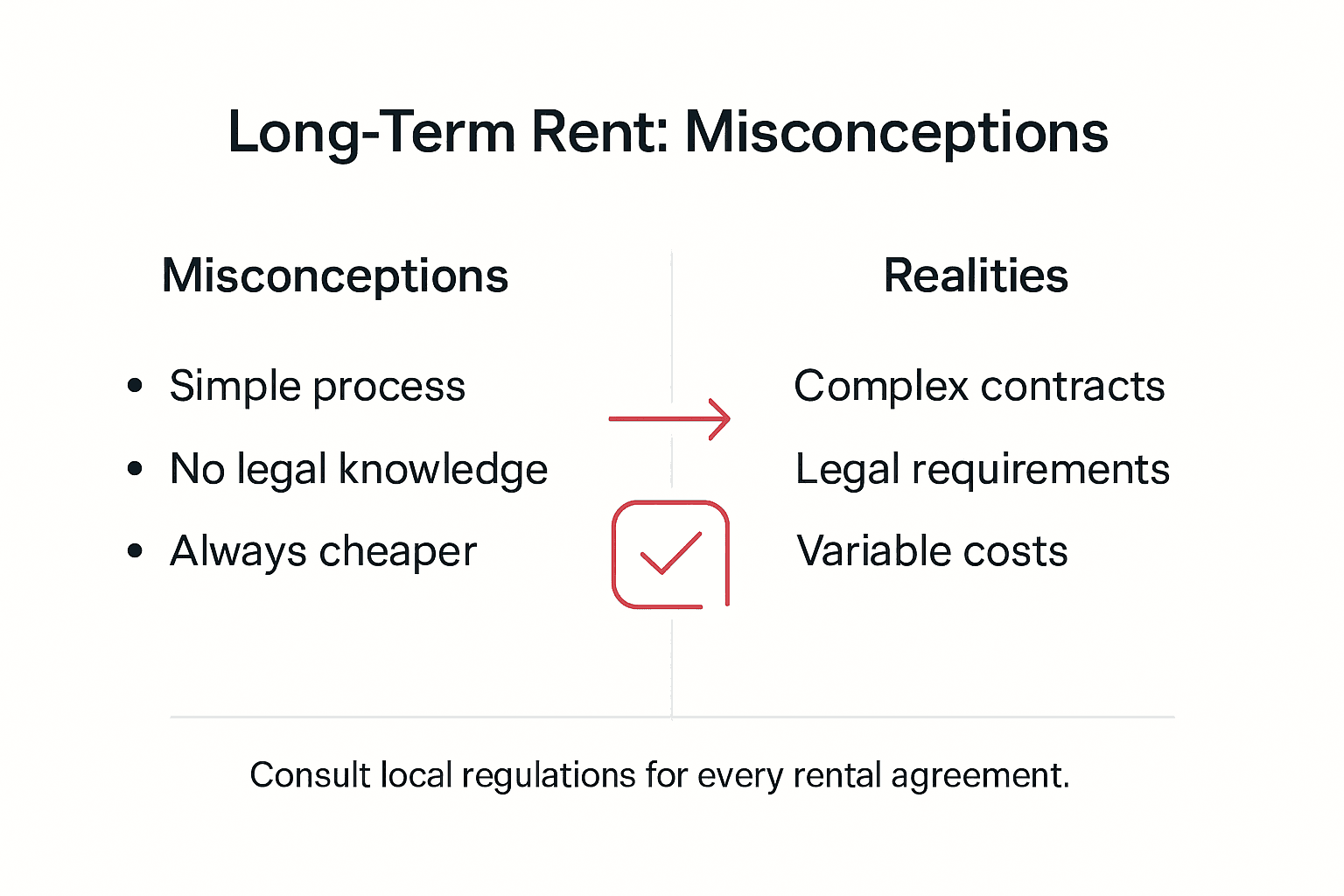
The following table highlights how long-term rental misconceptions can affect decision-making for professional tenants across European regions:
| Misconception Impact | Realistic Scenario | Professional Consequence |
|---|---|---|
| Assuming uniform contracts | National laws vary widely | Legal exposure or unexpected costs |
| Ignoring deposit policies | Deposit rules differ regionally | Loss of deposit, disputes on exit |
| Overlooking termination clauses | Jurisdictions require specific notice | Unplanned relocation, financial penalties |
| Believing all tenant rights are identical | Some countries limit landlord actions more | Varying levels of housing security |
Pro tip: Before committing to a long-term rental agreement, always consult local tenancy regulations and consider seeking legal advice to understand specific regional requirements and potential contractual nuances.
Types of Extended Rental Arrangements
Extended rental arrangements encompass diverse accommodation models designed to meet specific professional and personal housing requirements. These arrangements differ significantly in structure, legal framework, and duration, offering flexibility for various tenant needs. Understanding the nuanced European tenancy law landscape reveals multiple distinctive rental categories essential for Nordic professionals seeking stable housing solutions.
The primary types of extended rental arrangements include:
- Fixed-Term Leases: Predetermined contract periods typically ranging from 6 to 24 months
- Indefinite Leases: Open-ended agreements providing long-term housing security
- Regulated Leases: Specialised contracts with specific legal protections and stipulations
- Professional Accommodation Leases: Tailored agreements for corporate relocations and project-based work
Fixed-term leases represent the most common extended rental arrangement, particularly attractive for corporate professionals and international assignees. These agreements offer predictability and structured financial planning, with clearly defined start and end dates. Nordic companies frequently utilise such arrangements to support employee relocations, providing stable housing solutions that align with project timelines and professional mobility requirements.

Indefinite leases present an alternative model, offering tenants increased housing security and reduced relocation uncertainty. These agreements provide more flexible terms, allowing for easier termination while maintaining longer-term residential stability. Such arrangements are particularly beneficial for professionals seeking extended stays without committing to rigid, predetermined contract durations.
For a clearer understanding of extended rental models, the table below compares their legal frameworks and suitability for Nordic professionals:
| Rental Arrangement Type | Legal Structure | Suitability for Professionals |
|---|---|---|
| Fixed-Term Lease | Defined start/end, regulated | Predictable, best for project-based stays |
| Indefinite Lease | Open-ended, flexible exit | High security, fits uncertain durations |
| Regulated Lease | Statutory conditions apply | Enhanced protection, suitable for families |
| Professional Accommodation Lease | Custom terms, company-backed | Ideal for relocations, corporate assignments |
Pro tip: Always carefully review contract terms, understanding specific termination clauses and potential penalties before committing to any extended rental arrangement.
How Long Term Rentals Work in Sweden
Long-term rentals in Sweden operate within a highly regulated and tenant-focused legal framework, designed to provide exceptional housing security and stability for professionals and residents. Swedish tenancy regulations establish comprehensive protections that distinguish the Nordic rental market from many other European countries, prioritising fair treatment and predictable housing arrangements.
Key characteristics of Swedish long-term rental systems include:
- Fuertes protecciones jurídicas para los inquilinos
- Standardised contract structures
- Regulated rent increase mechanisms
- Mandatory registration of rental agreements
- Extensive tenant rights against arbitrary eviction
The Swedish rental market primarily functions through two primary channels: Public Housing Associations (kommunala bostadsbolag) and Private Rental Providers. Public housing associations often offer more regulated and affordable options, with strict rules governing rent calculations and tenant selection. Private rental providers, while operating under similar regulatory frameworks, provide more diverse accommodation options for professionals and international assignees.
Professionals seeking long-term rentals in Sweden must navigate a complex but tenant-friendly system. Rental agreements typically require comprehensive documentation, including proof of employment, income verification, and sometimes personal references. The Swedish approach emphasises long-term residential stability, with legal mechanisms that protect tenants from sudden rent increases and unexpected contract terminations.
Pro tip: Engage a local housing expert or relocation specialist who understands Swedish tenancy laws to help navigate the nuanced rental application process and ensure compliance with local regulations.
Legal Protections and Compliance Essentials
Understanding legal protections in long-term rental agreements is crucial for Nordic professionals navigating international housing markets. European tenancy law research reveals a complex landscape of tenant rights that vary significantly across different national jurisdictions, with each country maintaining unique regulatory frameworks designed to balance landlord and tenant interests.
Key legal protections typically encompass:
- Rent Control Mechanisms: Limits on annual rent increases
- Eviction Protections: Strict procedural requirements for lease termination
- Deposit Regulations: Standardised rules for security deposit management
- Contract Transparency: Mandatory disclosure of all rental terms
- Dispute Resolution Frameworks: Structured processes for addressing tenant-landlord conflicts
The comprehensive European tenancy compliance guidelines emphasise the importance of formal written contracts that clearly articulate both parties’ rights and obligations. Nordic professionals must pay particular attention to specific clauses related to lease duration, termination conditions, and potential penalty structures. These agreements often include detailed provisions about maintenance responsibilities, property condition reporting, and mechanisms for addressing potential disputes.
Professionals should recognize that legal protections extend beyond initial contract terms. Tenant rights in most European jurisdictions include protection against arbitrary eviction, requirements for proper notice periods, and legal recourse in cases of unfair treatment. Understanding these nuanced legal frameworks requires careful review of national tenancy laws and potentially consulting local legal experts who specialise in rental regulations.
Pro tip: Maintain a comprehensive digital folder with all rental documentation, including original contract, communication records, and property condition reports to protect yourself legally and facilitate smoother dispute resolution if needed.
Costs, Obligations, and Exit Procedures
Long-term rental arrangements demand comprehensive understanding of financial commitments and procedural expectations. European tenancy regulations establish clear frameworks governing tenant obligations, ensuring predictability and fairness in professional housing arrangements across different national contexts.
Typical cost structures for long-term rentals encompass:
- Base Rent: Monthly payment for property occupation
- Utilities: Potential additional charges for electricity, heating, water
- Service Fees: Maintenance and common area expenses
- Security Deposit: Refundable funds held against potential damages
- Administrative Costs: Registration and contract processing fees
Tenant obligations extend far beyond simple rent payment. Professionals must meticulously maintain the property, respect neighbour agreements, and adhere to specific contractual provisions. Exit procedures require strategic planning, typically involving:
- Providing standardised notice periods
- Conducting comprehensive property condition assessments
- Clearing outstanding financial obligations
- Returning keys and access mechanisms
- Completing formal property handover documentation
Financial risks associated with long-term rentals can be significant. Nordic professionals should anticipate potential penalties for early contract termination, understand deposit reclaim processes, and maintain detailed documentation of property condition throughout their tenancy. Transparent communication with landlords and proactive management of contractual obligations can substantially mitigate potential financial complications.
Pro tip: Document every property condition with dated photographs and written reports upon move-in and planned move-out to protect yourself from potential dispute over damages or maintenance responsibilities.
Comparing Long Term and Short Stay Solutions
Navigating accommodation options requires a nuanced understanding of different rental approaches. Comparative rental research reveals significant distinctions between long-term and short-stay solutions, each designed to serve unique professional and personal requirements in the Nordic and European contexts.
Key comparative characteristics include:
| Aspecto | Long-Term Rentals | Short-Stay Solutions |
|---|---|---|
| Duración | Más de 6 meses | Days to weeks |
| Cost Predictability | Alta | Baja |
| Protecciones legales | Completo | Mínimo |
| Monthly Expenses | Baja | Más alto |
| Flexibilidad | Limitado | Alta |
Professionals considering accommodation strategies must evaluate their specific needs carefully. Long-term rentals offer substantial advantages for Nordic workers seeking stability, including predictable monthly expenses, comprehensive legal protections, and reduced administrative overhead. These arrangements provide a sense of home and continuity, particularly valuable for extended project assignments or regional transfers.
Short-stay solutions, while offering greater flexibility, typically involve higher per-night costs and fewer tenant protections. These arrangements suit professionals with uncertain timelines or frequent travel requirements. However, they often lack the stability and cost-effectiveness of long-term leases, making them less appealing for professionals seeking consistent, reliable housing solutions.
Pro tip: Calculate total accommodation expenses across 12 months for both long-term and short-stay options to understand the true financial implications of your housing choice.
Discover Hassle-Free Long Term Rentals Designed for Nordic Professionals
Navigating the complexities of long term rent can be challenging, especially with varying regional laws, tenant rights, and contractual obligations highlighted in this article. Nordic professionals seeking stable, predictable accommodation deserve solutions that deliver peace of mind and seamless living from move-in to exit. At Guestly Homes, we specialise in fully managed, premium homes tailored specifically for extended stays of 10 nights up to 12 months, perfect for professionals needing reliable housing with clear legal compliance and tenant protections.
Experience benefits such as:
- Transparent long-term contracts aligned with Nordic tenancy regulations
- Fully serviced apartments and villas designed to support your work and wellbeing
- Expert local management eliminating uncertainty and administrative hassle
Ready to leave rental worries behind and embrace hassle-free extended stays in Sweden and across the Nordics? Explore how we support professionals and corporate teams with premium accommodation solutions that understand the true meaning of long term rent. Visit Guestly Homes now to find your perfect home away from home and discover our dedicated service that prioritises calm, care, and consistency.
Learn more about our unique approach and partnership models that bring landlords and guests together with confidence and trust by visiting Guestly Homes.
Secure your long term rental the right way today with Guestly Homes.
Preguntas frecuentes
What is the definition of long-term rent?
Long-term rent refers to accommodation arrangements that extend beyond typical short-term leases, often lasting from six months to multiple years, providing stability for tenants.
How do long-term rentals differ from short-stay solutions?
Long-term rentals offer fixed contracts, cost predictability, and comprehensive legal protections, while short-stay solutions provide greater flexibility but often come with higher costs and fewer tenant rights.
What legal protections are typically associated with long-term rental agreements?
Legal protections for long-term rentals often include rent control mechanisms, eviction protections, regulations on security deposits, and mandatory contract transparency to ensure fair treatment of tenants.
Why is it important to understand local tenancy regulations before committing to a long-term rental?
Understanding local tenancy regulations is crucial because they can significantly impact tenant rights, deposit requirements, and termination clauses, and can help avoid legal complications or unexpected costs.
Recomendado
- ¿Qué es el alquiler a largo plazo? Entender sus fundamentos - Guestly Homes
- ¿Qué significa alquiler a largo plazo? Comprender su importancia - Guestly Homes
- ¿Qué se considera un alquiler de larga duración? Entender el concepto - Guestly Homes
- What Is Long-Term Rental? Complete Central Europe Guide – Guestly Homes