

TL;DR:
- Clear requirements and a structured comparison process are essential for effective corporate housing decisions.
- Verifying service quality, safety standards, and contract transparency reduces risks and hidden costs.
- Involving end users and testing provider responsiveness enhances accommodation suitability and satisfaction.
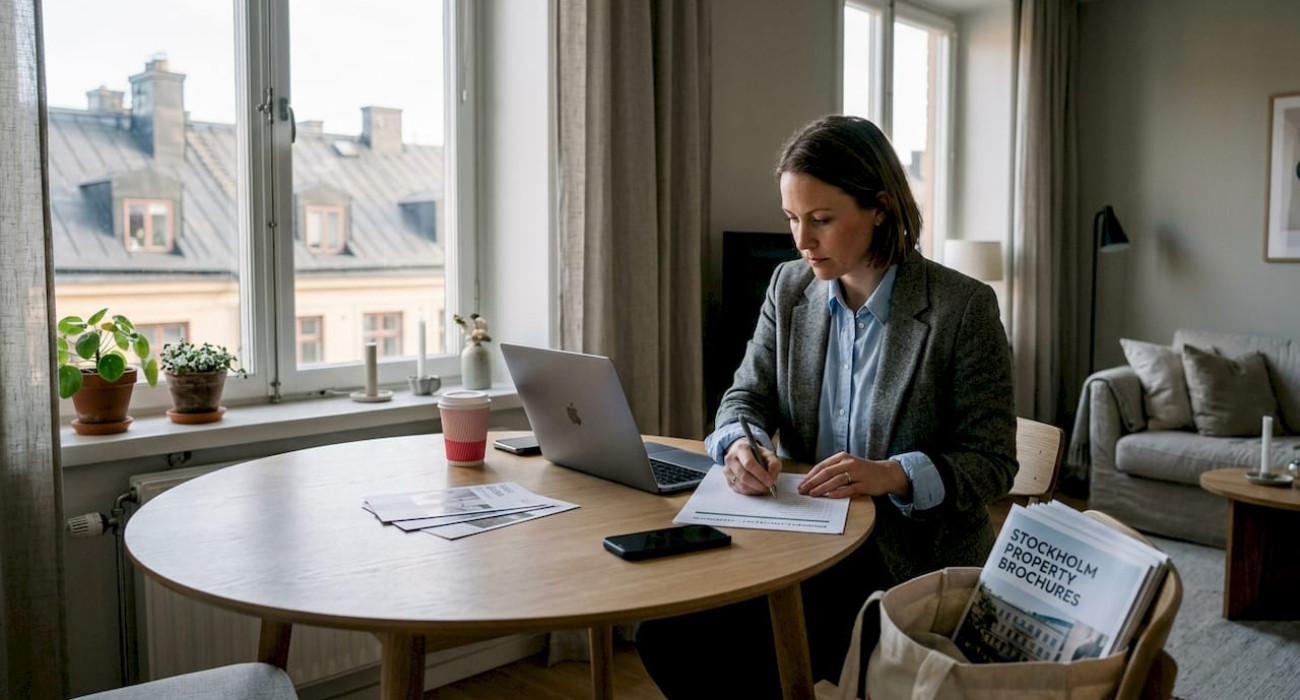
Imagine this: it is Monday morning, and you have just received word that a project team of eight needs high-standard accommodation in Sweden within the fortnight. You open your browser and immediately face a wall of providers, each promising premium quality, each with pricing structures that seem to shift the moment you ask a follow-up question. Contracts are vague, service levels are undefined, and the clock is ticking. For HR leads and project managers, this scenario is far more common than it should be. The wrong choice carries real consequences, from disrupted productivity to unexpected costs and dissatisfied teams. This guide gives you a structured, evidence-based approach to evaluate your options with confidence.
Índice
- Understanding your requirements
- Comparing providers: Tools and step-by-step approach
- Assessing quality, safety, and service standards
- Avoiding hidden costs and contract pitfalls
- A smarter way forward: Beyond the checklist
- Explore top-rated business housing options in Sweden
- Frequently asked questions
Puntos clave
| Punto | Detalles |
|---|---|
| Specify all requirements | A detailed list of needs ensures you only consider suitable providers. |
| Use a structured checklist | A 7-step approach and side-by-side comparison protect against hidden risks. |
| Demand quality and flexibility | Require third-party verified quality and easily adjustable contracts. |
| Engage all stakeholders | Include team leads and end users early to guarantee satisfaction. |
Understanding your requirements
To make confident decisions, you must first be clear on what your team actually needs. Rushing straight to provider websites without a documented brief is one of the most common and costly mistakes in corporate housing procurement. Before you contact a single provider, invest time in building a requirements document that every stakeholder has reviewed and approved.
Start with the fundamentals: team size, duration of stay, and overall budget. These three factors will immediately eliminate providers that are not a practical fit. Then layer in location priorities. In Sweden, this often means weighing city centre proximity against closeness to a specific office, construction site, or industrial facility. A team working in Gothenburg’s port district has very different location needs from an executive visiting Stockholm’s financial quarter.
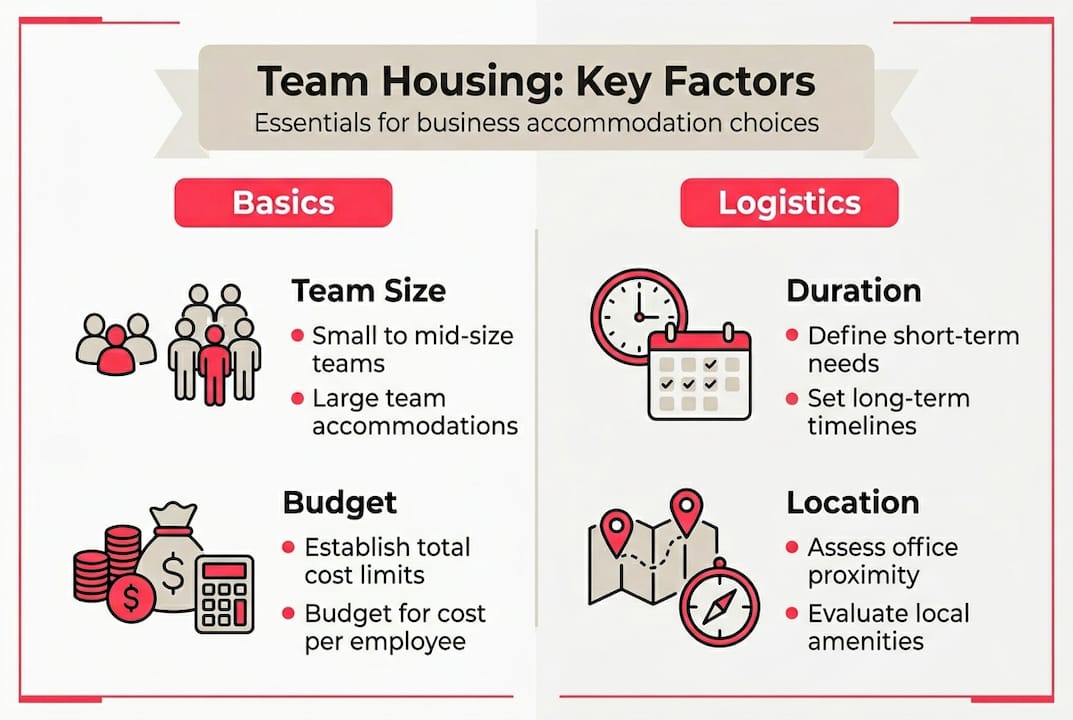
Next, establish a preference hierarchy. Not every amenity carries equal weight, and knowing which features are non-negotiable versus simply desirable will sharpen your shortlist considerably. Corporate housing selection tips can help you structure this thinking before you begin outreach.
| Specification | Example: Project team | Example: Executive stay |
|---|---|---|
| Team size | 6 to 10 people | 1 to 2 people |
| Duración | 4 to 12 weeks | 2 to 8 weeks |
| Location priority | Near project site | City centre or transport hub |
| Must-have amenities | Fast Wi-Fi, laundry, parking | Workspace, concierge, premium furnishings |
| Contract flexibility | Break clause after 30 days | Rolling monthly terms |
| Support requirement | Business hours | 24/7 responsive |
As the checklist for comparing corporate housing providers makes clear, defining requirements including team size, duration, budget, location, service level, and amenities is the essential first step before any comparison begins. Many organisations skip this stage and pay for it later through mismatched accommodation or costly mid-stay changes.
Two common mistakes stand out. First, teams often overlook contract flexibility, assuming all providers offer reasonable break clauses. Second, support requirements are routinely underestimated, particularly for international teams unfamiliar with local systems. Explore executive accommodation options to understand the service tiers available for senior travellers.
Pro Tip: Build a shared requirements spreadsheet with columns for each specification and a column for priority level (essential, preferred, or optional). Share it with team leads before approaching providers. This single step prevents misalignment and speeds up final decisions significantly.
Comparing providers: Tools and step-by-step approach
With your requirements documented, the next step is to compare providers on a level playing field. Subjective impressions and glossy websites are poor substitutes for structured evaluation. A spreadsheet comparison forces objectivity and creates an auditable record, which matters when justifying spend to finance teams or senior leadership.
When assessing corporate housing options in Sweden, the comparison factors that carry the most weight for business clients include: whether the provider operates directly or relies on a partner network, guaranteed response times, third-party inspection records, contract flexibility, the range of amenities included in the base price, and the overall service model.
Follow this seven-step evaluation process to keep your assessment consistent across all providers:
- Confirm the provider operates in your required location and for your required duration.
- Request a full written specification of all included services and amenities.
- Ask specifically about direct operations versus subcontracted management.
- Obtain documentation of third-party inspections and any quality certifications.
- Clarify response time guarantees, particularly for maintenance and support issues.
- Request a sample contract and review cancellation and modification terms.
- Ask for references from corporate clients with similar team sizes and durations.
As noted in the housing provider checklist, comparing aspects such as direct operations versus partner networks, response times, and premium service guarantees (including sub-24-hour response commitments) is essential for corporate clients who cannot afford service failures mid-project.
| Evaluation factor | Proveedor A | Proveedor B | Proveedor C |
|---|---|---|---|
| Direct operations | Sí | Partner network | Sí |
| Response time guarantee | Under 2 hours | 24 hours | Under 4 hours |
| Third-party inspections | Documented | Not available | On request |
| Contract flexibility | Monthly break clause | Fixed term only | Negotiable |
| Servicios incluidos | Completo | Básico | Completo |
| Corporate references | Disponible | Limitado | Disponible |
Pro Tip: Always request written documentation of third-party inspections and service-level agreements before shortlisting. Verbal assurances are not enforceable. If a provider cannot produce these documents promptly, treat that as a meaningful signal about their operational standards.
Assessing quality, safety, and service standards
Evaluation is not just about price. Quality and service have direct effects on business outcomes. A team housed in a poorly maintained property or one with unreliable support will experience disruptions that ripple into project delivery. This is not a soft consideration; it is a risk management issue.
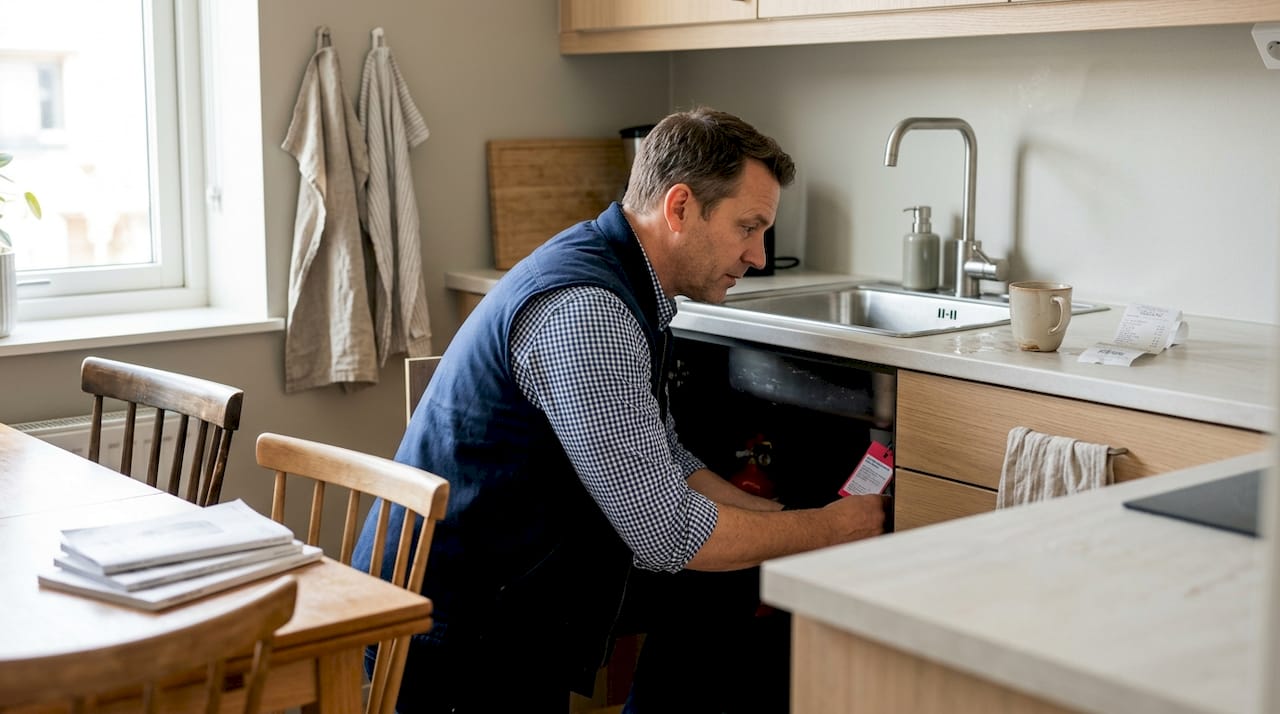
When verifying quality, look beyond surface-level presentation. A well-photographed listing tells you very little about day-to-day standards. Instead, focus on verifiable indicators: hygiene certifications, documented cleaning protocols, and evidence of regular property inspections. As the checklist for comparing corporate housing providers confirms, establishing quality standards with verified third-party inspections and ensuring wellness and safety amenities are in place is a non-negotiable baseline for corporate accommodation.
The essential safety and wellness features to verify include:
- 24/7 support access with documented response time commitments
- Fire safety compliance and up-to-date certifications
- Secure entry systems and safe neighbourhood assessment
- High-speed, reliable internet connectivity tested and guaranteed
- On-site or readily available laundry facilities
- Fully equipped kitchen to support self-catering and wellbeing
- Access to wellness and safety packages where relevant to the team’s needs
Important: Poor housing conditions do not stay contained to after-hours. Research consistently links substandard accommodation to increased fatigue, reduced focus, and higher rates of sick leave among project teams. For executives, inadequate housing can affect decision-making quality and client-facing performance. The risk to your project is real and quantifiable.
Contractual protections matter here too. Ensure any agreement you sign includes specific clauses that define service standards and outline recourse if those standards are not met. The connection between housing and employee satisfaction is well established, and providers who understand this will have no hesitation in committing to measurable standards in writing.
Avoiding hidden costs and contract pitfalls
Beyond features and service, contracts can make or break value for your organisation. The accommodation market in Sweden, like most European markets, contains providers whose headline pricing does not reflect the true cost of a stay. Identifying and eliminating these risks before signing is far easier than disputing charges after the fact.
The most common hidden fees and restrictive clauses to watch for include:
- Cleaning fees charged per stay or per week, not included in the quoted rate
- Utility surcharges billed separately from accommodation costs
- Early departure penalties with no proportional refund mechanism
- Mandatory insurance add-ons that duplicate your existing corporate cover
- Fees for additional guests or changes to the original booking
- Automatic renewal clauses that lock you in without prior notice
- Deposit terms that delay return of funds beyond reasonable timelines
As transparent pricing and contract flexibility should be non-negotiable for corporate clients, any provider unwilling to provide a full cost breakdown in writing before signing warrants serious scrutiny. Studies of corporate travel procurement consistently show that hidden fees account for a significant proportion of budget overruns in extended accommodation bookings.
When reviewing quotations, always request an all-in figure that itemises every potential charge. Ask explicitly about what happens if the project ends early, if team size changes, or if the property becomes unsuitable. These are not hypothetical scenarios; they happen regularly on live projects.
For context on how corporate housing compares to alternatives, reviewing corporate housing versus Airbnb is useful, particularly regarding the contractual protections that managed operators provide versus platform-based bookings. In Sweden, consumer protection law offers some baseline safeguards, but these are no substitute for a well-drafted corporate agreement.
Negotiation note: Swedish business culture values directness and fairness. Requesting contract modifications is entirely acceptable and expected in B2B accommodation procurement. A reputable provider will engage constructively with reasonable requests.
A smarter way forward: Beyond the checklist
Having addressed what to check and how, let us consider what genuinely sets successful teams apart when evaluating housing. The checklist is necessary, but it is not sufficient on its own.
The organisations that consistently secure the best outcomes involve their end users early. Team leads and the employees who will actually live in the accommodation have insights that no specification document captures fully. A brief video call with a shortlisted provider, or better still, a short trial stay before committing to a longer booking, can reveal operational realities that no brochure will disclose. These steps take time, but they prevent far costlier mid-stay crises.
The contrarian view worth stating plainly: prioritising speed or lowest price in housing selection is a false economy. The time saved by skipping thorough evaluation is almost always lost to managing problems during the stay itself. Providers who offer temporary apartment comparisons with genuine transparency about their service model are signalling something important about how they operate.
Adaptability is the quality that separates good providers from excellent ones. A provider willing to customise contract terms, adjust services as team needs evolve, and respond without friction when things change will add lasting value well beyond the initial booking.
Pro Tip: After shortlisting two or three providers, arrange a brief video review with each one. Ask them to walk you through a specific scenario: what happens if you need to extend by two weeks at short notice? Their response will tell you more than any written specification.
Explore top-rated business housing options in Sweden
Now that you have a clear framework for evaluating with confidence, the next step is finding options that genuinely meet your standards. Guestly Homes operates fully managed, high-standard properties across Sweden, built specifically for project teams, executives, and professionals on extended stays.
Every Guestly property is managed directly, inspected to consistent standards, and supported by a responsive team that understands business requirements. Whether your team needs a business villa in Sweden for a larger group, a luxury villa with lake views for executive stays, or a grand villa with garden for a mid-sized team, there are options ready to book. Speak to a solutions expert to find the right fit for your next project.
Frequently asked questions
What is the first step when evaluating housing options for a project team?
Start by defining all requirements including team size, duration, budget, location, and must-have amenities before reaching out to any providers. This prevents misalignment and makes comparison far more efficient.
How many providers should I compare before booking accommodation?
Always compare at least three providers using a structured spreadsheet and a consistent evaluation framework to ensure your decision is objective and defensible.
What safety and quality standards should corporate housing meet?
Providers should offer third-party inspected properties, 24/7 support with documented response times, and wellness and safety amenities as standard for any business team booking.
How can I avoid hidden fees when booking group housing?
Request a transparent, all-in cost breakdown before signing and ensure the contract includes clear terms for cancellations, early departures, and any changes to the original booking.
Recomendado
- 7 Smart Accommodation Options in Sweden for Team Stays – Guestly Homes
- Las mejores opciones de alojamiento para empresas en Suecia - Comparación de expertos 2025 - Guestly Homes
- How to choose corporate housing for every season in Sweden – Guestly Homes
- Why Book Corporate Housing in Sweden – Key Business Impacts – Guestly Homes
- Taktält vs husbil – vad är egentligen bäst? – Blogg – Gasell Adventure – Taktält i Hårdskal, Markiser & Tillbehör