


Many property owners believe long-term rentals always offer more stability than short-term ones. This assumption overlooks the nuances of income potential, management demands, and tenant profiles across different rental strategies. Whether you’re considering short stays for tourists, mid-term arrangements for project workers, or traditional long-term leases, each approach carries distinct implications for your property’s performance and your involvement as an owner. This article clarifies the differences between short-term, mid-term, and long-term rentals to help you make informed decisions about income stability and management efficiency for Swedish properties.
Índice
- Key takeaways
- Defining short-term, mid-term, and long-term rentals
- Comparing benefits and challenges of short-term and long-term rentals
- Mid-term rentals: the middle ground for Swedish property owners
- Choosing the right rental strategy for stable income and efficient management
- Discover tailored rental properties and management options
- FAQ
Puntos clave
| Punto | Detalles |
|---|---|
| Short term management demands | Short term rentals offer flexibility but require intensive management due to high turnover, guest communications and variable pricing. |
| Mid term workload balance | Mid term rentals aim to balance higher income with a manageable level of tenant interactions and administrative tasks. |
| Long term steady income | Long term rentals provide more predictable earnings with fewer routine interruptions and maintenance requirements. |
| Strategic alignment with goals | Understanding the differences helps you align your property strategy with your financial goals and your capacity for involvement. |
Defining short-term, mid-term, and long-term rentals
The rental market divides into three categories based on lease duration and tenant expectations. Short-term rentals usually last fewer than 30 days, long-term rentals extend beyond 6 months, with mid-term in between. Each category attracts different tenant types and requires distinct management approaches.
Short-term rentals typically accommodate guests for a few nights to several weeks. These stays appeal to tourists exploring Swedish cities, business travellers on temporary assignments, or visitors attending events. The rental agreement remains simple, often handled through booking platforms or direct arrangements. Guests expect hotel-like amenities, immediate communication, and flexible check-in procedures.
Mid-term rentals span one to six months, filling the gap between transient stays and permanent housing. This category serves professionals on project assignments, families relocating between homes, or individuals testing a new city before committing long-term. Rental agreements become more structured than short-term contracts but retain flexibility compared to traditional leases. Tenants expect furnished spaces, utilities included, and responsive property management without the formality of long-term tenancy.
Long-term rentals involve leases of six months or more, often extending to years. These arrangements suit permanent residents, families seeking stability, or individuals establishing roots in a community. Contracts follow Swedish tenancy law, which strongly protects tenant rights. Landlords typically provide unfurnished properties, and tenants handle utilities and maintenance responsibilities within lease terms.
The tenant profile shifts dramatically across these categories:
- Short-term guests prioritise convenience, location, and immediate comfort
- Mid-term tenants seek value, functionality, and minimal commitment
- Long-term residents want stability, community integration, and personalisation options
Rental agreement complexity increases with duration. Short-term bookings require simple terms and conditions. Mid-term contracts balance flexibility with tenant protections. Long-term leases must comply with comprehensive Swedish rental regulations, including notice periods, rent adjustment procedures, and termination conditions.
Comparing benefits and challenges of short-term and long-term rentals
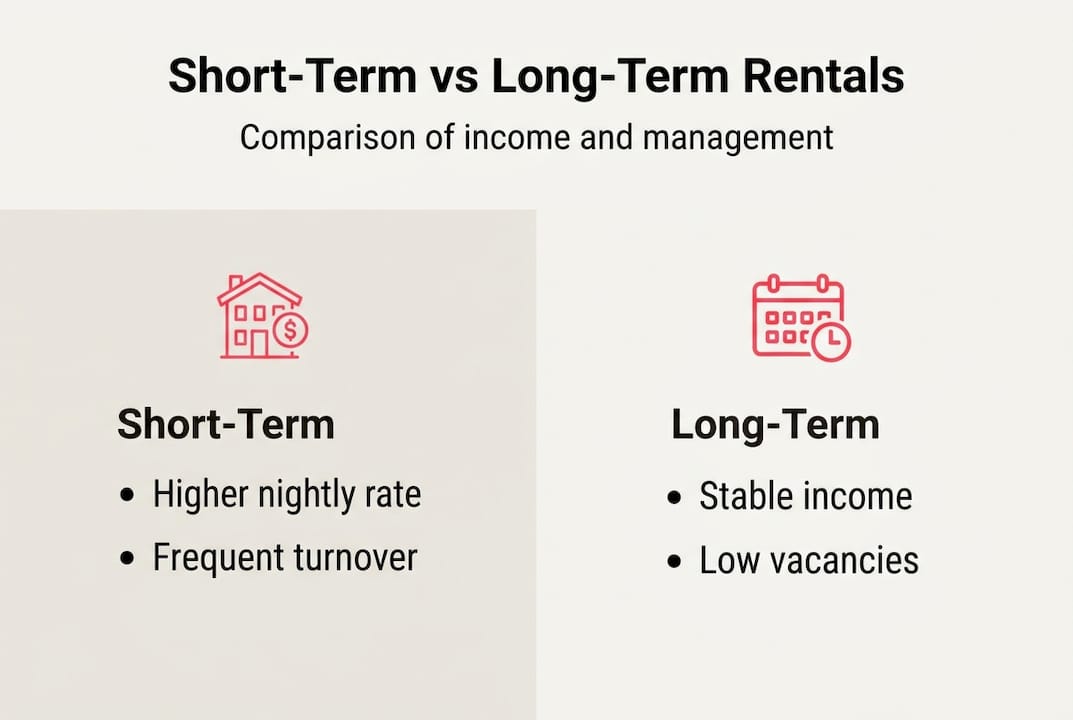
Short-term rentals generate higher nightly rates than long-term equivalents. A Stockholm apartment earning 1,200 SEK per night can theoretically produce 36,000 SEK monthly, far exceeding typical long-term rent of 15,000-20,000 SEK. This income potential attracts owners seeking maximum returns. You can adjust pricing based on demand, seasonal trends, or local events, optimising revenue throughout the year.
Flexibility defines short-term rental advantages. You maintain access to your property for personal use between bookings. If market conditions change or you decide to sell, you’re not locked into long-term lease obligations. Guest diversity keeps the property dynamic, and you can screen each booking individually.
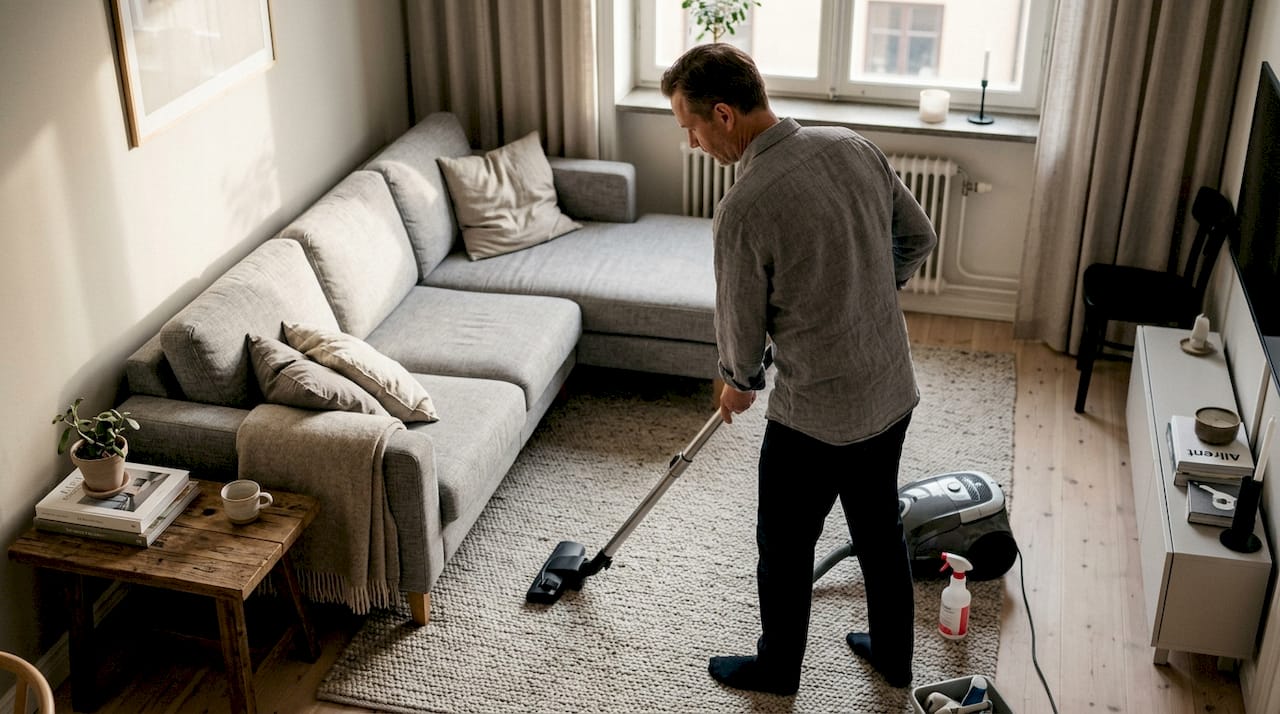
However, short-term rentals require frequent cleaning, guest communication, and booking management, increasing operational complexity. Every checkout triggers a full property reset: cleaning, linen changes, restocking supplies, and preparing for the next arrival. Guest inquiries arrive at all hours. Maintenance issues demand immediate attention to protect reviews and future bookings.
Vacancy risk compounds management challenges. Even prime locations experience booking gaps during low seasons. A property vacant 30% of the year loses significant income despite higher nightly rates. Swedish regulations add complexity, with some municipalities restricting short-term rentals or requiring permits. Tax obligations differ from long-term arrangements, and insurance costs rise to cover frequent guest turnover.
Long-term rentals deliver predictable monthly income. Once a tenant signs a lease, you receive consistent rent for the contract duration, typically 12 months or more. This stability simplifies financial planning and reduces the stress of constant marketing. Tenant turnover occurs infrequently, and long-term arrangements require minimal day-to-day involvement.
Management becomes straightforward. After initial tenant screening and lease signing, your involvement drops to periodic inspections and maintenance requests. You’re not coordinating cleanings, responding to guest questions, or managing bookings. The tenant handles daily property care, and you maintain a single relationship rather than dozens of short-term guests.
Yet long-term rentals sacrifice income potential. Monthly rent remains fixed regardless of market fluctuations or seasonal demand. If you set rent too low initially, you’re locked in until lease renewal. Tenant turnover, while infrequent, can leave properties vacant for weeks or months. Swedish tenant protections make eviction difficult, even when tenants breach lease terms.
| Aspecto | Short-term rentals | Long-term rentals |
|---|---|---|
| Monthly income potential | 18,000-36,000 SEK | 12,000-20,000 SEK |
| Management hours per month | 40-60 hours | 2-5 hours |
| Vacancy risk | High, seasonal gaps | Low, but longer when it occurs |
| Regulatory complexity | Moderate to high | High, tenant protections |
| Flexibility for owner use | Alta | None during lease |
Pro Tip: Effective property management systems offset short-term rental complexities. Professional operators handle guest communication, cleaning coordination, and maintenance scheduling, letting you capture higher income without constant involvement.
Mid-term rentals: the middle ground for Swedish property owners
Mid-term rentals occupy the space between transient tourism and permanent residency. These arrangements typically last one to six months, attracting a specific tenant demographic that values stability without long-term commitment. Mid-term rentals attract business travellers and expats seeking accommodation between short stays and full leases.
Project workers represent a substantial mid-term market in Sweden. Engineers, consultants, and specialists often accept temporary assignments lasting several months. These professionals need furnished accommodation near project sites, with flexibility to extend or conclude stays based on work timelines. Corporate clients booking for employee teams value consistent quality and streamlined processes.
Relocating families and individuals testing new cities before permanent moves also seek mid-term options. An executive transferring to Stockholm might rent for three months whilst searching for permanent housing. A family considering a move from Malmö to Gothenburg might stay mid-term to evaluate neighbourhoods and schools before committing.
Mid-term rentals provide more stable income than short-term equivalents whilst maintaining higher rates than long-term leases. A property earning 25,000 SEK monthly on a three-month contract generates predictable revenue without the vacancy gaps plaguing short-term rentals. You’re not scrambling to fill every night, yet you’re not locked into year-long fixed rates.
Management intensity falls between extremes. You’re not coordinating weekly turnovers, but you’re not absent for years either. Tenant screening becomes more thorough than short-term bookings, reducing risk. Contracts remain simpler than long-term leases whilst establishing clear expectations. Property wear remains moderate, as tenants treat spaces more carefully than transient guests but don’t personalise as permanent residents might.
Swedish markets with seasonal workforce fluctuations or international corporate presence benefit particularly from mid-term strategies. Cities hosting large companies with rotating project teams, university towns with visiting researchers, or regions with construction and infrastructure projects all generate mid-term demand.
Key advantages for property owners include:
- Quarterly or bi-annual turnover reduces vacancy risk compared to short-term rentals
- Higher monthly rates than long-term leases without constant management
- Furnished units command premium pricing whilst remaining tax-efficient
- Flexible contracts allow market rate adjustments more frequently than annual leases
- Corporate bookings provide reliable, professional tenants with employer backing
Pro Tip: Position mid-term rentals with furnished units and flexible contracts to attract specific tenant types. Include utilities, internet, and basic supplies in the monthly rate to appeal to professionals seeking hassle-free accommodation. Offer contract extensions or early termination clauses to accommodate changing project timelines.
Choosing the right rental strategy for stable income and efficient management
Your income stability needs and management capacity determine the optimal rental strategy. Start by assessing how much monthly revenue fluctuation you can tolerate. If you require predictable income for mortgage payments or other fixed obligations, long-term or mid-term rentals suit better than short-term approaches. If you can absorb seasonal variation and want to maximise annual returns, short-term rentals offer higher potential.
Management options range from complete self-management to full-service professional operators. Self-managing short-term rentals demands significant time: responding to inquiries, coordinating cleanings, handling maintenance, and managing bookings. You save on fees but sacrifice personal time and potentially income if you lack expertise. Long-term self-management requires less frequent involvement but demands tenant relations skills and legal knowledge.
Professional property management agencies charge 15-30% of rental income for comprehensive services. They handle tenant screening, lease agreements, maintenance coordination, and legal compliance. For long-term rentals, this fee buys peace of mind and professional expertise. For short-term rentals, agencies manage the operational complexity but may not optimise pricing or guest experience as effectively as specialised operators.
Rental platforms can cause up to 30% income loss for Swedish property owners due to fees and commissions. Whilst platforms provide booking infrastructure and guest access, they extract substantial value. Commission fees, service charges, and reduced pricing control diminish net returns. Platform dependency also limits your ability to build direct guest relationships or control brand presentation.
Swedish rental law significantly impacts long-term strategies. Tenant protections make eviction difficult and time-consuming, even when tenants breach lease terms. Rent increases face legal restrictions, limiting your ability to adjust to market conditions. Notice periods extend to three months or more for established tenancies. Avoid costly pitfalls when renting Swedish property in 2026 by understanding lease terms and regulations thoroughly before committing to long-term arrangements.
Assess your property’s suitability for each rental type using this checklist:
- Location analysis: proximity to tourist attractions, business districts, or residential neighbourhoods
- Property condition: furnished and equipped for immediate occupancy or requiring tenant furnishing
- Local regulations: municipal restrictions on short-term rentals or licensing requirements
- Owner availability: capacity to manage operations or budget for professional management
- Financial goals: prioritising maximum returns, stable income, or minimal involvement
- Market demand: researching tenant profiles and seasonal patterns in your area
| Estrategia | Expected annual income | Management effort | Regulatory exposure | Primary tenant type |
|---|---|---|---|---|
| A corto plazo | 180,000-360,000 SEK | Very high, daily involvement | Moderate, municipal permits | Tourists, business travellers |
| A medio plazo | 240,000-300,000 SEK | Moderate, quarterly oversight | Low, flexible contracts | Project workers, relocating professionals |
| A largo plazo | 144,000-240,000 SEK | Low, annual involvement | High, tenant protections | Permanent residents, families |
The right strategy aligns with your ownership philosophy. If property investment represents passive income, long-term or professionally managed mid-term rentals suit best. If you’re willing to operate a business for higher returns, short-term rentals with professional support or self-management become viable. If you want balance between income and effort, mid-term arrangements offer the middle path.
Market conditions matter. Stockholm and Gothenburg support all three strategies due to diverse demand. Smaller cities might lack sufficient short-term tourism but offer strong mid-term corporate markets. Residential suburbs favour long-term family rentals over transient stays.
Discover tailored rental properties and management options
Owning a property shouldn’t feel like work. It should feel like something already handled. Whether you’re exploring short-term flexibility, mid-term balance, or long-term stability, the right management partner transforms property ownership from operational burden into passive performance.
Guestly Homes specialises in fully managed premium properties across Sweden, operating modern luxury villas and spacious family homes for extended stays ranging from 10 nights to 12 months. We’re not a rental platform. We’re a 5-star operator delivering frictionless property performance for owners and hassle-free living for guests.
Our revenue share and arbitrage models let you choose between performance-driven partnership or predictable fixed income. We handle everything: guest screening, property maintenance, cleaning coordination, and brand presentation. You receive consistent returns without constant involvement. Discover how Guestly Homes can optimise your Swedish property for stable income and efficient management.
FAQ
What is the ideal rental type for income stability?
Long-term rentals typically offer the most stable income due to fixed monthly rent and fewer vacancies. Once a tenant signs a 12-month lease, you receive predictable payments throughout the contract period. Mid-term rentals also provide substantial stability with slightly higher returns, as three to six-month contracts reduce vacancy risk whilst maintaining premium pricing.
How does management differ between short-term and long-term rentals?
Short-term rentals are management intensive due to frequent tenant turnover and maintenance demands. You coordinate cleanings after every checkout, respond to guest inquiries daily, and handle booking management continuously. Long-term rentals require less frequent management but demand stronger tenant relations over the lease duration. After initial screening and lease signing, your involvement drops to periodic inspections and maintenance requests.
Are mid-term rentals common in Sweden?
Mid-term rentals are growing in Sweden due to corporate housing demand and temporary relocation needs. Cities with large international companies, rotating project teams, or significant construction activity generate consistent mid-term demand. They serve as a flexible option bridging short-term tourism and long-term residential leasing, particularly appealing to professionals on temporary assignments.
What legal considerations should Swedish landlords know?
Swedish law strongly protects tenants, especially in long-term leases, affecting eviction procedures and rent adjustments. Landlords must understand lease contracts, notice periods extending to three months or more, and termination conditions before committing to long-term arrangements. Platform regulations and municipal permits may apply to short-term rentals. Consulting legal expertise helps avoid costly pitfalls when structuring rental agreements.
Recomendado
- Why Rental Platforms Risk 30% Income Loss for Swedish Owners – Guestly Homes
- What Is Long Term Rent? Impact for Nordic Professionals – Guestly Homes
- ¿Qué se considera un alquiler de larga duración? Entender el concepto - Guestly Homes
- ¿Qué es el alquiler a largo plazo? Entender sus fundamentos - Guestly Homes