
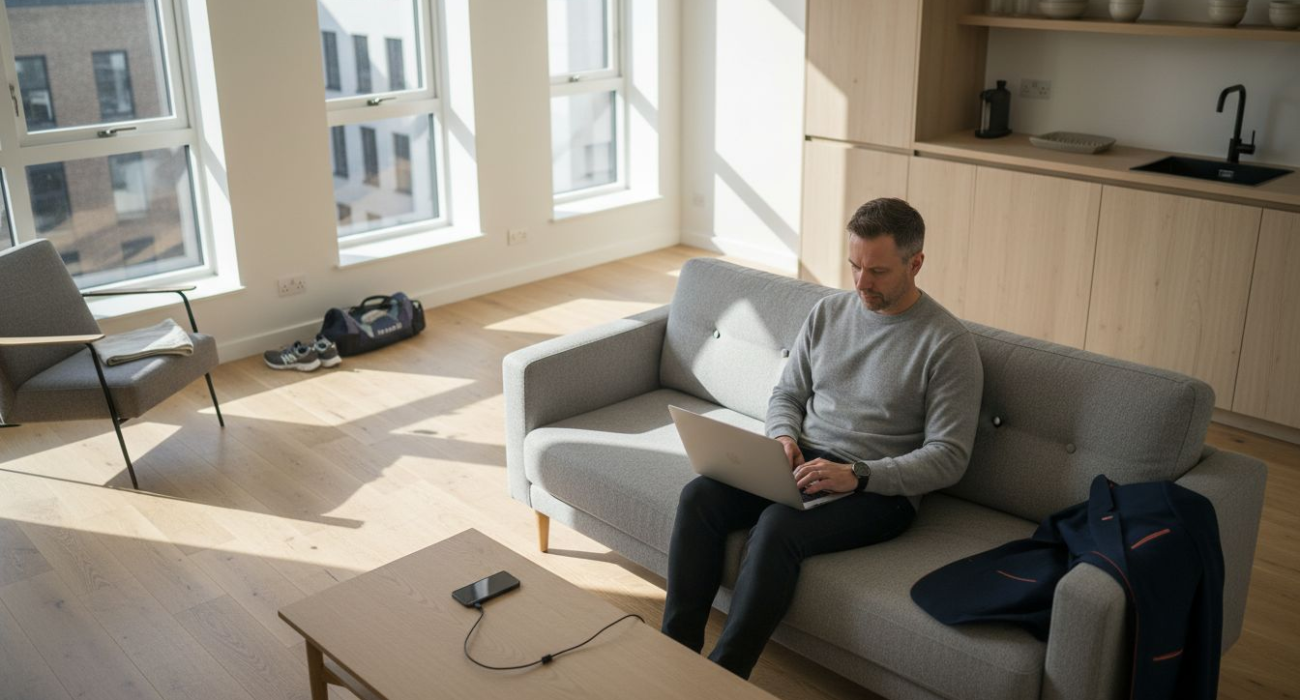

Most British and European companies report that choosing between service apartments and hotels can change the cost and comfort of temporary staff stays. HR professionals and project managers in Sweden’s Piteå, Luleå, Boden, and Nyköping face unique challenges when arranging accommodation that balances space, flexibility, and financial control. This overview clarifies how these options differ and highlights key factors to help you make informed choices for your team’s next assignment.
Inhaltsübersicht
- Defining Service Apartments And Hotels
- Core Differences In Facilities And Experience
- Length Of Stay And Flexibility Compared
- Financial And Contractual Implications
- Best Choice For Team And Project Stays
Wichtigste Erkenntnisse
| Punkt | Einzelheiten |
|---|---|
| Unterkunft Typ | Service apartments offer self-contained, spacious living quarters suitable for longer stays, while hotels provide standardised, short-term accommodation. |
| Facilities & Amenities | Service apartments typically include fully equipped kitchens and separate living areas, enhancing guest independence compared to hotels’ limited service options. |
| Flexibilität | Service apartments offer adaptable lease terms suitable for varied stay lengths, as opposed to hotels’ rigid booking structures. |
| Kosteneffizienz | Service apartments generally provide more favourable pricing models for extended stays, helping to control overall accommodation costs better than hotels. |
Defining Service Apartments And Hotels
Understanding the fundamental differences between service apartments and hotels is crucial for professionals seeking optimal accommodation solutions. Comprehensive European research highlights the distinctive characteristics that set these two accommodation types apart, revealing nuanced variations in space, amenities, and guest experience.
A service apartment represents a self-contained living space designed to provide residential comfort with professional hospitality services. Unlike traditional hotel rooms, these apartments offer larger floor plans, fully equipped kitchens, separate living and sleeping areas, and the flexibility for extended stays. Independent UK research emphasises that service apartments cater specifically to guests requiring home-like environments with professional management support.
Hotels, in contrast, traditionally focus on short-term accommodation with standardised rooms, limited living space, and centralised service delivery. They typically provide basic amenities like housekeeping, room service, and reception support, but lack the residential feel and functional flexibility of service apartments. The primary distinction lies in the approach: hotels prioritise transient overnight stays, while service apartments create temporary living environments that closely mimic permanent residential experiences.
Pro tip: When booking accommodation for extended work assignments, carefully assess your specific requirements regarding space, kitchen facilities, and length of stay to determine whether a service apartment or hotel better suits your professional needs.
Core Differences In Facilities And Experience
Accommodation facilities represent more than just physical spaces for professionals on extended work assignments. Recent market surveys reveal significant distinctions in how service apartments and hotels approach guest experiences, with each offering unique advantages tailored to different traveller needs.
Service apartments distinguish themselves through self-sufficiency features that cater to extended stay requirements. These accommodations typically provide fully equipped kitchens, separate living and working areas, and significantly larger floor spaces compared to traditional hotel rooms. Comprehensive European research indicates that these apartments prioritise residential comfort, offering guests the ability to prepare meals, host small meetings, and create a more personalised living environment.
Hotels, in contrast, focus on standardised convenience and comprehensive on-site services. They excel in providing immediate amenities such as 24-hour reception, daily housekeeping, on-site restaurants, conference facilities, and centralised support systems. While service apartments offer more independent living, hotels deliver a more structured hospitality experience with professional staff available to manage guest requirements instantly. The key differentiator lies in the approach: service apartments create a home-like atmosphere, whereas hotels maintain a more transient, service-oriented environment.

Pro tip: When selecting between a service apartment and a hotel, consider your work assignment duration, desired level of independence, and specific professional requirements to make the most appropriate accommodation choice.
The following table summarises the core differences in guest experience and facilities:
| Aspekt | Service Apartment | Hotel |
|---|---|---|
| Weltraum | Spacious, residential layout | Compact, standardised room |
| Kitchen facilities | Fully equipped kitchen for self-catering | Typically limited or absent |
| Living/Working areas | Separate areas for living and work | Single multi-purpose space |
| Atmosphere | Home-like and personalisable | Formal and transient |
| Guest independence | High, suited for long-term stays | Lower, service-driven |
Length Of Stay And Flexibility Compared
Professionals seeking accommodation for work assignments require nuanced understanding of stay duration options. Comprehensive market analysis reveals significant differences in booking flexibility between service apartments and traditional hotels, highlighting critical considerations for extended business travel.
Service apartments excel in providing adaptable accommodation solutions that accommodate varying stay lengths, from short-term projects to multi-month assignments. Unlike hotels with rigid booking structures, these apartments offer customisable lease terms, allowing professionals to adjust their living arrangements seamlessly. European market research demonstrates that service apartments can support stays ranging from a few days to several months, making them particularly attractive for corporate clients and remote workers who require dynamic housing solutions.
Hotels traditionally focus on shorter stays, typically offering standardised booking periods with less flexibility. Their pricing models and availability tend to be more restrictive, often requiring advance bookings and charging premium rates for extended stays. In contrast, service apartments provide more lenient cancellation policies and the ability to modify booking durations with minimal penalties, giving professionals greater control over their accommodation arrangements.
Pro tip: When planning extended work assignments, always request detailed flexibility terms from your accommodation provider and negotiate booking conditions that align with your potential project timeline.
Financial And Contractual Implications
Navigating the complex landscape of accommodation costs requires a nuanced understanding of financial structures unique to service apartments and hotels. Comprehensive industry research reveals critical differences in pricing models that can significantly impact budgeting for extended work assignments.
Service apartments demonstrate superior financial flexibility by offering more sophisticated pricing structures tailored to longer-term stays. Unlike hotels with their rigid daily rates, these accommodations frequently provide volume discounts, inclusive service packages, and negotiable contract terms that can substantially reduce overall expenditure. Market analysis indicates that corporate clients can often secure more favourable financial arrangements, with pricing models designed to accommodate project-specific duration and budget constraints.

Hotels typically maintain standardised pricing strategies focused on short-term guests, resulting in less economical options for extended stays. Their contracts frequently include additional charges for services such as internet, laundry, and workspace access, which are often bundled within service apartment rates. This approach can lead to significantly higher cumulative costs for professionals requiring accommodation beyond a few weeks, making service apartments a more financially prudent choice for budget-conscious organisations.
Pro tip: When comparing accommodation costs, calculate the total expected expenses including all potential additional charges, not just the base nightly rate, to make a truly informed financial decision.
This table highlights financial and contractual factors to consider for extended professional stays:
| Financial Aspect | Service Apartment Benefits | Hotel Limitations |
|---|---|---|
| Pricing model | Discounted rates for longer stays | Fixed nightly charges |
| Contract flexibility | Customisable lease durations | Restrictive standard booking periods |
| Eingeschlossene Dienstleistungen | Utilities and amenities bundled | Extra charges for add-ons |
| Overall cost control | Predictable, project-aligned costs | Higher cumulative expense |
Best Choice For Team And Project Stays
Choosing the right accommodation for team and project stays requires strategic consideration of collaborative working environments and logistical efficiency. European hospitality research consistently highlights service apartments as the superior solution for corporate teams requiring extended accommodation arrangements.
Service apartments offer distinctive advantages for team and project stays, providing spacious, interconnected living spaces that facilitate both professional collaboration and personal comfort. Unlike fragmented hotel environments, these accommodations enable team members to live and work in proximity, with shared common areas that support spontaneous interactions and project discussions. Market analysis indicates that apartment-style layouts significantly enhance team dynamics by creating more integrated living and working environments.
The infrastructure of service apartments specifically addresses corporate team requirements through flexible spatial configurations, fully equipped kitchens for group meals, multiple workspaces, and communal areas that support both formal meetings and informal team building. Hotels, by contrast, typically offer disconnected, individual rooms that limit team interaction and increase logistical complexities for project management. Corporate clients increasingly recognise service apartments as strategic housing solutions that simultaneously address professional needs and team cohesion.
Pro tip: When booking team accommodation, prioritise properties offering interconnected living spaces and confirm the specific layout to ensure it supports your project’s collaborative requirements.
Discover How Guestly Homes Elevates Your Work Stay Experience
Choosing between service apartments and hotels is more than a booking decision. It hinges on understanding your unique professional needs such as stay duration, space requirements, and the balance between independence and service. This article highlights key challenges like limited flexibility in hotels and the need for home-like environments that support both personal comfort and productivity during extended assignments.
At Guestly Homes, we specialise in fully managed, premium serviced apartments crafted specifically for professionals, project teams, and executives who demand more than a traditional hotel stay. Our homes offer spacious layouts with fully equipped kitchens, quiet work areas, and flexible contracts that align perfectly with your project timeline. We provide the calm, stable environment that fosters focus and well-being without any hassle.
Ready to experience a seamless extended stay designed for professional success and peace of mind? Explore how Guestly supports dependable, flexible living tailored to your exact needs.
Find your ideal work stay with Guestly Homes. Learn more about our unique business model and how we manage properties to ensure consistently excellent guest experiences. Book your next stay today and transform the way your team lives and works.
Häufig gestellte Fragen
What are the main differences between service apartments and hotels for work stays?
Service apartments provide self-contained living spaces with larger floor plans, fully equipped kitchens, and separate living and working areas, making them suitable for longer stays. Hotels focus on transient accommodation with standardised rooms and centralised services, catering more to short-term guests.
How does the length of stay impact the choice between service apartments and hotels?
Service apartments typically offer more flexible booking arrangements, accommodating stays from a few days to several months, while hotels usually cater to shorter stays and have more rigid booking structures.
What financial advantages do service apartments have over hotels?
Service apartments often feature flexible pricing structures with discounts for longer stays and bundled services, which can reduce overall costs. Hotels, on the other hand, usually employ fixed nightly rates and may charge extra for additional services, leading to higher cumulative expenses for extended stays.
How do service apartments facilitate team collaboration compared to hotels?
Service apartments provide interconnected living spaces and communal areas that encourage team interaction and collaboration. In contrast, hotels often have separated individual rooms, which can limit team dynamics and increase logistical challenges for project management.
Empfohlen
- Difference Between Hotel and Apartment: Full Guide – Guestly Homes
- Die 7 besten Arbeitswohnungen für Remote Professionals im Jahr 2025 - Guestly Homes
- Wie man Serviced Apartments auswählt: Eine schrittweise Anleitung - Guestly Homes
- Was ist ein Serviced Apartment auf Airbnb? Erklärt - Guestly Homes
- 7 Key Working Remotely Pros and Cons for Future Founders | siift