


TL;DR:
- Staying compliant with team housing involves meeting legal, safety, and welfare standards through documented verification and ongoing management. Proper planning, record-keeping, and assigning a responsible owner ensure properties meet current regulations and prevent costly mistakes. Routine inspections and clear operational practices sustain compliance during employee stays.
Staying compliant with team housing is defined as meeting all applicable legal, safety, and welfare standards through systematic planning, documented verification, and ongoing management of employee accommodation. The industry term for this practice is employer housing compliance, and it covers everything from occupancy limits and hygiene standards to contract registration and incident reporting. For HR leads and project managers, getting this right is not optional. Regulatory bodies such as OSHA, through standard 29 CFR §1910.142, set binding requirements on crew accommodation, and housing regulations continue to tighten across most jurisdictions. A structured approach protects your organisation, your team, and your reputation.
What legal and regulatory requirements govern team housing compliance?
Employer housing obligations vary by region, but the core compliance elements are consistent across most frameworks. Safety, hygiene, occupancy limits, and commute times are the four pillars that regulators inspect first.
OSHA standard 29 CFR §1910.142 specifies that commute time from housing to the worksite must not exceed 20–30 minutes as a mandatory operational safety criterion. That figure is not a guideline. It is a defensible benchmark that HR leads must document and verify before approving any property.
Licensing and registration requirements add another layer. Regulatory readiness now drives worker housing real estate decisions more than cost, making licensing and contractual documentation a non-negotiable starting point. This shift reflects a broader trend: authorities want proof of compliance before a team moves in, not after a complaint is filed.
Key legal requirements to verify before approving any property:
- Occupancy limits: Confirm the property’s legal maximum occupancy and match it to your team size.
- Safety certifications: Check fire safety, electrical inspection, and structural certificates are current.
- Hygiene standards: Verify adequate sanitation facilities per the number of occupants.
- Commute compliance: Confirm travel time to the worksite meets the 20–30 minute standard.
- Licensing and registration: Obtain formal approval or registration documents from the relevant local authority.
- Contract documentation: Use written, signed agreements rather than informal arrangements.
One common misconception is that older, previously approved properties remain compliant automatically. They do not. Grandfathered accommodation frequently fails current standards because regulations evolve and require upgrades or renovations that owners have not carried out. Never assume a property that passed inspection two years ago still qualifies today.
Pro Tip: Request a copy of the property’s most recent inspection report and cross-reference it against your jurisdiction’s current standards before signing any agreement.
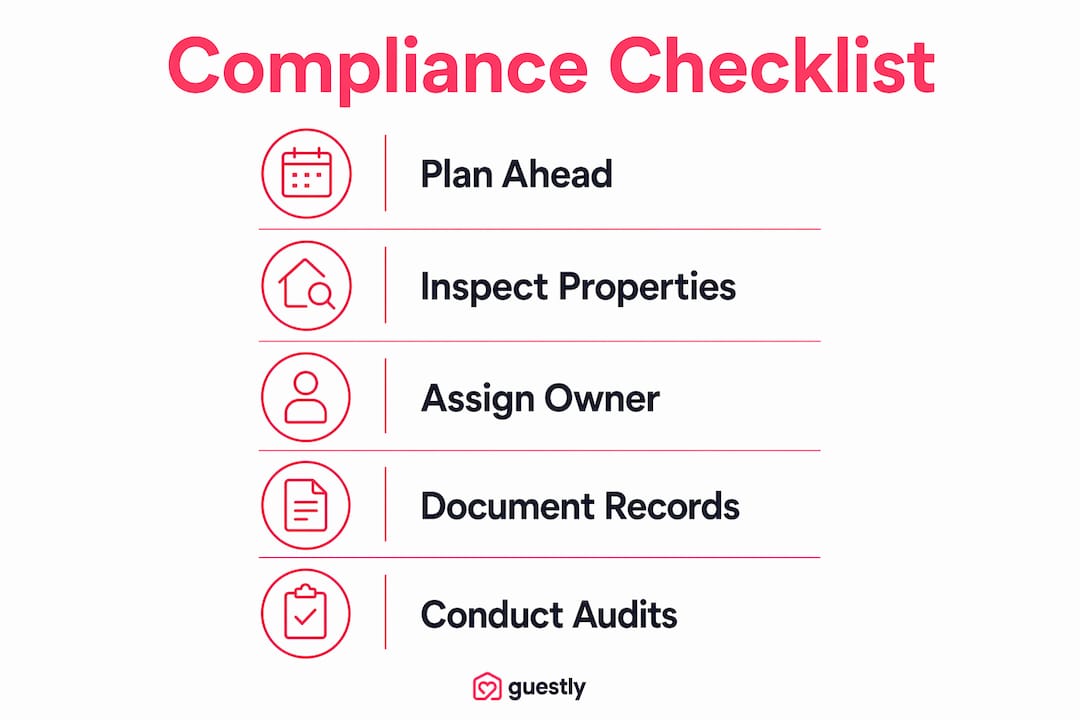
How to plan and document team housing to meet compliance standards

Compliance in team housing starts well before the first employee arrives. Advance planning must begin 2–3 months before worker deployment to allow time for property identification, legal registration, and budget allocation. That timeline is not generous. It is the minimum required to complete due diligence properly.
A structured planning process follows these steps:
- Define your criteria. Set documented minimum standards for the property: size, location, safety certifications, and amenities. Write these down before you search.
- Identify and vet properties. Assess each candidate against your criteria. Reject any property that does not meet every minimum standard, regardless of cost or convenience.
- Register and licence. Submit all required documentation to local authorities and obtain written confirmation of approval.
- Assign a housing owner. Appoint one internal person who is accountable for compliance throughout the assignment. Outsourcing bookings does not remove this responsibility.
- Budget for upgrades. Allocate funds for furnishings, safety equipment, or minor renovations that bring a property to standard.
- Build your compliance record. Create a centralised file containing inspection reports, approval documents, contracts, and contact details for the property manager.
Documentation is the difference between a defensible position and a liability. A searchable, centralised compliance database should log the criteria each property meets, the identity of the verifier, inspection dates, and the resolution of any incidents. This record allows you to respond to an audit within hours rather than days.
| Document | Purpose | Review frequency |
|---|---|---|
| Inspection report | Confirms safety and hygiene standards | Before move-in and every 6 months |
| Licensing certificate | Proves legal registration | At approval and on renewal |
| Occupancy agreement | Defines terms, responsibilities, and exit conditions | At signing and on any amendment |
| Incident log | Records issues and resolutions for audit trail | Ongoing, updated within 24 hours |
| Criteria checklist | Verifies property meets all defined minimums | At vetting and each periodic review |
Pro Tip: Assign document ownership to one named individual, not a shared inbox. Accountability disappears when responsibility is collective.
What operational practices sustain compliance during employee stays?
Compliance does not end when the team moves in. Ongoing management is where most organisations lose ground, because the day-to-day pressures of a project push housing oversight to the bottom of the list.
Routine audits are the most reliable defence. A first-week walkthrough confirms the property is functioning as approved. A mid-assignment review at the halfway point catches issues before they escalate. A final check before departure documents the property’s condition and closes the compliance record cleanly.
Managing mixed-rank teams in shared accommodation requires specific attention. Housing layouts should promote physical separation between seniority levels, and rotating chore responsibilities prevents hierarchy tensions from affecting morale. These are not soft concerns. Unresolved social friction in team housing creates welfare complaints, which regulators treat as compliance failures.
Operational practices that sustain housing policy compliance throughout a stay:
- First-week check: Confirm all utilities, safety equipment, and facilities are operational.
- Mid-assignment walkthrough: Inspect for wear, hygiene issues, or unreported incidents.
- Incident reporting protocol: Require all issues to be logged within 24 hours and resolved with documented evidence.
- Regulation monitoring: Assign someone to track regulatory updates and flag changes that affect current arrangements.
- Hygiene and maintenance schedule: Set a fixed cleaning and maintenance calendar and keep records of each visit.
- Communication channel: Maintain a direct, accessible contact for team members to report concerns without friction.
Assigning a dedicated housing owner is the single most effective operational decision you can make. Routine checkpoints detect minor issues early. Without a named owner, minor issues become major ones before anyone notices.
How to avoid the most common compliance pitfalls in team housing
The most damaging compliance failures are predictable. They share a common cause: assumptions made in place of verification.
“Standardised housing compliance is about defined minimum criteria and a replicable approval flow, not uniformity. This reduces management overhead and improves risk visibility.” — housing standardisation framework
That distinction matters. HR leads often confuse standardisation with making every property identical. The goal is a consistent approval process, not identical floorplans. Once your criteria are documented and your approval flow is replicable, vetting a new property takes a fraction of the time.
Common pitfalls and how to pre-empt them:
- Assuming past approvals still hold. Regulations change. A property approved under last year’s framework may not meet this year’s standards. Re-verify before each deployment.
- Relying on informal agreements. Verbal arrangements and email threads are not compliance records. Every commitment must be in a signed document.
- Treating cost as the primary filter. Regulatory readiness must come before budget optimisation. A cheaper property that fails inspection costs far more in penalties and rehousing.
- Neglecting senior management engagement. Housing compliance requires budget authority and policy backing. Without senior advocacy, the housing owner cannot act on findings.
- Skipping the social dynamics assessment. Placing a mixed-rank team in a layout that offers no separation is a welfare risk. Assess the floor plan before approving the property.
Pro Tip: Build a one-page housing compliance checklist that any project manager can use to vet a property independently. Standardise the questions, not the answers.
For teams managing long-term business accommodation, the planning and documentation disciplines described here apply equally whether you are placing two people or twenty.
Key takeaways
Staying compliant with team housing requires documented criteria, a named internal owner, and routine verification throughout the assignment.
| Point | Details |
|---|---|
| Start planning 2–3 months early | Allow time for property vetting, legal registration, and budget allocation before deployment. |
| Document everything centrally | Log inspection reports, approvals, and incidents in one searchable record for audit readiness. |
| Assign a named housing owner | One accountable person prevents compliance gaps that shared responsibility creates. |
| Never assume past approval still holds | Re-verify every property against current regulations before each new deployment. |
| Sustain compliance operationally | Schedule first-week checks, mid-assignment walkthroughs, and a final departure review. |
What I have learned from managing team housing compliance
By Joakim
The organisations that handle team housing compliance well share one trait: they treat it as a system, not a task. They build a replicable approval flow, assign clear ownership, and maintain a centralised record that anyone can access in minutes. The ones that struggle treat compliance as something to sort out when a problem appears.
The grandfathered-accommodation assumption is the most expensive mistake I see repeatedly. A project manager books a property that worked fine on the last assignment, skips the re-verification, and then faces a regulatory inspection that reveals the property no longer meets current standards. The cost of rehousing a team mid-project, plus any penalties, far exceeds what a proper vetting process would have cost.
Social dynamics in shared team housing are underestimated. A layout that forces a senior engineer and a junior technician to share a kitchen with no separation creates friction that shows up as welfare complaints within weeks. Assessing the floor plan is not a soft consideration. It is a compliance requirement in most frameworks that cover worker welfare.
My honest view is that housing compliance is one of the few areas where investing in a proper system pays back immediately. The first time you respond to an audit request in two hours rather than two days, you understand why the centralised record matters. Build the system before you need it.
— Joakim
Guestlyhomes: compliant team accommodation, ready to book
HR leads and project managers who need properties that already meet high standards have a direct option with Guestlyhomes.
Guestlyhomes operates fully managed, high-standard homes across Sweden and the Nordics, designed specifically for professionals and project teams on extended stays. Properties such as the Nordic Studio and the 1 Bedroom Nordic Comfort are maintained to consistent standards, with amenities suited to working professionals. Centralised billing, flexible terms, and a single point of contact remove the administrative friction that makes housing compliance difficult to manage. For teams that need accommodation that performs without supervision, Guestlyhomes delivers exactly that.
FAQ
What does staying compliant with team housing actually require?
Staying compliant with team housing requires meeting legal safety, hygiene, and occupancy standards, maintaining written contracts, and keeping a centralised record of inspections and approvals. Compliance must be verified before move-in and sustained through routine checks throughout the stay.
How far in advance should HR leads plan team housing?
Planning must begin 2–3 months before worker deployment to allow time for property identification, legal registration, and budget allocation. Starting later reduces the time available for proper vetting and increases the risk of non-compliant choices.
Does outsourcing the booking remove our compliance responsibility?
No. Outsourcing bookings does not transfer internal accountability. A named housing owner must still oversee inspections, maintain records, and enforce compliance standards regardless of who arranged the booking.
Can a previously approved property be used again without re-verification?
No. Regulations evolve, and a property that met standards on a previous assignment may not meet current requirements. Re-verify every property against the latest applicable standards before each new deployment.
What is the most common cause of team housing compliance failures?
The most common cause is the absence of a named internal owner combined with informal or undocumented agreements. Without clear accountability and written records, minor issues escalate and audits cannot be answered with evidence.