


Choosing between corporate housing and hotels for business assignments is weighed down by unpredictable costs, disrupted routines, and limited privacy for teams staying more than a few nights. Hotels rarely offer full kitchens or laundry and their service model drives up total spend and fatigue during extended stays, while corporate housing can lack instant booking flexibility and consistent amenities across regions. This comparison covers privacy, space, everyday conveniences, and cost structure so you can match the right accommodation type to your assignment duration and team needs.
Table of Contents
Corporate Housing
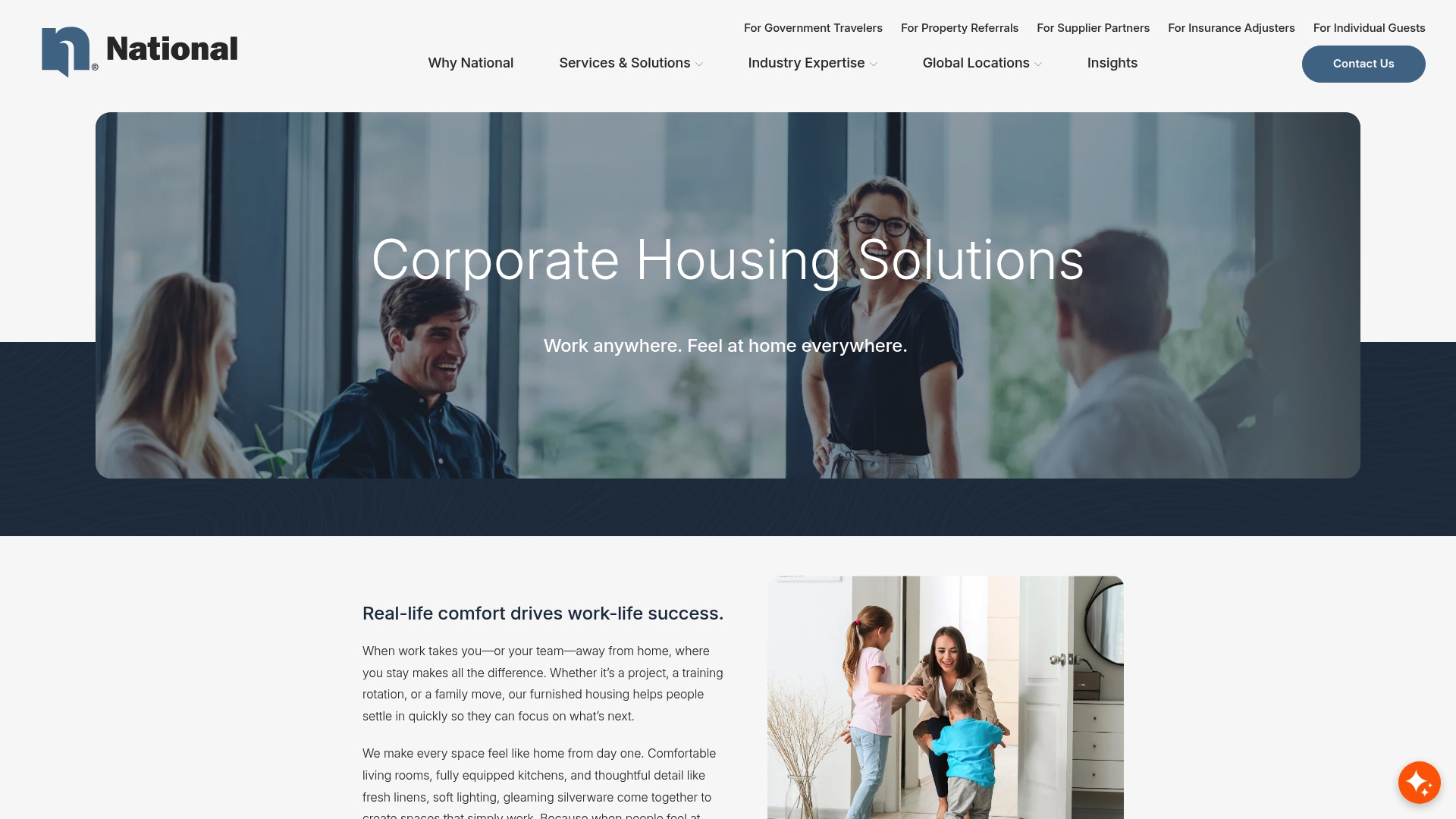
At a Glance
The vendor advertises an inventory spanning 125+ countries and 16,900+ properties, a scale that supports multi-market programmes. Corporate Housing positions itself as a software-enabled accommodation solution for stays typically of 30 days or more, pairing turnkey residences with programme-level reporting and account management.
Core Features
-
Fully furnished one to three bedroom apartments, condos, or rental homes with living and dining areas.
-
Full kitchens supplied with cookware and dishware so teams can keep routines and reduce meal spend.
-
Laundry either in-unit or in-building to shorten disruption during medium and long stays.
-
High-speed Wi-Fi and utilities included to remove billing complexity and support remote work.
-
Programme tools such as consolidated invoicing, policy-tagged reporting, and centralised account management.
-
Local destination support, 24/7 customer service in many markets, and white-glove move-in coordination.
The vendor states flexible lease terms generally start at around 30 days with some locations offering shorter options depending on market conditions.
Key Differentiator
Corporate Housing combines residential space with programme controls and reporting, so your travel or relocation programme can manage inventory, invoicing, and compliance from a single contact point. That blend of home-style accommodation and account-level systems is where it diverges from hotel-centric programmes.
优点
-
More space and privacy than hotel rooms, which helps employees maintain routines and rest properly during medium or long assignments.
-
Kitchens and laundry mean staff can eat healthier and avoid daily restaurant expenditure, reducing incidental costs and friction.
-
Programme reporting and consolidated invoicing simplify finance workflows and cut reconciliation time for travel teams.
-
Localised support reduces onboarding friction for relocated employees by handling move-in, local orientation, and practical services.
-
Scalable for single assignees or larger teams, so the same vendor can support an individual relocation and a project team simultaneously.
缺点
-
Higher cost per night for very short stays under a week compared with hotels.
-
Availability and amenity consistency vary by region and property, which can force compromises on layout or furnishings.
-
Less instant flexibility for last-minute bookings when compared with hotel inventory held for transient guests.
-
Not ideally suited to trips significantly shorter than 30 days where hotel or short term rental options are often simpler and cheaper.
When It May Not Fit
If assignments are one to seven days and flexibility to change dates at short notice is the priority, Corporate Housing is a poor match. If your programme requires perfectly standardised room layouts across every booking, the natural variation across properties will cause headaches.
Notable Integrations
-
Consolidated invoicing that integrates with corporate expense and finance systems.
-
Dedicated account managers who handle lease and booking management workflows.
-
Custom reporting dashboards for programme-level oversight and policy compliance.
These are delivered as part of the vendor’s account services rather than as third-party software plugins.
Who It’s For
Human Resources teams, relocation specialists, and corporate travel managers running medium and long duration assignments who prioritise employee well-being, predictable accounting, and programme-level control.
Real World Use Case
A technology firm places a team of developers in furnished apartments near a client site for a three month project. The apartments let the team keep household routines and reduce commute time while centralised invoicing and reporting kept finance and HR aligned on cost and compliance.
Pricing
Pricing is customised per location, unit size, and duration. The vendor positions corporate housing as cost-effective for stays of 30 days or more but typically more expensive per night than hotels for very short stays. Specific rates are provided on request and vary by market conditions.
Website: https://www.nationalcorporatehousing.com/furnished-housing/corporate-housing
Hotels

At a Glance
A month in a mid-range hotel commonly runs between $3,600 and $12,000 before taxes and extras, a useful figure for finance teams modelling assignment cost versus corporate housing. Hotels centre on nightly pricing, service, and location rather than extended-stay economics.
Hotels supply a private bedroom and bathroom, daily housekeeping, and on-site facilities such as restaurants and fitness centres. That configuration suits brief visits where convenience and a predictable service level matter more than space or self-catering.
Core Features
- Private bedroom and bathroom for each guest, with standard hotel toiletries and daily servicing where offered.
- Nightly pricing that includes base room fees; taxes and resort or occupancy charges frequently add on top.
- Limited in-room cooking options rather than a full kitchen; many properties offer room service or on-site dining.
- Guest-facing services such as concierge, bell staff, business lounges, and fitness facilities.
Key Differentiator
Hotels prioritise a service-oriented stay with daily housekeeping and staff-led guest services. That model optimises for turnover, reliable service touchpoints, and proximity to business districts or event venues rather than the residential needs of a month-long assignment.
优点
- Convenient for short trips and rapid bookings, which keeps travel coordinators responsive when plans change.
- Wide availability and easy reservation through platforms such as Hotels.com, making logistics straightforward for small groups and single travellers.
- On-site amenities reduce the need to scout local suppliers; meeting rooms, restaurants, and fitness centres are immediately accessible.
- Daily housekeeping and maintenance remove the chores burden from the traveller, preserving time for work and meetings.
- Prime, central locations minimise commuting time and can protect billable hours on tight schedules.
缺点
- Nightly rates plus occupancy taxes make month-long stays expensive compared with serviced apartments or corporate housing.
- Rooms rarely include a full kitchen or separate living area, which reduces privacy and limits in-place team routines.
- Frequent housekeeping visits and hotel floor layouts can mean less control over interruptions and privacy.
- Add-on costs for meals, laundry, parking, and internet are common and can erode the apparent per-night value.
- Extended assignments can trigger employee fatigue from small rooms and repetitive hotel routines.
When It May Not Fit
If a project exceeds 30 days, hotels typically cost more than alternatives because of nightly charges and tax structures. Teams needing separate living and work zones or the ability to cook and do laundry in-unit will find hotels restrictive. Privacy-sensitive roles or teams requiring asynchronous schedules may prefer a residential option.
Who It’s For
Business travellers, consultants on brief client visits, and event attendees who prioritise fast check-in, service access, and a central location. Also suitable for frequent flyers who value a known service standard and predictable amenity set.
Real World Use Case
A three-person consulting team books centrally located rooms for a three-day client workshop. Quick check-in, daily housekeeping, access to the hotel business centre, and a nearby restaurant allow the team to focus on deliverables rather than logistics.
Pricing
Rooms are charged nightly with wide variance by market and season. Typical mid-range rates range from $120 to $400 per night, creating monthly figures from roughly $3,600 to $12,000 before taxes, parking, and meals. Expect prices to increase in peak periods and premium districts.
Website: https://www.hotels.com
Corporate Housing vs. Hotels: Evaluating Accommodation Options
Choosing between Corporate Housing and Hotels depends on the priorities and requirements of the assignment or business travel context. This analysis highlights the strengths and challenges associated with each option to provide guidance when selecting the most fitting solution.
Cost Efficiency and Assignment Duration
For assignments exceeding 30 days, Corporate Housing often proves more economical, as its pricing model avoids daily rates and amplifying costs like taxes and meals. In contrast, Hotels are financially convenient for shorter stays due to their lower initial costs and lack of set duration requirements but can become exceedingly expensive for longer durations when nightly rates accumulate.
Accommodation and Lifestyle Features
Corporate Housing focuses on offering a residential lifestyle, emphasising space, privacy, and domestic facilities such as full kitchens and laundry access. This supports healthier routines and team management during medium to long assignments. Hotels, however, provide consistent service integration, offering amenities like daily housekeeping, in-room dining, and fitness centres, optimally supporting short-term stays where convenience outweighs self-sufficiency.
Flexibility and Availability
The Hotel industry excels in offering immediate availability and high adaptability for last-minute schedule alterations, ensuring ease of booking changes. Meanwhile, Corporate Housing prioritises pre-booked arrangements and planning consistency, with potential delays for short-notice requests but greater assurance for stays aligned with assignment timelines.
Best Fit
- Corporate Housing: Suited for staff on extended projects prioritising a home-like environment and cost stability while focusing on routine maintenance and well-being.
- Hotels: Suitable for short-term visits where flexibility and central location are, enabling travellers to prioritise work deliverables without domestic setup concerns.
Our Pick
For professionals seeking to establish consistent routines for assignments of a month or longer, Corporate Housing offers enhanced amenities suited to long-term comfort and productivity. For brief business trips or tight-turnaround situations, Hotels provide necessary convenience and centrality. Understanding the primary objective of the stay enables the selection of the solution that promotes project success while acknowledging the tradeoffs in cost and amenities inherent in each option.
Corporate Housing vs Hotels
A detailed comparison of Corporate Housing and Hotels focusing on key dimensions to help you make informed decisions for your travel or relocation needs.
| Aspect | Corporate Housing | Hotels |
|---|---|---|
| Space and Privacy | Fully furnished apartments with multiple rooms | Single rooms with private bathroom |
| Kitchen Facilities | Equipped with full kitchens for self-catering | Limited in-room cooking options |
| Cost Efficiency | Cost-effective for long stays, customised pricing | $120–$400 per night, high monthly costs |
| Amenity Highlights | High-speed Wi-Fi, laundry, consolidated invoicing | On-site restaurants, daily housekeeping |
| Best For | Medium to long-term stays, team collaborations | Short-term stays, individual business trips |
Finding the Right Home Away from Home
Choosing between corporate housing and hotels depends heavily on assignment length, team needs, and employee wellbeing. If privacy, space for routines, kitchens, and laundry are priorities for medium or longer stays, corporate housing often delivers better results. Hotels excel in short-term flexibility and service, but extended assignments can strain both budget and performance.
Guestlyhomes specialises in fully managed, premium homes offering exactly that balance for stays from 10 nights up to 12 months across Sweden and the Nordics. Designed for professionals and teams who value calm, hotel-grade consistency and thoughtful design, these apartments and villas support wellbeing without distraction.
Discover how to match your accommodation strategy to your team’s needs with assured expertise and quiet confidence. Visit Guestlyhomes to explore detailed guides and find solutions that create sustainable, cost-effective stays that help your projects succeed.
Frequently Asked Questions
What advantages does Corporate Housing offer for medium and long-term assignments?
Corporate Housing provides more space and privacy compared to hotels, allowing employees to maintain their routines during medium or long stays. The article highlights fully furnished apartments with kitchens and laundry facilities, which help reduce meal costs and accommodate daily living needs. For those needing comfortable and functional living arrangements for longer assignments, Corporate Housing is typically the better choice.
How do Hotels and Corporate Housing differ in terms of cost for extended stays?
Hotels often have a higher nightly rate for stays exceeding 30 days, increasing overall costs significantly compared to Corporate Housing. Corporate Housing is generally priced to be more economical for longer assignments, as their flexible lease terms start around 30 days. Thus, for projects lasting a month or more, Corporate Housing may provide better financial value.
When should a team consider using Hotels instead of Corporate Housing?
Hotels are suitable for short-term stays, typically under a week, where flexibility and rapid booking are prioritized. The article notes that their convenience and range of amenities, including daily housekeeping, make them ideal for brief visits where employees require quick service rather than residential comforts. For teams on short assignments, choosing hotels might be the more efficient solution.
What benefits does Corporate Housing provide over Hotels for team wellbeing?
Corporate Housing enhances team wellbeing by offering larger living spaces and the ability to cook meals, which helps employees feel more at home and supports healthier eating habits. The article mentions that maintaining routines in a home-like environment can positively impact employee satisfaction and performance. Therefore, teams focused on wellbeing during longer assignments should strongly consider Corporate Housing.
How does the local support differ between Corporate Housing and Hotel stays?
Corporate Housing typically provides local destination support and 24/7 customer service, which helps ease the transition for relocated employees. In contrast, hotels mainly focus on guest services but may lack the dedicated support for long-term assignments that Corporate Housing offers. For teams needing assistance during their stay, Corporate Housing is likely to deliver a more tailored experience.
Recommended
- Corporate Housing vs Airbnb: Which Model Fits Your Property? – 4 Options 2026 – Guestly Homes
- Corporate Housing vs Airbnb: What’s the Real Difference for Your Stay? – Top 7 Solutions 2026 – Guestly Homes
- Corporate Guests vs High-turnover Tourist Stays 2026 – Guestly Homes
- The Ultimate Guide to Corporate Housing Furnished Apartments 2025 – Guestly Homes