


Pe scurt:
- Furnished rentals can command a 20–50% rent premium in the right locations, especially near institutions like hospitals and universities. Proper management, high-quality furniture, and understanding tenant expectations are essential for maximizing returns, with professional operators offering predictable income and reduced operational burdens. The decision to furnish should be based on market demand, property type, and available management capacity, rather than aesthetic preferences alone.
Deciding whether to furnish your rental property is a strategic choice that directly shapes your rental income, the type of tenants you attract, and the management demands you take on. In the property industry, this decision is framed as the furnished versus unfurnished rental strategy, and the distinction carries real financial consequences. Furnished rentals can command a 20–50% rent premium over comparable unfurnished units, with the initial furniture investment typically recovering within 4–10 months. The right answer depends on your property type, location, and how actively you want to manage your asset.
Should you furnish your property before renting it out?
The furnished rental model is defined by providing a property with beds, seating, kitchen equipment, storage, and the practical comforts a tenant needs to move in without purchasing anything. The unfurnished model offers empty space, attracting tenants who bring their own belongings and typically stay longer. These two approaches serve fundamentally different tenant pools, and understanding that distinction is the starting point for any sound rental strategy.
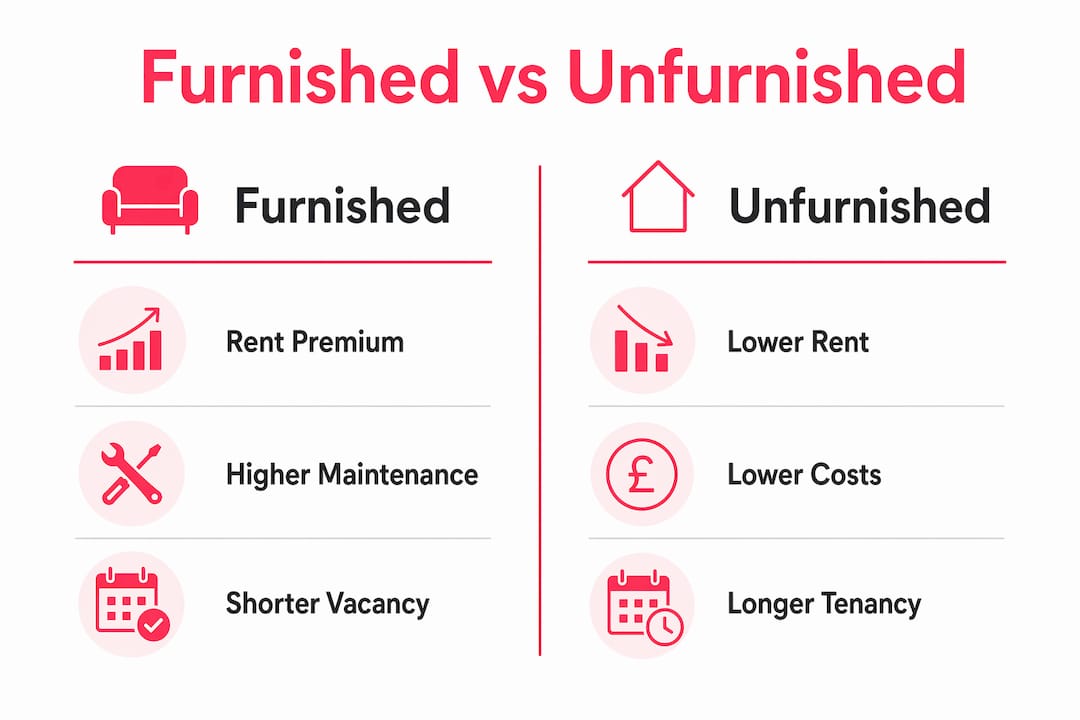
Urban furnished apartments see a monthly rent premium of approximately £145–£165 over unfurnished equivalents, but they also experience two to four tenant turnovers per year compared to one for unfurnished units. That higher turnover is not a flaw in the model. It is a feature, provided you are prepared to manage it. Corporate professionals on short-term contracts, medical staff on hospital rotations, and consultants on project assignments all require furnished accommodation and will pay a meaningful premium for it.
| Factor | Furnished rental | Unfurnished rental |
|---|---|---|
| Monthly rent premium | 20–50% above market rate | Standard market rate |
| Typical tenant profile | Corporate professionals, students, relocating executives | Long-term residents, families |
| Average annual turnovers | 2–4 per year | 1 per year |
| Upfront investment | £2,000–£4,000 per unit | Minimală |
| Management intensity | Înaltă | Low to moderate |
Location is the clearest predictor of whether furnishing will generate a positive return. Properties near hospitals can earn £2,400–£4,800 more annually than unfurnished equivalents, particularly studios and one-bedroom units. Properties near business districts, universities, and transport hubs follow a similar pattern. A three-bedroom family home in a suburban residential area, however, rarely achieves a positive return on furnishing investment, because the tenant demographic in that market prioritises space for their own belongings over move-in convenience.
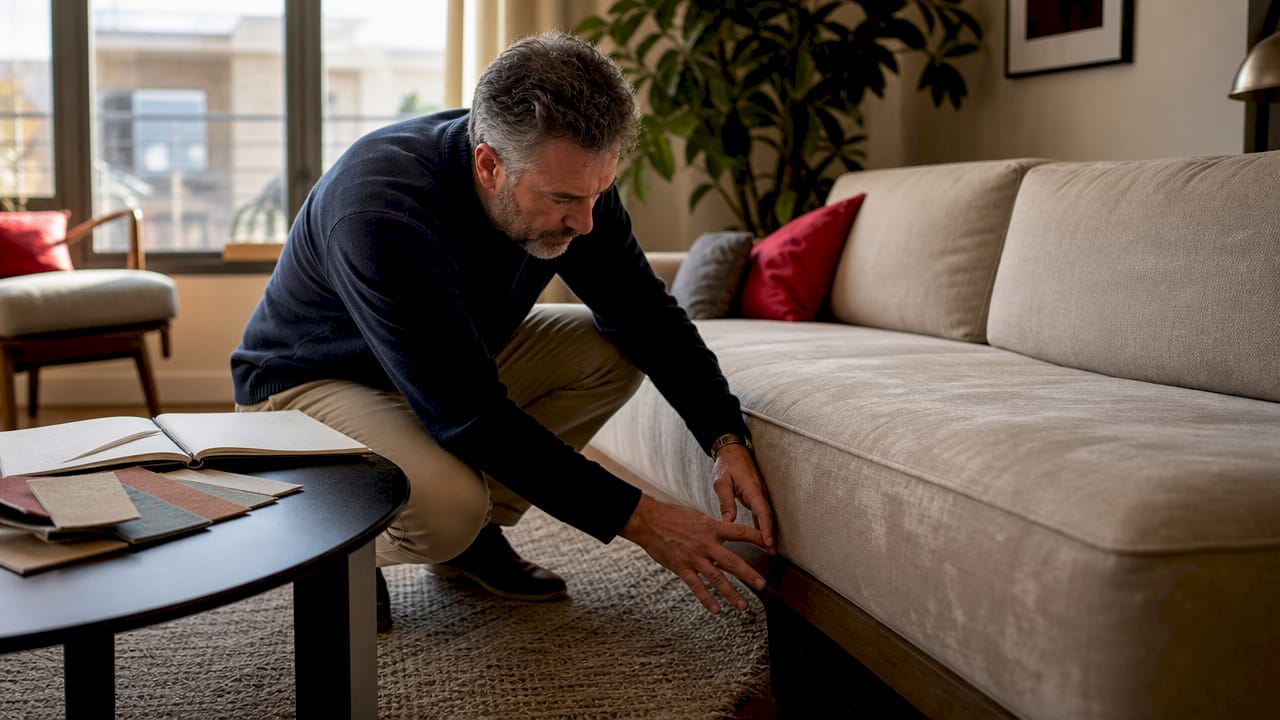
What do corporate tenants expect in a furnished rental?
Corporate tenants value move-in readiness above almost everything else. Their decision to book a furnished property is driven by the expectation that every practical need has been anticipated. Falling short of that expectation does not just cost you a review. It costs you the repeat booking and the referral that follows it.
The non-negotiable elements for a corporate-standard furnished rental are:
- Beds and bedding: Quality mattresses with full linen sets, spare pillows, and blackout curtains. A tired consultant on a Monday morning notices a poor mattress immediately.
- Kitchen equipment: Hob, oven, microwave, refrigerator, kettle, toaster, and a complete set of cookware, crockery, and utensils. A functional kitchen reduces daily living costs for long-stay guests and increases perceived value.
- Dining area: A table and chairs sized appropriately for the unit. Many corporate guests work from the dining table, so stability and surface space matter.
- Reliable WiFi: A minimum of 100 Mbps with a router positioned centrally. Slow or unreliable connectivity is the single most cited complaint in corporate rental reviews.
- Laundry facilities: An in-unit washing machine is the standard expectation. A combined washer-dryer is preferred for compact units. Shared laundry facilities are acceptable only in larger buildings where access is guaranteed.
- Storage: Adequate wardrobe space, drawers, and shelving. Professionals on extended stays bring more than a weekend bag.
- Workspace: A dedicated desk or a clear surface with good lighting. This is increasingly expected and, when present, mentioned positively in reviews.
What corporate guests notice is rarely the expensive items. It is the absence of the ordinary ones. A missing tin opener, a broken blind, or a sofa that sags in the middle communicates neglect far more loudly than any premium finish communicates care.
Pro Tip: Source your kitchen equipment from commercial catering suppliers rather than high-street homeware retailers. The items are built for repeated use, cost comparably, and last significantly longer under the wear of frequent tenant changeovers.
How does furniture quality affect long-term returns?
Home-grade furniture fails quickly in rental settings, with low-quality pieces often requiring replacement within one to two years. That replacement cycle eliminates the rent premium you worked to achieve. Commercial-grade furniture, designed for repeated use and easy cleaning, is the correct specification for any property targeting corporate or short-stay tenants.
| Furniture type | Approximate cost | Expected lifespan (rental use) | Maintenance demand |
|---|---|---|---|
| Home-grade sofa | £300–£600 | 1–2 years | High (fabric wear, frame fatigue) |
| Commercial-grade sofa | £700–£1,200 | 5–8 years | Low to moderate |
| Home-grade bed frame | £150–£350 | 2–3 years | Moderat |
| Commercial-grade bed frame | £400–£700 | 7–10 years | Scăzut |
| Flat-pack dining table | £100–£250 | 1–2 years | High (joint failure, surface damage) |
| Solid wood dining table | £350–£700 | 8–12 years | Scăzut |
The financial logic is straightforward. A commercial-grade sofa at £900 that lasts seven years costs less per year than a home-grade sofa at £450 replaced every eighteen months. The higher upfront spend protects your rent premium and reduces the operational disruption of mid-tenancy replacements.
Inventory documentation is equally important. Photograph every item before each tenancy, record serial numbers for appliances, and maintain a written inventory that tenants sign at check-in. Security deposits for furnished rentals should be set higher than for unfurnished units to provide a financial buffer against upholstery wear, breakage, and missing items. This is not a precaution against dishonest tenants. It is standard practice that protects both parties and removes ambiguity at the end of a tenancy.
Turnover labour for a furnished rental runs to approximately eight hours per event at professional cleaning rates, covering inspection, steam cleaning, inventory checks, and restaging. At two to four turnovers per year, that cost is predictable and should be built into your financial model from the outset. Properties managed to a consistent maintenance standard retain occupancy rates that justify the operational investment.
Pro Tip: Opt for neutral colours in upholstery and soft furnishings. Grey, oatmeal, and charcoal tones photograph well, show less wear between professional cleans, and appeal broadly across tenant demographics without dating quickly.
Independent management vs. professional operators: what are the trade-offs?
Many landlords approach furnished rentals with the assumption that self-management is the more profitable route. The arithmetic often proves otherwise once the full cost of time, expertise, and missed occupancy is accounted for.
Self-managing a furnished rental involves:
- Handling all tenant enquiries, viewings, and check-ins personally
- Coordinating professional cleaning and inventory checks at every turnover
- Managing maintenance requests, often at short notice
- Marketing the property across multiple platforms and managing dynamic pricing
- Staying current with tenancy law, deposit regulations, and safety compliance
The operational intensity is significant. Many landlords underestimate the management demands of furnished rentals and the associated costs, leading to unexpected workload and eroded returns. The model rewards those who treat it as an active business, not a passive income stream.
Working with a professional operator offers:
- Consistent guest experience managed to a defined standard
- Occupancy optimisation through professional pricing and distribution
- Maintenance oversight and supplier relationships already in place
- Compliance management handled on your behalf
- A predictable income structure, whether through revenue share or fixed lease arrangements
Professional management fees for furnished rentals run to approximately 15% of revenue, reflecting the increased supervision and maintenance demands compared to standard long-let management. That fee is not simply a cost. For owners who value their time, want consistent standards, or manage properties remotely, it is the mechanism that makes the model viable. The benefits of serviced apartments for property owners become most apparent when professional management removes the operational friction entirely.
The choice between independent and professional management ultimately reflects your goals. If you want high-yield active management and have the capacity to deliver it, self-management is viable. If you want predictable rental income with minimal involvement, a professional operator is the more reliable path. Repeat corporate guests are the most profitable outcome of a well-managed furnished property, and achieving that consistency typically requires systems that go beyond what most individual landlords can maintain alone.
Key takeaways
Furnishing a rental property generates a measurable rent premium, but only when the property type, location, furniture quality, and management capacity are all aligned with the demands of the furnished rental model.
| Punct | Detalii |
|---|---|
| Rent premium potential | Furnished units command 20–50% above unfurnished rates in the right locations. |
| Location determines viability | Studios and one-beds near hospitals, universities, and business districts yield the strongest returns. |
| Quality protects returns | Commercial-grade furniture outlasts home-grade alternatives and reduces costly replacement cycles. |
| Management intensity is real | Turnover labour, inventory checks, and maintenance must be costed into your financial model from the start. |
| Professional operators add measurable value | A 15% management fee is justified when it delivers consistent occupancy, compliance, and guest satisfaction. |
The furnishing decision is a business decision, not a decorating one
I have spoken with many property owners who approach furnishing as an aesthetic exercise. They spend time choosing cushion colours and artwork, then underinvest in the mattress and the WiFi router. That order of priorities is backwards, and it shows in the reviews.
The landlords who generate sustained returns from furnished rentals treat the property as a product. They define their target tenant first, then specify the furnishings that tenant requires, then price accordingly. They do not furnish a three-bedroom family home in a quiet suburb and wonder why corporate tenants are not enquiring. They match the asset to the market.
The other misconception I encounter regularly is the belief that furnishing automatically means higher income. Dated or poor-quality furnishings reduce demand and rental value. A property with tired furniture, slow WiFi, and a missing inventory of kitchen basics will underperform an unfurnished equivalent in the same building. If you cannot invest in quality furnishings from the outset, renting unfurnished is the more rational choice until you can.
My honest view is that the furnished rental model is genuinely excellent for the right property in the right location, managed to a consistent standard. It is genuinely poor for properties that do not fit the profile, or for landlords who want passive income without the operational infrastructure to support it. The setup standards that distinguish high-performing furnished rentals from average ones are not complicated. They are simply consistent, and consistency requires either personal commitment or professional support.
— Joakim
How Guestlyhomes supports furnished property owners
Guestlyhomes operates fully managed, high-standard furnished properties across Sweden and the Nordics, working with property owners through either a revenue share or fixed-lease model. If you are considering furnishing your property and want to understand what a professionally managed furnished rental looks like in practice, the 1BR Executive Premium Suite illustrates the standard Guestlyhomes delivers to corporate guests on extended stays.
For property owners, the model removes the operational complexity entirely. Guestlyhomes handles furnishing specification, guest management, maintenance, and occupancy optimisation. You receive predictable income without the workload. If you want to understand how top rental standards translate into long-term property performance, Guestlyhomes is a practical starting point.
FAQ
What is the rent premium for a furnished rental?
Furnished rentals typically command a 20–50% rent premium over comparable unfurnished units, with urban one-bedroom apartments earning approximately £145–£165 more per month. The premium is strongest near hospitals, universities, and business districts.
Is it worth furnishing a rental property?
Furnishing is worth it for studios and one-bedroom units in high-demand urban locations where corporate or short-stay tenants are the primary market. For larger family homes in residential areas, the return on furnishing investment is rarely positive.
What furniture do landlords need to provide in a furnished rental?
The standard expectation covers beds with full bedding, a functional kitchen with appliances and utensils, a dining area, reliable WiFi, laundry facilities, and adequate storage. Corporate tenants also expect a dedicated workspace.
How long does rental furniture last?
Commercial-grade furniture lasts seven to twelve years under rental use, while home-grade alternatives often require replacement within one to two years. Investing in commercial-grade pieces from the outset reduces long-term costs and protects the rent premium.
Should landlords use a professional operator for furnished rentals?
Professional operators charge approximately 15% of revenue for furnished rental management, covering guest experience, maintenance, and compliance. For landlords who want consistent occupancy without active involvement, professional management typically delivers a better net outcome than self-management.