


Balancing team logistics across Central Sweden often demands smart mobility choices that also make financial sense. For many companies, the challenge is finding a flexible way to access vehicles without the strain of large upfront investments or ownership risks. Business car leasing has become a preferred route across the European market, offering cost-effective mobility, predictable budgeting, and sustainable fleet options. This article helps you understand how modern leasing works and what makes it an attractive option for dynamic workplaces.
Inhoudsopgave
- What Business Car Leasing Means Today
- Types Of Business Car Lease Agreements
- How A Business Car Lease Works
- Tax, Legal, And Regulatory Requirements
- Costs, Risks, And Common Pitfalls
- Key Alternatives To Business Car Leasing
Belangrijkste opmerkingen
| Punt | Details |
|---|---|
| Business car leasing offers financial flexibility. | Modern leasing arrangements reduce upfront costs and enable predictable budgeting, aligning with organisational financial goals. |
| Vehicle types impact lease agreements. | Operational leases focus on expense management, while financial leases provide ownership benefits and tax advantages. |
| Navigating taxes and regulations is crucial. | Companies must understand tax implications of different lease types to optimise financial efficiency and compliance. |
| Explore alternative mobility solutions. | Options like car subscriptions and ride-sharing can serve as flexible and sustainable alternatives to traditional leasing. |
What Business Car Leasing Means Today
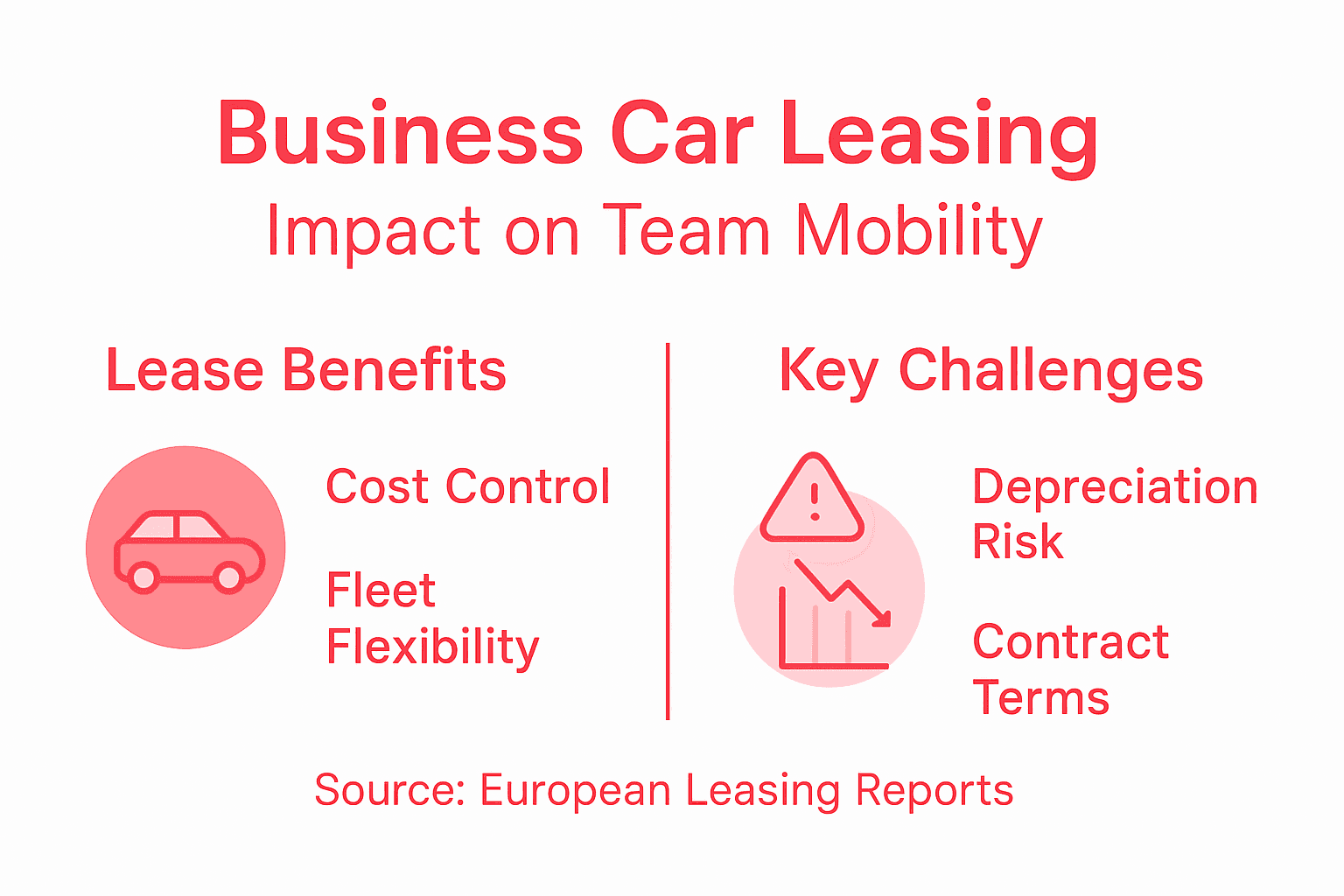
Business car leasing has transformed dramatically in recent years, emerging as a strategic mobility solution for forward-thinking Swedish companies. At its core, car leasing represents a sophisticated financial service that enables businesses to access vehicle fleets without the substantial upfront capital investment traditionally required for ownership.
The contemporary landscape of business car leasing goes far beyond simple vehicle acquisition. Modern leasing arrangements provide comprehensive solutions that integrate financial flexibility, technological innovation, and sustainability objectives. Companies can now access vehicles through structured agreements that spread costs, mitigate depreciation risks, and provide predictable budgeting frameworks. The European market particularly demonstrates this evolution, with leasing becoming increasingly attractive for organisations seeking intelligent mobility strategies.
Key advantages of modern business car leasing include:
- Reduced initial capital expenditure
- Predictable monthly budgeting
- Access to newest vehicle technologies
- Simplified fleet management
- Lower maintenance and operational risks
- Enhanced sustainability through newer, more efficient vehicle selections
The European car leasing market continues experiencing robust growth, particularly driven by rising preferences for electric vehicles and flexible mobility solutions. This trend reflects a broader shift towards more agile, cost-effective transportation strategies that align with corporate environmental and financial objectives.
Pro tip: When exploring business car leasing, always request transparent total cost breakdowns and compare multiple providers to ensure you’re securing the most advantageous agreement for your specific organisational needs.
Types Of Business Car Lease Agreements
Business car leasing offers multiple agreement structures, each designed to address different organisational needs and financial strategies. Operational and financial leasing represent the primary categories that Swedish companies can explore when considering vehicle fleet management.
In the realm of operational leasing, businesses effectively rent vehicles without assuming full ownership responsibilities. This model provides significant advantages, including predictable monthly expenses, comprehensive maintenance coverage, and the flexibility to upgrade vehicles periodically. Under these arrangements, the leasing company retains legal ownership while the business enjoys full operational use of the vehicle. Key characteristics include fixed monthly payments, bundled service packages, and reduced long-term financial commitments.
Alternatively, financial leasing presents a different approach where the business becomes the economic owner of the vehicle. This model typically involves:
- Longer lease terms (often 3-5 years)
- Higher monthly payments compared to operational leases
- Transfer of ownership risk to the business
- Potential tax advantages related to asset ownership
- Greater flexibility in customising vehicle specifications
Business car lease contracts can be further categorised into open-end and closed-end arrangements. Open-end leases place residual value risk on the lessee, potentially requiring additional payments if vehicle depreciation exceeds initial projections. Closed-end leases offer more predictable cost structures with predefined mileage limits and fixed-term agreements.
Pro tip: Conduct a comprehensive financial analysis comparing operational and financial lease structures, considering your company’s specific cash flow, tax positioning, and long-term mobility requirements before selecting an agreement.
Here’s how operational and financial leasing differ for Swedish businesses:
| Aspect | Operational Leasing | Financial Leasing |
|---|---|---|
| Ownership of Vehicle | Retained by lessor | Held by business |
| Accounting Treatment | Recorded as an expense | Recognised as an asset |
| Payment Predictability | High, with fixed monthly costs | Usually less predictable, varies |
| Tax Deductibility | Full lease payments typically deductible | Depreciation and interest deductible |
| End-of-Term Options | Return or renew the vehicle | Option to purchase at residual value |
How A Business Car Lease Works
Business car leasing represents a strategic financial process that transforms traditional vehicle acquisition for organisations. The journey begins with a comprehensive assessment of the company’s mobility requirements, vehicle specifications, and budgetary constraints.
The initial stage involves a detailed application process where businesses submit financial documentation, demonstrate creditworthiness, and specify their precise vehicle needs. Leasing providers evaluate these submissions, considering factors such as company financial health, operational history, and intended vehicle usage. Once approved, the company can select from a range of vehicle models, negotiating specific lease parameters including mileage allowances, maintenance packages, and contract duration.
Typical business car lease agreements typically encompass several key components:
- Fixed monthly payment structures
- Predetermined mileage limitations
- Comprehensive maintenance options
- Flexible contract terms (usually 2-4 years)
- Option for vehicle upgrades at lease conclusion
- Potential tax efficiency advantages
Business car lease contracts ultimately provide businesses with a structured approach to vehicle management. At the contract’s conclusion, companies can choose to return the vehicle, renew the lease, or in some instances, purchase the vehicle at a predetermined residual value. This flexibility allows organisations to maintain a modern, efficient fleet without the long-term financial commitments associated with outright vehicle ownership.
Pro tip: Before finalising a business car lease, carefully calculate the total cost of ownership, including potential additional fees, to ensure the agreement aligns perfectly with your organisation’s financial strategy.
Tax, Legal, And Regulatory Requirements
Tax regulations surrounding business car leasing create a complex landscape that Swedish organisations must navigate carefully. The legal framework distinguishes between operational and financial leases, each carrying distinct taxation implications and reporting requirements.
Under operational leasing, businesses typically treat lease payments as recurring expenses, enabling straightforward tax deductions. Financial leases, conversely, require more nuanced accounting, where the vehicle is effectively considered a company asset. This classification impacts depreciation calculations, VAT treatment, and potential tax benefits. Companies must meticulously document vehicle usage, particularly distinguishing between business and personal mileage, as private use can trigger additional tax liabilities.
Key regulatory considerations for business car leasing include:
- VAT reclaim eligibility
- Precise documentation of vehicle usage
- Depreciation calculation methods
- Compliance with environmental reporting standards
- Potential carbon taxation implications
- Corporate tax reporting requirements
European leasing regulations continue evolving, with increasing emphasis on sustainability and prudential capital treatments. Companies must stay informed about changing legislative landscapes, particularly regarding clean vehicle incentives and environmental taxonomy reporting. The regulatory environment increasingly encourages businesses to adopt more sustainable fleet management strategies through targeted tax frameworks and investment incentives.
Pro tip: Consult a specialised tax accountant familiar with automotive leasing regulations to ensure comprehensive compliance and maximise potential tax efficiency for your business car lease agreements.
Costs, Risks, And Common Pitfalls
European leasing markets reveal complex financial landscapes where businesses must carefully navigate potential risks and unexpected expenditures associated with vehicle leasing. The seemingly straightforward process of acquiring business vehicles through leasing can harbour numerous financial complexities that require strategic management.
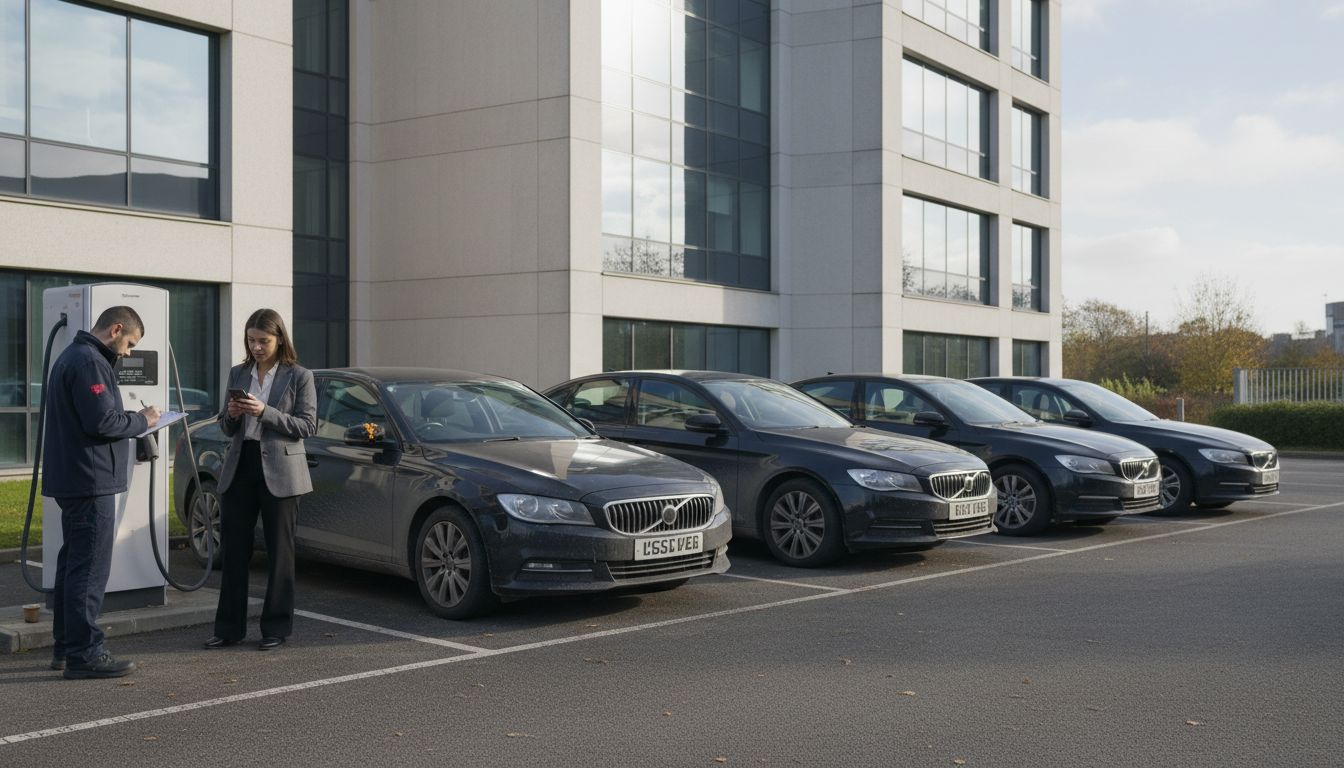
Primary financial risks emerge from residual value uncertainties, particularly with rapidly evolving electric vehicle technologies. Companies face significant challenges in forecasting long-term vehicle values, which directly impacts lease pricing and potential end-of-contract expenses. Unexpected depreciation can result in substantial financial penalties, especially if vehicles do not maintain anticipated market values or technological relevance.
Common pitfalls in business car leasing include:
- Underestimating total contract costs
- Miscalculating anticipated mileage limits
- Failing to understand early termination penalties
- Overlooking maintenance responsibilities
- Neglecting comprehensive insurance requirements
- Insufficient budgeting for potential additional charges
Declining used-car prices create substantial risks for businesses, particularly in the electric vehicle sector. Economic volatility and technological shifts can dramatically impact lease profitability, necessitating robust risk management strategies. Companies must develop sophisticated financial modelling approaches to mitigate potential losses and maintain flexibility within their vehicle procurement strategies.
Pro tip: Conduct thorough financial scenario planning and negotiate flexible contract terms that provide maximum adaptability to changing market conditions and technological developments.
Key Alternatives To Business Car Leasing
European mobility solutions are rapidly evolving, presenting businesses with an expanding array of transportation alternatives beyond traditional vehicle leasing. These emerging options reflect changing workplace mobility needs, technological advancements, and sustainability priorities.
Car subscription services represent a significant alternative, offering unprecedented flexibility compared to conventional leasing models. These services enable businesses to access vehicles with shorter commitment periods, reduced administrative overhead, and comprehensive bundled services. Subscribers can typically change vehicles more frequently, adapt to shifting operational requirements, and avoid long-term financial obligations associated with standard lease agreements.
Key alternatives to business car leasing include:
- Car subscription platforms
- Short-term vehicle rental programmes
- Ride-sharing corporate memberships
- Electric bicycle leasing
- Fractional vehicle ownership schemes
- Mobility-as-a-Service (MaaS) packages
Mobility service partnerships are increasingly bridging traditional transportation models, creating innovative solutions that address corporate mobility challenges. These collaborative approaches integrate various transportation modes, providing businesses with more dynamic and cost-effective mobility strategies that can be customised to specific organisational needs and sustainability goals.
The following table summarises major alternatives to traditional car leasing:
| Alternative Solution | Typical Commitment Length | Flexibility for Businesses |
|---|---|---|
| Car subscription services | 1-12 months | High: vehicles switched easily |
| Short-term rental | Days to months | Very high: suits project-based needs |
| Ride-sharing memberships | Per trip or monthly | Flexible for occasional requirements |
| Electric bicycle leasing | 6-24 months | Supports green commuting initiatives |
| Mobility-as-a-Service | Customisable, ongoing | Integrates multiple transport options |
Pro tip: Conduct a comprehensive mobility audit of your organisation’s transportation requirements to identify the most cost-effective and flexible alternative that aligns with your operational objectives and environmental commitments.
Enhance Your Team Mobility Beyond Business Car Leasing with Guestly Homes
Addressing the challenges of team mobility highlighted in the article, such as predictable budgeting, seamless operational coordination, and sustainability goals, requires solutions that complement your business car leasing strategies. While leasing offers financial flexibility and fleet management advantages, your teams also need reliable, comfortable, and centrally located accommodations during extended projects or assignments.
Guestly Homes specialises in fully managed, premium apartments and villas across Sweden designed for professionals and project teams. Our properties deliver the quiet stability and performance support your employees seek, ensuring stays that work quietly and free of disruptions. With options ranging from 10 nights to 12 months, we provide frictionless living without the hassle—supporting your operational leasing or financial leasing models by enhancing your team’s overall mobility experience.
Discover how Guestly Homes can transform your business travel and team stays with:
- High-standard spaces that promote focus and rest
- A single point of contact to ease accommodation management
- Flexible leasing models that align with your project timelines
Ready to synchronise your vehicle leasing benefits with exceptional team stays? Explore tailored housing solutions on our Guestly Homes website, and experience hassle-free accommodation management that complements your business car lease framework seamlessly. Visit us today to improve your team’s mobility and productivity with trusted, premium living spaces.
Veelgestelde vragen
What are the main benefits of business car leasing for team mobility?
Business car leasing offers reduced initial capital expenditure, predictable monthly budgeting, access to the latest vehicle technologies, simplified fleet management, lower maintenance risks, and enhanced sustainability.
How do operational and financial leasing differ in a business car leasing arrangement?
Operational leasing involves renting vehicles without assuming ownership responsibilities, resulting in predictable costs and less risk. Financial leasing allows the business to own the vehicle economically, typically involving longer lease terms and potential tax advantages.
What should companies consider before signing a business car lease agreement?
Companies should assess their mobility requirements, compare total costs, understand the terms of the lease, consider potential mileage limits, and evaluate maintenance responsibilities to ensure alignment with their financial strategy.
What are key alternatives to traditional business car leasing?
Alternatives include car subscription services, short-term vehicle rentals, ride-sharing memberships, electric bicycle leasing, and Mobility-as-a-Service (MaaS) packages, which offer flexibility and adapt to varying business needs.
Aanbevolen
- Wat is een Corporate Lease Appartement? Het concept begrijpen - Guestly Homes
- Wat is een zakelijke lease? De belangrijkste concepten begrijpen - Guestly Homes
- How to Arrange Long-Term Stays for Teams with Ease – Guestly Homes
- 7 Beste Executive-huurwoningen voor zakenreizen in 2025 - Guestly Homes
- Field Service Management: How to Structure, Manage & Motivate Your Team – FullyOps
- 7 Key Working Remotely Pros and Cons for Future Founders | siift