
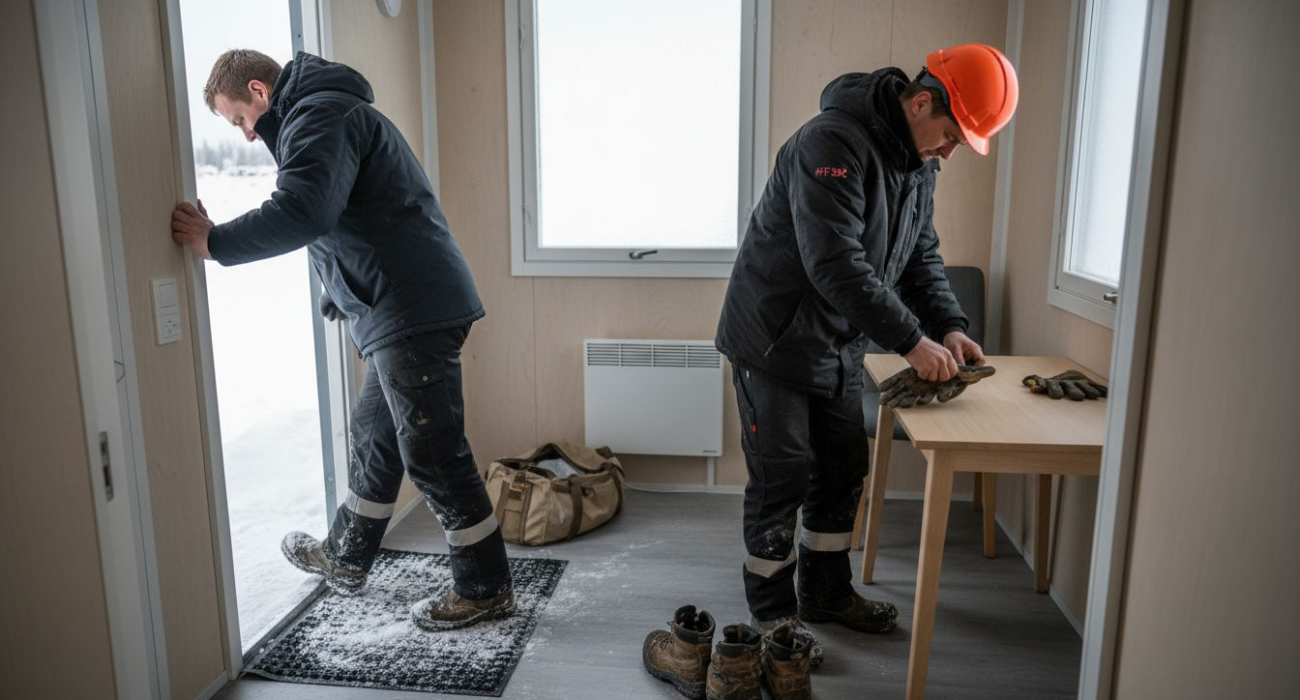

Booking contractor accommodation in Norrbotten is never a simple checklist exercise for modern project leaders. Sweden’s northern climate and industrial pace create unique challenges that demand much more than the average housing solution. For HR managers and project coordinators, understanding the importance of workforce housing standards and operational support is key to securing team productivity, safety, and morale. This article examines the critical elements behind effective accommodation decisions to help you deliver comfort, compliance, and smooth project delivery in Norrbotten.
Table des matières
- Defining Contractor Accommodation Needs
- Types of Housing for Project Teams
- Essential Facilities and Operational Support
- Risks to Avoid When Booking Stays
- Balancing Safety, Comfort, and Logistics
Principaux enseignements
| Point | Détails |
|---|---|
| Understanding Accommodation Needs | Contractor accommodation in Norrbotten must be strategically planned, considering factors such as team size, project duration, and working conditions to optimise productivity and well-being. |
| Housing Types and Suitability | Selecting the right housing type, from clustered apartments to shared villas, is essential for meeting operational needs and maintaining team morale during projects. |
| Operational and Support Infrastructure | Facilities should not only provide shelter but also enhance productivity with reliable internet, workspaces, and recovery areas, addressing the unique challenges of the northern environment. |
| Gestion des risques | Conducting thorough risk assessments prior to finalising accommodation is crucial to avoid issues related to reliability, location, and support services that could impact project success. |
Defining Contractor Accommodation Needs
Contractor accommodation in Norrbotten requires careful strategic planning that goes beyond traditional housing models. The unique geographical and climatic challenges of northern Sweden demand highly specialised housing solutions tailored to professional work environments.
Understanding contractor accommodation needs involves assessing several critical dimensions, including workforce housing standards that support team productivity and well-being. These standards encompass more than basic shelter – they represent an integrated approach to supporting professional performance in demanding industrial settings.
Key considerations for defining effective contractor accommodation include:
- Proximity to work sites
- Une connectivité internet à haut débit fiable
- Fully equipped kitchen facilities
- Separate sleeping quarters
- Secure tool and equipment storage
- Parking facilities for work vehicles
- Climate-controlled environments suitable for Nordic conditions
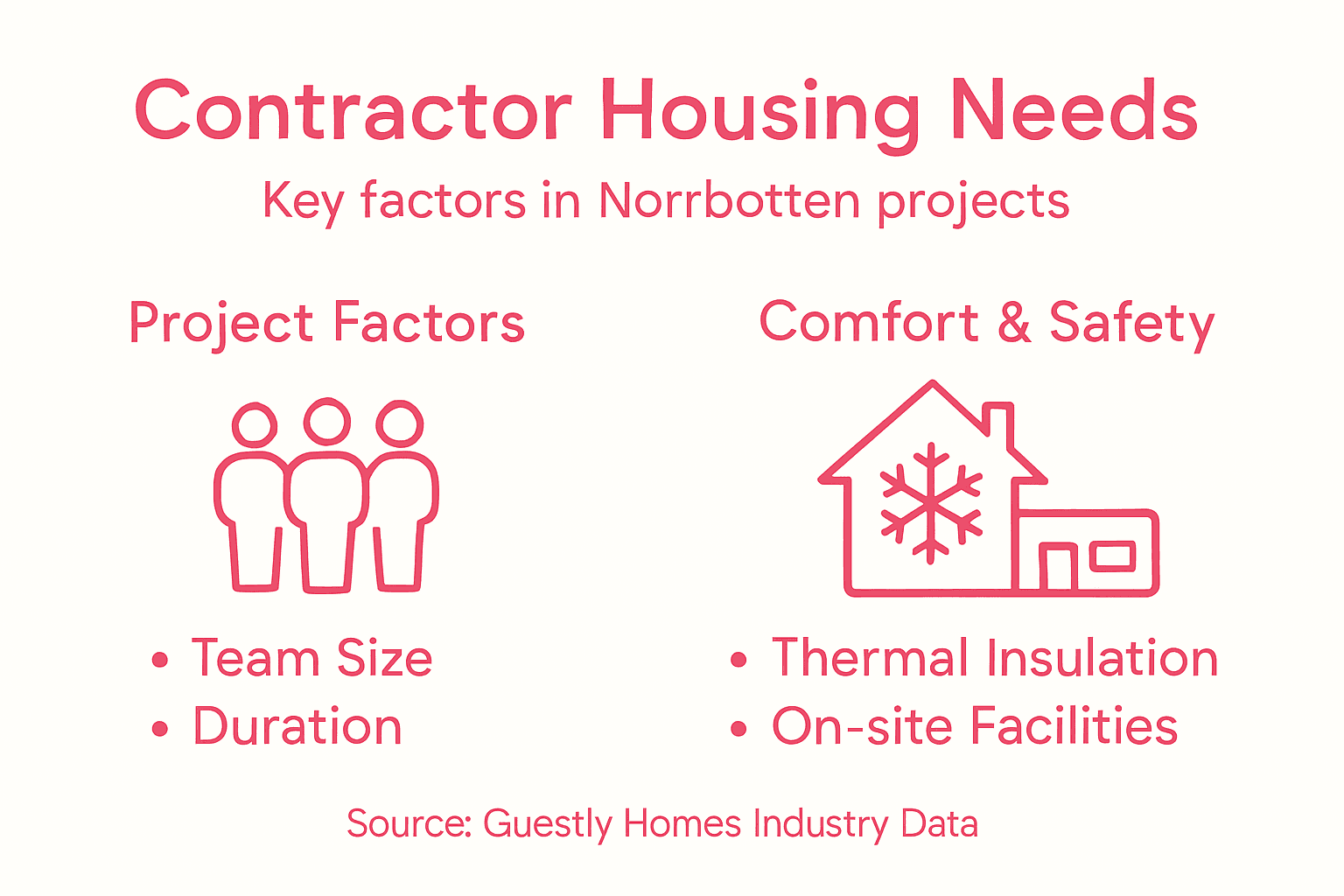
Team size, project duration, and specific operational requirements will significantly influence accommodation design. Short-term projects might require clustered apartment arrangements, while longer-term deployments could benefit from villa-style shared accommodations that provide more personalised living spaces.
Operational Performance Factors
Contractor housing is not merely about providing a place to sleep, but creating an environment that supports professional effectiveness. This means considering factors like:
- Rest and recovery spaces
- Personal privacy zones
- Collaborative common areas
- Technology infrastructure
- Stress reduction amenities
Safety and Comfort Parameters
Norrbotten’s harsh winter conditions demand accommodation solutions that provide robust thermal insulation, reliable heating systems, and spaces that enable contractors to recharge effectively between demanding work shifts.
Pro tip: Conduct a comprehensive site-specific assessment before finalising accommodation arrangements to ensure alignment with team performance requirements and individual contractor needs.
Types of Housing for Project Teams
In Norrbotten’s challenging industrial landscape, selecting appropriate housing for project teams requires nuanced understanding of contractor accommodation categories. Different project requirements demand tailored housing solutions that balance operational efficiency, team dynamics, and individual comfort.
The primary housing typologies for contractor teams in northern Sweden encompass several strategic configurations:
- Clustered Apartments: Ideal for medium-sized teams
- Shared Villa Accommodations: Best for long-term, stable project groups
- Corporate Dormitory Complexes: Suitable for large-scale industrial projects
- Modular Temporary Housing: Designed for short-duration, remote site deployments
Each housing type presents unique advantages depending on project parameters such as duration, team size, and specific industrial context. Short-term engineering assignments might require more flexible arrangements, while extended mining or infrastructure projects demand more comprehensive living solutions.
Accommodation Evaluation Criteria
Effective housing selection involves assessing multiple critical dimensions:
- Spatial requirements per team member
- Proximity to work sites
- Infrastructure and connectivity capabilities
- Rapport coût-efficacité
- Comfort and psychological well-being support
Norrbotten’s extreme climatic conditions necessitate housing solutions that provide not just shelter, but comprehensive support for professional performance.
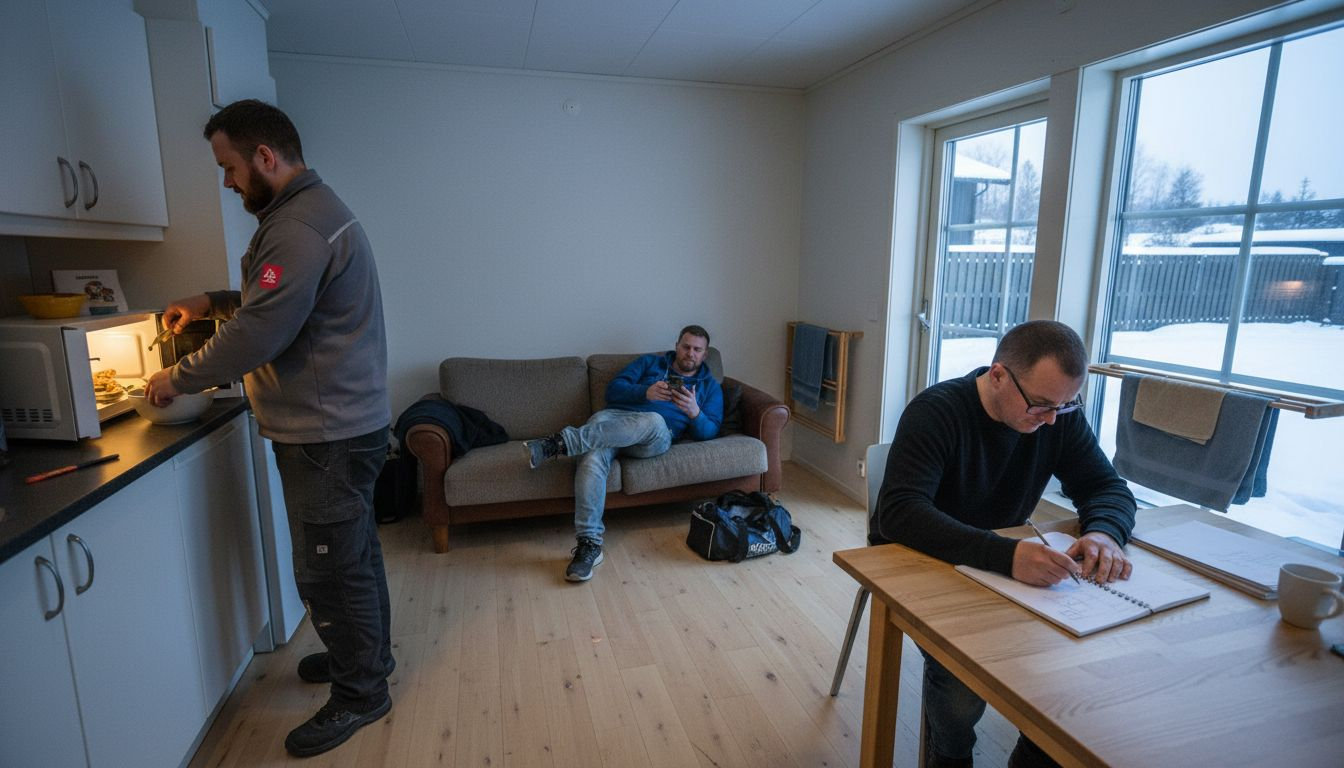
Long-term projects particularly benefit from villa-style shared accommodations that offer personalised spaces while maintaining collaborative potential. These arrangements allow teams to balance professional proximity with individual privacy, crucial for maintaining morale during extended industrial deployments.
The table below contrasts the main contractor housing types available in Norrbotten, highlighting their suitability and operational implications:
| Type de logement | Team Suitability | Duration Best Suited | Operational Impact |
|---|---|---|---|
| Clustered Apartments | Medium-sized teams | Short to medium projects | Good privacy, moderate teamwork |
| Shared Villa Accommodation | Stable long-term teams | Long projects | High comfort, strong team spirit |
| Corporate Dormitory Complex | Large workforce groups | Major, ongoing projects | Economies of scale, less privacy |
| Modular Temporary Housing | Small/rotating teams | Short/urgent deployments | Rapid setup, flexible locations |
Pro tip: Conduct a comprehensive site-specific assessment and team consultation before finalising accommodation strategies to ensure optimal match between housing configuration and project requirements.
Essential Facilities and Operational Support
In Norrbotten’s demanding industrial environment, contractor accommodations must go beyond basic shelter, providing comprehensive operational support infrastructure that ensures worker productivity and well-being. The right facilities can significantly impact team performance and project success.
Essential facilities for contractor housing in northern Sweden must address multiple critical dimensions of professional support:
- Communication Infrastructure
- Connectivité internet fiable et à haut débit
- Dedicated workspaces with electrical outlets
- Secure mobile phone reception
- Rest and Recovery Areas
- Soundproofed bedrooms
- Individual climate control
- Ergonomic furniture
- Kitchen and Nutrition Support
- Professional-grade cooking facilities
- Refrigeration and storage spaces
- Meal preparation areas
Operational Support Considerations
Effective contractor accommodations require a holistic approach to operational readiness:
- 24/7 maintenance support
- Protocoles d'intervention en cas d'urgence
- On-site laundry facilities
- Secure equipment storage
- Transportation coordination
Norrbotten’s extreme working conditions demand accommodation solutions that provide comprehensive support beyond traditional housing models.
Specialised facilities must account for the unique challenges of industrial projects in arctic environments. This includes robust heating systems, superior insulation, and spaces designed to support both individual recovery and team collaboration.
Pro tip: Conduct a detailed operational needs assessment with project managers to design accommodation facilities that precisely match team requirements and project specifications.
Risks to Avoid When Booking Stays
Contractor accommodation in Norrbotten demands meticulous attention to potential risks that could compromise team performance and project success. Critical risk assessment strategies are essential for identifying and mitigating potential operational challenges before they escalate.
Key risks that project managers and procurement teams must carefully evaluate include:
- Accommodation Reliability Risks
- Unstable or unreliable landlords
- Poorly maintained properties
- Inconsistent cleaning standards
- Hidden additional costs
- Location and Infrastructure Risks
- Inadequate proximity to work sites
- Limited transportation options
- Poor internet connectivity
- Insufficient security measures
- Operational Support Risks
- Slow maintenance response times
- Lack of emergency protocols
- Limited communication channels
- Inflexible booking conditions
Critical Risk Evaluation Dimensions
Comprehensive risk management requires systematic assessment across multiple domains:
- Financial transparency
- Property condition verification
- Flexibilité contractuelle
- Support infrastructure quality
- Emergency preparedness
Norrbotten’s challenging industrial environment demands rigorous screening to prevent accommodation-related project disruptions.
Specialised contractor housing requires more than basic compliance – it demands proactive risk management that anticipates potential operational challenges. This includes detailed background checks on property managers, comprehensive facility inspections, and clear contractual frameworks that protect both the team and the organisation.
Pro tip: Develop a standardised risk assessment checklist that covers technical, logistical, and operational criteria to systematically evaluate potential accommodation options.
Balancing Safety, Comfort, and Logistics
In Norrbotten’s challenging industrial landscape, creating contractor accommodation requires a sophisticated approach that simultaneously addresses worker safety and operational requirements. The delicate equilibrium between physical safety, psychological comfort, and logistical efficiency demands nuanced strategic planning.
Key dimensions of this integrated approach include:
- Safety Parameters
- Robust building structural integrity
- Fire safety systems
- Emergency evacuation protocols
- Secure access controls
- Comfort Considerations
- Soundproofed living spaces
- Ergonomic furniture design
- Individual temperature management
- Mental health support spaces
- Logistical Foundations
- Proximity to work sites
- Transportation infrastructure
- High-speed communication networks
- Equipment storage facilities
Performance-Driven Design Principles
Effective accommodation strategies must integrate multiple critical elements:
- Risk mitigation protocols
- Physical environment quality
- Psychological well-being support
- Operational efficiency frameworks
- Adaptable infrastructure design
Professional accommodations in extreme environments require holistic solutions that transcend traditional housing models.
The most successful contractor housing solutions recognise that safety, comfort, and logistics are interconnected systems rather than isolated considerations. This means designing spaces that simultaneously protect physical health, support psychological resilience, and maintain operational readiness.
Below is a summary of how safety, comfort, and logistics contribute to successful contractor accommodation strategies:
| Domaine d'intervention | Key Impact | Value for Teams |
|---|---|---|
| Sécurité | Reduces incidents | Protects health and assets |
| Comfort | Boosts morale | Supports rest and productivity |
| Logistics | Enhances efficiency | Minimises travel and lost time |
Pro tip: Engage multidisciplinary teams including industrial psychologists, safety engineers, and logistics specialists when designing contractor accommodation strategies.
Elevate Contractor Accommodation in Norrbotten with Guestly Homes
Navigating the unique challenges of contractor accommodation in Norrbotten requires solutions that prioritise safety, comfort, and operational efficiency. Your teams deserve more than just shelter; they need living spaces designed to support performance through climate-controlled environments, reliable amenities, and thoughtful layouts that promote rest and collaboration. At Guestly Homes, we understand these critical needs and provide premium, fully managed homes tailored specifically for professionals and project teams operating in demanding industrial settings.
Experience the difference with Guestly Homes where:
- Accommodation is designed for long-term wellbeing and productivity
- Every detail supports team performance and individual privacy
- Operations run smoothly without fuss or delays
Whether you are coordinating accommodation for engineering teams or long-term industrial projects, our serviced apartments and villas offer a seamless, hassle-free experience with hotel-grade consistency. Discover how we transform contractor stays into stable, comfortable homes by visiting Guestly Homes.
Ready to provide your teams with accommodation that works as hard as they do Explore our tailored solutions today and take the first step towards stress-free housing arrangements designed specifically for the challenges of Norrbotten. Learn more at Guestly Homes and discover how our expertise can support your project success. Start your partnership now and ensure your contractor accommodation truly supports team performance.
Questions fréquemment posées
What are the key considerations for contractor accommodation in Norrbotten?
Key considerations include proximity to work sites, reliable high-speed internet connectivity, fully equipped kitchen facilities, separate sleeping quarters, secure storage for tools and equipment, and climate-controlled environments suitable for harsh northern conditions.
What types of housing are available for contractor teams?
The types of housing include clustered apartments for medium-sized teams, shared villa accommodations for long-term projects, corporate dormitory complexes for large groups, and modular temporary housing for short-duration deployments.
How can contractor accommodation support team performance?
Effective contractor accommodation supports team performance by providing spaces for rest and recovery, personal privacy, collaborative areas, and necessary technology infrastructure, all of which contribute to overall well-being and productivity.
What risks should be considered when booking contractor accommodation?
Risks include accommodation reliability, such as unstable landlords or poorly maintained properties, location risks like inadequate proximity to work sites, and operational support risks such as slow maintenance response times and lack of emergency protocols.
Recommandé
- Living and Working in Norrbotten – How to Feel at Home Easily – Guestly Homes
- Best Long-Term Stay Providers in Norrbotten 2026 – Guestly Homes
- Best 6 Temporary Housing Providers for Teams – Expert Comparison 2026 – Guestly Homes
- Corporate Travel Accommodation Explained: Smarter Choices for Project Teams in Sweden – Guestly Homes
- Automated Guest Registration Services