
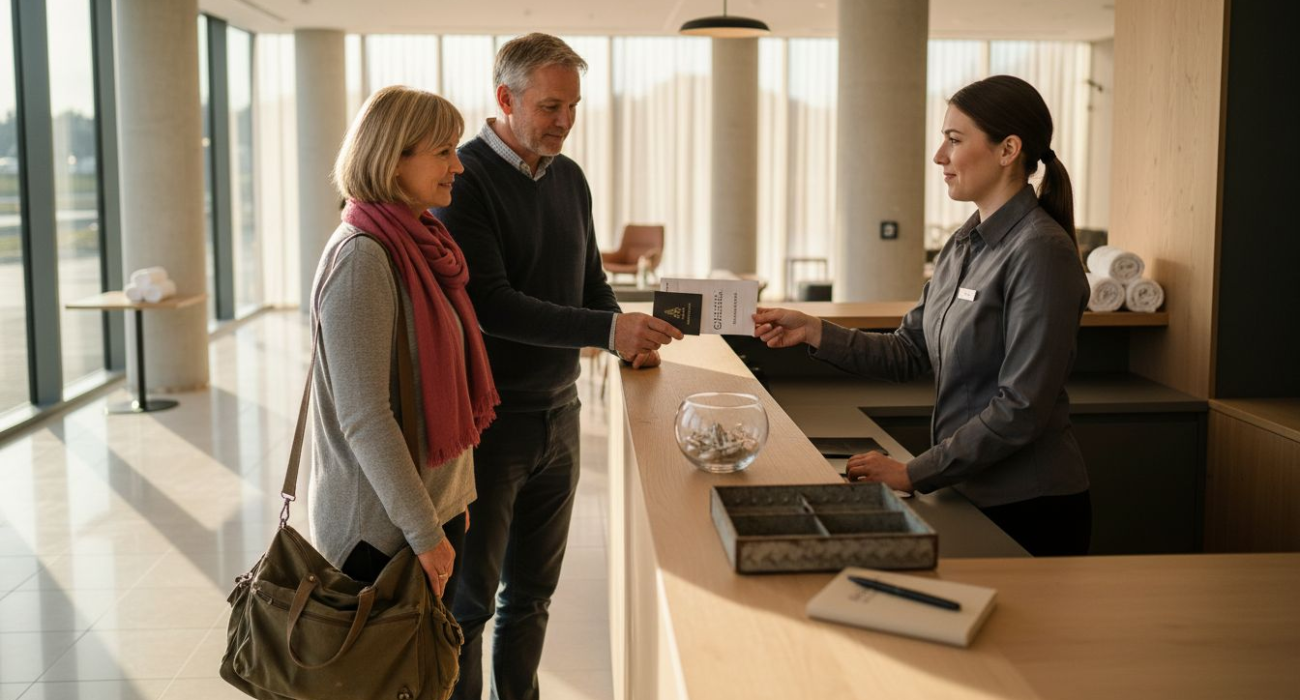

Managing team accommodation in cities like Piteå or Luleå can quickly become a headache when essential details are overlooked. Every HR lead and project manager knows that even a small mix-up with bookings or access codes threatens project timelines and staff satisfaction. This guide highlights clear booking confirmation practices, digital entry systems, and support strategies that keep every arrival smooth, every property ready, and your entire team comfortable throughout long-term projects in Northern Sweden.
Table des matières
- Step 1: Confirm Booking And Receive Clear Instructions
- Step 2: Prepare Access Details And Verify Digital Check-In
- Step 3: Co-Ordinate Arrival Timing And Property Readiness
- Step 4: Test Secure Entry And Resolve Potential Issues
- Step 5: Access Fast Support For Any Immediate Needs
Résumé rapide
| Point clé | Explication |
|---|---|
| 1. Confirm booking details clearly | Verify all reservation information with the property and request written confirmation to avoid misunderstandings upon arrival. |
| 2. Prepare and test access methods | Gather access codes and test digital systems before arriving to ensure seamless entry into the property. |
| 3. Communicate exact arrival timing | Notify the property of your precise arrival time at least 72 hours in advance to ensure readiness and proper staffing. |
| 4. Document testing of access methods | Test your entry method 24 hours prior and report any issues immediately for timely resolution before travel. |
| 5. Know emergency support contacts | Save property support contact numbers in your phone, distinguishing between emergencies and standard issues for quicker access when needed. |
Step 1: Confirm booking and receive clear instructions
Once your booking is confirmed, the real work begins. This step ensures you have everything documented before you arrive, preventing confusion and last-minute surprises. You’ll verify your reservation details and collect all the information you need for a smooth arrival.
Start by confirming your booking directly with the property or management team. Writing a clear confirmation email that includes your arrival date, room type, number of guests, and any special requests helps establish a paper trail. Request written confirmation in return. This simple step prevents double bookings and ensures the property knows exactly when to expect you.
Next, verify that all key details match what you booked. Check your confirmation against your booking reference, arrival and departure dates, address, and any services you paid for in advance. If you’re booking for a team stay (common for Swedish tech companies coordinating projects in Luleå or Piteå), confirm the number of rooms and any flexibility needed for adjusted timelines. Don’t assume everything is correct just because you received a confirmation number.
Ask for comprehensive check-in instructions before arrival. This should include the property address, access method (key code, smart lock, key pickup location), parking details if applicable, check-in time, and emergency contact information. Request this in writing. If instructions are vague or incomplete, verifying booking details through direct follow-up protects you from arriving at a locked door with no way to access your accommodation.
Confirm that you understand how to access the property and what to do if something goes wrong upon arrival. Ask for a contact number for after-hours support and clarify the response time. For team bookings where multiple people arrive at different times, ensure instructions are detailed enough that any team member can access the space independently.
Professional tip Request all check-in information at least 48 hours before arrival so you have time to clarify anything confusing, rather than discovering problems when you’re standing outside the locked property.
Step 2: Prepare access details and verify digital check-in
With your booking confirmed, it’s time to prepare the practical details that get you through the door. This step ensures you have all access information tested and ready before you arrive, eliminating last-minute friction. You’ll gather access codes, verify digital systems work, and understand how to enter the property without stress.
Collect all access information provided by the property management and store it securely. This includes key codes, digital lock passwords, smart key app links, or instructions for key collection. Write these down in a safe location separate from your main booking email. For team stays where multiple colleagues arrive on different days, share access details with each person well in advance so everyone knows how to enter independently.
Test digital check-in systems before your arrival date if the property offers this option. Digital check-in systems allow you to verify your identity and gain access through secure platforms rather than physical keys. Download any required apps, create your account, and confirm you can log in. If you cannot access the system, contact the property immediately to troubleshoot rather than discovering the problem upon arrival.
Verify that digital access verification methods are clear and that you understand the security requirements. Some properties use PIN entry, biometric access, or app-based systems. Practise entering your PIN or opening the app on your phone to ensure muscle memory before you arrive tired after travel. Confirm whether backup access methods exist if your primary method fails.
Create a backup access plan with the property. Ask what happens if the smart lock battery dies, if the app malfunctions, or if you forget your code. Confirm an emergency contact can let you in and what time they’re available. For team bookings in Swedish project locations like Luleå or Piteå, knowing the fallback procedure means your entire team stays on schedule if one access method fails.
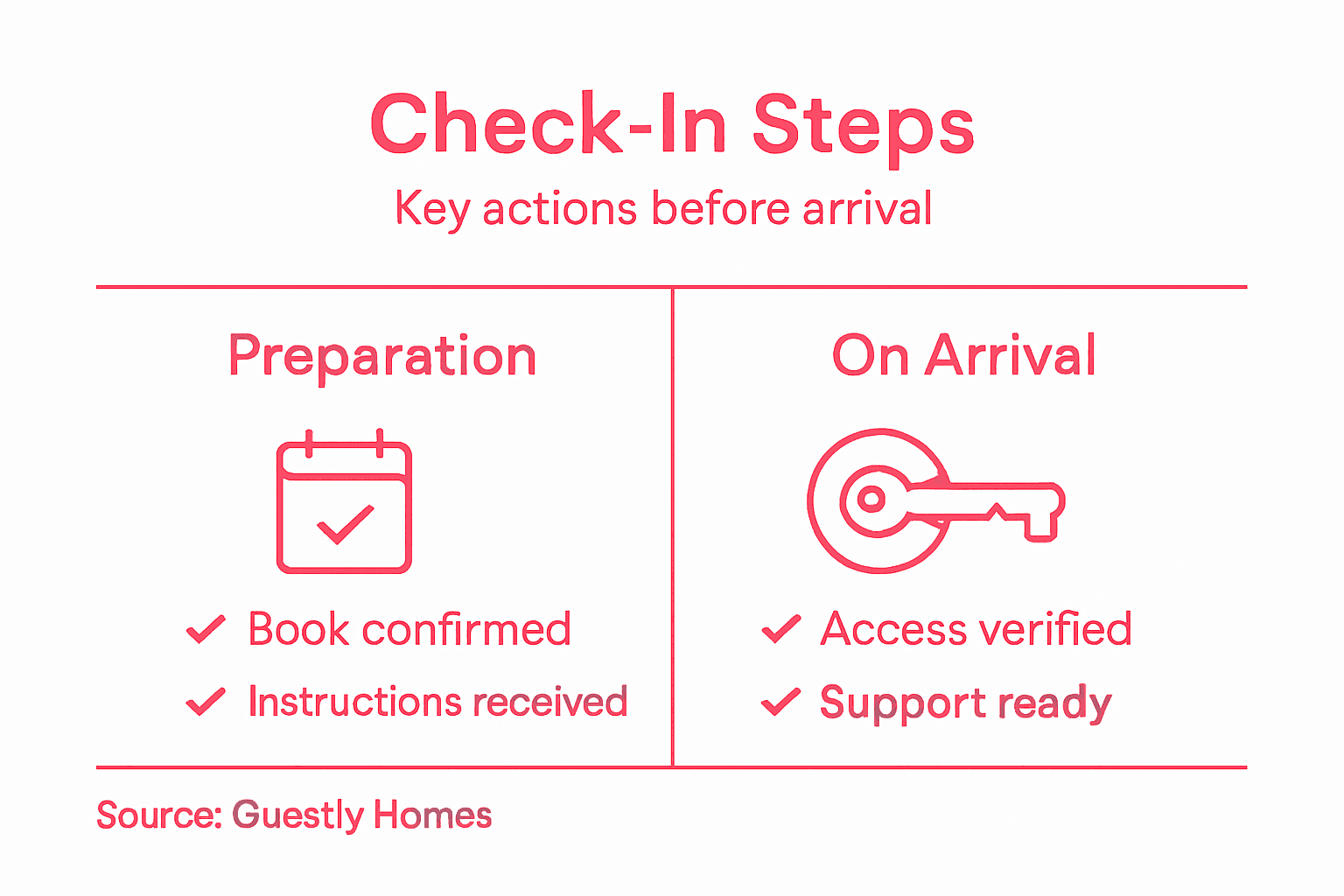
Here is a summary comparing traditional and digital property access methods you may encounter:
| Access Method | Typical Process | Avantages | Potential Issues |
|---|---|---|---|
| Physical Keys | Collect from reception | Familiar, no technology required | Limited access hours, lost keys |
| Key Codes | Enter PIN at entrance | Remote access, simple sharing | Forgotten code, keypad failure |
| Smart Lock Apps | Unlock via mobile app | High security, flexible entry | App malfunctions, battery dead |
| Biometric Systems | Fingerprint/face scan | No lost keys, fast entry | Sensor errors, privacy concerns |
Professional tip Test your digital access and write down all codes in two locations at least 24 hours before arrival, so you have time to contact the property if something doesn’t work correctly.
Step 3: Co-ordinate arrival timing and property readiness
Timing matters more than you might think. This step ensures the property is genuinely ready when you arrive and that the property team knows exactly when to expect you. You’ll confirm your arrival time, verify the property is prepared, and establish a communication plan if delays occur.
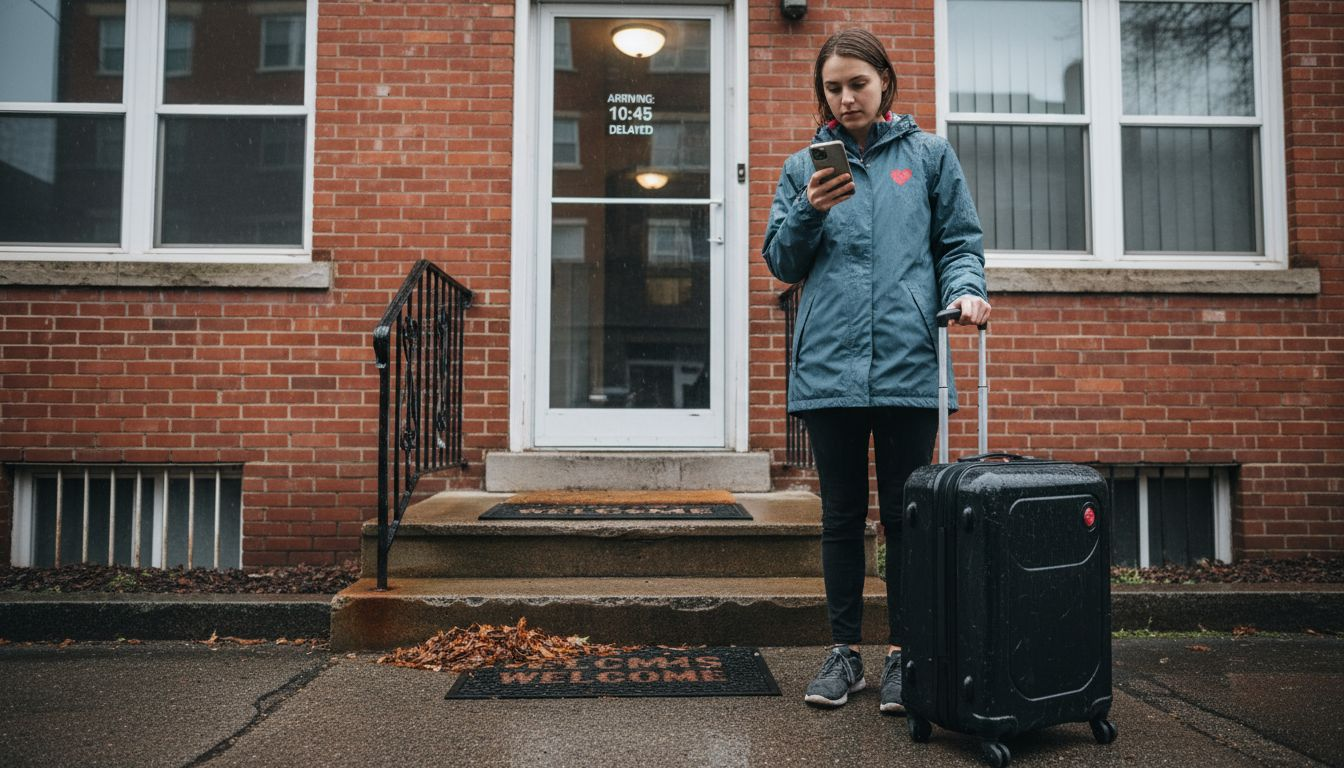
Confirm your exact arrival time with the property at least 72 hours in advance. Include the date, estimated arrival hour, and whether you are arriving during standard business hours or outside normal times. The property needs this precision to ensure someone is available, utilities are switched on, heating is set appropriately, and cleaning is completed. For team bookings where multiple colleagues arrive on different days across a project timeline in northern Sweden, submit the complete arrival schedule so the property can plan accordingly.
Verify that property readiness procedures are confirmed before your arrival date. Ask the property to confirm that the accommodation is clean, utilities are functional, heating or cooling is operational, beds are prepared, and essential amenities are stocked. Request photographic confirmation if you are booking remotely and want assurance that standards are met. This protects both you and the property by establishing agreed standards before check-in.
Communicate any schedule changes immediately. If your arrival will be delayed, contact the property as soon as possible rather than arriving hours later than planned. This allows the property team to manage their workflow and resources. For team arrivals, update the property if some colleagues are arriving earlier or later than initially scheduled. Many check-in problems occur simply because timing expectations were misaligned.
Confirm what happens if you arrive outside check-in hours. Ask whether late night or early morning arrivals have support available, what access methods will work at those times, and whether any additional fees apply. Establish an emergency contact number and agree on a response time if something is wrong upon arrival.
Professional tip Confirm your final arrival time and receive written property confirmation 48 hours before check-in, giving you time to address any readiness issues before you travel.
Step 4: Test secure entry and resolve potential issues
Before you arrive at the property, test your access method to catch problems early. This step ensures you can actually enter the property when you arrive and that you have time to resolve any issues with support. You’ll verify your entry method works, document any failures, and establish a clear resolution process.
Test your access method at least 24 hours before arrival. If you have a PIN code, enter it into a calculator or piece of paper to confirm you wrote it correctly. If you have a smart lock app, open it and confirm you can unlock the digital lock or access the booking. If you have a physical key being held somewhere, confirm the location and opening hours. This simple test catches typos and technical problems before you are standing outside the locked property after travel.
Document what happens if access fails. Write down what you see or experience when testing. Does the app give an error message? Does the PIN not work? Does the key holder not answer? Specific details help the property team troubleshoot quickly rather than hearing vague complaints about “it not working.”
Contact the property immediately if your access method fails during testing. Do not wait until your arrival date. Secure access control mechanisms require proper configuration and testing to function correctly. The property may need to reset your PIN, resend your app invite, or arrange alternative access. Early notification gives both of you time to solve the problem before you travel.
Establish a backup access procedure before arrival. Ask the property what to do if your primary method fails when you actually arrive. Will someone answer a phone call immediately? Can they let you in within 30 minutes? Is there a physical key hidden somewhere? For team stays where colleagues may arrive at different times, ensure secure entry procedures are documented so anyone on your team can gain access if needed.
Confirm you have working contact details and a support timeframe. Get the direct phone number for the property manager or emergency contact, not just a generic support line. Confirm response times for after-hours emergencies. Know exactly whom to call and when they will answer.
Professional tip Test your access method 48 hours before arrival and immediately report any failures to the property so you have time for troubleshooting without pressure on arrival day.
Step 5: Access fast support for any immediate needs
You arrive at the property and something is wrong. The heating doesn’t work, the water is cold, or the space isn’t what you expected. This step ensures you can reach help immediately without frustration or delay. You’ll know exactly whom to contact, how quickly they respond, and what to do while waiting for support.
Confirm the support contact details before you arrive. Write down the phone number, email, and messaging app details for the property manager or support team. Ask what hours they are available and what response time you can expect for different types of issues. Distinguish between emergency issues (no heating in winter, no hot water, safety concerns) and standard requests (missing item, furniture adjustment). Emergency issues should have immediate phone support. Standard requests might accept email or messaging apps with a response within 24 hours.
Understand what qualifies as an emergency requiring immediate help. Access issues, safety hazards, missing utilities, and health concerns need fast response. Minor inconveniences like a broken light bulb or a missing kitchen utensil can usually wait for standard support channels. When you call with an emergency, be specific about the problem so the team can send the right help or provide accurate guidance.
Know how to describe problems clearly when you contact support. Instead of saying “something is broken,” say “the shower has no hot water and the thermostat shows the boiler is off.” Details help support teams diagnose issues quickly and sometimes fix problems over the phone. For team stays where colleagues are arriving independently, ensure everyone knows the support process so they can get help without delays.
Understand that emergency accommodation support services are designed to address critical needs rapidly when standard arrangements fail. Having access to immediate support means you are never stranded. If the primary contact is unavailable, ask for a secondary contact number so you always have a way to reach someone. This is especially important for team arrivals in Swedish project locations where you may need help outside business hours.
Confirm that support covers practical issues like explaining how appliances work, resetting locks, or arranging repairs. Good support goes beyond fixing broken things. They explain how to use the property properly, which prevents many issues from becoming problems in the first place.
For quick reference, here are the main types of accommodation support requests and the recommended contact channels:
| Issue Type | Urgency Level | Best Contact Method | Expected Response Time |
|---|---|---|---|
| No heating/water | Emergency | Direct phone call | Within 60 minutes |
| Safety hazard | Emergency | Direct phone call | Immédiate |
| Broken appliance | Important | Email or messaging app | Within 24 hours |
| Minor inconvenience | Faible | Email or messaging app | 1-2 days |
Professional tip Save all support contact numbers in your phone with labels like “Property Emergency” and “Property Standard Support” so you reach the right person instantly during the stress of arrival.
Simplify Your Accommodation Experience with Guestly Homes
Navigating the complex check-in process can be a source of stress for both guests and bookers. From confirming bookings and understanding access details to coordinating arrival timing and securing immediate support, the challenges are clear. The article highlights how critical it is to have precise communication, tested entry methods, and reliable after-hours assistance to avoid unnecessary delays and confusion.
Guestly Homes specialises in delivering hassle-free living for professionals and teams, removing these pain points with fully managed, high-standard homes across Sweden and the Nordics. Whether you are an internal booker needing precision and reliability, a guest seeking steadiness without disruption, or a property owner desiring trustworthy management and stable income, our approach ensures the accommodation process works quietly and flawlessly.
Experience a stay where everything from confirmation to entry and support is handled with quiet excellence. Visit Guestly Homes now to discover how our premium serviced apartments and villas take the friction out of your arrival, so you focus on what matters. Learn more about how we provide hassle-free living and a trusted guest interface designed for seamless check-ins and stress-free stays.
Questions fréquemment posées
How do I confirm my accommodation booking?
To confirm your accommodation booking, contact the property or management team directly and ensure all details match your reservation. Send a clear confirmation email detailing your arrival date, room type, and any special requests to establish a written record.
What should I include in my check-in instructions?
Your check-in instructions should include the property address, access method (such as key code or smart lock details), parking information, and emergency contact numbers. Request these details in writing at least 48 hours before your arrival to avoid confusion.
How can I test digital check-in systems before my arrival?
To test digital check-in systems, ensure you download any required apps, create your account, and successfully log in at least 24 hours in advance. This proactive step helps you confirm access methods are working and allows time to troubleshoot any issues.
What should I do if my access method fails upon arrival?
If your access method fails upon arrival, contact the property immediately for support rather than waiting. Document the issue clearly and follow up according to their established procedures for resolution.
How do I ensure timely communication with the property regarding my arrival?
To ensure timely communication, confirm your exact arrival time with the property at least 72 hours in advance. Include any potential changes in schedule as soon as possible so they can prepare accordingly.
What types of issues require immediate support from property management?
Emergency issues such as lack of heating or water, and safety hazards require immediate support from property management. Clearly describe the issue when contacting them, so they can provide appropriate assistance quickly.
Recommandé
- Maîtrisez les procédures d'enregistrement à l'hôtel pour réussir en 2025 – Guestly Homes
- Comment choisir un appartement avec services : Un guide étape par étape - Guestly Homes
- Accommodation Booking Checklist for Hassle-Free Stays – Guestly Homes
- Step by Step Relocation Housing: A Calm Path to Moving Well – Guestly Homes
- How to choose cruise cabins: Perfect fit guide 2025