
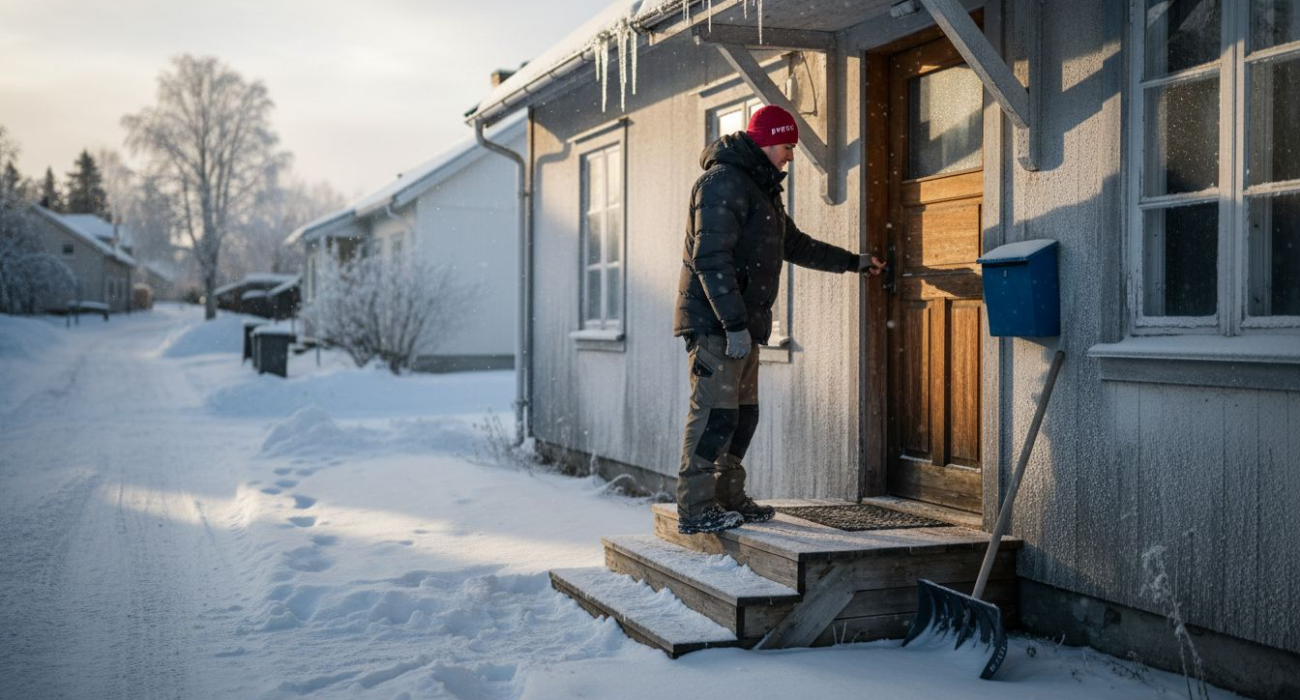

Relocating a team to Norrbotten means more than just booking beds—it is about creating the right conditions for productivity and wellbeing in Sweden’s Arctic frontier. The region’s unforgiving climate and distance from urban centres place unique pressure on housing choices that directly impact performance, retention, and morale. This guide highlights quality housing as a foundation for success, revealing what every HR manager and project coordinator needs to consider for a smooth professional transition north.
Sisällysluettelo
- Housing In Norrbotten: What Professionals Should Know
- Why Housing Matters More In Norrbotten
- The Practical Housing Checklist
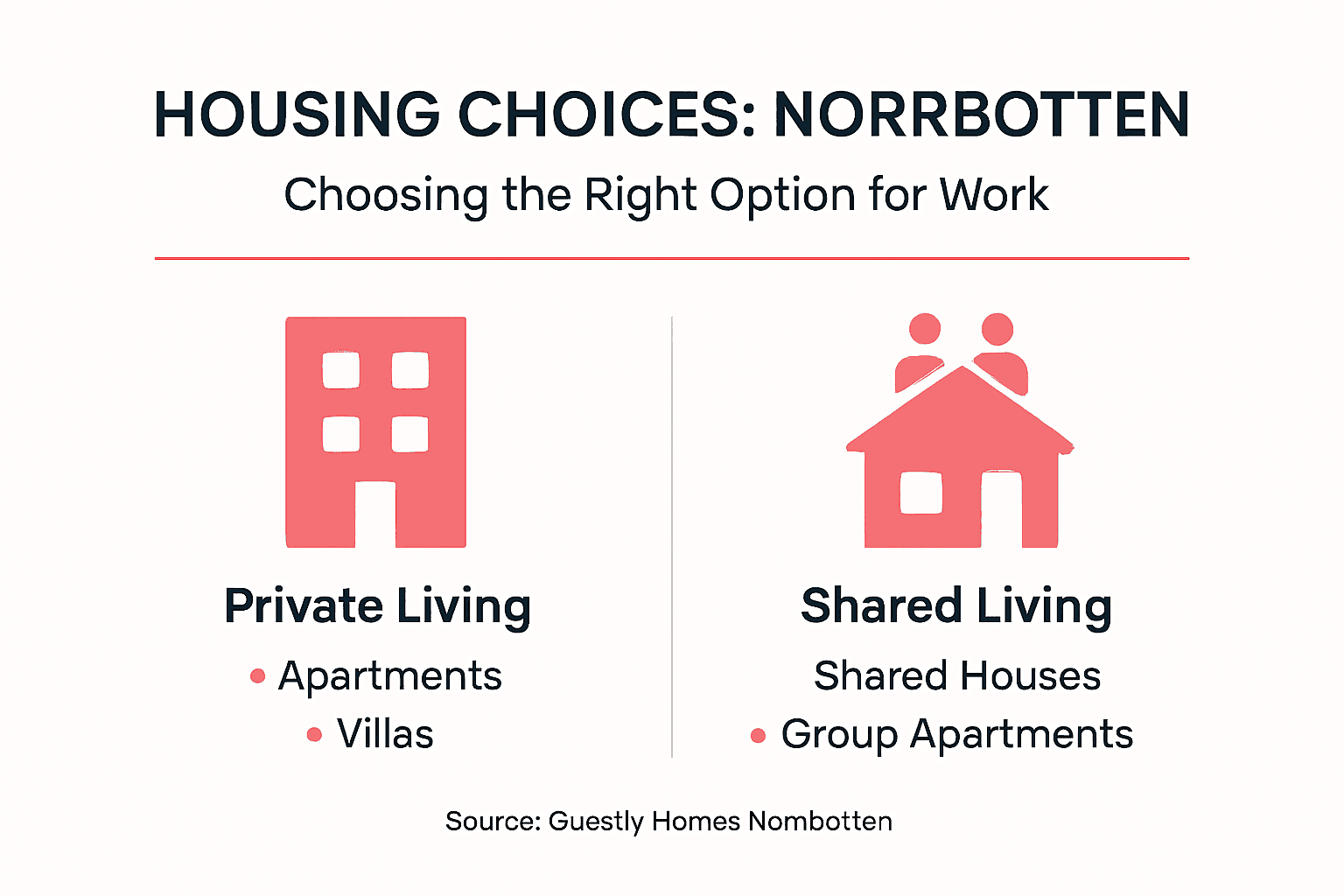
- Privacy Vs. Shared Living: Which Suits Your Team?
- Lifestyle Features That Matter
- Seasonal Considerations & What Changes
- Working With Housing Providers In Norrbotten
- Next Steps
- Types Of Managed Accommodation For Work Stays
- Self-Catering Apartments
- Jaettu asuminen
- Palveluhuoneistot
- Managed Villas For Larger Teams
- Comparing Your Options
- How To Select The Right Type For Your Team
- Key Considerations Beyond Type
- Workspace, Connectivity, And Home Facilities Checklist
- Connectivity: The Non-Negotiable Foundation
- Workspace Setup At Home
- Internet And Communication Backup
- Home Facilities Checklist
- Pre-Arrival Verification Process
- Quick Reference: Must-Have Vs. Nice-To-Have
- Lifestyle Choices: Privacy, Space And Wellbeing
- Privacy Vs. Shared Living: The Wellbeing Trade-Off
- Space: Why Square Metres Matter In Winter
- Light, Darkness, And Mental Wellbeing
- Amenities Supporting Wellbeing
- Indoor Design: Colour, Texture, And Mood
- Social Proximity Without Enforced Sharing
- Choosing Your Lifestyle Configuration
- Location Factors: Commute, Access And Winter Prep
- Commute Reality: Distance And Winter Conditions
- Route Reliability And Backup Options
- Airport And Travel Access
- Public Transport And Alternative Mobility
- Winter Preparation Checklist
- Neighbourhood And Emergency Access
- Assessing Location Quality Before Committing
Keskeiset asiat
| Kohta | Yksityiskohdat |
|---|---|
| Housing Quality is Crucial | The choice of housing in Norrbotten impacts work performance, team dynamics, and overall well-being. Prioritising quality accommodations can mitigate seasonal challenges and enhance productivity. |
| Winter Preparations are Essential | Properties must be equipped with industrial heating and proper insulation to withstand harsh winter conditions. Verify heating systems and emergency provisions before arrival. |
| Commute Considerations Matter | Evaluate the actual winter commute time and road access to ensure team members remain rested and productive. Choose locations that minimize travel time to work sites, especially during winter. |
| Team Cohesion is Enhanced by Housing Type | Housing arrangements can influence team bonding; shared spaces promote interaction while private accommodations support individual well-being. Assess team preferences to optimise living arrangements. |
Housing in Norrbotten: What Professionals Should Know
Moving to Norrbotten for work means stepping into Sweden’s Arctic frontier—a region where housing decisions directly affect your work performance, team cohesion, and quality of life. Unlike relocating within southern Sweden, Norrbotten demands careful consideration of climate, distance, and lifestyle factors that most professionals overlook until they arrive.
This guide covers what you need to know before your assignment begins, so your team settles quickly and stays productive through every season.
Why Housing Matters More in Norrbotten
Housing quality shapes how professionals and teams perform in remote or northern regions. Quality housing influences talent retention and workplace stability across Nordic assignments.
In Norrbotten specifically, your choice affects:
- Winter readiness: Proper heating, insulation, and equipment access prevent cold-related stress and safety risks.
- Commute reality: Distance to site determines whether your team arrives rested or exhausted.
- Team dynamics: Shared or grouped housing affects how colleagues bond outside work hours.
- Work continuity: Strong WiFi, workspace quality, and reliable utilities keep projects on track during harsh weather.
Get the housing decision right, and your assignment runs smoothly. Get it wrong, and you spend months managing preventable friction.
Quality housing directly enables work performance—especially in climates where environmental conditions are demanding.
The Practical Housing Checklist
Before booking any property, verify these non-negotiable elements:
Location & Commute
- Distance to your primary work site (aim for under 30 minutes)
- Real commute time in winter conditions, not summer estimates
- Reliable road access, even during heavy snow
- Proximity to airport if frequent travel is required
Climate & Winter Equipment
- Industrial-grade heating system (not portable heaters)
- Double or triple-glazed windows rated for Arctic temperatures
- Engine block heater and designated parking (essential for vehicles)
- Garage access or covered parking to prevent ice formation
- Proper insulation in walls and roof—this matters more than you think
Connectivity & Work Space
- Strong, stable WiFi (not theoretical speeds—test it)
- Dedicated workspace separate from living areas for focus
- Backup internet option (mobile hotspot as secondary line)
- Phone signal strength verified inside the property
Household Essentials
- Full kitchen (for team meals and cost savings)
- Reliable laundry facilities (not coin-operated in shared buildings)
- Sauna access (standard in Swedish housing, genuinely important for winter wellbeing)
- Hot water system that functions consistently
Team Considerations
- For small teams: modern apartments grouped nearby (easy peer interaction)
- For mixed teams: larger house accommodating colleagues (shared common areas reduce isolation)
- For single professionals: proximity to social activities and services
Pro tip: Request utility bills from previous occupants and verify heating costs—Arctic winters can double your expenses without proper insulation, and landlords sometimes underestimate what newer tenants will face.
Privacy vs. Shared Living: Which Suits Your Team?
Your team’s housing structure shapes how people relax and recharge between shifts.
Private Apartments (Individual or Couples)
Best for professionals who need clear separation between work and personal time. Choose this if your team members value solitude or have families.
Benefits: autonomy, quiet, personal routines uninterrupted.
Trade-off: isolation during long winters, potential loneliness on longer assignments.
Shared Houses or Grouped Apartments
Best for project teams staying 3-12 months who benefit from built-in peer support. Colleagues become your social network when you’re far from home.
Benefits: shared meals, natural mentoring, faster team integration, cost efficiency.
Trade-off: requires compatible housemates, less privacy, shared responsibility for spaces.
Mixed Approach: Apartments Near Each Other
Modern professional housing now groups studios and one-bedroom apartments within walking distance. Teams have privacy but can gather in common areas or neighbours’ homes easily.
This works best for most corporate assignments—independence without isolation.
Shared housing accelerates team cohesion but only works if personalities and expectations align from day one.
Lifestyle Features That Matter
Norrbotten’s long winters and unique geography make certain amenities more valuable than they seem on paper.
Sauna Access
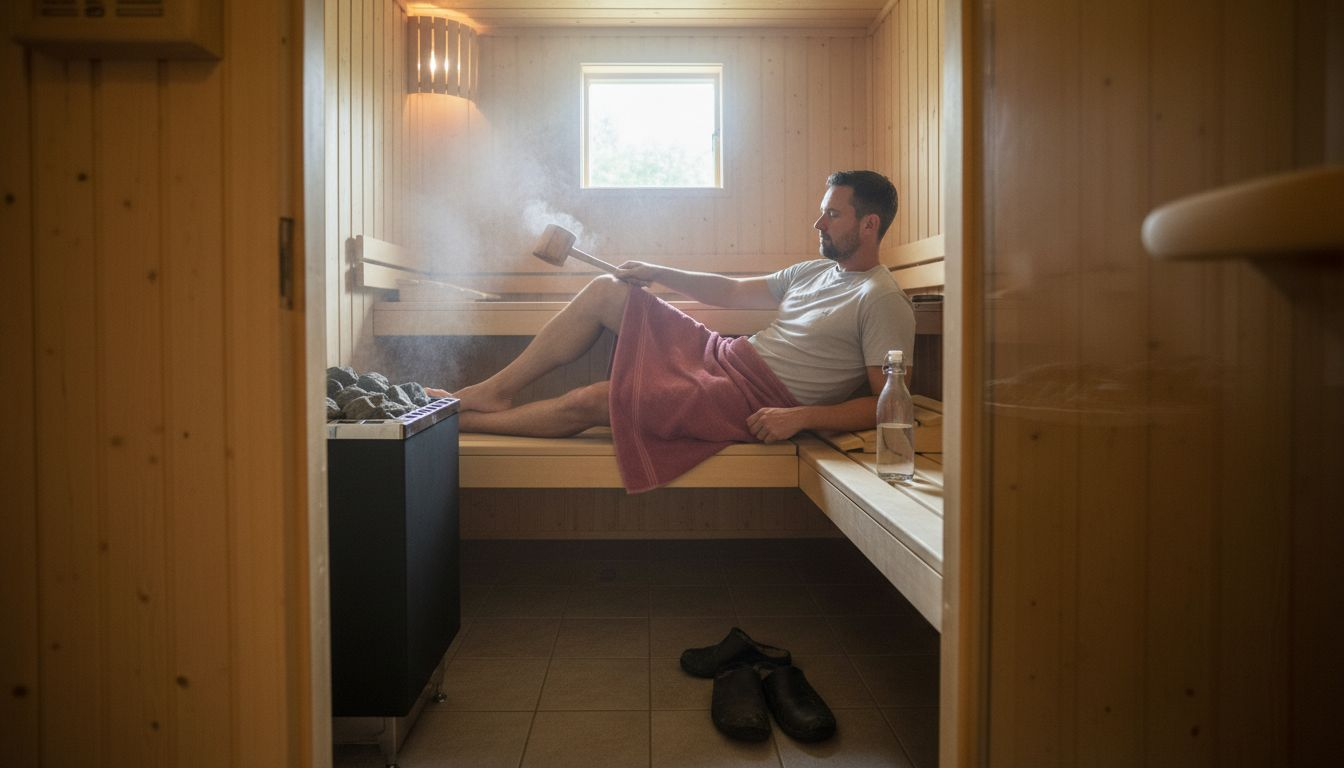
This is not optional comfort—it’s a genuine wellness necessity. Swedish saunas regulate body temperature, improve circulation, and reduce winter stress. Most quality housing includes sauna access. If yours doesn’t, negotiate to add it or find alternative accommodation.
Fireplace or Wood Stove
Whilst not essential (modern heating replaces this), a fireplace creates psychological warmth and becomes a natural gathering space during long dark evenings. Team morale noticeably improves around a real fire.
Proximity to Nature vs. City Access
Choose based on your team’s downtime preferences:
- Nature-focused: Properties near forests, frozen lakes, and hiking trails appeal to outdoor professionals. Winter activities include cross-country skiing, snowshoeing, and ice fishing.
- City-focused: Kiruna or Abisko town centres offer restaurants, shops, and cultural activities. Better for professionals who prefer evening social life and dining out.
- Balanced: Properties within 15 minutes of both nature and town amenities suit most teams.
Don’t assume all professional workers want nature access—some find isolation draining. Ask your team directly.
Seasonal Considerations & What Changes
Housing needs shift dramatically between seasons in Norrbotten.
Winter (October–April)
Temperatures drop to −20°C or lower. Your property must have industrial heating, not emergency systems. Engine block heaters become essential—vehicles won’t start without them. Commute times increase by 30–50% due to snow and ice. WiFi reliability matters more because team members spend more time indoors.
Summer (May–September)
Temperature swings to +20°C. Midnight sun affects sleep patterns—blackout curtains become essential. Outdoor activities replace indoor gathering. Commutes normalise. This is when you’ll realise heating costs and appreciate your investment in quality insulation.
Transition Seasons (April–May, September–October)
Unpredictable. Roads switch between snow and mud. Stock emergency provisions and ensure your property has reliable heating capability that can activate quickly.
Pro tip: Book accommodation for at least one full winter cycle before committing long-term—professionals often underestimate how Arctic darkness and cold affect wellbeing, and you need real experience before extended assignments.
Working With Housing Providers in Norrbotten
When sourcing accommodation for your team, work with providers who specialise in professional relocations, not general rental platforms.
Provisional housing providers (not tourist agencies) understand:
- Corporate lease flexibility (3–12 month terms)
- Bulk team placements without coordination chaos
- Winter maintenance standards that prevent heating failures
- Reliable utilities during weather emergencies
- Documentation required for tax and employment purposes
When evaluating best long-term stay providers in Norrbotten, prioritise operators with demonstrated experience managing professional teams through entire Arctic winters.
Ask potential providers:
- How do you handle heating emergencies in winter?
- What’s the typical tenant profile (corporate, individuals, students)?
- Can you accommodate team placement preferences (grouped apartments vs. mixed locations)?
- What’s included in rent (utilities, WiFi, maintenance response times)?
- Do you have properties that meet our specific checklist requirements?
Next Steps
Housing decisions should happen 8–12 weeks before your team’s arrival. This timeline allows for:
- Site visits to verify properties match specifications
- Winter condition assessment (if timing allows)
- Lease negotiation and documentation completion
- Team member preferences factored into final placements
If you’re managing multiple team members, create a shared checklist and have each person verify their property independently before signing.
Ready to secure housing that supports your team’s success? Guestly Homes specialises in premium, fully managed accommodation for professional assignments across Sweden and the Nordics. We understand the specific demands of Norrbotten work assignments—from Arctic heating standards to team dynamics—and can provide properties verified against the checklist you’ve just reviewed.
Contact us with your specific housing requirements, timeline, and team size. We’ll match you with accommodation that keeps your project on track and your team thriving through every season.
Types of Managed Accommodation for Work Stays
Choosing the right accommodation type shapes how your team lives and works during extended assignments. In Norrbotten, managed options range from self-catering apartments to fully furnished houses, each designed for different team sizes, budgets, and working patterns.
Understanding which type suits your situation prevents costly mistakes and ensures your team settles efficiently.
Self-Catering Apartments
Self-catering apartments give teams independence and cost control. You manage your own meals, routines, and schedules without hotel-style service interruptions.
These work best for:
- Small teams (1–4 people) staying 3+ months
- Professionals who value routine and privacy
- Budget-conscious assignments with stable team composition
- Groups where members prefer separate sleeping areas
What’s included typically:
- Fully equipped kitchen with basic cookware
- Separate living and sleeping spaces
- Washing machine and laundry facilities
- WiFi and utilities covered in rent
- Furnished throughout (no need to buy anything)
The trade-off is straightforward: you handle cleaning, shopping, and meal preparation yourself. For small teams, this saves money compared to serviced apartments. For larger groups, the administrative burden grows quickly.
Self-catering works brilliantly when team members genuinely want autonomy—but falls apart if people feel isolated during long winters.
Jaettu asuminen
Shared houses accommodate 4–10 people under one roof, with each person or couple having private bedrooms but shared common areas. Contractor accommodation arrangements in Norrbotten often feature shared housing for project teams staying 6–12 months.
Shared housing excels at:
- Building team cohesion through daily interaction
- Reducing per-person housing costs significantly
- Creating natural peer support networks in remote regions
- Simplifying logistics (one property, one lease, one contact)
Typical setup:
- 4–10 private bedrooms
- Shared kitchen, living room, and dining area
- Common-use sauna and laundry facilities
- Shared responsibility for cleanliness and maintenance
The challenge: personality compatibility matters enormously. Team members living together must respect shared spaces and accept noise, schedules, and habits different from their own.
Best practice: establish house rules before anyone moves in. Who cooks communal meals? How is cleaning scheduled? What are quiet hours? Clarity prevents friction.
Palveluhuoneistot
Serviced apartments combine self-catering independence with hotel-grade support. Think studio or one-bedroom apartments with professional cleaning, maintenance, and often a concierge service handling urgent issues.
These suit:
- Teams needing flexibility without management burden
- Professional individuals or couples staying 2–6 months
- Assignments where work intensity leaves no time for household tasks
- Short-notice placements requiring quick settlement
Typical features:
- Private studio or one-bedroom unit
- Weekly or bi-weekly cleaning included
- 24/7 maintenance support for emergencies
- WiFi, utilities, and basic furnishings included
- Sometimes on-site laundry or communal facilities
Cost runs 15–25% higher than self-catering, but you gain time and peace of mind. Someone else handles the heating system failure at midnight or the washing machine breaking down.
Serviced apartments remove friction points that derail productivity—especially valuable when your team’s focus must stay on work, not household management.
Managed Villas for Larger Teams
For teams of 8–15 people, managed villas offer house-like comfort with professional oversight. These are larger properties with multiple bedrooms, common areas, and often dedicated staff support.
Villas provide:
- Private bedrooms for each team member
- Large shared kitchen and dining spaces for team meals
- Living areas designed for relaxation and bonding
- Professional cleaning and maintenance included
- Sauna access (standard in Norrbotten villas)
This option minimises logistical overhead whilst maintaining team structure. One property lease, one main contact, clear expectations around shared spaces.
Ideal for:
Here is a summary of common professional housing types in Norrbotten and their typical strengths and weaknesses:
| Majoitustyyppi | Advantage for Professionals | Major Limitation | Ideal Assignment Length |
|---|---|---|---|
| Self-catering flat | High autonomy and cost control | Requires self-management | 3–12 months |
| Shared house | Maximises team bonding and value | Compatibility challenges | 6–12 months |
| Serviced flat | Reduces personal admin burden | Higher cost than other types | 1-6 kuukautta |
| Managed villa | Combines comfort and team privacy | Less flexible for small teams | 6-18 kuukautta |
- Multi-month project teams (6–18 months)
- Engineering or construction crews
- Cohorts where team identity matters
- Groups working high-intensity schedules
Comparing Your Options
| Tyyppi | Paras | Kustannukset | Independence | Team Cohesion |
|---|---|---|---|---|
| Self-catering apartment | Individuals, couples (3+ months) | Matala | Korkea | Matala |
| Shared house | Small teams (4–10 people) | Low–Medium | Medium | Korkea |
| Serviced apartment | Professionals, short stays | Medium–High | Korkea | Matala |
| Managed villa | Large teams (8–15 people) | Medium | Medium | Korkea |
How to Select the Right Type for Your Team
Ask yourself three questions:
1. How long is the assignment?
- Under 3 months: serviced apartments reduce hassle.
- 3–12 months: shared housing or self-catering work well.
- 12+ months: villas justify higher setup costs through stability.
2. Is the team stable or rotating?
- Stable (same people throughout): shared housing builds lasting bonds.
- Rotating (people leaving and arriving): serviced apartments adapt more easily.
3. What’s the team’s preference?
- Privacy-focused: self-catering or serviced apartments.
- Connection-focused: shared housing or villas.
- Mixed needs: grouped apartments (private units near each other).
Pro tip: Ask prospective accommodation providers about their experience managing your specific team size and assignment length—properties optimised for 4-person teams often fail when 10 people arrive, because common areas, WiFi bandwidth, and heating capacity weren’t designed for that scale.
Key Considerations Beyond Type
Regardless of which type you choose, verify:
- Heating systems rated for −20°C winters
- WiFi speeds tested (not promised) in all rooms
- Cleaning and maintenance response times documented
- Lease flexibility if team size changes
- Cost transparency (utilities, cleaning, maintenance all included or separate?)
- Winter accessibility and snow clearance standards
Guestly Homes manages serviced apartments, shared housing, and managed villas across Norrbotten, with team placements optimised for your specific assignment needs. Contact us with your team size, duration, and preferences—we’ll match you with accommodation designed to support both performance and wellbeing.
Workspace, Connectivity, and Home Facilities Checklist
Work assignments in Norrbotten demand reliable infrastructure that supports focus and productivity. Poor connectivity or inadequate workspace derails projects faster than almost any other factor. Before signing any lease, verify these essentials systematically.
This checklist covers what separates functional accommodation from accommodation that actually enables performance.
Connectivity: The Non-Negotiable Foundation
Connectivity in Norrbotten varies dramatically by location. Rural areas near work sites may lack the broadband speeds urban professionals expect. Test everything before commitment.
WiFi Requirements
- Download speed minimum: 50 Mbps (not theoretical, measured with a speed test app)
- Upload speed minimum: 10 Mbps (critical for video calls and file transfers)
- Stability: check for dropped connections during peak hours (7–9 pm)
- Coverage: verify signal strength in every room, especially bedrooms and work areas
Backup Connectivity
- Mobile hotspot as secondary option (test with your phone provider)
- Fixed telephone line for emergencies if internet fails
- Provider contact details and response time for outages (should be under 4 hours)
Don’t rely on landlord promises. Visit the property yourself, run speed tests, and attempt a video call during evening hours when networks strain.
Strong, stable connectivity determines whether your team works or waits. Test it yourself, not on theoretical data sheets.
Workspace Setup at Home
Dedicated workspace prevents work bleeding into personal life and keeps productivity intact. A kitchen table doesn’t count—your team needs a proper working environment.
Essential Workspace Features
- Dedicated room or corner away from shared living areas
- Desk large enough for laptop, monitor, and reference materials
- Ergonomic chair (not sofa cushions) that supports long working days
- Proper lighting: natural light plus supplementary desk lamp
- Minimal background noise (away from kitchen, laundry, shared spaces)
For Video Calls and Meetings
- Professional background (not bedroom clutter)
- Reliable WiFi signal in the workspace area
- Minimal echo or reverberation (soft furnishings help)
- Privacy door (closed door means no interruptions)
Optimising your temporary housing workspace setup directly improves focus and meeting quality. Engineers and consultants spending 6+ hours daily on video calls notice this difference immediately.
Internet and Communication Backup
When primary internet fails during critical project deadlines, backups matter intensely. Norrbotten weather occasionally disrupts service—plan accordingly.
Primary Connection Failover
- Mobile broadband (4G/5G) as secondary internet source
- Personal hotspot capability tested before assignment starts
- Data plan with adequate allowance (minimum 30 GB monthly)
- Alternative work location identified (office, coffee shop, shared working space)
Emergency Communication
- Reliable mobile phone signal verified inside the property
- Landlord’s emergency contact number saved and tested
- Internet provider’s support number (preferably with on-call technician)
- Backup power solution (UPS battery for modem and router)
Home Facilities Checklist
Beyond workspace, verify basic facilities function reliably in Arctic conditions.
Kitchen and Food Preparation
- Full-size refrigerator and freezer (not mini fridge)
- Functional oven and hob for cooking variety
- Adequate storage and worktop space
- Dishwasher or reliable hot water for washing up
- Microwave for quick meals during intense work periods
Laundry and Cleaning
- In-unit washing machine (not communal laundry in basements)
- Dryer or efficient drying space
- Cleaning supplies provided or easily sourced
- Vacuum and basic cleaning equipment included
Temperature Control and Comfort
- Thermostat allowing individual room temperature adjustment
- Heating system that maintains minimum 21°C in all rooms
- Functioning radiators verified before winter assignment start
- Emergency heating backup explained by landlord
Sanitation and Hygiene
- Reliable hot water system with adequate pressure
- Functional shower or bathtub
- Adequate ventilation in bathroom (prevents mould)
- Clean towels provided upon arrival
Pre-Arrival Verification Process
Don’t wait until move-in day. Verify everything systematically.
30 Days Before Arrival
- Request virtual tour focusing on workspace and WiFi router location
- Ask landlord for speed test results from current WiFi
- Confirm heating system type and winter maintenance schedule
- Request photos of kitchen, laundry, and bathroom facilities
2 Weeks Before Arrival
- Book a site visit if possible (especially critical for winter assignments)
- Test WiFi signal with personal device
- Photograph all major systems and facilities
- Get landlord’s emergency contact information in writing
Day of Arrival
- Check heating system activation and temperature response
- Verify WiFi speed matches promises
- Test all major appliances (oven, washing machine, hot water)
- Document any pre-existing damage for deposit protection
Pro tip: Set up workspace and run speed tests before unpacking everything else—if connectivity or workspace proves inadequate, you have time to negotiate improvements or find alternative accommodation, rather than discovering problems after your team settles in.
Quick Reference: Must-Have vs. Nice-to-Have
Non-Negotiable (verify before signing)
- WiFi minimum 50 Mbps download, stable during peak hours
- Dedicated workspace with door and ergonomic chair
- Industrial heating system (−20°C rated)
- Full kitchen with oven and stovetop
- In-unit washing machine
- Hot water system that functions reliably
Highly Valuable (seek these out)
- Sauna access
- Natural light in workspace
- Backup internet option
- Emergency heating backup
- Dedicated parking with engine block heater
Nice-to-Have (don’t compromise core needs for these)
The following table distinguishes between must-have, highly valuable, and nice-to-have features for winter assignments in Norrbotten:
| Feature Type | Example Features | Impact on Assignment |
|---|---|---|
| Essential | Industrial heating, fast WiFi | Enabling day-to-day function |
| Valuable | Sauna, backup internet | Improves comfort, well-being |
| Nice-to-have | Fireplace, gym, designer furniture | Enhances lifestyle if present |
- Fireplace or wood stove
- Premium furniture or décor
- Proximity to restaurants
- Gym access or fitness facilities
Guestly Homes verifies all these specifications before confirming placements. Your team receives fully functioning workspace and connectivity infrastructure that supports performance from day one—no surprises, no settling for less.
Lifestyle Choices: Privacy, Space and Wellbeing
Where you live in Norrbotten shapes not just your work performance but your mental health and quality of life during long, dark winters. Housing choices affect how you relax, reconnect with yourself, and maintain wellbeing when daylight becomes scarce.
This section explores the lifestyle dimensions of accommodation that matter most for sustained professional engagement and personal stability.
Privacy vs. Shared Living: The Wellbeing Trade-Off
Privacy and social connection sit in tension. Your accommodation type determines where you land on that spectrum, and the right balance differs by person and assignment length.
Private Accommodation Benefits
- Control over your environment and daily rhythm
- Space to decompress after intensive work
- Freedom from others’ schedules and noise
- Quiet evenings essential for winter mental health
Shared Living Benefits
- Built-in social connection reducing isolation
- Shared meals and communal activities
- Natural peer support during long winters
- Faster team integration and trust-building
Housing quality and privacy influence talent retention significantly across northern European regions. Professionals staying 6+ months report better wellbeing when they have some privacy combined with social access nearby.
The optimal choice: private or semi-private space with easy access to shared facilities or team gathering areas. This gives you control without isolation.
Privacy without connection breeds loneliness; connection without privacy breeds frustration. The best assignments balance both.
Space: Why Square Metres Matter in Winter
In milder climates, a compact apartment works fine. In Norrbotten, where team members spend more time indoors during long winters, space becomes a genuine wellness requirement.
Minimum Space Standards for Wellbeing
- Single person: 35–45 square metres (studio or one-bedroom)
- Couple: 50–70 square metres (one to two-bedroom)
- Small team (4 people): 80–120 square metres shared (plus individual rooms)
Small spaces amplify winter stress. Confined quarters intensify noise perception, reduce freedom of movement, and create psychological pressure during months of limited daylight.
Larger spaces feel different psychologically—they breathe. Even if you’re confined indoors, multiple rooms, higher ceilings, and open layouts prevent the claustrophobic tension that damages morale in cramped conditions.
Key Space Elements
- Living area separate from bedroom (sleeping and waking spaces distinct)
- Kitchen large enough for meal preparation without crowding
- Dedicated workspace away from living and sleeping zones
- Bathroom with adequate ventilation (prevents moisture accumulation)
- Storage for winter gear, equipment, and personal items
Light, Darkness, and Mental Wellbeing
Norrbotten experiences polar nights—prolonged darkness affecting circadian rhythms, mood regulation, and sleep quality. Your accommodation must support light management actively.
Light Optimisation
- Large windows facing south or west (maximum natural light during limited daylight hours)
- Quality window coverings allowing light control (blackout curtains essential for summer midnight sun)
- Supplementary lighting: LED bulbs simulating daylight (5000K colour temperature)
- Workspace positioned near natural light sources
Darkness Management
- Blackout curtains in bedrooms (summer midnight sun disrupts sleep)
- Dimmer switches allowing evening light reduction
- Warm amber lighting for evening relaxation (supports melatonin production)
Amenities Supporting Wellbeing
Certain features become genuinely therapeutic during extended Arctic assignments.
Sauna Access
Swedish saunas are not luxury. They’re a proven wellness tool—heat therapy improves circulation, reduces muscle tension, and provides psychological relief from cold. Most quality accommodation includes sauna access. If yours doesn’t, prioritise finding it.
Outdoor Space
- Balcony or terrace for fresh air breaks
- Garden access (even small areas for winter activities)
- Proximity to outdoor trails or natural spaces
Fireplace or Wood Stove
Psychological warmth matters as much as actual temperature. A real fire becomes a natural gathering point, reduces feelings of isolation, and creates comfort during long evenings.
Exercise and Fitness Access
- Home gym equipment or dedicated workout space
- Gym membership included or nearby
- Access to winter sports facilities (cross-country skiing equipment)
Indoor Design: Colour, Texture, and Mood
Home-like accommodation with thoughtful design supports mental health more than generic furnished spaces.
Elements Supporting Wellbeing
- Warm colour palettes (greys, soft whites, warm earth tones)
- Natural materials (wood, stone, textiles reducing institutional feel)
- Plants and greenery (biophilic design supporting mood)
- Art and personal touches (spaces feeling inhabited, not transient)
- Soft furnishings absorbing sound (reduces noise anxiety in shared buildings)
Social Proximity Without Enforced Sharing
The ideal arrangement for many teams: individual or couple apartments grouped within 100–200 metres of each other, with shared facilities nearby.
This allows:
- Private retreat space after work
- Quick peer connection when desired
- Team meals and social activities without forced cohabitation
- Individual control balanced with community access
Shared Facilities Nearby
- Common kitchen for team cooking
- Sauna and relaxation areas
- Lounge or gathering spaces
- Laundry facilities (if not in-unit)
Choosing Your Lifestyle Configuration
Evaluate your needs across these dimensions:
For Privacy-Focused Professionals
- Individual serviced apartments with sauna and recreational access
- Proximity to hiking or outdoor activities
- Scheduled team social events (structured connection without constant cohabitation)
For Connection-Focused Teams
- Shared house or large villa accommodation
- Communal meal spaces and gathering areas
- Built-in social structure and peer support
For Mixed Teams
- Grouped apartments close together
- Shared common spaces and sauna
- Individual autonomy with easy peer access
Pro tip: Before finalising assignments, ask each team member directly about their preference—isolation preferences vary dramatically between people, and mismatching professionals with unsuitable accommodation creates resentment that spreads through the entire team.
Location Factors: Commute, Access and Winter Prep
Location determines whether your team arrives at work rested or exhausted, whether logistics flow smoothly or create daily friction, and whether your accommodation survives Arctic winters intact. Choosing poorly on location compounds every other accommodation decision.
This section covers the practical geography that separates functional assignments from troubled ones.
Commute Reality: Distance and Winter Conditions
Distance to your work site matters enormously, but winter transforms what “close” actually means. Summer commute times are misleading—plan based on winter conditions.
Distance Targets
- Optimal: under 20 minutes (normal conditions)
- Acceptable: 20–35 minutes (allowing winter slowdown)
- Risky: 35+ minutes (exhaustion accumulates; morale suffers)
A 15-minute summer commute becomes 30–40 minutes in winter ice and snow. Account for this reality when evaluating properties. Professionals underestimate how winter commutes erode energy and focus.
Winter Commute Factors
- Road condition maintenance (who clears snow? how quickly?)
- Vehicle grip and traction (winter tyres essential, engine heater critical)
- Daylight hours (darkness and slippery roads compound difficulty)
- Emergency response (if you slide off, how long until help arrives?)
Managing commute logistics and winter preparation requires understanding both your property’s location and local winter protocols. Experienced accommodation providers factor this into property selection automatically.
A 30-minute summer commute can feel like a three-hour ordeal in winter. Choose location assuming worst-case conditions, not best-case scenarios.
Route Reliability and Backup Options
Know your commute route intimately before assignment starts. Identify backup routes and alternative transportation methods.
Route Research
- Primary route: most direct path in normal conditions
- Winter route: potentially different due to snow accumulation or avalanche risk
- Backup route: alternative if primary becomes impassable
- Public transport option: bus or shared transport if vehicle fails
Winter Route Considerations
- Which roads are prioritised for snow clearing?
- Where are skid risks highest (curves, bridges, open areas)?
- Are there avalanche zones or weather-blocked passes?
- What’s the breakdown support availability (roadside assistance response time)?
Ask your accommodation provider or local colleagues which routes professionals actually use in winter. GPS might suggest a route that becomes treacherous when snow-covered.
Airport and Travel Access
If your team requires frequent travel, airport access determines whether assignments feel sustainable or draining.
Airport Distance Factors
- Kiruna Airport: primary option for most Norrbotten assignments
- Travel time: 30–90 minutes depending on accommodation location
- Road condition: critical during winter (weather delays are common)
- Flight frequency: limited options may require travel flexibility
Planning for Travel Assignments
- Book accommodation within reasonable distance of airport (under 60 minutes ideal)
- Allow extra travel time on winter travel days
- Verify airport shuttle or taxi reliability before assigning team members
- Build buffer time into project schedules accounting for weather delays
Public Transport and Alternative Mobility
Public transport in Norrbotten is limited compared to southern Sweden. Don’t assume buses will run as primary transport.
Available Options
- Buses: limited frequency, especially in winter
- Shared transport services: sometimes organised by employers
- Vehicle rental: many professionals maintain personal cars
- Taxis: expensive but reliable backup when roads are difficult
Accommodation near public transport provides flexibility if team members prefer not to drive in winter conditions.
Winter Preparation Checklist
Comprehensive winter preparation prevents emergencies before assignment begins. Properties require specific readiness before cold months arrive.
Property-Level Preparations
- Heating system serviced and tested (August–September)
- Insulation verified (walls, pipes, attic)
- Windows and doors sealed (no draught leaks)
- Pipes insulated against freezing
- Snow clearing arrangements confirmed with landlord
- Gutters cleared to prevent ice dams
Vehicle Readiness
- Winter tyres installed (mandatory September–May in Sweden)
- Engine block heater functional and accessible
- Dedicated parking with heater access
- Emergency kit in vehicle (blanket, torch, jumper cables, sand)
- Fuel tank kept above half-full (prevents fuel line freezing)
Personal and Team Readiness
- Winter clothing provided or budget allocated
- Snow boots and proper footwear for all team members
- Ice scraper and snow shovel at property
- Emergency contact information for landlord and services
- Travel contingency plans if commute becomes impassable
Neighbourhood and Emergency Access
Beyond commuting, proximity to essential services matters during emergencies.
Critical Access Points
- Hospital or urgent care facility (under 30 minutes)
- Pharmacy (under 15 minutes)
- Grocery stores (under 10 minutes)
- Fuel station (under 15 minutes)
- Emergency services (police, fire response time confirmation)
Assessing Location Quality Before Committing
Visit the property during winter if possible. If not, get detailed information from current occupants or landlords.
Questions to Ask
- What’s the actual winter commute time from this location?
- Which roads are most dangerous or frequently blocked?
- Has anyone been stranded here in winter?
- How quickly does the landlord respond to heating emergencies?
- What’s the mobile phone signal reliability?
- Are backup routes reliable if primary roads close?
Pro tip: Contact professionals currently living at potential properties and ask directly about winter commute reality, neighbourhood safety, and whether location meets their expectations—their honest answers reveal what marketing materials won’t.
Secure Housing in Norrbotten That Supports Your Work and Wellbeing
Moving and working in Norrbotten presents unique challenges: winter-ready heating, reliable connectivity, and carefully chosen locations to keep your team focused and healthy. The complexities of Arctic commutes and team dynamics demand housing that goes beyond basic shelter. Through Guestly Homes, you gain access to premium, fully managed accommodation tailored for professionals like you who need more than just a roof over their heads.
What sets Guestly Homes apart?
- Properties verified for industrial heating and winter preparedness
- Dedicated workspaces with tested high-speed WiFi
- Flexible options including serviced apartments, shared houses, and villas designed for team cohesion or individual privacy
- Hassle-free management that ensures uninterrupted comfort throughout every season
Experience stays that truly support your assignments in Sweden’s Arctic frontier. Visit Guestly Homes today and discover how we transform professional housing from a stress point into a foundation for success. Book early to secure accommodation that matches your team size, assignment length, and lifestyle needs perfectly.
Usein kysytyt kysymykset
What factors should I consider when choosing housing for work assignments in Norrbotten?
When selecting housing for work assignments in Norrbotten, consider location and commute times, climate readiness of the property, connectivity and workspace quality, and household essentials such as kitchen facilities and laundry access.
How does the winter climate influence housing choices in Norrbotten?
Winter in Norrbotten can reach temperatures of −20°C or lower, requiring properties to have industrial-grade heating, proper insulation, and amenities like engine block heaters and covered parking to ensure safety and comfort during commutes.
What types of accommodation are best for team cohesion during long assignments?
Shared housing or grouped apartments are ideal for fostering team cohesion, as they encourage interaction and shared experiences. Alternatively, a mixed approach of individual apartments within close proximity can also balance privacy with social access.
How can I ensure reliable internet connectivity for work purposes in Norrbotten?
To guarantee reliable internet connectivity, verify actual download speeds of at least 50 Mbps and upload speeds of 10 Mbps. Testing the WiFi signal strength in all relevant rooms and having a backup mobile hotspot are also recommended for seamless work operations.