


TL;DR:
- Long-term rentals provide predictable, stable income and attract high-quality corporate tenants.
- Swedish tenancy laws and dispute resolution offer legal protection and low default risks.
- Premium furnished properties command higher rents and benefit from effective management and tax deductions.
Owning a premium property in Sweden is a significant asset, yet many owners find themselves caught between two competing priorities: maximising income and avoiding the relentless complexity of tenant turnover, vacant periods, and administrative burden. Short-term lets can feel lucrative on paper, but the reality often involves unpredictable occupancy, constant maintenance cycles, and mounting management costs. Long-term rental, by contrast, offers a structured path to reliable, hands-off income, particularly for owners of high-end homes. This article examines the core financial, legal, and strategic advantages of long-term letting for premium Swedish properties, drawing on real market data and practical insights.
Sisällysluettelo
- Consistent, high-quality rental income
- Reduced risk and legal peace of mind
- Premium property advantages: Higher rents, less turnover
- Tax efficiency and financial perks for owners
- What most owners miss: How long-term management redefines ‘passive’ income
- Discover premium long-term rental solutions for your property
- Frequently asked questions
Keskeiset asiat
| Kohta | Yksityiskohdat |
|---|---|
| Reliable premium income | Long-term lets in Swedish cities provide steady cashflow with minimal vacancy risk for premium homes. |
| Legal and financial security | Sweden’s tenancy laws and owner-friendly tax deductions make long-term rental a secure strategy. |
| Higher-value tenants | Furnished premium rentals attract expats and professionals who value quality, reducing turnover. |
| Tax efficiency | Owners benefit from generous deductions and competitive tax rates on rental income. |
Consistent, high-quality rental income
For premium property owners, the most immediate appeal of long-term rental is income predictability. Rather than chasing bookings week by week, a long-term lease secures a fixed monthly payment, often for 12 months or more. This removes the anxiety of seasonal dips and last-minute cancellations that can erode short-term rental returns significantly.
Sweden’s rental market makes this proposition especially compelling. National vacancy sits at 1.3%, with rates approaching zero in major cities such as Stockholm, Gothenburg, and Malmö. In practical terms, this means a well-positioned premium property rarely sits empty for long. Owners who understand long-term vs short-term income dynamics quickly recognise that consistent occupancy often outperforms headline nightly rates when all costs are factored in.
Long-term leases also attract a distinct calibre of tenant. Corporate expats, senior executives, and project-based professionals actively seek premium furnished accommodation for extended assignments. These tenants prioritise quality, stability, and discretion, which translates into fewer complaints, less wear and tear, and longer average tenancy durations. Operators managing team stays solutions for businesses frequently report that corporate tenants are among the most reliable and low-maintenance occupants available.
Key income benefits of long-term premium rental:
- Fixed monthly income with no dependency on booking platforms or seasonal demand
- Significantly lower tenant turnover, reducing void periods and re-letting costs
- Reduced marketing expenditure compared to short-term models
- Corporate and expat tenants who treat properties with care and respect
- Predictable cash flow that simplifies financial planning and mortgage servicing
- Lower administrative burden, with fewer check-ins, inspections, and turnovers per year
Pro Tip: When screening tenants, prioritise applicants with employer-backed relocation packages or confirmed corporate assignments. These individuals have both the financial backing and the professional incentive to maintain a property well throughout their stay.
Reduced risk and legal peace of mind
With income reliability established, the next consideration for premium owners is minimising risk and legal headaches. Sweden’s tenancy framework, known as Hyreslagen, provides a well-structured legal environment that benefits both parties, but it is particularly reassuring for owners of high-value properties.
Payment defaults are rare under Hyreslagen, thanks to a clear legal environment that sets out tenant obligations, rent payment schedules, and recourse mechanisms in precise terms. This contrasts sharply with some other European markets where enforcement of rental agreements can be slow and costly. Understanding long-term rental essentials helps owners appreciate just how structured and owner-friendly the Swedish system can be when applied correctly.
Main legal protections for premium property owners in Sweden:
- Written lease agreements are legally binding and enforceable, providing clear documentation of all terms
- Rent payment obligations are explicit, with defined consequences for non-payment
- The Hyresnämnden (Rent Tribunal) offers a formal, accessible dispute resolution mechanism for edge cases such as subletting disputes or tenancy termination
- Security deposits are standard practice, providing a financial buffer against property damage
- Notice periods are clearly regulated, giving owners time to prepare for re-letting without sudden vacancy
“Strong tenant protections under Swedish rental regulations ensure low payment defaults and stable tenancy, with rare defaults due to a clear legal environment.”
The Hyresnämnden is worth understanding in more detail. It functions as a specialist tribunal for rental disputes, handling matters such as unreasonable rent increases, subletting permissions, and tenancy termination disagreements. For premium owners, the mere existence of this body acts as a deterrent against problematic tenant behaviour, since both parties know there is a formal, efficient resolution process available. This institutional clarity is one of Sweden’s genuine competitive advantages as a long-term rental market.
Premium property advantages: Higher rents, less turnover
Once owners appreciate the legal and financial peace of mind, it becomes clear how premium homes maximise returns and reduce churn. The furnished premium segment of Sweden’s rental market is particularly well-positioned to command above-average rents, and the data supports this confidently.
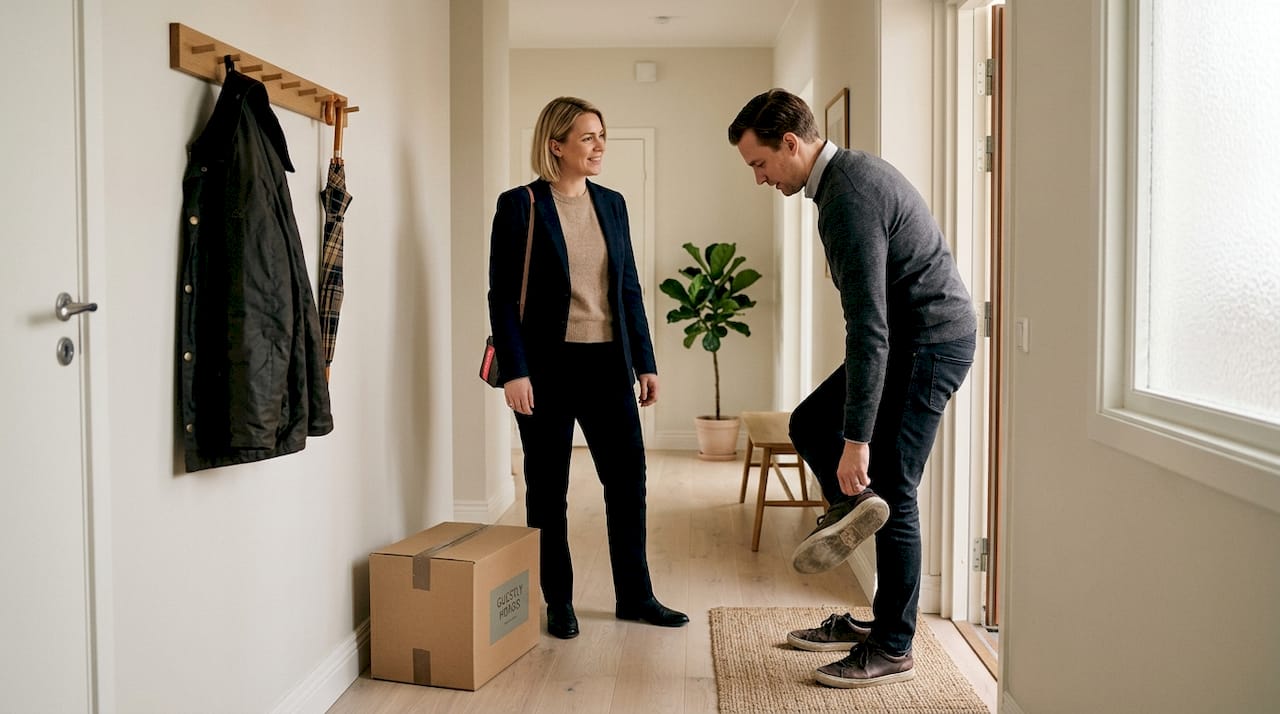
Furnished premium properties command rent premiums of 500 to 1,500 SEK per month compared to equivalent unfurnished units, driven by amenities such as modern kitchens, washing machines, and proximity to transport links. Approximately 25% of the Swedish rental market consists of furnished properties, with this segment disproportionately favoured by expats and professionals on corporate assignments.
Amenities that justify premium rent positioning:
- High-specification kitchen appliances and integrated storage
- In-unit laundry facilities (washing machine and dryer)
- High-speed broadband and dedicated workspace
- Private outdoor space such as a garden, terrace, or balcony
- Secure parking or garage access
- Proximity to public transport, international schools, or business districts
| Property type | Average monthly rent (Stockholm) | Rent premium vs unfurnished |
|---|---|---|
| Unfurnished 3BR apartment | 14,000 SEK | Baseline |
| Furnished 3BR apartment | 15,500 SEK | +1,500 SEK |
| Furnished premium villa | 22,000 SEK | +4,000 SEK+ |
| Fully managed premium villa | 25,000 SEK+ | +7,000 SEK+ |
The tenant profile attracted by premium furnished properties is also markedly different from the general rental market. Corporate expats and senior professionals typically sign leases of 6 to 24 months, reducing the frequency of re-letting cycles considerably. Owners who invest in flexible lease strategies find they can accommodate corporate clients without sacrificing income stability. Taking time to prepare your premium rental to the highest standard before listing is one of the most effective ways to attract this tenant profile from the outset.
Tax efficiency and financial perks for owners
Having discussed the direct rental benefits, owners should also weigh the longer-term financial perks, especially around tax efficiency. Sweden’s tax framework for rental income is structured in a way that rewards long-term letting, particularly for owners of high-value properties.
Rental income is taxed at 30% as capital income, but owners benefit from a generous 40,000 SEK annual flat-rate deduction before this rate applies. For bostadsrätt (condominium) owners, an additional 20% deduction on annual condo fees is also permitted, further reducing the taxable rental income figure.
Key tax rules for Swedish rental property owners in 2026:
- The 40,000 SEK flat-rate deduction applies to all private rental income before tax is calculated
- Bostadsrätt owners may deduct 20% of their annual condo fees from taxable rental income
- Rental income is classified as capital income and taxed at a flat 30% rate
- Actual costs such as repairs and maintenance may be deducted in lieu of the flat-rate deduction if they exceed 40,000 SEK
- Detailed records of all rental-related expenses are essential to support any deduction claims
| Tax advantage | Long-term rental | Short-term rental | Other investment income |
|---|---|---|---|
| Flat-rate deduction | 40,000 SEK/year | 40,000 SEK/year | Ei sovelleta |
| Condo fee deduction | 20% (bostadsrätt) | 20% (bostadsrätt) | Ei sovelleta |
| Tax rate on income | 30% (capital) | 30% (capital) | 30% (capital) |
| Administrative complexity | Matala | Korkea | Medium |
| Income predictability | Korkea | Low to medium | Muuttuva |
For owners seeking to understand the full picture of rental tax advantages, the combination of the flat-rate deduction and the condo fee allowance can meaningfully reduce the effective tax burden on rental income.
Pro Tip: Keep a dedicated folder, whether digital or physical, for all property-related receipts, invoices, and maintenance records throughout the year. This makes it straightforward to compare actual costs against the flat-rate deduction and choose whichever option yields the greater tax saving at year end.
What most owners miss: How long-term management redefines ‘passive’ income
Beyond the technical and financial facts, there is a strategic insight most owners only learn after some hard-won experience. A signed lease agreement does not, by itself, create passive income. True hands-off performance requires something more deliberate: professional, ongoing management that protects the asset, maintains tenant satisfaction, and handles the operational details that quietly accumulate over time.
Many owners underestimate how much value a skilled management partner adds beyond basic rent collection. Property condition, tenant communication, regulatory compliance, and periodic upgrades all require consistent attention. Without this, even a well-positioned premium property can drift below its potential, attracting lower-quality tenants or experiencing avoidable maintenance costs.
The most effective long-term strategy combines premium property positioning with expert management, particularly firms experienced in medium-term rental strategies and corporate expat placements. These operators understand the specific expectations of high-value tenants and can maintain the standards that justify premium rents over the long term. Passive income, done properly, is an active choice made once, with the right partner.
Pro Tip: When evaluating management firms, ask specifically about their experience placing corporate expats and project-based professionals in premium properties. This niche expertise signals both market knowledge and the operational standards your property deserves.
Discover premium long-term rental solutions for your property
For owners ready to turn insight into action, securing reliable, premium rental income without the stress is entirely achievable with the right partner.
Guestly Homes specialises in fully managed, high-standard properties for extended stays across Sweden, working with owners through tailored revenue share or fixed-lease models to deliver consistent, frictionless performance. Whether you own a spacious villa or a high-specification apartment, Guestly’s approach is built around protecting your asset and maximising its income potential. Explore properties such as the 5BR business villa or the 4BR villa with garden to see the standard we maintain. Contact Guestly Homes today to discuss a bespoke management arrangement for your property.
Frequently asked questions
Are long-term rentals in Sweden suitable for premium furnished properties?
Yes, furnished premium rentals in Sweden can command rent premiums of 500 to 1,500 SEK per month and attract reliable tenants such as corporate expats and senior professionals seeking quality accommodation for extended assignments.
What are the main tax incentives for Swedish property owners opting for long-term rental?
Owners benefit from a 40,000 SEK annual deduction and can deduct 20% of condominium fees from taxable rental income, with the remaining income taxed at a flat rate of 30%.
How does Swedish tenancy law support long-term rental owners?
Hyreslagen minimises payment risks through a clear legal framework, and the Hyresnämnden provides efficient dispute resolution for edge cases, giving owners reliable recourse without costly legal proceedings.
Is it easy to fill long-term rental vacancies in Swedish cities?
With national vacancy at 1.3% and rates near zero in Stockholm, Malmö, and Gothenburg, premium properties are typically let quickly, particularly when positioned for the corporate and expat tenant segment.
Suositeltu
- Flexible rental agreements for premium properties in Sweden – Guestly Homes
- Before you rent out your property: essential guide for Swedish owners – Guestly Homes
- Compare short-term vs long-term rentals for stable income – Guestly Homes
- Best 7 Premium Short-Term Rentals in Sweden – Expert Comparison 2025 – Guestly Homes