
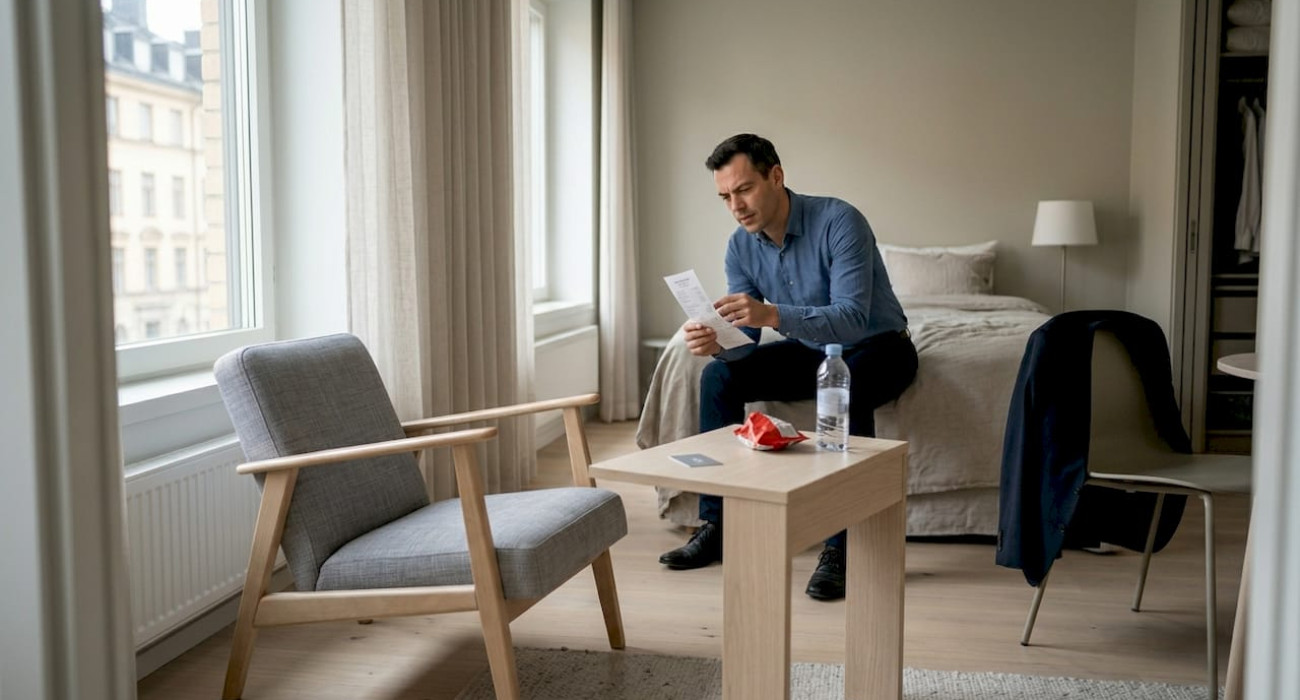

The nightly rate on a hotel booking screen rarely tells the full story. For HR professionals and project managers arranging work travel in Sweden, the gap between the advertised price and the actual total spend can be surprisingly wide. Hidden fees for breakfast, parking, and Wi-Fi routinely inflate what looked like a sensible budget decision. Beyond the invoice, there are quieter costs: a team member who slept poorly, a consultant who spent an hour finding a restaurant because there was no kitchen, a project manager fielding complaints instead of managing the project. This guide examines the real arithmetic of cheap accommodation and offers a clearer framework for making smarter choices.
Tabla de conținut
- The true cost of a ‘cheap’ stay
- How cheap stays undermine productivity and increase project costs
- What Swedish corporate travel policies really recommend
- Hotels vs. managed homes and apartments: Which really saves more?
- How dynamic pricing and seasonality worsen the pitfalls
- Checklist: How to evaluate true value for work travel accommodation
- Smarter choices for productive, cost-effective team stays
- Frequently asked questions
Principalele concluzii
| Punct | Detalii |
|---|---|
| Hidden fees add up | Seemingly cheap hotel stays often carry extra costs that inflate your final bill. |
| Quality boosts productivity | Well-appointed accommodation can improve team efficiency by up to 20 percent. |
| Policy and planning matter | Following Swedish corporate travel guidelines helps avoid false savings from budget stays. |
| Alternatives save money | Managed homes and apartments can reduce both direct and indirect stay costs for your teams. |
| Seasonality shifts prices | Budget hotel rates can spike unpredictably, making long-term planning difficult. |
The true cost of a ‘cheap’ stay
Having challenged the myth of low upfront rates, it is worth scrutinising which hidden charges routinely inflate total spend. Budget accommodation in Sweden frequently carries a range of add-on fees that are easy to overlook at the point of booking but impossible to ignore on the expense report.
Major Swedish hotel chains have already signalled this shift. Scandic Hotels now charges separately for breakfast, with costs ranging from 99 to 225 SEK per person per night. For a team of four staying two weeks, that single line item can add thousands of kronor to the bill before any other extras are counted.
“The advertised rate is the starting point, not the total. Every add-on erodes the perceived saving until the budget option is no longer the budget option.”
Common hidden charges at Swedish budget hotels include the following:
- Breakfast: 99 to 225 SEK per person
- Wi-Fi: 50 to 150 SEK per day in older properties
- Parking: 150 to 300 SEK per night in city locations
- Cleaning fees: Variable, often charged on departure
- Late check-out or early check-in: 200 to 500 SEK per request
| Hidden charge | Typical cost per night | Monthly impact (1 person) |
|---|---|---|
| Breakfast | 99 to 225 SEK | 2,970 to 6,750 SEK |
| Wi-Fi | 50 to 150 SEK | 1,500 to 4,500 SEK |
| Parcare | 150 to 300 SEK | 4,500 to 9,000 SEK |
| Late check-out | 200 to 500 SEK (per use) | Variabilă |
A true cost analysis that accounts for these charges often reveals that the cheapest room is not the cheapest stay. Over a project lasting several weeks, these fees compound into a material budget variance that no HR team planned for.
How cheap stays undermine productivity and increase project costs
Now that we have covered fees, it is worth examining why the wrong stay can quietly reduce productivity and inflate project budgets in ways that never appear on a hotel invoice.
The absence of a kitchen is one of the most underestimated cost drivers in corporate travel. When team members cannot prepare meals, they eat out for every meal, adding both expense and time. A consultant spending 45 minutes travelling to and from a restaurant at lunch is a consultant not working. Multiply that across a team and across weeks, and the time loss becomes significant.
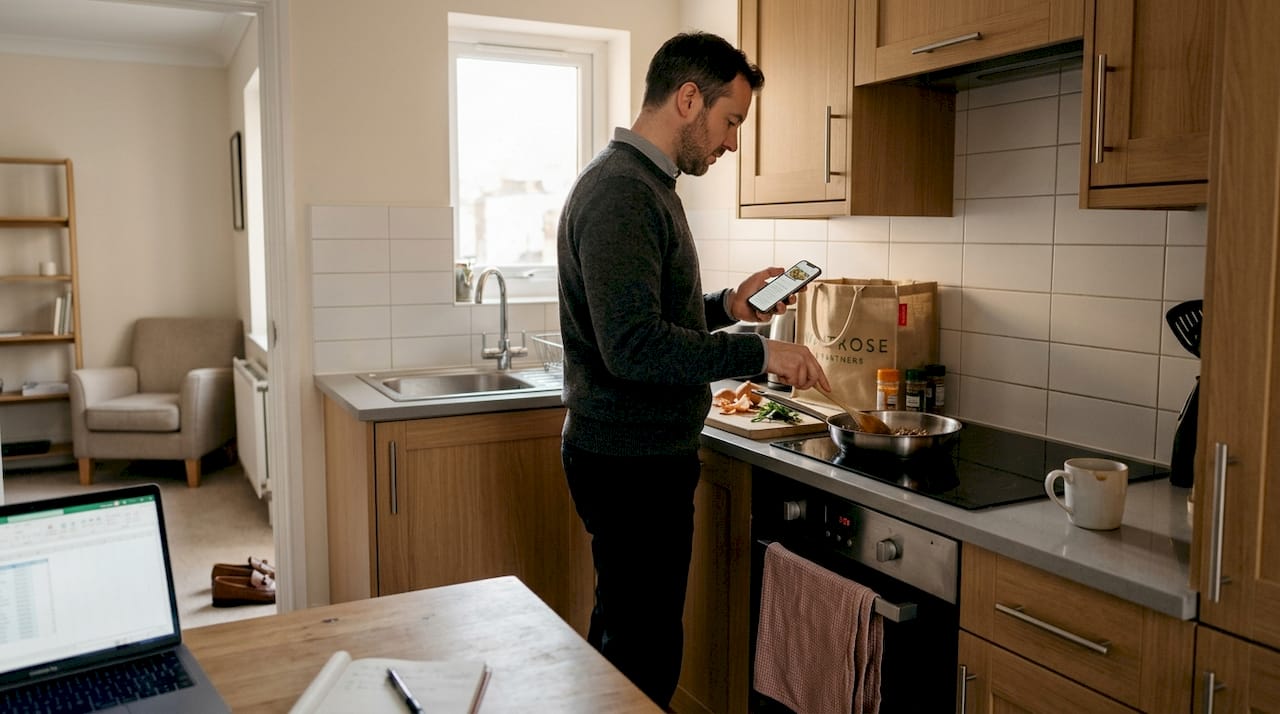
Poor accommodation choices increase total project costs by 10 to 15 percent through productivity loss and restaurant meals alone, while quality stays have been shown to boost team productivity by up to 20 percent. These are not marginal differences. They represent real budget variance and real project risk.
The hidden impacts on teams follow a predictable pattern:
- Fragmented work: Noisy corridors, thin walls, and inconsistent Wi-Fi break concentration and extend task completion times.
- Travel time for meals: Without kitchen access, teams lose productive hours to meal logistics every single day.
- Workplace morale: Employees who feel their employer has not invested in their comfort perform with less discretionary effort over time.
Strong HR policy recommendations increasingly recognise that employee well-being during travel is not a perk. It is a performance variable. Treating it as a cost to minimise rather than an investment to optimise is a decision that tends to cost more in the end.
Pro Tip: Before booking, calculate the total cost of ownership for the stay. Add estimated meal costs, transport to restaurants, and a conservative estimate of reduced output. The number will often surprise you.
What Swedish corporate travel policies really recommend
Understanding company policy clarifies why the lowest rate is rarely the smart long-term choice. Swedish corporate travel frameworks, including guidance from institutions such as Lund University, are explicit on this point.
Swedish corporate policies recommend 3 to 4 star hotels as the standard for business travel, with total trip costs considered rather than nightly rate alone. This includes allowances, working hours, and travel times to and from the property. The policy logic is straightforward: a cheaper room that requires a 40-minute commute to the project site costs more in time and allowances than a better-located, mid-tier option.
A compliant and effective corporate stay typically includes:
- A private kitchen or kitchenette to reduce meal costs
- Reliable, high-speed Wi-Fi included in the rate
- A dedicated workspace within the accommodation
- A location within reasonable distance of the project site
- Flexible check-in and check-out to accommodate project schedules
- Consistent cleaning and maintenance standards
For further guidance on structuring travel spend, the corporate travel policy guidance published by CE Sweden offers a practical framework for HR teams building or reviewing their policies.
Pro Tip: When presenting the business case for quality accommodation internally, frame it in terms of project outcomes and total spend rather than nightly rate. Finance teams respond to numbers, and the numbers favour quality when all costs are included.
Hotels vs. managed homes and apartments: Which really saves more?
Let us make this practical with a side-by-side look at the major options for work travel accommodation in Sweden.
| Factor | Budget hotel | 3 to 4 star hotel | Managed home or apartment |
|---|---|---|---|
| Advertised nightly rate | Scăzut | Mediu | Medium to high |
| Hidden fees | Înaltă | Moderat | Minimală |
| Kitchen access | Rareori | Uneori | Întotdeauna |
| Dedicated workspace | Rareori | Uneori | Întotdeauna |
| Cleaning consistency | Variabilă | Consistent | Consistent |
| Flexibility for long stays | Scăzut | Moderat | Înaltă |
| Productivity impact | Negative | Neutral | Positive |
| Total cost of ownership | Often highest | Moderat | Often lowest for extended stays |
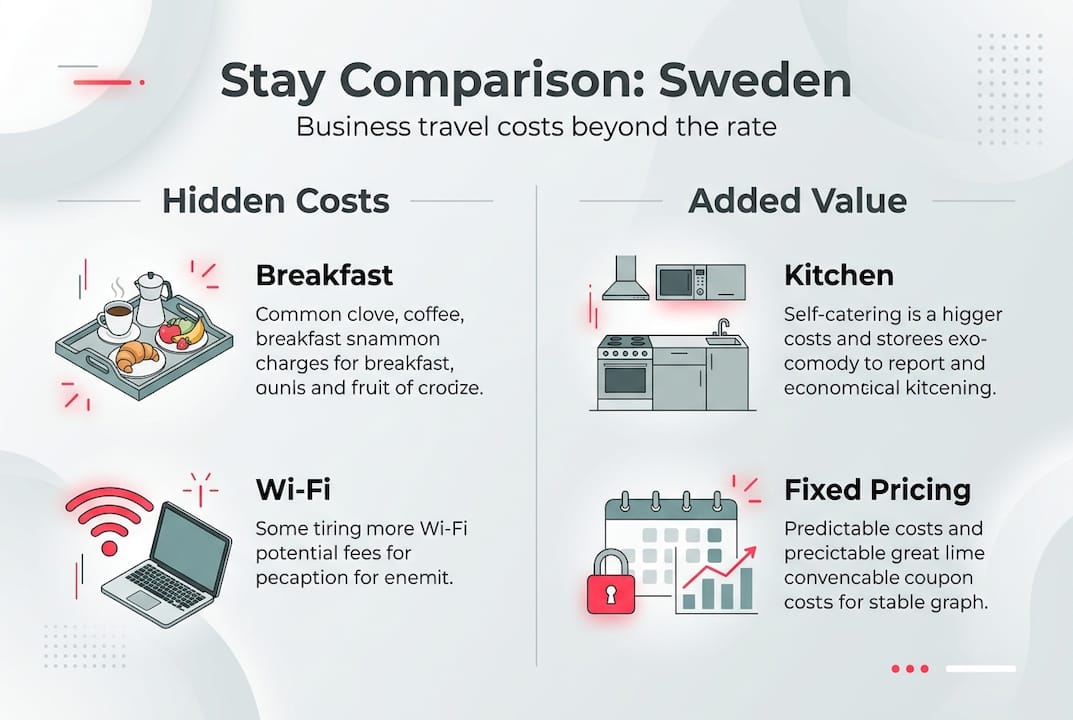
As the business travel accommodation comparison data shows, hotels offer convenience for short stays but carry a high total cost of ownership over longer projects. The corporate housing guide for Sweden outlines how managed homes address the specific gaps that hotels leave open.
Managed homes and serviced apartments offer several clear advantages for project-based travel:
- Fixed, transparent pricing with no surprise add-ons
- Full kitchen facilities that eliminate daily restaurant dependency
- Consistent, professional management with a single point of contact
- Home-like space that supports rest, recovery, and focused work
The expense trend insights from Concur Sweden confirm that finance leaders are increasingly scrutinising total accommodation spend rather than headline rates, a shift that favours managed alternatives for stays beyond a few nights.
How dynamic pricing and seasonality worsen the pitfalls
Beyond the advertised price, pricing volatility and seasonality can further erode any expected savings from budget stays. This is a risk that is easy to underestimate when planning project travel months in advance.
Budget hotels in Stockholm can rise 20 to 40 percent in price during summer and other high-demand periods, making it extremely difficult to predict and control travel spend. A rate that looked reasonable in January may be unrecognisable by June.
“Planning a travel budget around the lowest available rate is not a strategy. It is a gamble. Seasonality and demand spikes mean the cheapest option today may not exist when you actually need it.”
Strategies to minimise seasonality risks include:
- Book early and lock in rates for known project timelines
- Prioritise accommodation providers offering fixed long-term pricing
- Avoid relying on last-minute availability in high-demand cities like Stockholm and Gothenburg
- Consider managed homes, which frequently offer stable monthly rates regardless of seasonal fluctuation
- Build a buffer into travel budgets to account for dynamic pricing variance
For HR teams managing multi-month projects, the best housing choices are those that offer rate stability alongside quality, removing the budget uncertainty that dynamic pricing creates.
Checklist: How to evaluate true value for work travel accommodation
Summing up the pitfalls, here is a practical checklist for booking smarter, more productive, and genuinely cost-effective corporate stays. Use this before confirming any booking for a project team.
- Calculate total cost of ownership: Add nightly rate, all known fees, estimated meal costs, and transport. Compare options on this figure, not the headline rate.
- Check for work essentials: Confirm kitchen access, dedicated workspace, and reliable Wi-Fi are included, not optional extras.
- Review policy alignment: Ensure the property meets your organisation’s minimum standard, typically 3 to 4 star equivalent.
- Ask for fixed pricing: For stays of two weeks or more, request a fixed rate that will not fluctuate with seasonal demand.
- Measure indirect impacts: Estimate the productivity value of a well-rested, well-fed team versus one managing daily logistics. Factor this into the decision.
As total cost of ownership thinking becomes standard in corporate travel management, the bookers who apply this framework consistently will make better decisions with less stress. For further guidance on applying this approach, the smarter accommodation choices resource offers practical tools for HR and project teams.
Pro Tip: Build a simple spreadsheet with columns for nightly rate, estimated add-ons, meal costs, and a productivity adjustment factor. Run every shortlisted property through it before booking. The results will consistently point away from the cheapest option.
Smarter choices for productive, cost-effective team stays
The hidden costs, productivity losses, and pricing volatility covered in this article are not abstract risks. They are the everyday reality for teams placed in accommodation chosen on rate alone. Guestly Homes was built to resolve exactly these problems.
Guestly’s fully managed properties across Sweden offer transparent, fixed pricing with no hidden fees, full kitchen facilities, professional-grade workspaces, and consistent 5-star standards on every stay. Whether your team needs a modern luxury villa with space to breathe between project days, or a well-appointed 1BR Nordic Apartment for a solo consultant on an extended assignment, the experience is the same: calm, reliable, and built for performance. Explore the full range of options at the Guestly Homes booking portal and give your team the foundation they need to do their best work.
Frequently asked questions
What are the most common hidden fees with cheaper hotels in Sweden?
Breakfast, Wi-Fi, and parking are frequently charged as extras at budget hotels in Sweden, significantly raising the total bill beyond the advertised nightly rate.
How do accommodation choices affect team productivity during business travel?
Low-quality options create distractions, poor rest, and logistical friction, while quality lodging boosts output by up to 20 percent, making accommodation a direct performance variable.
Do Swedish corporate policies allow booking the cheapest available hotel?
Most Swedish organisations follow guidance that recommends 3 to 4 star hotels as the standard for business travel, prioritising team efficiency over the lowest available rate.
Why does seasonality matter for business travel budgeting in Sweden?
Budget hotel prices in Stockholm can rise by 20 to 40 percent during peak summer months, making cost prediction unreliable when planning is based on the cheapest available option.
What is the best way to compare total accommodation value for a project?
Apply a total cost of ownership framework that includes all direct fees, meal costs, transport, and an estimate of productivity impact, rather than comparing headline nightly rates alone.
Recomandate
- 7 Smart Accommodation Options in Sweden for Team Stays – Guestly Homes
- Corporate Travel Accommodation Explained: Smarter Choices for Project Teams in Sweden – Guestly Homes
- Why Book Corporate Housing in Sweden – Key Business Impacts – Guestly Homes
- 8 Best Corporate Lodging Alternatives Sweden – Expert Comparison 2026 – Guestly Homes