


Most british property owners investing in Swedish cities like Piteå, Luleå, Boden, and Nyköping underestimate the importance of Sweden’s legal definitions for real property ownership. A single registration omission can trigger years of disputes or unexpected costs. For those seeking stress-free management and reliable income from serviced apartments, understanding how Swedish law defines ownership is the foundation for long-term success and financial stability.
Innholdsfortegnelse
- What Counts As Real Property Ownership
- Forms Of Ownership In Sweden Explained
- Legal Foundations And Registration Processes
- Owner Rights, Duties And Liabilities
- Key Financial And Tax Obligations
- Risks, Common Pitfalls And Exit Options
De viktigste erfaringene
| Punkt | Detaljer |
|---|---|
| Understanding Ownership | Real property ownership in Sweden requires registration and legal recognition of rights and responsibilities. |
| Forms of Ownership | Ownership structures include Sole Ownership, Joint Ownership, and Housing Cooperative Ownership, each with distinct implications. |
| Rettslig rammeverk | Lantmäteriet governs the property registration process, crucial for safeguarding ownership rights and ensuring compliance. |
| Financial Responsibilities | Property owners must fulfil annual tax obligations and manage costs related to maintenance and potential liabilities. |
What Counts As Real Property Ownership
Real property ownership in Sweden encompasses a precise legal framework that defines how individuals and entities can possess land and buildings. Lantmäteriet, the Swedish mapping and land registration authority, provides the official mechanism for establishing and verifying property ownership across the country.
In the Swedish context, real property ownership involves several key characteristics that distinguish it from other forms of asset possession. These include:
- Registration of the property under the owner’s name
- Specific property designation issued by national authorities
- Legal rights to use, develop, and transfer the property
- Responsibility for property-related taxes and charges
Property types that qualify as real property in Sweden range widely, from residential apartments and standalone houses to commercial buildings and agricultural land. The Skatteverket (Swedish Tax Agency) highlights that property ownership carries specific tax obligations, with the registered owner on 1 January being responsible for the entire year’s property charges.
Understanding the nuanced legal requirements is crucial. Ownership is not merely about possessing a deed but involves a comprehensive set of rights, responsibilities, and legal recognitions by Swedish governmental institutions. This includes precise boundary definitions, registration processes, and compliance with local and national property regulations.
Pro tip: Before purchasing a property in Sweden, always conduct a thorough title search through Lantmäteriet to verify complete ownership details and potential encumbrances.
Forms of Ownership in Sweden Explained
Swedish property ownership encompasses several distinct legal structures that determine how individuals and entities can possess and interact with real estate. Lantmäteriet, the national property registration authority, recognises multiple forms of ownership that provide different rights and responsibilities to property holders.
The primary forms of property ownership in Sweden include:
- Sole Ownership: Where a single individual or legal entity holds complete property rights
- Joint Ownership: Shared property rights between multiple parties, with defined percentage stakes
- Housing Cooperative Ownership (Bostadsrätt): A unique Swedish model where residents purchase the right to occupy an apartment within a collectively managed housing association
Housing cooperative apartments represent a distinctive ownership structure in the Swedish real estate market, where owners technically purchase membership rights rather than direct property ownership. This system differs significantly from traditional property ownership, as residents pay monthly fees to the cooperative and have collective responsibility for building maintenance and management.
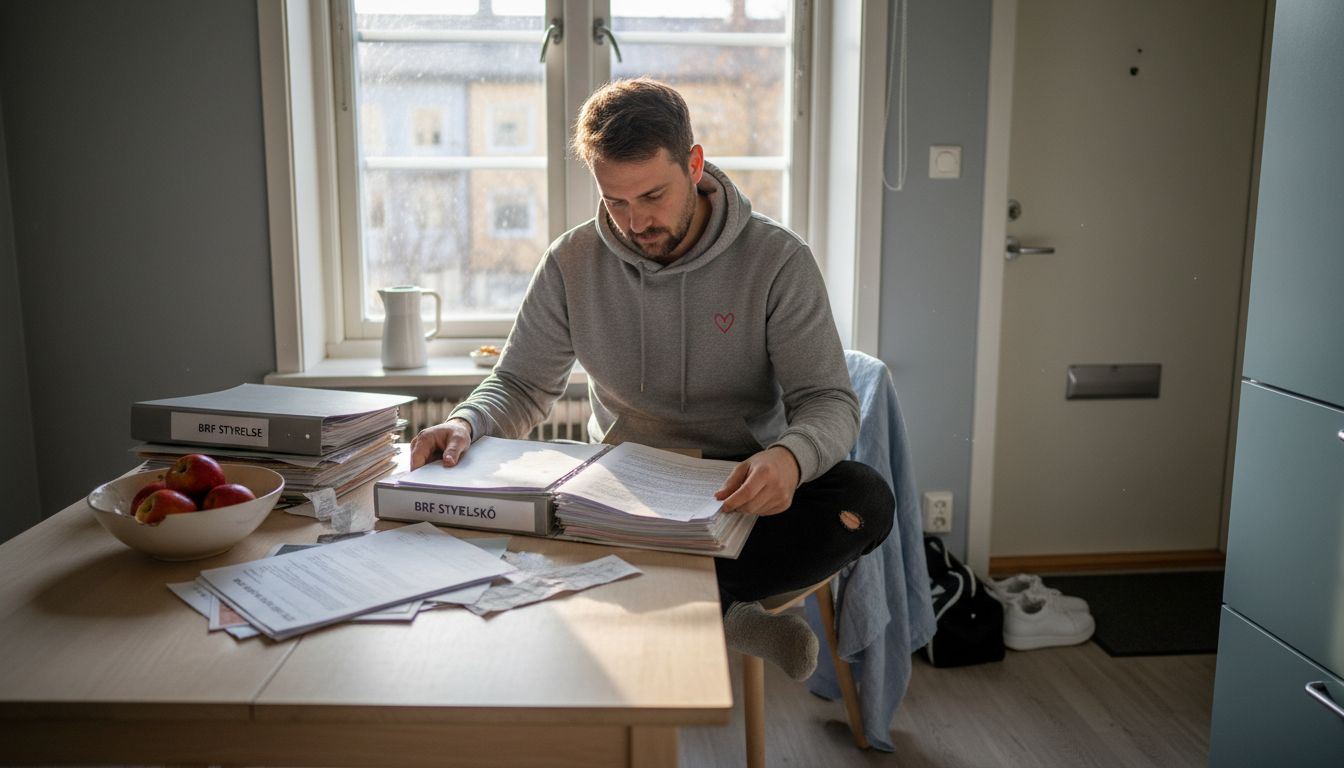
Each ownership form carries specific legal implications. Sole ownership provides the most direct control, allowing complete autonomy in property use and transfer. Joint ownership requires detailed agreements defining each party’s rights and financial obligations. Housing cooperatives involve complex collective decision-making processes, with individual members participating in association governance.
Here is a comparison of the main forms of property ownership in Sweden and their distinctive features:
| Ownership Form | Type of Rights Held | Transfer Flexibility | Decision-Making Approach |
|---|---|---|---|
| Sole Ownership | Full legal and economic | Unilateral, simple | Owner decides independently |
| Felles eierskap | Shared legal, divided | Requires agreement | Joint agreements govern actions |
| Housing Cooperative | Usage, not direct title | Restricted, by rules | Collective voting in association |
Pro tip: Consult a Swedish property lawyer to thoroughly understand the nuanced legal distinctions between different ownership structures before making a significant real estate investment.
Legal Foundations and Registration Processes
Lantmäteriet, Sweden’s national land registration authority, provides the critical legal framework governing property ownership and transfer in the country. The registration process represents a comprehensive system designed to ensure legal clarity, protect property rights, and maintain precise records of land ownership and boundaries.
The property registration process involves several key steps:
- Submission of property transfer documents
- Verification of ownership credentials
- Formal cadastral assessment of property boundaries
- Recording of ownership transfer in official national registers
Sweden’s legal framework for property registration demonstrates a commitment to creating an open and competitive market for real estate transactions. Foreign investors enjoy the same property rights as domestic owners, with no discriminatory restrictions limiting investment potential. This transparent approach ensures that property ownership is accessible, secure, and well-documented.
The registration procedure requires meticulous documentation, including sale agreements, property valuations, and proof of financial capability. Lantmäteriet conducts thorough background checks to confirm the legitimacy of property transfers, examining historical ownership records, potential encumbrances, and legal compliance. Property boundaries can be modified through formal procedures such as land division, merger, or transfer, always maintaining precise geographical documentation.
Pro tip: Engage a local property lawyer specialising in Swedish real estate to navigate the complex registration processes and ensure all documentation meets Lantmäteriet’s stringent requirements.
Owner Rights, Duties and Liabilities
Property ownership in Sweden involves a comprehensive set of legal rights and responsibilities that balance individual property interests with broader community and legal considerations. The Swedish legal framework establishes clear guidelines defining what property owners can and cannot do with their real estate assets.
Key owner rights include:
- Right to use and modify the property within legal constraints
- Right to generate income through rental or sale
- Right to transfer ownership
- Right to privacy and peaceful enjoyment of the property
- Protection against unwarranted intrusion or seizure
Swedish housing regulations mandate specific duties for property owners to ensure community standards and individual safety. These obligations extend beyond personal property management to include broader responsibilities towards neighbours, tenants, and local regulatory frameworks. Owners must maintain their properties to acceptable standards, comply with local building codes, and ensure that any modifications or usage do not negatively impact surrounding properties.
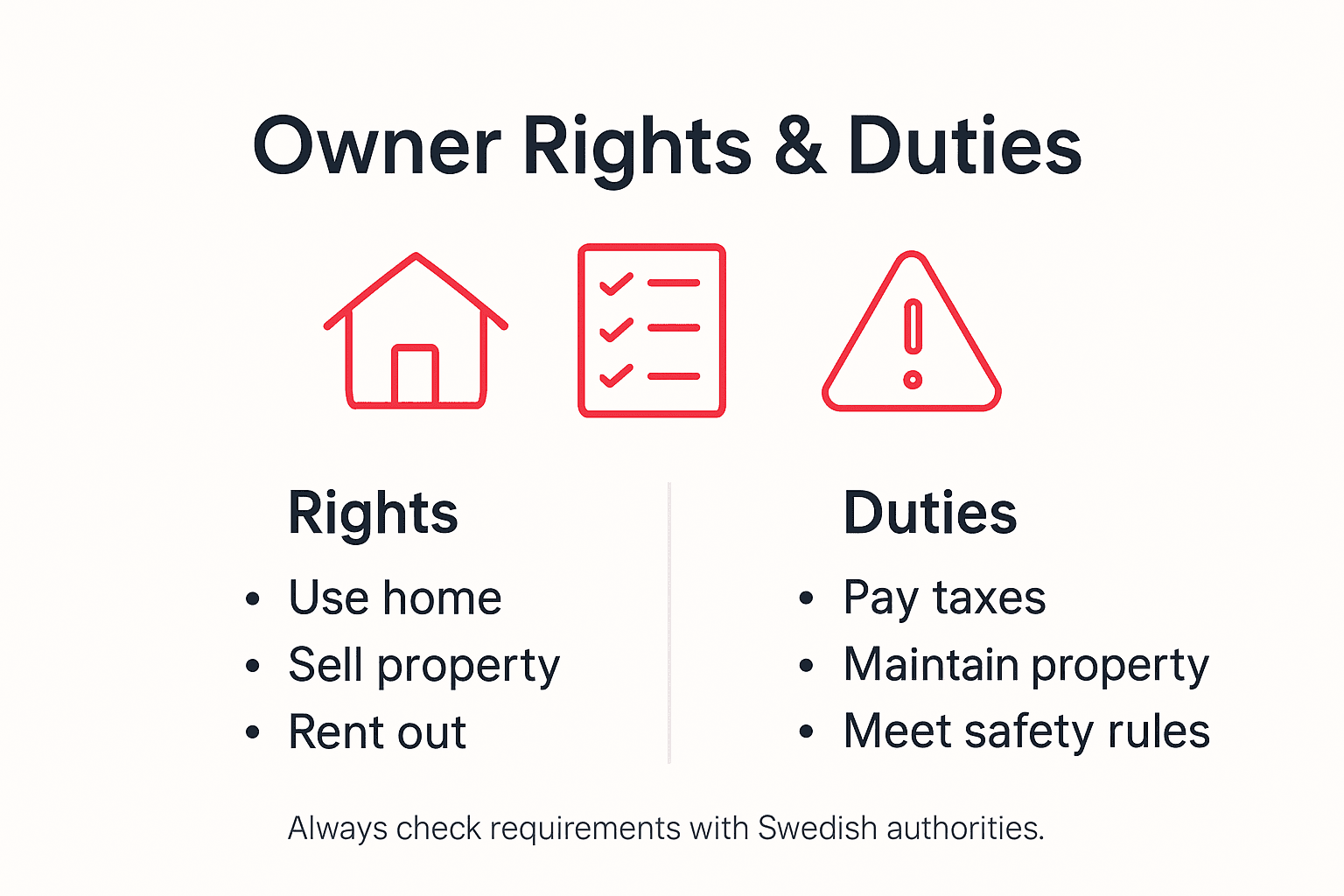
Liabilities for property owners can be substantial and multifaceted. Failure to meet legal obligations can result in financial penalties, legal action, or forced property management interventions. These potential liabilities cover areas such as structural maintenance, safety compliance, environmental regulations, and tenant rights. Owners may be held financially responsible for damages resulting from negligence, improper maintenance, or violations of local housing regulations.
The table below summarises key owner obligations and associated liabilities for Swedish property owners:
| Obligation Area | Typical Responsibilities | Major Legal Risk |
|---|---|---|
| Vedlikehold av eiendom | Regular repairs and upkeep | Penalties for neglect |
| Tax Compliance | Proper calculation and timely filing | Fines or legal prosecution |
| Neighbour Relations | Respecting boundaries, noise limits | Claims for disruption or damage |
| Forvaltning av leietakere | Ensuring safety and rights | Tenant lawsuits or compensation |
Pro tip: Maintain comprehensive property insurance and conduct regular professional inspections to mitigate potential legal and financial risks associated with property ownership.
Key Financial and Tax Obligations
Swedish property ownership comes with comprehensive financial and tax responsibilities that require careful understanding and strategic planning. Property owners must navigate a complex landscape of fiscal obligations designed to ensure transparent and equitable property transactions.
Key financial and tax obligations include:
- Annual property tax or charge payments
- Capital gains tax reporting for property sales
- Rental income declaration
- Income tax calculations for property-related revenues
- Mandatory annual tax return submissions
Sweden’s tax framework establishes specific regulations for property owners, including distinct tax rates and reporting requirements, with significant variations between residential and commercial property ownership. The tax system imposes a 22% capital gains tax on property sales, while rental income is typically taxed at 30% of the surplus after permissible deductions.
Commercial property owners face additional complexities, as their property holdings are treated as business activities requiring more detailed financial reporting. These owners must maintain comprehensive financial records, track all income and expenses, and ensure precise tax calculations. The registered property owner as of 1 January becomes responsible for the entire year’s tax obligations, regardless of subsequent ownership transfers.
Pro tip: Consult a Swedish tax specialist annually to ensure complete compliance and identify potential tax optimisation strategies specific to your property portfolio.
Risks, Common Pitfalls and Exit Options
Property ownership in Sweden involves navigating complex legal and regulatory landscapes that present potential risks for investors, requiring strategic awareness and proactive management. Understanding these potential challenges is crucial for maintaining a successful property investment strategy.
Common risks and pitfalls for property owners include:
- Boundary disputes with neighbouring properties
- Incorrect property registration documentation
- Non-compliance with local housing regulations
- Tenant-related legal complications
- Unexpected maintenance or renovation costs
- Complex property transfer procedures
Lantmäteriet plays a critical role in mitigating property ownership risks by providing official mapping and cadastral information, which helps property owners understand precise legal boundaries and ownership transfer mechanisms. The organisation offers comprehensive services to verify property details, resolve potential disputes, and ensure secure ownership transitions.
Exit options for property owners in Sweden are relatively flexible, though they require careful navigation of legal and financial considerations. Potential strategies include selling the property outright, transferring ownership to family members, converting the property into a rental investment, or engaging in a managed sale through professional real estate channels. Each exit route carries specific tax implications and legal requirements that must be meticulously evaluated to optimise financial outcomes.
Pro tip: Maintain comprehensive documentation of your property’s history, conduct periodic professional valuations, and consult with a legal specialist before implementing any significant ownership transition.
Maximise Your Swedish Property Ownership with Guestly Homes
Navigating the legal complexities and financial responsibilities of property ownership in Sweden requires trusted expertise and a streamlined management approach. Whether you face challenges with tax compliance, tenant management, or seek a hassle-free way to optimise your property’s performance, understanding your ownership rights and duties is essential for long-term success. Key concerns such as maintenance liabilities, ownership registration, and income stability can create uncertainty without the right partner.
Guestly Homes offers a premium, fully managed solution designed specifically for property owners who want to unlock predictable income and expert stewardship while avoiding common pitfalls. With flexible partnership options like our Revenue Share Model or Arbitrage Model, you retain control with minimal involvement and benefit from our 5-star operational standards across Sweden and the Nordics. Learn how to protect your investment and maximise returns with confidence.
Own property in Sweden but want stability and peace of mind? Explore our expertly managed homes and discover your ideal ownership experience.
Discover how Guestly empowers Swedish property owners with tailored management and consistent profitability. Visit Guestly Homes to get started today and transform your ownership journey. For deeper insights, see how our fully managed service supports hands-off success and why our operation delivers long-term profitability that aligns perfectly with your goals.
Ofte stilte spørsmål
What are the key characteristics of real property ownership?
Real property ownership involves registration under the owner’s name, specific property designation, legal rights to use and transfer the property, and responsibilities for related taxes and charges.
What forms of property ownership exist?
There are several forms of property ownership, including sole ownership, joint ownership, and housing cooperative ownership, each with distinct rights and responsibilities.
What are the legal processes for registering property ownership?
The property registration process includes submitting transfer documents, verifying ownership credentials, conducting a cadastral assessment, and recording the ownership transfer in national registers.
What are the tax obligations associated with property ownership?
Property owners must pay annual property taxes, report capital gains tax for property sales, declare rental income, and submit mandatory annual tax returns.
Anbefales
- Typer av boligeierskap i Sverige: Komplett guide – Guestly Homes
- Lease Agreement for a House – Key Essentials in Sweden – Guestly Homes
- Hva er fremleie? Komplett guide for svenske eiere – Guestly Homes
- Avtale om eiendomsforvaltning: Komplett guide for Sverige - Guestly Homes
- Understanding Window Treatments for Apartments