

Managing premium rentals in Sweden’s Piteå, Luleå, Boden, or Nyköping presents unique opportunities and challenges. Property owners seeking reliable returns must navigate a market shaped by supply shortages, strict rent controls, and evolving guest expectations. Aligning your strategy with Sweden’s distinctive rental regulations is essential. This guide clarifies how thoughtful planning, strategic pricing, and professional standards put you ahead, ensuring both steady income and satisfied guests.
Innholdsfortegnelse
- Step 1: Set the Right Foundation for Reliable Earnings
- Step 2: Apply Strategic Pricing and Stay Length Policies
- Step 3: Select Quality Guests for Long-Term Stability
- Step 4: Enforce Consistent Standards and Upkeep
- Step 5: Monitor Performance and Adapt for Long-Term Gains
Rask oppsummering
| Main Insight | Forklaring |
|---|---|
| 1. Understand Your Market Thoroughly | Research local rental conditions, such as guest types and demand patterns, to make informed, strategic decisions. |
| 2. Prioritise Longer Stay Bookings | Set a minimum stay of at least 10 nights to reduce turnover costs and maximise revenue stability. |
| 3. Establish Clear Guest Screening Criteria | Define booking criteria to attract reliable, long-term guests who enhance income stability and reduce wear and tear. |
| 4. Maintain Consistent Property Standards | Implement a detailed checklist for cleanliness and functioning to ensure guest satisfaction and protect your asset. |
| 5. Monitor Performance Metrics Regularly | Track key metrics like occupancy rate and guest retention to adapt your strategy proactively and sustain profitability. |
Step 1: Set the Right Foundation for Reliable Earnings
Before you adjust pricing or chase high turnover, you need to understand the market you’re working in. Sweden’s rental landscape has specific characteristics that directly affect your income stability. Unlike markets where you can react quickly to demand spikes, Swedish properties operate within a framework of regulations, supply constraints, and guest expectations that reward thoughtful planning over reactive tactics. Understanding these realities upfront means you’ll make decisions from strength rather than scrambling later.
Start by examining your local market conditions honestly. Are you in a city where corporate teams dominate, or do you see more individual professionals seeking longer stays? Research what comparable properties in your area actually earn, not what owners claim they earn. Look at length of stay patterns in your region, seasonality trends, and what types of guests book properties like yours. The Swedish housing market faces supply challenges that create genuine opportunities if you position correctly. High-quality properties with reliable standards attract guests willing to stay longer and pay more consistently. This matters far more than chasing volume.
Next, assess your property’s actual condition and presentation. A property that photographs well but feels worn during arrival costs you in repeat bookings, ratings, and referrals. Standards matter. Professional presentation includes not just cleanliness but also working systems, thoughtful details, and spaces that function quietly. Guests remember how your property made them feel, and that feeling directly influences whether they book again or recommend you to others. Understanding rental conditions and market realities in Sweden helps you set competitive yet sustainable pricing. When your property consistently meets high standards, you can justify higher nightly rates and attract guests seeking stability, not bargains. This foundation supports everything that follows.
Professional tip Document your property’s true condition now, invest in any maintenance or presentation gaps before listing, and establish clear standards for every stay so you’re not building income on a foundation of deferred care.
Step 2: Apply Strategic Pricing and Stay Length Policies
Your pricing and minimum stay requirements work together to shape your entire revenue model. Get this right, and you attract stable, profitable guests. Get it wrong, and you chase turnover that erodes your margins and exhausts your property. The goal is not to charge the highest possible rate or fill every night. The goal is to generate reliable income while keeping your operational demands manageable and your property in good condition.
Start by understanding how stay length affects your actual earnings. A 30 night booking at a lower nightly rate generates more revenue than four 7 night bookings at higher rates, whilst requiring only one check in, one set of guest communications, and one checkout. You avoid four turnover cycles, four sets of cleaning, four opportunities for accidental damage, and four instances of wear that compounds over time. Longer stays also mean lower vacancy risk between bookings. When considering rental duration policies and lease length strategies, you’re not just optimising income per night; you’re protecting your asset and your peace of mind. Set a minimum stay requirement that reflects your market, typically 10 to 30 nights for professional guests. This single decision filters out transient demand and attracts the guest profile most likely to respect your property.
Next, price according to market reality, not wishful thinking. Research what genuinely comparable properties earn in your location, not what owners claim on marketing sites. Consider government rent caps and second hand rental dynamics in Sweden’s market when setting your rates. Pricing too high kills occupancy and leaves your property sitting empty. Pricing too low leaves money on the table and attracts guests who may not value your standards. The right price attracts the right guest, fills your calendar predictably, and generates stable income. Adjust seasonally if your market shows clear patterns, but avoid constant fluctuations that confuse potential bookers. Consistency builds trust and makes your property easier to understand as a reliable option.
To clarify the advantages of longer versus shorter stays in the Swedish rental market, consider the following comparison:
| Aspekt | Longer Stays (30+ Nights) | Shorter Stays (1-7 Nights) |
|---|---|---|
| Revenue Stability | Predictable income stream | Income highly variable |
| Turnover Costs | Reduced cleaning and admin | Increased cleaning and admin |
| Guest Screening | Easier to vet thoroughly | Higher volume, less time for screening |
| Wear and Tear | Less frequent turnover, less wear | More frequent use, increased wear |
| Guest Profile | Professionals, relocating families | Tourists, transient guests |
Professional tip Set your minimum stay at 10 nights or longer, offer a small discount for 30+ night bookings, and lock your nightly rate for 90 days so you can focus on occupancy rather than daily price tweaking.
Step 3: Select Quality Guests for Long-Term Stability
Not every inquiry deserves a booking. Selecting the right guests upfront saves you countless hours of management headaches, protects your property from unnecessary wear, and creates the conditions for steady, predictable income. A guest who respects your standards and stays for three months generates far more value than a guest who books impulsively for five nights, treats the property carelessly, and leaves you a collection of minor repairs and poor reviews. Your screening process is not about being difficult. It’s about attracting guests aligned with what your property offers.
Begin by establishing clear booking criteria before you receive any inquiries. What type of stay are you optimising for? Corporate teams on extended project work, individual professionals relocating temporarily, or perhaps families needing stability during a transition? Once you’ve identified your target guest profile, you can screen against that standard consistently. Request basic information from every potential guest: employment details, purpose of stay, length of commitment, and references from previous landlords or property managers if available. A guest comfortable providing this information is typically a guest confident in their reliability. Ask direct questions about their expectations for the property and their lifestyle. How many people will actually occupy the space? Will they work from home or be out during the day? Will they host visitors? These conversations reveal whether the guest’s needs align with your property’s boundaries. Understanding housing supply matched to resident needs helps you place guests in situations where they’re likely to stay longer and remain satisfied. When there’s alignment between what someone needs and what your property provides, everything becomes easier.
Verify what guests tell you. Check employment or project details through professional networks or LinkedIn if appropriate. Contact previous landlords or property managers directly, not just via guest provided references. A guest with a genuine three month contract at a Swedish employer is far less likely to leave suddenly than one offering vague explanations. You’re not being intrusive. You’re being professional. When booking a property, guests expect owners to care about who lives there. Careful tenant screening reduces vacancy risks and supports sustained income in Sweden’s competitive rental market. Trust your instinct. If an inquiry feels rushed, evasive, or misaligned with your standards, decline it. There will be better guests next week. One poor guest can damage your property and your peace of mind far more than one empty week costs you in revenue.
Professional tip Create a one-page screening questionnaire, check at least one professional reference before confirming every booking, and always trust hesitation over desperation when you’re unsure about a guest.
Step 4: Enforce Consistent Standards and Upkeep
Consistent standards are not about perfectionism or endless expense. They’re about protecting your asset, maintaining guest satisfaction, and sustaining your rental income over years, not months. A property that deteriorates between guests costs you more in urgent repairs, lost bookings, and damaged reputation than preventative maintenance ever will. When standards slip, guests notice immediately. When they’re maintained reliably, guests return and recommend your property to others. This distinction shapes your long-term profitability more than any pricing tactic.
Establish a detailed standards checklist that covers everything guests experience during their stay. What does “clean” actually mean in your property? Define it precisely: light fixtures dusted, grout inspected, appliances inside and out, carpets vacuumed in specific directions, windows streak-free. What about “functioning”? Every door should open smoothly, every lock should work without sticking, every appliance should operate as intended, every light switch should work. What about “pleasant”? Fresh linens on arrival, plants alive, air fresh, temperature comfortable, Wi-Fi working reliably. Write these standards down. Share them with whoever maintains your property. Inspect against them before every guest arrival. This consistency builds trust because guests experience the same reliable quality every time. Research into quality programme standards and maintenance regimes across Swedish residential developments reveals that systematic upkeep preserves both property value and guest confidence. Your property becomes known for reliability, and that reputation attracts guests willing to stay longer and pay fairly.
Schedule maintenance proactively rather than reactively. This means quarterly deep cleaning, seasonal system checks, annual professional inspections of appliances and utilities, and immediate attention to any guest reported issues. A leaking tap fixed within 24 hours stops being a problem. A leaking tap left for a week becomes a negative review and potential water damage. Guests respect owners who respond quickly to legitimate maintenance issues because it signals competence and care. Document everything. Take photos before each guest arrival and after departure. Keep records of every repair, cleaning cycle, and maintenance visit. This protects you legally and gives you clear data on what actually deteriorates over time so you can adjust your maintenance schedule accordingly. Rising housing prices and regulatory constraints necessitate improved quality standards to preserve property value and attract quality tenants. In Sweden’s market, your property’s condition directly reflects your professionalism and determines whether guests return.
Professional tip Create a photograph-based standards checklist you can use before every guest arrival, schedule quarterly professional cleaning, and fix any guest reported maintenance issues within 24 hours to build a reputation for reliability.
Step 5: Monitor Performance and Adapt for Long-Term Gains
Monitoring your property’s performance is not optional paperwork. It’s the system that tells you whether your strategy is working, where adjustments are needed, and how to respond before problems become expensive. Most owners track revenue casually but miss the metrics that actually predict long-term success. Occupancy rate, guest retention, maintenance costs, and guest satisfaction scores matter far more than raw income figures. By monitoring these consistently, you’ll spot trends early and adapt before your competitors do.
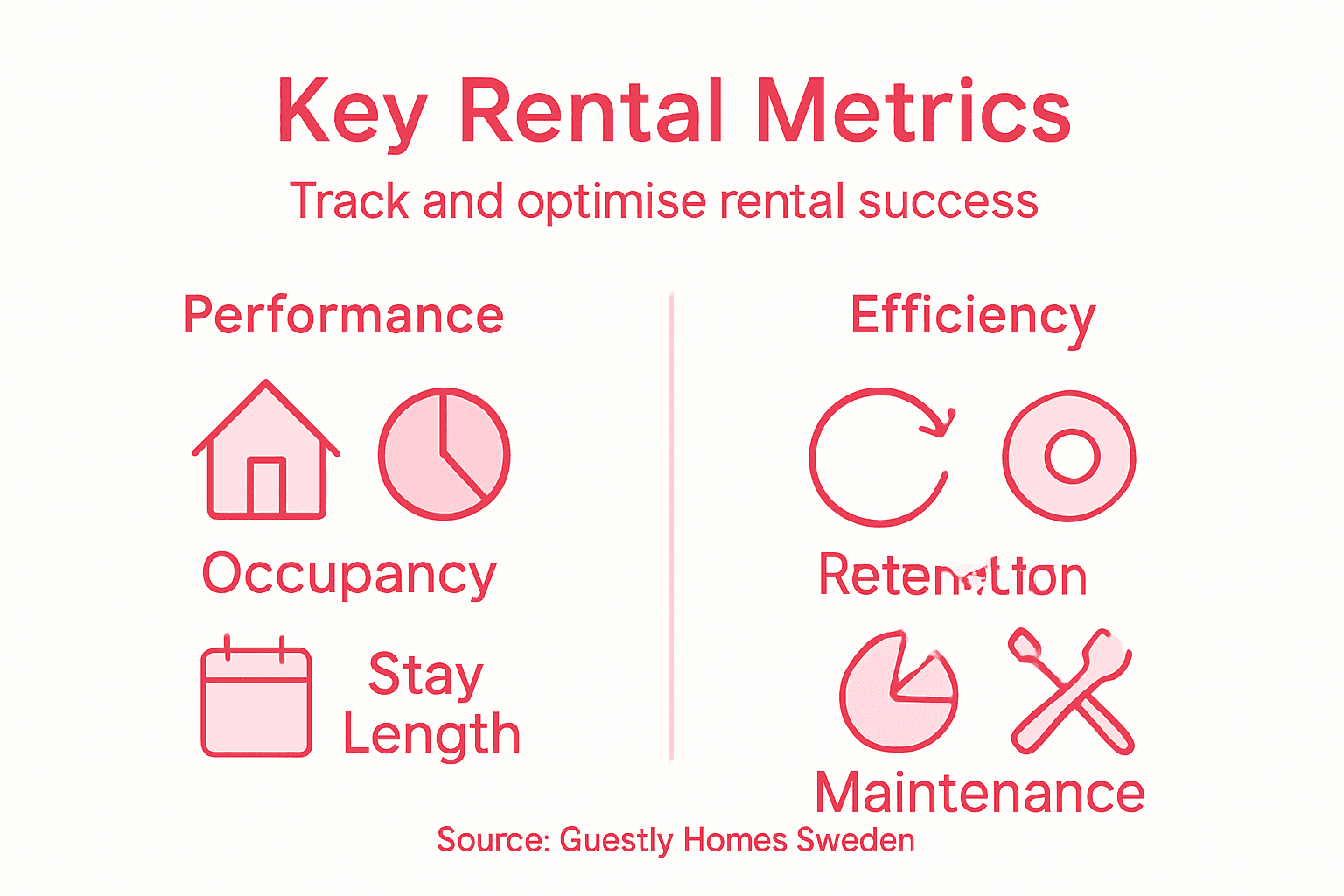
Start by tracking the metrics that reveal your property’s true health. Occupancy rate shows what percentage of days your property generates income versus sitting empty. If this drops below 70 per cent, something in your pricing, marketing, or guest selection needs adjustment. Guest retention measures whether previous guests book again, which indicates satisfaction and reduces your dependency on constant new bookings. High retention dramatically improves your economics because you avoid the turnover costs that erode profitability. Average length of stay reveals whether your positioning attracts the guest profile you want. If your average stay drops below your minimum, your guest mix has shifted away from your target. Maintenance cost per stay tracks whether standards are being maintained or whether wear is accelerating. Rising maintenance costs without obvious cause often indicate a guest behaviour issue or property condition issue you haven’t yet noticed. Review these metrics monthly and compare them year on year to identify meaningful patterns rather than temporary fluctuations. Understanding market performance monitoring and continuous adjustments ensures your strategy remains aligned with changing conditions.
Here is an at-a-glance summary of key metrics to monitor for sustained rental success:
| Metric | What It Measures | Typical Target |
|---|---|---|
| Beleggsprosent | Nights booked vs available | 70% or higher |
| Guest Retention | Repeat bookings rate | 30% or higher |
| Avg Length of Stay | Average nights per booking | Above your minimum stay |
| Maintenance Cost/Stay | Avg maintenance per guest | Flat or declining month-on-month |
Adapt your approach based on what the data tells you. If occupancy is declining, adjust pricing downward slightly or review your guest screening criteria to see if you’re being too selective. If maintenance costs are rising, investigate the cause before assuming all guests are careless. If guest retention is poor, contact recent guests to understand what fell short. Maybe your standards checklist wasn’t actually being followed, or maybe guests had a specific complaint during stay. This feedback loop closes the gap between what you think your property delivers and what guests actually experience. Track seasonal patterns in your region and adjust minimum stay requirements or pricing accordingly. Some Swedish locations see genuine demand swings, whilst others remain stable year-round. Responding to these patterns rather than ignoring them keeps occupancy high and revenue predictable. Property owners benefit from tracking operational metrics to adapt strategies for long-term profitability. The owners who earn consistently are not those who set a strategy once and forget it. They’re the ones who watch their data, understand what it means, and adjust thoughtfully.
Professional tip Track occupancy rate, average length of stay, guest retention percentage, and maintenance cost per stay monthly in a simple spreadsheet, then review trends quarterly to identify patterns and guide your adjustments.
Unlock Consistent Revenue and Carefree Property Management with Guestly Homes
Maximising rental income in Sweden demands more than just setting higher prices or chasing short stays. The article reveals critical challenges such as aligning your property condition with guest expectations, adopting longer minimum stays for stability, and selecting quality guests to protect your investment. Guestly Homes understands these pain points deeply. We specialise in fully managed, premium properties designed for extended stays that attract reliable professional tenants seeking a hotel-grade yet home-like experience. Our approach helps you avoid costly turnover cycles and unpredictable earnings by focusing on consistent standards, thoughtful guest selection, and strategic pricing.
Why settle for reactive management when you can partner with a trusted operator? Discover how our Revenue Share Model or Arbitrage Model can provide stable income tailored to your needs with minimal involvement. Join owners across Sweden who enjoy hassle-free, long-term profitability supported by a 5-star management team. Take the next step towards maximising your property’s potential today by visiting Guestly Homes. Your property deserves the care and consistency that only a premium operator like Guestly can deliver.
Ofte stilte spørsmål
How can I ensure reliable income from my rental property in Sweden?
To ensure reliable income, start by thoroughly researching local market conditions and guest profiles. Assess comparable property earnings and set appropriate pricing strategies, such as a minimum stay requirement of at least 10 nights, to attract longer-term, stable guests.
What pricing strategies should I implement for my rental property?
Implement pricing strategies that reflect market realities rather than wishful thinking. Research similar properties in your area and consider offering discounts for longer stays, such as 10% off for bookings of 30 nights or more, to ensure consistent occupancy and steady income.
How do I select quality guests for my rental property?
Establish clear booking criteria to identify your target guest profile, whether it’s corporate teams or individual professionals. Request detailed information from potential guests, such as their employment status and rental history, to ensure they align with your rental standards and are likely to care for your property.
What maintenance practices should I follow to maintain my rental property?
To maintain your rental property effectively, create a detailed standards checklist outlining cleanliness, functionality, and overall guest experience. Schedule proactive maintenance, including quarterly deep cleaning and prompt repair of any issues reported by guests, to preserve the property’s condition and reputation.
How can I monitor the performance of my rental property?
Monitor key metrics such as occupancy rate, guest retention, and average length of stay to evaluate your property’s performance. Track these metrics monthly using a simple spreadsheet, and analyse trends quarterly to adjust your strategies accordingly, aiming for a minimum occupancy rate of 70%.
What should I do if my occupancy rate drops?
If your occupancy rate drops below the target of 70%, reassess your pricing strategy or guest screening criteria. Consider lowering your rates slightly or refining your criteria to attract a broader range of potential tenants, ensuring your listings remain appealing and accessible.