


Managing team accommodations in Piteå, Luleå, Boden, and Nyköping often means juggling expectations, comfort, and seamless logistics for peak performance. For HR leads and project managers in Sweden’s tech sector, the need for structured, reliable property operations is clear when overseeing extended stays. Discover how professional property operation standards backed by recognised frameworks such as The Royal Institution of Chartered Surveyors ensure every aspect of team housing runs efficiently, creating an environment where productivity thrives.
Indice dei contenuti
- Defining Professional Property Operation Standards
- Operational Scale And Advanced Systems
- Data-Led Pricing And Occupancy Control
- Safety, Identity, And Loss Prevention Tools
- Consistent Quality Through Specialist Teams
- Risks Owners Face Without Managed Services
Punti di forza
| Punto | Dettagli |
|---|---|
| Adherence to Professional Standards | Evaluate property management partners on their compliance with recognised professional standards to ensure reliability and performance. |
| Integrazione tecnologica | Implement advanced technological systems for predictive maintenance and data management to enhance operational efficiency and strategic control. |
| Data-Driven Pricing Strategies | Utilise robust data analytics platforms for real-time market analysis and dynamic pricing to optimise occupancy and revenue. |
| Risks of Unmanaged Properties | Recognise that without professional management, properties face significant legal, financial, and operational risks, impacting long-term value. |
Defining Professional Property Operation Standards
Professional property operations represent a sophisticated ecosystem of standards and practices that elevate property management beyond simple maintenance. Global property management principles establish comprehensive frameworks that transform residential and commercial spaces into strategic assets.
These professional standards encompass multiple critical dimensions, including:
- Ethical client relationships
- Rigorous performance benchmarking
- Consistent operational protocols
- Conformità legale e normativa
- Advanced technological integration
- Risk management strategies
The Royal Institution of Chartered Surveyors (RICS) has been instrumental in codifying these professional standards. Property agency principles outline precise expectations for property management professionals, emphasising not just technical competence but also ethical conduct and client trust.
Professional property operation standards go far beyond traditional maintenance. They represent a holistic approach that integrates technological innovation, data-driven decision making, and strategic asset management. Modern operators leverage sophisticated software, predictive maintenance technologies, and comprehensive risk assessment protocols to deliver exceptional value.
Pro tip: When selecting a property management partner, evaluate their adherence to internationally recognised professional standards as a key indicator of potential performance and reliability.
Operational Scale and Advanced Systems
The evolution of property management hinges critically on operational scale and technological sophistication. Strategic property asset management reveals that larger portfolios demand increasingly complex systems to maintain efficiency and strategic control.
Key characteristics of advanced operational systems include:
- Integrated data management platforms
- Real-time performance monitoring
- Predictive maintenance algorithms
- Comprehensive risk assessment tools
- Automated workflow management
- Scalable technological infrastructure
Research demonstrates a direct correlation between organizational scale and technological adoption. Operation and maintenance practices highlight that larger corporate entities employ more sophisticated technological solutions, enabling enhanced operational efficiency and strategic decision-making.
These advanced systems transform property management from reactive maintenance to proactive strategic asset optimization. By leveraging artificial intelligence, machine learning, and comprehensive data analytics, modern operators can predict maintenance needs, optimize resource allocation, and generate unprecedented insights into property performance.
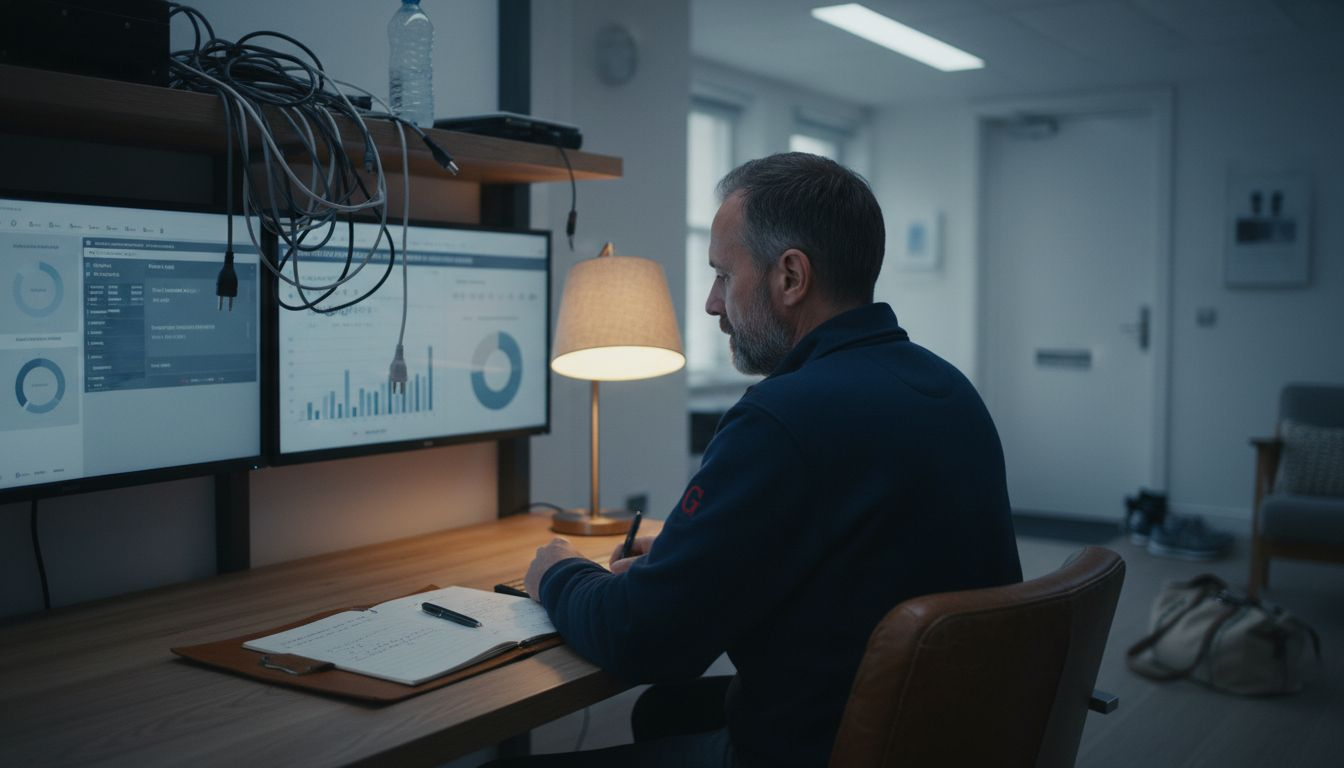
Pro tip: Invest in scalable technological infrastructure that can grow alongside your property portfolio, ensuring long-term operational flexibility and strategic adaptability.
To highlight the role of advanced technology in professional property operations, see the comparison below:
| Technology Feature | Funzione | Value for Property Owners |
|---|---|---|
| Predictive maintenance algorithms | Anticipate issues before breakdowns | Reduce unplanned costs |
| Integrated data management | Centralises all property data | Supports informed decision-making |
| Automated workflow management | Streamlines routine operational tasks | Increases operational efficiency |
| Real-time performance monitoring | Tracks asset health continuously | Enables immediate response |
| AI-based risk assessment | Identifies and assesses potential threats | Enhances security and risk reduction |
Data-Led Pricing and Occupancy Control
Modern property management has transformed from intuitive guesswork to precision-driven strategy, powered by sophisticated data analytics. Prudent property valuation now integrates complex market trends, occupancy patterns, and predictive modelling to optimise revenue and asset performance.
Key components of data-led pricing and occupancy control include:
- Real-time market trend analysis
- Algoritmi di prezzo dinamico
- Seasonal demand forecasting
- Competitive benchmarking
- Granular occupancy rate tracking
- Predictive revenue management
Big data technologies enable property managers to develop nuanced pricing strategies that respond instantaneously to market fluctuations. European valuation standards emphasise the importance of comprehensive data collection, allowing operators to make informed decisions that balance maximum revenue potential with market competitiveness.
The evolution of pricing strategies now incorporates machine learning algorithms that can predict optimal pricing points by analysing hundreds of variables simultaneously. These advanced systems consider factors like local events, economic indicators, seasonal variations, and micro-market dynamics to generate pricing recommendations that maximise occupancy and revenue.
Pro tip: Invest in robust data analytics platforms that provide real-time market insights and predictive pricing capabilities to stay ahead of market trends and optimise your property’s financial performance.
Safety, Identity, and Loss Prevention Tools
Modern property management transcends traditional security approaches, integrating sophisticated digital identity verification and comprehensive loss prevention strategies. Professional property management standards now require multilayered systems that protect both physical assets and stakeholder interests.
Key safety and loss prevention tools include:
- Advanced biometric identity verification
- Real-time occupancy monitoring
- Predictive damage detection systems
- Remote security surveillance
- Digital guest screening protocols
- Comprehensive insurance integration
Technological innovations have revolutionised risk management by enabling proactive intervention. European professional qualifications emphasise the critical importance of systematic risk assessment, moving beyond reactive security measures to predictive and preventative approaches that minimise potential financial and reputational damages.
The integration of artificial intelligence and machine learning allows for unprecedented insights into potential security risks. These advanced systems can analyse guest behaviour patterns, detect anomalies in real-time, and provide instantaneous alerts to property managers, creating a seamless and intelligent safety infrastructure that operates continuously and autonomously.
Pro tip: Implement multi-factor identity verification and invest in AI-powered monitoring systems that provide comprehensive security without compromising guest experience.
Consistent Quality Through Specialist Teams
Professional property management demands more than individual skills—it requires meticulously structured specialist teams with clearly defined roles and comprehensive training. Professional qualifications across Europe demonstrate how harmonised expertise ensures consistently exceptional service delivery.
Key characteristics of specialist teams include:
- Defined role specialisations
- Continuous professional development
- Cross-functional training protocols
- Performance benchmarking systems
- Standardised quality assessment metrics
- Regular skill recertification processes
Successful property management teams operate like precision instruments, with each specialist contributing unique expertise towards a unified operational standard. This approach transforms property management from a reactive service into a strategic, professional discipline that anticipates and exceeds client expectations.
Advanced training methodologies enable teams to develop deep institutional knowledge while maintaining flexibility. By investing in comprehensive skill development, organisations create adaptive professionals who can navigate complex property management challenges with consistency, technical proficiency, and nuanced understanding of client needs.
Pro tip: Implement a robust, continuous learning framework that combines theoretical knowledge with practical skills training, ensuring your specialist teams remain at the forefront of property management innovation.
Risks Owners Face Without Managed Services
Property ownership without professional management represents a complex landscape fraught with potential financial and legal vulnerabilities. Housing professionals in Europe reveal the multifaceted risks that unmanaged properties encounter, transforming what seems like cost-saving into potential long-term financial exposure.
Significant risks for unmanaged properties include:
- Legal compliance challenges
- Inefficient maintenance protocols
- Potential tenant dispute escalations
- Inconsistent rental income streams
- Higher insurance and liability risks
- Reduced property market valuation
- Limited technical expertise for property upgrades
Without professional oversight, property owners become vulnerable to complex regulatory landscapes that require specialised knowledge. European property management perspectives underscore how navigating local regulations, tax implications, and tenant rights demands sophisticated understanding that most individual owners cannot consistently maintain.
The financial implications extend far beyond simple maintenance. Unmanaged properties typically experience higher operational costs, more frequent unexpected repairs, and reduced long-term asset appreciation. Professional management transforms property ownership from a potentially risky investment into a strategic, professionally managed asset with predictable performance and minimal personal intervention.
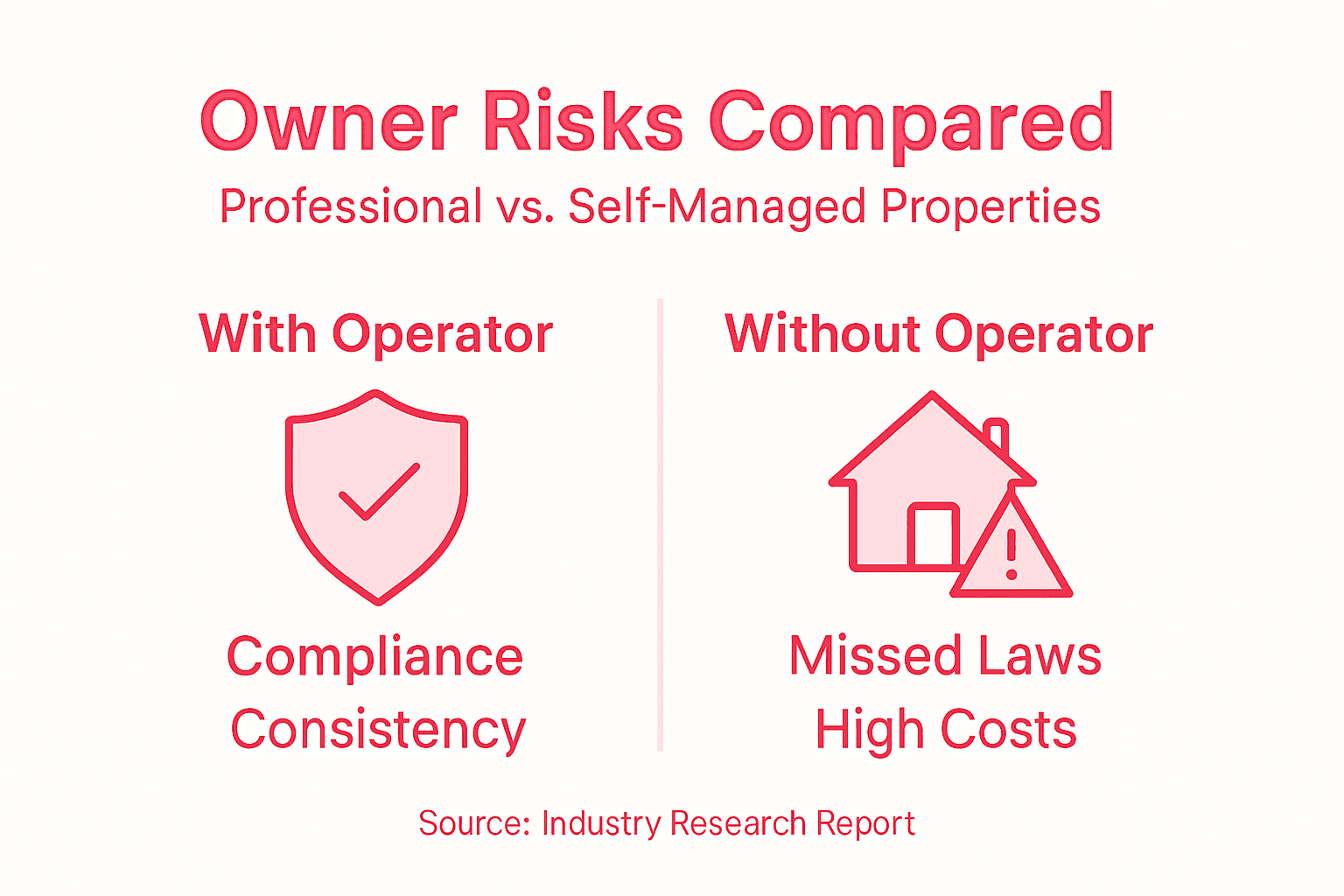
This summary table contrasts managed versus unmanaged property ownership risks:
| Aspetto | With Professional Management | Without Professional Management |
|---|---|---|
| Legal compliance | Regularly updated and enforced | Prone to violations and fines |
| Financial predictability | Stable, planned costs | Unexpected expenses likely |
| Asset value retention | Optimised maintenance and upgrades | Increased depreciation risk |
| Dispute resolution | Structured, rapid processes | Potential for escalation |
| Operational oversight | Dedicated expert team | Owner responsibility and stress |
Pro tip: Conduct a comprehensive risk assessment of your property’s current management approach, identifying potential vulnerabilities that professional services could mitigate.
Unlock the Power of Professional Systems with Guestly Homes
The article highlights the crucial difference that professional property operation standards and advanced systems make between owners and operators. Owners without managed services face risks such as inconsistent income, legal challenges, and operational stress. You want stable income, expert management, and risk reduction by leveraging data-led pricing, safety tools, and specialist teams. This is exactly where Guestly Homes excels.
Guestly Homes is a premium operator delivering hassle-free, fully managed stays across Sweden and the Nordics. Our proven systems transform properties into high-performing assets, combining ethical standards, technological innovation, and consistent quality service. We offer flexible models tailored to your needs—from partnership revenue sharing to long-term leases with predictable income.
Experience professional property management that aligns with the article’s insights on operational scale, risk control, and specialist teams. Trust us to safeguard your investment while you enjoy the benefits of growth and peace of mind. Discover how our fully managed solutions create long-term value with minimal involvement on your part.
Explore what professional property operation means in practice with Guestly Homes and learn more about our service offerings.
Start reducing your property ownership risks today. Visit Guestly Homes to partner with a team that drives success through proven professional systems.
Domande frequenti
How do professional property operators differ from individual owners?
Professional property operators employ structured systems, specialist teams, and advanced technology to manage properties effectively, while individual owners may lack the resources and expertise for optimal management.
What are the benefits of using professional property management services?
Utilising professional property management services provides legal compliance, efficient maintenance, consistent rental income, and enhanced property values, all of which mitigate risks associated with unmanaged properties.
How can technology improve property management practices?
Technology enhances property management through predictive maintenance, real-time performance monitoring, and data-driven pricing strategies, enabling operators to optimise resource allocation and respond proactively to issues.
What are the potential risks of self-managing a property?
Self-managing a property can lead to legal compliance failures, inefficient maintenance, escalated tenant disputes, and reduced market valuations due to a lack of professional oversight and industry knowledge.
Consigliato
- Real Estate vs Property Management: What Owners Need to Know – Guestly Homes
- 7 tipi di modelli di reddito che i proprietari di immobili dovrebbero conoscere - Guestly Homes
- Case in affitto di proprietà: una guida completa (2025) - Guestly Homes
- What is Revenue Share Model? Understanding Its Importance – Guestly Homes
- Private Transportation Workflow – Elevating Austin Leisure | Trinity Concierge