


Serviced apartments cut accommodation costs by 20-30% compared to hotels for project teams on extended stays in Sweden, yet many HR leads and project managers still default to traditional hotel bookings. Planning team accommodation for projects lasting weeks or months requires balancing cost control, logistical coordination, and team wellbeing. This guide walks you through the critical decisions that determine whether your team thrives or struggles during their stay.
Indice dei contenuti
- Introduction To Accommodation Planning For Project Teams
- Understanding Accommodation Types: Serviced Apartments Vs Hotels
- Budget Management Strategies For Long-Term Team Stays
- Operational Logistics In Booking And Managing Accommodation
- Service Models And Partnerships For Seamless Accommodation
- Impact Of Accommodation Quality On Team Productivity And Wellbeing
- Common Misconceptions And Pitfalls In Accommodation Planning
Key takeaways
| Punto | Dettagli |
|---|---|
| Cost efficiency | Serviced apartments reduce accommodation expenses by up to 30% for long stays compared to hotels. |
| Budget allocation | Reserve 25-35% of project costs for accommodation whilst accounting for hidden expenses like transport and compliance. |
| Centralised logistics | Coordinated booking systems minimise errors, improve vendor rates, and streamline team arrivals. |
| Quality matters | High-quality lodging boosts team productivity by up to 20% and supports mental wellbeing. |
| Regional compliance | Swedish regulations and cultural preferences must guide accommodation selection for successful projects. |
Introduction to accommodation planning for project teams
Your choice of accommodation shapes project outcomes more than most budget lines suggest. Teams spending 10 nights to 12 months on site need stable, comfortable spaces that support focused work and genuine rest. Yet accommodation quality and planning directly influence extended project team success in ways that surprise inexperienced coordinators.
Extended stays demand different thinking than short business trips. A two-night hotel visit tolerates cramped rooms and limited amenities. A three-month project assignment requires kitchens, laundry, workspace, and privacy. Your team’s ability to cook proper meals, maintain routines, and decompress after demanding shifts directly affects their output and retention.
HR leads and project managers face overlapping challenges:
- Coordinating staggered arrivals across multiple team members with varying schedules
- Managing transport logistics from accommodation to site, particularly in winter conditions
- Balancing budget constraints against team comfort and productivity requirements
- Navigating Swedish regulatory requirements and cultural expectations for lodging standards
- Securing sufficient parking for work vehicles and personal transport
Early assessment of team size, project duration, and site proximity sets the foundation for every subsequent decision. A 12-person team working 8-week rotations needs fundamentally different arrangements than a 4-person crew on a 6-month assignment. Get this assessment wrong and you’ll spend the project firefighting complaints instead of focusing on delivery.
Understanding accommodation types: serviced apartments vs hotels
Two primary options dominate the extended stay market, each with distinct advantages and limitations. Serviced apartments provide fully equipped homes with kitchens, separate living areas, and washing facilities. Hotels offer standardised rooms with daily housekeeping and reception services.
The smart accommodation options in Sweden reveal that serviced apartments deliver home-like environments promoting team wellbeing and collaboration. Shared kitchens and living spaces in villa-style properties enable teams to bond over meals and downtime. Separate bedrooms provide privacy for rest and personal calls. These elements matter profoundly when people work together intensively for months.
Serviced apartments offer 20-30% cost savings over hotels for stays beyond one month, making them financially attractive for budget-conscious planners. Hotels charge nightly rates that compound quickly, whilst serviced apartments typically negotiate monthly terms. However, hotels excel at accommodating last-minute bookings and fluctuating team sizes with minimal advance notice.

| Fattore | Appartamenti serviti | Hotel |
|---|---|---|
| Monthly cost | 25-35% lower for extended stays | Higher nightly rates compound |
| Booking flexibility | Requires advance planning | Accepts short-notice bookings |
| Living space | Separate rooms, full kitchens | Single room, limited facilities |
| Team collaboration | Shared spaces foster connection | Isolated individual rooms |
| Servizi | Washing machines, cooking facilities | Daily housekeeping, room service |
Consider best serviced apartments Sweden when your project timeline is predictable and team size stable. Hotels suit dynamic situations with uncertain arrival dates or rapid team turnover.
Pro Tip: For stable project teams with schedules confirmed 4-6 weeks ahead, serviced apartments maximise cost efficiency whilst delivering superior living conditions that keep morale high.
Budget management strategies for long-term team stays
Realistic budgeting separates successful accommodation planning from mid-project financial stress. Industry standards recommend allocating 25-35% of overall project budgets to team lodging, but this figure only holds if you account for hidden costs that catch inexperienced planners off guard.
Hidden costs of low-quality accommodation increase total project lodging expenses by 10-15% through channels most budget templates ignore. Poor sleep quality reduces productivity, extending project timelines. Inadequate cooking facilities force expensive restaurant meals. Properties far from sites require additional transport arrangements. Each seemingly small inefficiency compounds over weeks and months.
| Categoria di costo | Visible Budget Items | Hidden Expenses Often Missed |
|---|---|---|
| Sistemazione | Monthly rent, security deposits | Cleaning fees, linen service, utilities overages |
| Trasporto | Vehicle hire, fuel budgets | Parking fees, winter tyre changes, site access delays |
| Wellbeing | Basic lodging costs | Productivity loss from poor rest, restaurant meals, turnover costs |
| Conformità | Standard rental fees | Regulatory fines, last-minute relocations, legal reviews |
Implement these budgeting steps for accurate long-term lodging strategies:
- Calculate base accommodation costs using monthly rates from vetted providers with transparent pricing
- Add 15-20% contingency for utilities, cleaning, and incidental expenses specific to your team size
- Factor transport costs from accommodation to site, including winter conditions and parking requirements
- Include costs for amenities that maintain productivity such as reliable internet and workspace
- Account for property management costs when using professional service providers
- Review contracts for hidden fees around early termination, damage deposits, or service adjustments
Revenue share service models reduce upfront cash requirements whilst providing predictable monthly expenses. Rather than large security deposits and advance rent, these arrangements spread costs evenly across the project duration. This approach improves cash flow management for companies juggling multiple concurrent projects.
Pro Tip: Request all-inclusive monthly pricing that covers utilities, cleaning, linen service, and basic maintenance to eliminate billing surprises and simplify accounting.
Operational logistics in booking and managing accommodation
Smooth operations depend on systems that handle complexity before it creates problems. Coordinating staggered arrivals for 8-person teams across three weeks whilst managing transport, keys, and site access demands precision that informal arrangements cannot deliver.
Centralised booking reduces errors and gets better vendor rates for team stays by consolidating all accommodation communication through a single point of contact. Rather than individual team members booking separately, one coordinator manages the entire process. This approach secures group discounts, ensures consistent quality standards, and provides clear accountability when issues arise.
Effective transport coordination prevents the morning chaos that disrupts project schedules. Teams need clear directions from accommodation to site, particularly during dark Swedish winters when unfamiliar roads become treacherous. Adequate parking for work vans, personal vehicles, and equipment trailers requires advance verification, not day-of-arrival surprises.
Key logistics steps from booking through occupancy:
- Confirm total team size, project duration, and arrival schedule 6-8 weeks before first check-in
- Verify property capacity, bedroom allocation, and parking availability for your specific vehicle mix
- Establish clear check-in procedures including key collection, emergency contacts, and property orientation
- Coordinate transport arrangements with detailed directions, winter driving guidance, and site access protocols
- Set up communication channels for maintenance requests, schedule changes, and emergency support
- Arrange mid-stay cleaning services, linen changes, and restocking based on team preferences and budget
Assigning a dedicated logistics coordinator streamlines vendor management and problem resolution. When one person owns all accommodation relationships, property managers know exactly who to contact about issues. Teams know exactly who to ask about practical questions. This clarity prevents the fragmented communication that leaves problems unresolved.
Pro Tip: Schedule a site visit to potential accommodation before finalising contracts, checking transport routes, parking capacity, and winter access to avoid unpleasant surprises when teams arrive.
Service models and partnerships for seamless accommodation
Strategic partnerships with experienced property managers transform accommodation from a logistical headache into a competitive advantage. Two primary service models dominate the extended stay market, each offering distinct financial structures and operational benefits.
Revenue share models split accommodation earnings between property owners and management companies, typically 60/40 or 70/30. This arrangement aligns incentives because managers only profit when occupancy remains high and guests satisfied. Flexible exit clauses provide security if project timelines shift unexpectedly.
Arbitrage models involve property managers signing long-term leases with owners, then operating the properties independently. These arrangements offer fixed monthly costs that simplify budget forecasting but require longer commitment periods of 3-5 years. They suit organisations with predictable, ongoing accommodation needs across multiple projects.
Property management partnerships stabilise accommodation supply and optimise costs for long-term stays by securing inventory before peak demand periods. Rather than competing for limited properties during busy seasons, partnered organisations access pre-arranged accommodation at negotiated rates.
Comparing partnership advantages:
- Revenue share provides flexibility for variable project schedules with shorter commitment terms
- Arbitrage delivers predictable fixed costs ideal for budgeting annual accommodation expenses
- Both models offer professional management handling maintenance, cleaning, and guest support
- Established partnerships secure priority access during high-demand periods when availability tightens
- Experienced operators navigate Swedish regulations and compliance requirements on your behalf
Select partners with proven Nordic market experience who understand regional expectations around comfort, privacy, and practical amenities. Swedish teams expect well-maintained properties with functional kitchens, reliable heating, and responsive support. Choosing trustworthy property management partners familiar with these standards prevents the cultural mismatches that undermine team satisfaction.
Impact of accommodation quality on team productivity and wellbeing
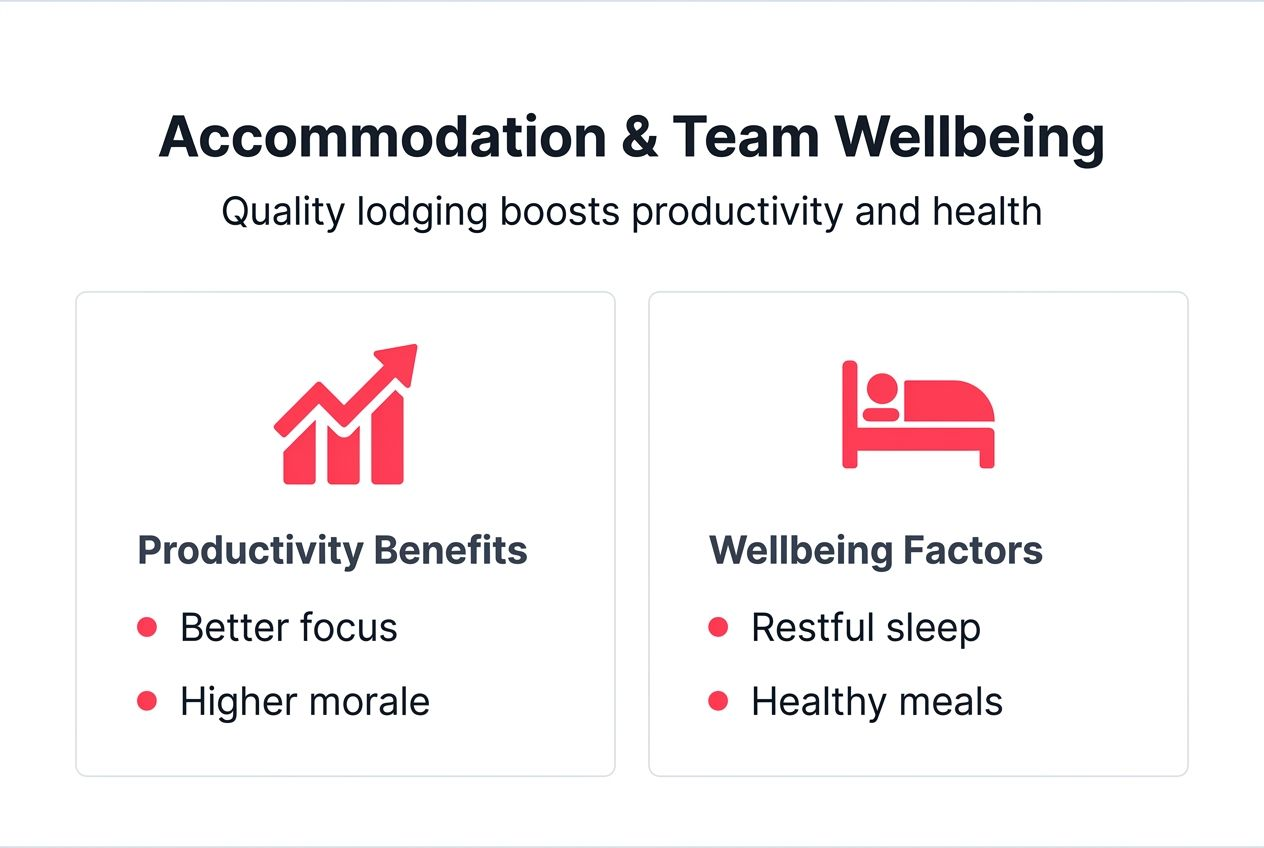
The connection between where people sleep and how they perform is neither subtle nor negotiable. High-quality accommodation can improve team productivity by up to 20% during extended projects, making it one of the highest-return investments in your project budget.
Home-like settings provide the psychological and physical comfort that demanding project work requires. Teams working long shifts in challenging conditions need spaces that support genuine recovery. A cramped hotel room with poor ventilation and street noise undermines sleep quality. A well-designed apartment with comfortable beds, quiet surroundings, and space to move restores energy for the next day’s work.
Research consistently demonstrates that accommodation environment directly correlates with cognitive performance, emotional resilience, and team cohesion during extended assignments. When people feel genuinely at home, they work better and stay longer.
The elements that drive productivity gains:
- Proper kitchens enable healthy eating and cost savings over restaurant meals
- Separate living areas provide space for video calls, administrative work, and socialising
- Quality mattresses and quiet bedrooms deliver the deep sleep essential for safety and focus
- Washing facilities maintain hygiene and reduce the logistical burden of laundry services
- Outdoor access and nearby nature support physical activity and mental health
Teams in quality accommodation achieve up to 20% higher productivity whilst reporting significantly better wellbeing scores and lower turnover intentions compared to those in standard hotel arrangements.
The financial case for quality extends beyond immediate productivity. Replacing a skilled team member who quits due to poor living conditions costs 50-200% of their annual salary through recruitment, training, and productivity gaps. Investing in accommodation that retains talent pays for itself many times over.
Consider the full cycle of project success. Teams that rest well work safely. Teams that eat well maintain energy. Teams that have space to decompress handle stress constructively. These factors compound over weeks and months, separating projects that finish on time and under budget from those that spiral into costly delays.
Common misconceptions and pitfalls in accommodation planning
Several persistent myths about team accommodation lead planners into expensive mistakes. Understanding these misconceptions protects your budget and team satisfaction.
The cheapest option rarely saves money. A property listing at £800 per month appears attractive compared to £1,200 alternatives until hidden costs emerge. Poor locations add £300 in monthly transport expenses. Inadequate facilities force £200 in restaurant meals. Ignoring accommodation logistics can increase project costs by at least 10% through channels that never appear in the accommodation line item.
Hotels seem flexible but often prove rigid for extended stays. Nightly rates that feel manageable for a week become prohibitive over months. Many hotels resist monthly bookings or offer minimal discounts for longer commitments. Their daily housekeeping, whilst convenient, disrupts team routines and privacy.
Common misconceptions debunked:
Consigliato
- Guide to Extended Stays Sweden: Hassle-Free Booking Steps – Guestly Homes
- 7 Smart Accommodation Options in Sweden for Team Stays – Guestly Homes
- Corporate Travel Accommodation Explained: Smarter Choices for Project Teams in Sweden – Guestly Homes
- Le 7 migliori soluzioni di alloggio per gruppi in Svezia – Confronto tra esperti 2025 – Guestly Homes
- Building Regulations Explained: What Project Managers Face