


Managing team relocations to Swedish cities like Piteå, Luleå, Boden, and Nyköping often means balancing tight project schedules with the challenge of finding suitable accommodation for young professionals. The transition into new roles and communities can be smoother with integrated support housing models such as foyer accommodation. This approach does more than provide a roof; it combines affordable living with targeted personal and career development, offering a stable foundation for your team’s productivity and well-being.
Indice dei contenuti
- Foyer Accommodation – Core Definition And Aims
- Types Of Foyer Accommodation And Key Distinctions
- Essential Features And How Foyer Schemes Operate
- Rights, Responsibilities, And Legal Safeguards
- Comparing Foyer To Serviced Apartments For Work
Punti di forza
| Punto | Dettagli |
|---|---|
| Foyer Accommodation Model | Foyer accommodation offers structured support for young professionals during transitional periods, integrating housing with personal development services. |
| Tipi di alloggio | There are various types of foyer accommodations, including migrant worker foyers and professional development foyers, each tailored to specific resident needs. |
| Operational Framework | Foyer schemes emphasise active participation from residents in educational and employment programmes, fostering a holistic support system. |
| Protezioni legali | Rights and responsibilities in foyer arrangements ensure privacy, safety, and fair treatment for residents, enhancing community standards and support. |
Foyer accommodation – core definition and aims
Foyer accommodation represents a distinctive housing model designed to support young professionals and workers during transitional periods of employment and personal development. Originating in post-World War II Europe), this innovative approach goes beyond traditional temporary housing by integrating comprehensive support services with affordable living spaces.
The core aims of foyer accommodation are multifaceted, focusing primarily on creating structured pathways for young individuals entering workforce environments. By providing subsidised living arrangements combined with targeted education and employment support, these facilities help bridge critical gaps in professional and personal transitions. The youth foyer model delivers supportive accommodation that enables residents to simultaneously secure housing and develop essential life skills.
Key characteristics of foyer accommodation include:
- Affordable, short-term housing solutions
- Integrated personal development programmes
- Direct linkage between accommodation and employment opportunities
- Structured support for skill enhancement
- Personalised transition management
The fundamental philosophy underlying foyer accommodation centres on the principle of a ‘something-for-something’ relationship, where residents actively engage in training, education, or employment programmes while receiving stable housing support. This approach transforms temporary accommodation into a dynamic platform for personal and professional growth.
Professional Recommendation: Consider foyer accommodation as a strategic option for young professionals seeking structured support during career transition phases, particularly when moving to new cities or industrial regions.
Types of foyer accommodation and key distinctions
Foyer accommodation encompasses a diverse range of housing models designed to support different professional and social needs. Accommodation types for migrant workers vary significantly, reflecting the complex landscape of temporary and supportive housing solutions across different regions and demographic groups.
Primary types of foyer accommodation include:
- Migrant Worker Foyers: Large-scale buildings with individual or collective rooms, typically located near industrial employment centres
- Student Accommodation Foyers: Purpose-built residences for young professionals and students with integrated support services
- Transitional Housing Foyers: Designed for vulnerable populations seeking structured pathways to independent living
- Professional Development Foyers: Focused on providing housing linked directly to employment and skills training programmes
Foyers for migrant workers traditionally featured large communal spaces with shared facilities, but modern iterations have evolved to offer more personalised and dignified living arrangements. Key distinctions between different foyer types emerge through their specific support mechanisms, duration of stay, and target demographic groups.
The contemporary foyer model prioritises holistic support, moving beyond mere shelter to create integrated environments that facilitate personal and professional growth. These accommodations are characterised by their comprehensive approach, combining affordable housing with targeted educational, employment, and personal development resources.
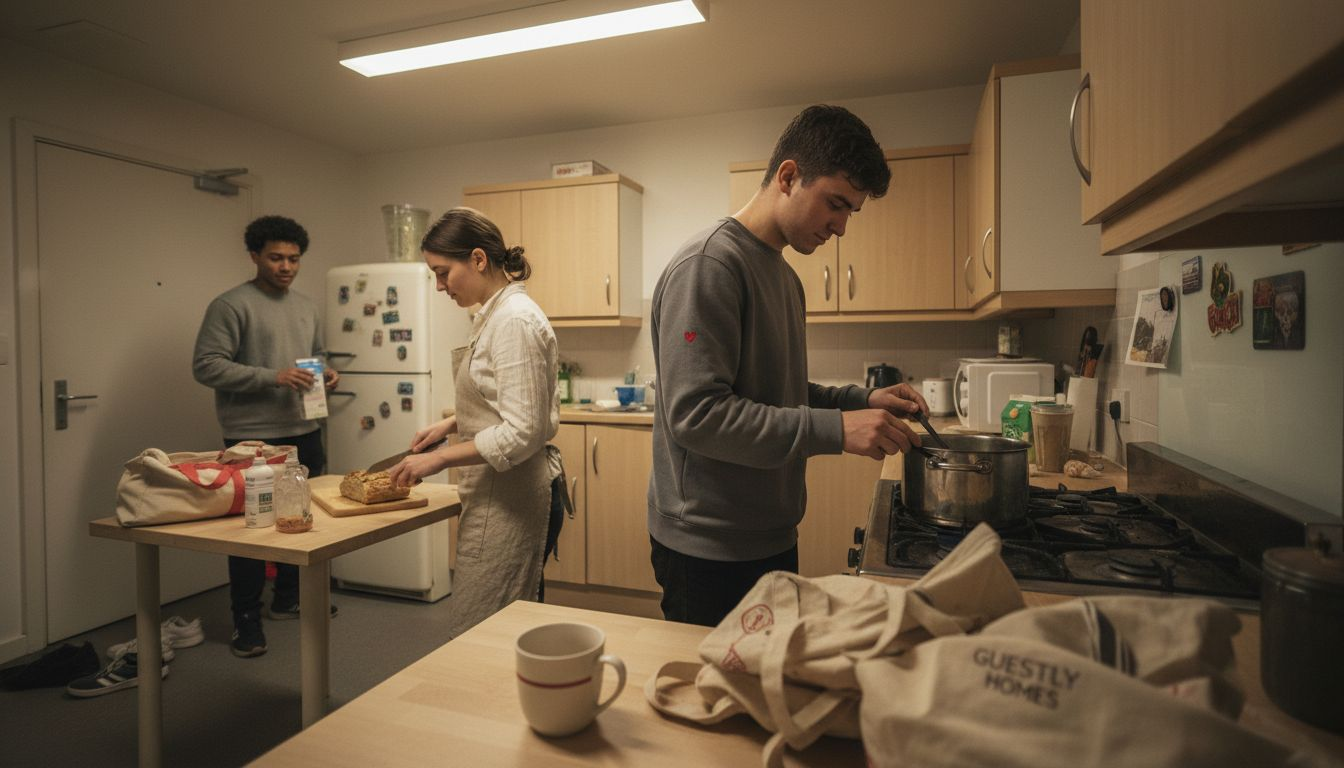
Here is a summary of key distinctions among foyer accommodation types:
| Tipo di alloggio | Primary Purpose | Typical Resident Profile | Support Services Focus |
|---|---|---|---|
| Migrant Worker Foyers | Facilitate employment transitions | Newly arrived or mobile workers | Employment placement, social orientation |
| Student Accommodation Foyers | Support academic and early career stages | Students, recent graduates | Academic guidance, career workshops |
| Transitional Housing Foyers | Enable independence for vulnerable groups | Young people needing structured support | Life skills, personal development planning |
| Professional Development Foyers | Advance skills and job readiness | Early-career professionals | Training, mentorship, job networking |
Professional Recommendation: Research the specific support services and eligibility criteria for different foyer accommodation types to identify the most suitable option for your professional transition needs.
Essential features and how foyer schemes operate
Foyer housing schemes) represent sophisticated support systems that go far beyond traditional accommodation models. These innovative programmes are designed to provide comprehensive support for young professionals and vulnerable populations, creating integrated environments that foster personal and professional growth.
Key operational features of foyer schemes include:
- Holistic Support Framework: Combining housing with targeted personal development services
- Active Participation Model: Requiring residents to engage in education, training, or employment
- Personalised Development Plans: Tailored support addressing individual needs and career aspirations
- Multidisciplinary Team Support: Providing counselling, life skills training, and social integration assistance
Foyer schemes integrate accommodation with supportive services through a structured ‘something-for-something’ agreement. This approach ensures that residents are not merely recipients of housing but active participants in their personal and professional development. The operational model typically involves comprehensive assessment, goal setting, and continuous support to help individuals transition towards independent living and sustainable employment.
The core philosophy of foyer schemes centres on empowerment, recognising that stable housing is just the first step in supporting young professionals’ broader life journey. By creating environments that blend affordable accommodation with targeted support services, these programmes aim to break cycles of economic vulnerability and provide meaningful pathways to personal and professional success.
Professional Recommendation: Carefully document your personal and professional development goals when applying to foyer schemes to maximise the support and opportunities available to you.
Rights, responsibilities, and legal safeguards
Legal protections for supported accommodation establish a comprehensive framework of rights and obligations designed to protect residents in foyer-style housing environments. These legal frameworks ensure that both service providers and residents understand their respective roles and responsibilities, creating a balanced and respectful living ecosystem.
Key rights and responsibilities include:
- Resident Rights:
- Right to privacy and personal dignity
- Protection against discrimination
- Access to safe and secure living conditions
- Freedom of movement within accommodation
- Provider Responsibilities:
- Maintaining safe and supportive environments
- Providing transparent house rules
- Ensuring non-discriminatory practices
- Offering clear complaint mechanisms
House rules in supported accommodations must carefully balance institutional requirements with individual freedoms. This delicate equilibrium requires regulations that respect residents’ fundamental human rights while maintaining necessary community standards and operational safety protocols.
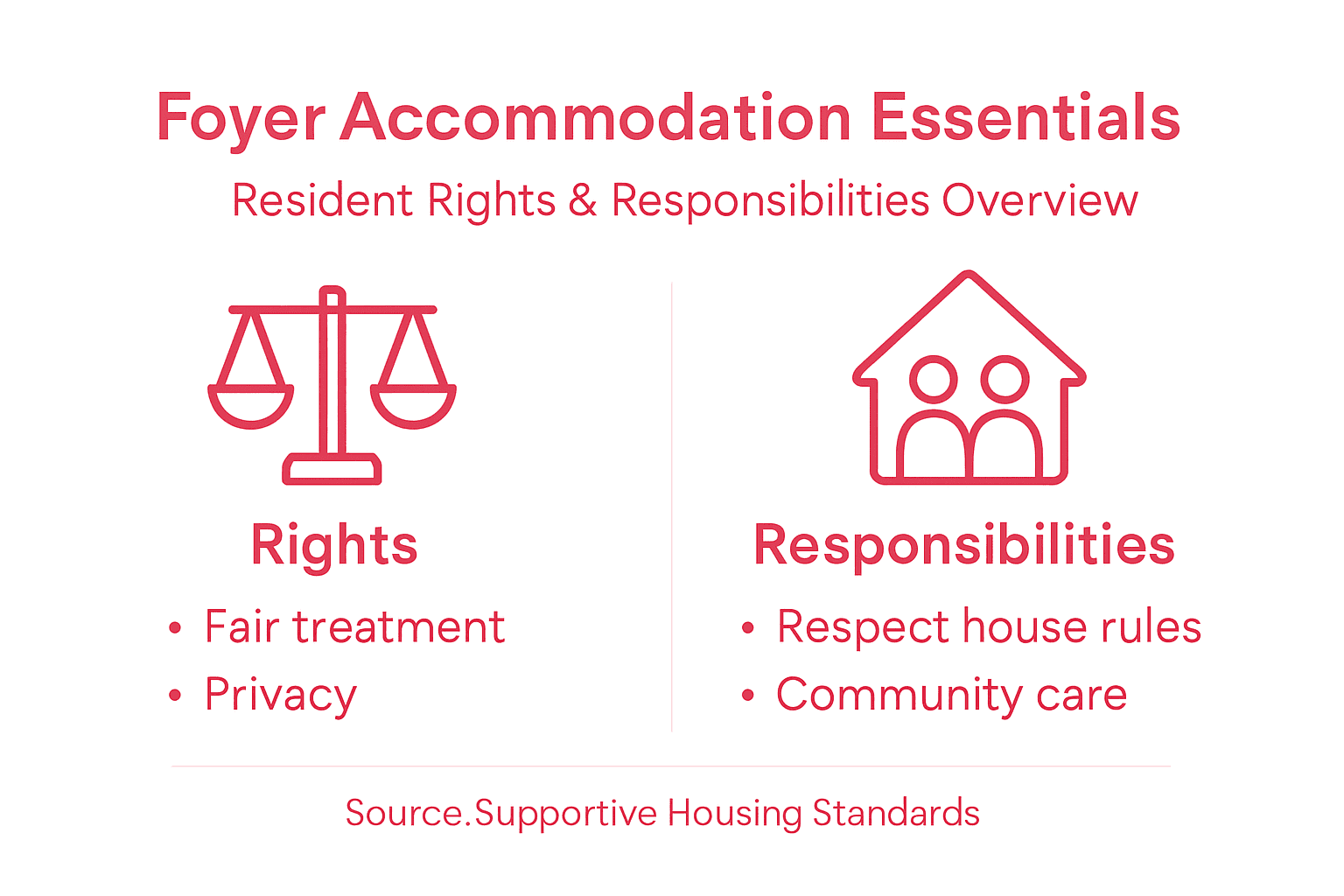
Legal safeguards are designed to protect vulnerable residents by mandating transparent processes, ensuring fair treatment, and providing mechanisms for addressing potential disputes. These protections extend beyond physical accommodation, encompassing broader principles of human dignity, personal autonomy, and equitable access to support services.
Professional Recommendation: Always request a written copy of house rules and resident rights before entering any supported accommodation arrangement, and carefully review the documented protections and responsibilities.
Comparing foyer to serviced apartments for work
Distinct housing models) for professional stays offer unique advantages depending on individual needs and career development stages. Whilst serviced apartments and foyer accommodations might appear similar, they fundamentally differ in their core purpose, support structures, and resident engagement strategies.
Key comparative characteristics include:
- Accommodation Philosophy:
- Foyers: Community-focused, developmental support
- Serviced Apartments: Independent, convenience-oriented living
- Servizi di supporto:
- Foyers: Integrated educational and employment training
- Serviced Apartments: Minimal additional professional support
- Target Demographics:
- Foyers: Young professionals, vulnerable workers
- Serviced Apartments: Established professionals, corporate travellers
Workers’ housing standards emphasise the importance of comfort, hygiene, and functional living spaces. Serviced apartments typically excel in providing high-quality, independent living environments with amenities designed for professional comfort. Foyers, conversely, prioritise holistic personal development alongside accommodation, offering a more structured and supportive living experience.
The primary distinction lies in the underlying philosophy: serviced apartments provide a transactional living space, whereas foyers offer a transformative living environment that actively supports residents’ professional and personal growth. This fundamental difference makes each option more suitable for different career stages and individual development needs.
The following table compares the typical resident journey in a foyer scheme versus a serviced apartment:
| Palcoscenico | Foyer Accommodation Experience | Serviced Apartment Experience |
|---|---|---|
| Entry | Structured assessment and goal setting | Simple registration and deposit |
| Stay | Active participation in training or support | Independent living, minimal oversight |
| Sviluppo | Continuous development monitoring and guidance | Self-directed, few structured opportunities |
| Transition | Supported move toward independence and employment | Independent move-out, no ongoing support |
Professional Recommendation: Carefully assess your current career stage, personal development goals, and support requirements when choosing between foyer accommodation and serviced apartments.
Discover Hassle-Free Foyer-Style Living for Work Stays with Guestly Homes
Navigating the challenges of foyer accommodation means balancing affordable, supportive housing with a seamless work-life transition. At Guestly Homes, we understand the crucial need for stable, secure living spaces that do more than just provide shelter. Whether you are a young professional seeking structured support during career moves or an internal booker tasked with managing team stays without chaos, our fully managed serviced apartments offer the perfect blend of comfort, consistency, and quiet support.
Instead of complicated ‘something-for-something’ housing schemes, Guestly Homes brings you premium, hotel-grade residences designed for extended stays across Sweden and the Nordics. Our homes are tailored to promote personal growth and professional performance without unnecessary distractions. Experience stays that work quietly and provide the stillness and calm you need, backed by a trusted operator who values your privacy and dignity.
Start your seamless work stay journey today by exploring our range of solutions at Guestly Homes.
Find out how you can transform transitional housing challenges into opportunities for success. Visit Guestly Homes to book your next professional stay or to partner for hassle-free property management. Make the move towards a home that supports your growth every step of the way.
Domande frequenti
What is foyer accommodation?
Foyer accommodation is a supportive housing model designed for young professionals and workers, integrating affordable living with essential education and employment services during transitional periods.
How does foyer accommodation differ from serviced apartments?
Foyer accommodation focuses on community development and offers integrated personal support services, while serviced apartments provide independent living with minimal oversight and convenience-oriented amenities.
What support services are typically provided in foyer accommodation?
Foyer accommodation offers a range of support services such as education and training programmes, life skills training, personal development plans, and access to employment opportunities to help residents transition towards independence.
Who can benefit from foyer accommodation?
Foyer accommodation is ideal for young professionals, graduates, and vulnerable workers seeking structured support to navigate transitional phases in their careers and personal lives.