


Becoming a landlord in Sweden seems straightforward until you encounter the reality of Hyreslagen, the Swedish rental act that heavily favours tenants. Many first-time property owners underestimate these protections, leading to disputes over rent adjustments, eviction procedures, and maintenance responsibilities. Poor preparation causes financial losses, legal conflicts, and operational stress that can quickly erode profitability. This guide reveals the most common pitfalls new landlords face and provides practical strategies to avoid them, ensuring your rental venture starts on solid legal and financial footing.
Indice dei contenuti
- Key takeaways
- Understanding the Swedish rental act and legal obligations
- The importance of written lease agreements and tenant screening
- Managing finances, taxes, and insurance for new landlords
- Subletting and specialised local regulations to watch
- Explore professional rental management options with Guestly Homes
- Frequently asked questions
Punti di forza
| Punto | Dettagli |
|---|---|
| Hyreslagen basics | The Hyreslagen sets strict tenant protections that influence eviction, rent increases and notice periods, so understanding it is essential before renting out a property. |
| Written leases essential | Written tenancy agreements specify rent, payment dates, duration, maintenance and notice requirements, protecting landlords when terms are challenged. |
| Screening reduces risk | Thorough tenant screening lowers the chance of rent non payment, damage or disputes by selecting reliable tenants. |
| Document everything | Maintain photographs, written communications, inspection reports and maintenance records to support arbitration outcomes and prove terms. |
| Tax compliance matters | Register rental income with Skatteverket and follow tax rules to avoid penalties and ensure compliant earnings. |
Understanding the Swedish rental act and legal obligations
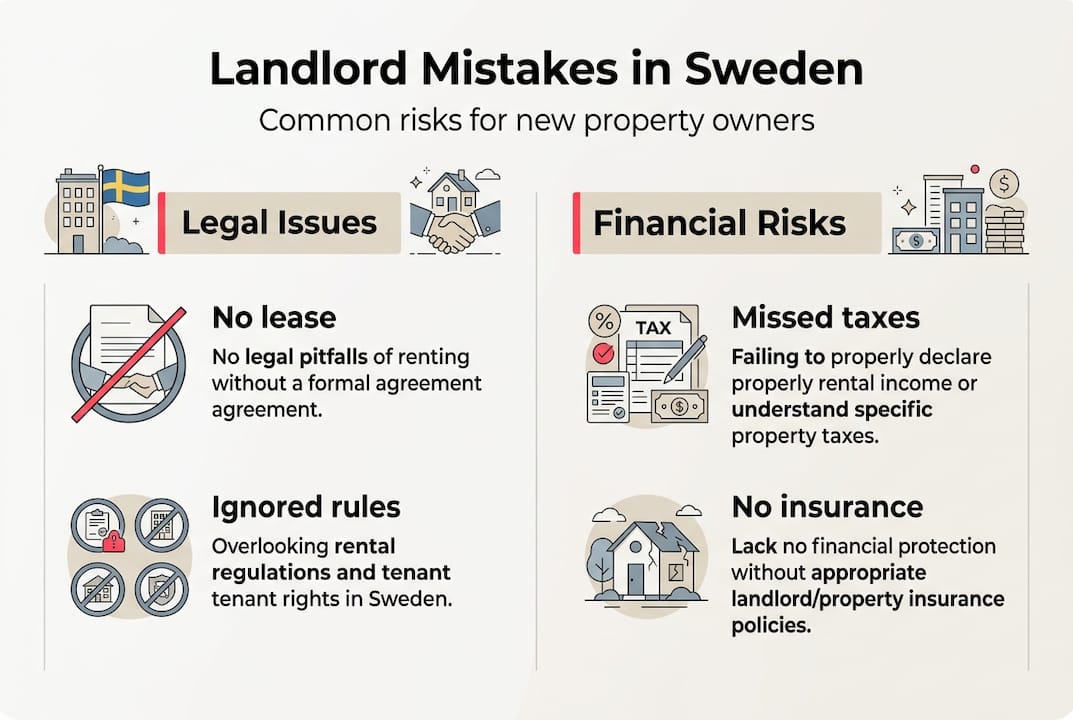
The Swedish rental act, Hyreslagen, establishes strict rules protecting tenants against unfair eviction and arbitrary rent increases. This legal framework creates a landlord-tenant relationship where tenant rights often supersede property owner preferences, particularly regarding notice periods, rent adjustments, and maintenance obligations. Ignoring Hyreslagen leads to disputes over rent levels, notice periods, and repair responsibilities that typically favour tenants in Hyresnämnden arbitration panels.
First-time landlords frequently misunderstand their legal duties under this framework. You cannot simply terminate a lease because you want to sell or move back into your property. Eviction requires specific legal grounds, such as unpaid rent or property damage, and follows strict procedural requirements. Similarly, rent increases must align with comparable properties in the area and cannot be imposed unilaterally without proper justification and notice.
“Swedish rental law prioritises housing security over property rights, making it essential for landlords to understand their limited flexibility before signing any lease.”
Written lease agreements become your primary defence against legal vulnerability. These documents must clearly specify rent amount, payment schedule, lease duration, maintenance responsibilities, and notice requirements. Without written proof of agreed terms, disputes default to tenant testimony and legal presumptions that rarely favour landlords. Understanding lease terms in Sweden helps you create legally sound agreements that protect your interests.
Common legal mistakes include:
- Failing to register rental income with Skatteverket, triggering tax penalties
- Attempting informal evictions without proper Hyresnämnden procedures
- Setting rent levels without researching comparable properties
- Neglecting mandatory maintenance duties like heating and water systems
- Ignoring tenant rights to sublease with landlord approval
Pro Tip: Consult the Swedish rental act guide before drafting your first lease to ensure compliance with all mandatory provisions and avoid common legal traps.
The Hyresnämnden arbitration system resolves disputes between landlords and tenants, but its tenant-focused approach means you must document everything meticulously. Photographs, written communications, inspection reports, and maintenance records become critical evidence if conflicts arise. Landlords who operate informally or rely on verbal agreements consistently lose arbitration cases, facing reduced rent awards or forced lease extensions.
The importance of written lease agreements and tenant screening
Oral lease arrangements create legal vulnerabilities that expose you to significant financial risk. 60% of disputes arise from oral agreements rather than written contracts, primarily because landlords cannot prove agreed terms when conflicts emerge. Written leases establish clear expectations for rent payment, property condition, maintenance responsibilities, and termination procedures, providing legal protection when tenants challenge terms or fail to meet obligations.
Your lease agreement should specify every material term of the tenancy. Include exact rent amount and due date, security deposit details, permitted occupants, subletting restrictions, pet policies, and maintenance divisions. Detail which repairs fall to you as landlord and which tenants must handle. Clarify notice periods for both parties and conditions under which early termination is permitted. The importance of lease agreements extends beyond legal compliance to operational clarity that prevents misunderstandings.
Tenant screening represents your first line of defence against financial losses and property damage. Inadequate screening leads to 35% problems from solvency issues, resulting in unpaid rent, property damage, and neighbour disturbances. Proper vetting includes credit checks through UC or Creditsafe, employment verification, previous landlord references, and identity confirmation. These steps filter out high-risk applicants before they gain tenancy rights.
Effective tenant screening process:
- Request detailed application with employment history and income documentation
- Run credit checks to identify payment defaults or debt collection cases
- Contact previous landlords to verify payment history and property care
- Verify identity documents to prevent fraud and subletting schemes
- Assess income stability, requiring rent to be maximum 30% of gross income
Pro Tip: Swedish privacy laws restrict what you can ask prospective tenants, but you can legally request information directly relevant to their ability to pay rent and maintain the property. Focus screening on financial capacity and rental history rather than personal characteristics.
Many first-time landlords skip thorough screening to fill vacancies quickly, prioritising immediate rental income over long-term security. This approach backfires when problem tenants stop paying rent or damage property. Evicting non-paying tenants in Sweden takes months through Hyresnämnden, during which you receive no income but remain responsible for property costs. Prevention through rigorous screening costs nothing compared to eviction proceedings and lost rent.
Consider how screening connects to maximising rental returns by reducing vacancy periods caused by tenant problems. Reliable tenants stay longer, pay consistently, and maintain properties better, creating stable income streams. The time invested in proper vetting pays dividends through reduced turnover, lower maintenance costs, and fewer legal disputes. Rental agreements reduce defaults when combined with thorough tenant selection processes.
Managing finances, taxes, and insurance for new landlords
Rental income taxation in Sweden follows specific rules that first-time landlords often misunderstand. Rental income is taxed at 30% on net surplus with a standard deduction of SEK 40,000 per property, meaning you pay tax on rental income minus allowable expenses and this deduction. Allowable expenses include mortgage interest, property maintenance, insurance premiums, property management fees, and depreciation on fixtures and fittings. Failing to claim eligible deductions or properly report income triggers Skatteverket penalties and back-tax assessments.
Insurance represents another critical financial consideration that new landlords frequently neglect. Standard homeowner policies typically exclude coverage when properties are rented, leaving you exposed to tenant-caused damage, liability claims, and loss of rental income. Landlord-specific insurance costs approximately SEK 3,000-8,000 annually but protects against damage averaging SEK 50,000 per incident. Without proper coverage, you personally absorb costs from tenant negligence, accidents, or intentional damage.

The choice between self-management and professional property management significantly impacts your net returns. Self-management exposes to higher costs than professional fees through preventable problems like inadequate tenant screening, delayed maintenance, and legal mistakes. Professional managers charge 6-12% of rent but provide tenant vetting, legal compliance, maintenance coordination, and financial reporting that often improve net yields despite the fee.
| Management approach | Typical costs | Risk exposure | Time commitment | Net yield impact |
|---|---|---|---|---|
| Self-management | Zero fees but hidden costs | High legal and tenant risk | 10-15 hours monthly | Often lower due to mistakes |
| Gestione professionale | 6-12% of rent | Reduced through expertise | Minimal owner involvement | Often higher despite fees |
| Hybrid model | 3-6% for specific services | Moderato | 5-8 hours monthly | Variable based on service scope |
Financial planning must account for vacancy periods, unexpected repairs, and seasonal income fluctuations. Swedish rental markets experience higher turnover in summer when students and professionals relocate. Budget for at least one month of vacancy annually, plus a maintenance reserve of 1-2% of property value. Understanding choosing property management helps you evaluate whether professional services align with your financial goals and risk tolerance.
Pro Tip: Track all rental-related expenses meticulously throughout the year using dedicated accounting software or spreadsheets. This documentation supports your tax deductions and provides financial clarity for evaluating property performance against your investment goals.
Mortgage interest represents your largest tax-deductible expense, but Swedish tax rules limit deductions to 30% of interest paid. This means if you pay SEK 50,000 in mortgage interest annually, you can deduct SEK 15,000 from your taxable rental income. Combine this with the SEK 40,000 standard deduction and actual maintenance expenses to minimise your tax liability. Proper financial structuring significantly impacts whether your rental property generates positive cash flow or operates at a loss.
Consider how property handover checklist procedures protect your financial interests by documenting property condition before and after tenancies. Detailed inventories with photographs establish baseline conditions that justify security deposit deductions for damage beyond normal wear and tear. Without this documentation, tenants successfully dispute damage claims, leaving you to absorb repair costs.
Subletting and specialised local regulations to watch
Subletting regulations in Sweden vary dramatically based on property type and location, creating confusion for first-time landlords. Bostadsrätt subletting requires association approval and often faces restrictions that limit rental opportunities. Cooperative housing associations typically permit subletting only for specific reasons like temporary work relocation or studies abroad, and impose time limits of 1-3 years. Violating these rules can result in forced sale of your bostadsrätt at below-market prices.
Äganderätt properties, which you own outright, offer more flexibility but still require compliance with local municipal regulations and tenant protection laws. Some municipalities impose registration requirements for rental properties or restrict short-term rentals to prevent housing stock conversion. Stockholm, Gothenburg, and Malmö each maintain distinct rules governing rental duration, registration procedures, and permitted rental types. Research your specific municipality’s requirements before listing your property.
Rental yields vary significantly by Swedish city, influenced by local demand, housing supply, and regulatory environments. Net yields in Stockholm average 2-3.2% annually, while university towns like Uppsala and Lund generate higher returns of 4-5% due to consistent student demand. Understanding these market dynamics helps you set realistic income expectations and evaluate whether professional management fees align with potential returns.
Steps for lawful subletting compliance:
- Verify your property type and ownership structure to determine applicable regulations
- Contact your bostadsrätt association or municipality to understand specific approval requirements
- Obtain written permission before advertising or signing any sublease agreements
- Register your rental property with local authorities if required by municipal law
- Ensure your sublease agreement complies with Hyreslagen tenant protection provisions
- Maintain documentation of all approvals and communications for future reference
Local regulations extend beyond subletting to encompass noise restrictions, waste management requirements, and building code compliance. Apartment buildings often impose quiet hours from 22:00-07:00, with violations triggering complaints to housing associations or landlords. You remain liable for tenant behaviour that violates building rules, potentially facing fines or legal action from other residents. Clear lease terms addressing noise, guest policies, and community rules help prevent these conflicts.
Pro Tip: Understanding ownership real property Sweden clarifies how different ownership structures affect your rental rights and obligations, particularly regarding subletting permissions and long-term rental strategies.
Some Swedish municipalities require landlords to register rental properties and maintain specific safety standards including functional smoke detectors, adequate heating systems, and proper ventilation. Inspections verify compliance, with violations resulting in rental prohibition orders until deficiencies are corrected. First-time landlords who skip these requirements face income loss and legal penalties that far exceed compliance costs.
Explore professional rental management options with Guestly Homes
Navigating Swedish rental regulations, tenant screening, and property maintenance demands expertise that most first-time landlords lack. Guestly Homes offers comprehensive property management services designed specifically for premium properties across Sweden, handling everything from legal compliance to tenant relations. Our revenue share and arbitrage models provide flexible partnership options that align with your financial goals whilst eliminating operational stress.
Professional management reduces risk whilst improving returns through expert tenant screening, proactive maintenance, and legal expertise. We handle 24/7 tenant communication, coordinate repairs, ensure regulatory compliance, and provide transparent financial reporting. Our experience managing modern luxury villa listings and business villa rentals demonstrates our capability to maximise property performance whilst maintaining impeccable standards.
Explore how choosing property management partners who understand Swedish rental markets transforms your investment from a source of stress into a reliable income stream. Our proven systems prevent the costly mistakes that plague first-time landlords, protecting your property value whilst optimising rental yields.
Frequently asked questions
How does Hyreslagen protect tenants and what must landlords do?
Hyreslagen establishes strong tenant protections against unfair eviction and arbitrary rent increases, requiring landlords to follow strict legal procedures for lease termination. You must provide proper notice periods, justify rent levels against comparable properties, and maintain essential services like heating and water. Violations typically favour tenants in arbitration proceedings.
What should be included in a written lease agreement?
Your lease must specify exact rent amount and payment schedule, security deposit terms, permitted occupants, maintenance responsibilities, subletting restrictions, and notice periods for both parties. Include property condition documentation, pet policies, and termination conditions to prevent disputes. Written agreements provide legal protection that oral arrangements cannot offer.
How can I screen tenants effectively to avoid problems?
Conduct credit checks through UC or Creditsafe to identify payment defaults, verify employment and income stability, contact previous landlords for references, and confirm identity documents. Require rent to be maximum 30% of gross income and assess rental history for patterns of late payment or property damage. Thorough screening prevents the majority of tenant problems.
Is professional property management worth the cost?
Professional management fees of 6-12% often deliver higher net returns than self-management by preventing costly mistakes in tenant screening, legal compliance, and maintenance. Managers handle time-consuming tasks like tenant communication, repair coordination, and financial reporting whilst reducing legal risks. Evaluate based on your expertise, available time, and risk tolerance.
What tax deductions are available for rental income in Sweden?
You can claim a standard deduction of SEK 40,000 per property plus actual expenses including mortgage interest (30% deductible), property insurance, maintenance costs, property management fees, and depreciation on fixtures. Proper documentation of all rental-related expenses maximises deductions and minimises your 30% tax liability on net rental income. Learn more about costly pitfalls renting property to protect your investment.
Consigliato
- Avoid costly pitfalls when renting Swedish property in 2026 – Guestly Homes
- Lease Agreement for a House – Key Essentials in Sweden – Guestly Homes
- Contratto di gestione immobiliare: Guida completa per la Svezia - Guestly Homes
- Sweden Rental Apartments: The Complete Guide for 2025 – Guestly Homes
- Flyttstädning i Varberg – Kostnad för flyttstäd direkt